Executive Overview
The landscape of American fashion is undergoing a profound structural realignment. For decades, heritage prep brands faced an existential crisis. Caught between the relentless rise of fast fashion, the casualization of the modern workplace, and changing generational aesthetics, legacy labels risked becoming historical footnotes rather than living wardrobes.
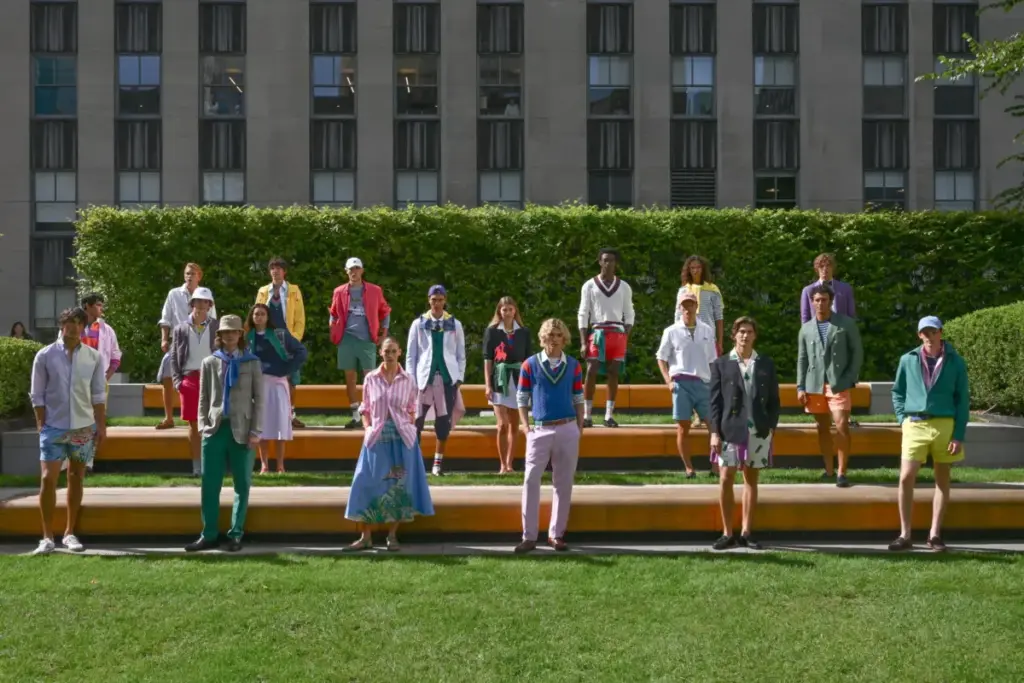
Yet, as the sweltering heatwave at New York Fashion Week (NYFW) proved last week, traditional American sportswear is fighting back with a vengeance. At Radio Park, atop Manhattan’s iconic Radio City Music Hall, models for Brooks Brothers endured blazing temperatures—requiring ice packs between takes—to walk the brand’s first major NYFW runway show in years. The visual metaphor was apt: the historic brand is bringing the heat back to prep.
Under the stewardship of Authentic Brands Group, alongside Creative Director Michael Bastian and CEO Ken Ohashi, Brooks Brothers is in the midst of a high-stakes, multi-pronged corporate turnaround. Having emerged from bankruptcy in 2020, the 200-year-old institution is actively charging toward a coveted $1.0 billion annual revenue milestone.
Simultaneously, across town at The Plaza Hotel, fellow prep titan Tommy Hilfiger was celebrating four decades of global brand-building. In an exclusive interview, Hilfiger reflected on how his namesake label has expanded from a domestic menswear line into an international lifestyle empire.
Together, these two pillars of American style illustrate a broader industry truth: heritage brands can successfully modernize without alienating their core demographic. By bridging the gap between Gen Z novelty and millennial-boomer reliability, and by balancing high-level experiential marketing with utilitarian business models, these giants are rewriting the playbook for legacy retail survival.
Detailed Chronology: The Road from Bankruptcy to the Runway
To understand where Brooks Brothers is today, one must examine the perilous depths from which it climbed. When the COVID-19 pandemic paralyzed global retail in 2020, Brooks Brothers—founded in 1818 and worn by nearly every U.S. President—was forced to file for Chapter 11 bankruptcy. Decades of shifting office dress codes, coupled with an over-reliance on traditional brick-and-mortar storefronts, had hollowed out its operating margins.
The turning point arrived when Authentic Brands Group stepped in to acquire the ailing company, installing a new leadership team tasked with modernizing a monolith.
Phase 1: Immediate Triage and Operational Stabilization (2020–2021)
When Ken Ohashi took the helm as CEO, the reality was stark. During his first week on the job, retail sales plummeted by an alarming 70%. Immediate triage was required. While the luxury consumer base remained largely intact, the brand needed diversified income streams to insulate itself against future retail shocks.
Ohashi initiated a strategic pivot into utilitarian and uniform manufacturing. Two years ago, Brooks Brothers launched a dedicated corporate uniform division. Today, the brand supplies apparel for more than 66,000 United Airlines employees. This B2B pivot provided immediate financial stability, securing predictable, recurring revenue independent of seasonal retail fluctuations.
Phase 2: Creative Realignment and Core Heritage (2021–2023)
Concurrently, Michael Bastian was brought in to overhaul the product assortment. Bastian quickly realized that while Brooks Brothers owned the DNA of American prep, it had drifted away from its most iconic inventions. Most notably, the Oxford cloth button-down shirt—a style the brand originally invented and popularized—was underrepresented in the core collection.
Bastian set to work re-establishing foundational pieces, integrating classic prep staples like Harrington jackets and cable-knit sweaters, while subtly infusing modern design cues inspired by global travel destinations like Monaco and the American Southwest.
Phase 3: Strategic Partnerships and Controlled Accessibility (2023–2024)
To broaden its consumer base without diluting its prestige, leadership engineered a measured partnership with Macy’s. By offering a more accessible line of suiting in roughly 40 select Macy’s locations nationwide, the brand captured a wider demographic.
"We were very careful and measured with this partnership," Ohashi noted, emphasizing the delicate balance required to maintain brand equity while expanding market penetration.
Phase 4: High-Impact Cultural Re-entry (2024–Present)
The culmination of this multi-year turnaround was last week’s NYFW presentation. Eschewing traditional, quiet lookbooks, Brooks Brothers opted for high-impact, experiential marketing designed to close its biggest awareness gap: consumers under the age of 40.
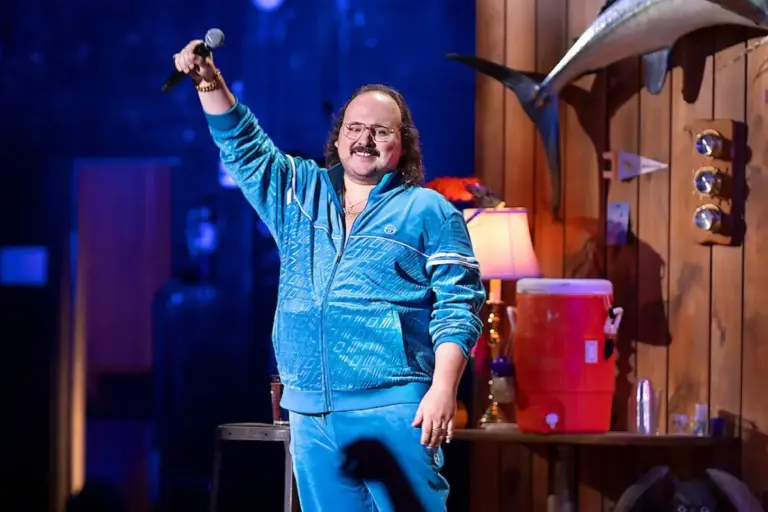
Through streetwear collaborations with labels like Needles and New Era, and casting choices featuring cultural figures like comedian Alex Edelman and influencer TyLynn Nguyen, Brooks Brothers successfully signaled to a younger, style-conscious audience that 200 years of history can look entirely modern.
Supporting Context & Metrics: Chasing the Billion-Dollar Mark
The financial metrics underpinning this operational pivot tell a compelling story of recovery. While private leadership declined to disclose exact, audited revenue figures for the fiscal year, Michael Bastian confirmed that the company has already brushed up against the $1.0 billion annual revenue threshold.
The growth is not a fluke. Brooks Brothers is currently enjoying five consecutive years of positive comp revenue growth under its current leadership team. Furthermore, this top-line expansion has occurred without any deterioration in spending from its core demographic of wealthy, full-price-paying traditionalists.
The Retail Footprint Strategy
Physical retail remains a cornerstone of the brand’s long-term viability. Rather than abandoning brick-and-mortar in favor of a digital-only model—a trap that has ensnared numerous contemporary brands—Brooks Brothers is doubling down on physical spaces.
- The Flagship Investment: In May of last year, the brand opened a high-profile New York flagship store.
- Store Expansion: The company is on track to open 10 new storefronts over the course of the year, bringing its global retail footprint to approximately 140 doors.
- Top-of-Funnel Marketing: Management views events like New York Fashion Week not as immediate revenue generators, but as essential top-of-funnel investments designed to drive overall brand heat and digital discovery.
Official Statements: Insights from Industry Visionaries
The strategic philosophies driving the modern prep renaissance were laid bare during recent industry dialogues.
Michael Bastian on Brand Awareness and Marketing
Addressing the necessity of the NYFW runway show, Bastian emphasized that traditional marketing collateral was no longer sufficient for younger consumers.
"The ball is already rolling," Bastian said, pointing to the brand’s multi-year streak of positive growth. "We just have to get the word out. And the show is a big part of that. It’s an investment, but the reward can be so big."
Bastian acknowledged that despite two centuries of heritage, brand awareness among Generation Z remains a hurdle.
"Previous marketing efforts like regular lookbooks and catalogs, while helpful, haven’t made a memorable splash with a younger crowd. Many consumers, particularly younger ones, may still not be familiar with Brooks Brothers or its history."
Ken Ohashi on Resilience and Stability
Reflecting on the harrowing start of his tenure and the subsequent stabilization of the company, CEO Ken Ohashi emphasized the importance of disciplined diversification.
"We opened our New York flagship, and we’re opening 10 stores over the whole year. We just did Fashion Week, and we’re investing a lot more in top-of-funnel marketing… We’ve seen a lot of healthy growth so far. Six consecutive years of comp growth and no deterioration in the full-price wealthy customer."
Tommy Hilfiger on Four Decades of Evolution
Across town at The Plaza Hotel, fashion icon Tommy Hilfiger sat down to discuss the 40-year evolution of his own eponymous brand, offering parallel insights into the enduring power of classic American sportswear.
- On Global Expansion: "Back then it was a menswear brand, designed in America and made for department stores. But we started expanding into women’s, children’s, fragrance, footwear, every adjacent product you could imagine. And then we went to Europe and were embraced by Europeans. And by now we are truly a global lifestyle brand."
- On Sports Partnerships: Hilfiger underscored the lucrative convergence of fashion and athletics, noting ongoing collaborations with Formula 1 (spanning three decades), NBA star Josh Hart, NFL standout Travis Kelce, and premier European football club Liverpool. "Fashion and sport are very important. They go together very well."
- On Cross-Generational Appeal: "Gen Z is really important to us… But we haven’t turned our backs on the millennial or baby boomer customer because they started buying our clothes 30 or 40 years ago, and they depend on the quality and the price and the reliability."
Future Outlook: The Next Frontier for Heritage Brands
As Brooks Brothers and its contemporaries look toward the horizon, the path forward requires a delicate balancing act. The immediate objective for Brooks Brothers is clear: consistently clear the $1.0 billion annual revenue mark. Achieving this will depend on maintaining the momentum generated by its recent high-profile runway debut, sustaining its corporate uniform contracts, and intelligently expanding its physical retail footprint.
For the wider heritage market, several macro trends will dictate future success:
- AI and Digital Acquisition Challenges: As artificial intelligence increasingly disrupts digital ad-buying and customer acquisition channels, physical retail spaces are regaining their status as the primary emotional anchor for consumer loyalty. Brands with strong brick-and-mortar strategies will hold a distinct advantage.
- Experiential Retail and "See-Now, Buy-Now" Iterations: Traditional fashion calendars are giving way to immediate consumer gratification. Hilfiger’s model—dressing front-row influencers in current collections that are instantly available for purchase—serves as a blueprint for bridging the gap between runway fantasy and retail reality.
- Lifestyle Extensions: Beyond apparel, legacy brands are eyeing lifestyle adjacencies. As Tommy Hilfiger noted regarding his distant yet achievable dreams of branded hotels, restaurants, and home goods, the ultimate evolution of a prep brand is not merely to clothe the consumer, but to curate their entire living environment.
Ultimately, the revitalization of Brooks Brothers demonstrates that heritage is not a static museum exhibit, but a dynamic toolkit. By honoring their historical roots while aggressively leaning into modern cultural conversations, America’s oldest clothiers are proving that classic style never truly goes out of fashion—it simply waits for the right moment to make its grand return.