Executive Overview
The modern fitness landscape presents a stark dichotomy. On one side, the weight room has surged in popularity, becoming a vibrant cultural hub characterized by clanging steel, synchronized grunting, and an endless array of barbells, kettlebells, and heavy dumbbells. To the uninitiated, however, this environment can feel intensely intimidating. The sheer volume of equipment, combined with the implicit performance anxiety of heavy lifting, often acts as a psychological barrier to entry for everyday wellness seekers.
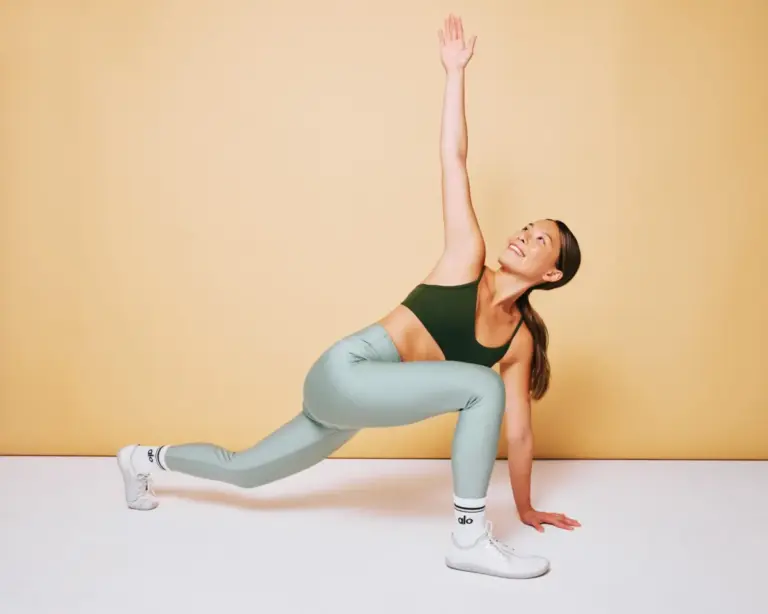
Enter bodyweight training—a stripped-down, highly accessible form of physical conditioning utilizing nothing more than gravity and human anatomy. From air squats and planks to push-ups and lunges, calisthenics offers an inviting entry point into strength training. Yet a lingering question persists among fitness enthusiasts and casual gym-goers alike: Can you truly build muscle and increase functional strength using just your own body weight, or are dumbbells, cables, and weight plates an absolute necessity?
According to leading exercise scientists, kinesiologists, and strength coaches, the answer is nuanced. While bodyweight exercises provide undeniable logistical advantages—such as zero cost, ultimate portability, and a lower barrier to entry—their capacity to build muscle is governed by strict physiological laws. Understanding how muscles respond to tension, how load varies across different movements, and what it truly means to reach muscular failure is essential for anyone looking to optimize their fitness routine without ever stepping foot near a heavy rack.
Detailed Chronology & Evolutionary Mechanics: How Bodyweight Exercises Work
To understand the efficacy of bodyweight training, one must first look at how human movement evolved and how the fitness industry has categorized resistance over time. Historically, human beings built and maintained functional strength through daily survival tasks: lifting objects, climbing, pushing, pulling, and carrying loads across varied terrain. Calisthenics—derived from the Greek words kalos (beauty) and sthenos (strength)—is the modern iteration of this ancestral movement.
The Physics of Human Load
Not all bodyweight exercises are created equal, and the mechanics of load distribution play a primary role in determining effectiveness. When an individual performs an isolation movement, such as a bodyweight biceps curl, the mechanical stress placed on the target muscle is negligible because the only weight being moved is the mass of the forearm and hand.
Conversely, compound movements alter the equation drastically. Consider the standard push-up. According to foundational biomechanical research published in the Journal of Strength and Conditioning Research, a traditional push-up requires an individual to support up to 75% of their total body mass. For a 150-pound person, this translates to pressing roughly 112.5 pounds of resistance with every single repetition. This explains why push-ups can induce muscular fatigue and failure far more rapidly than isolation movements, even without external load plates.
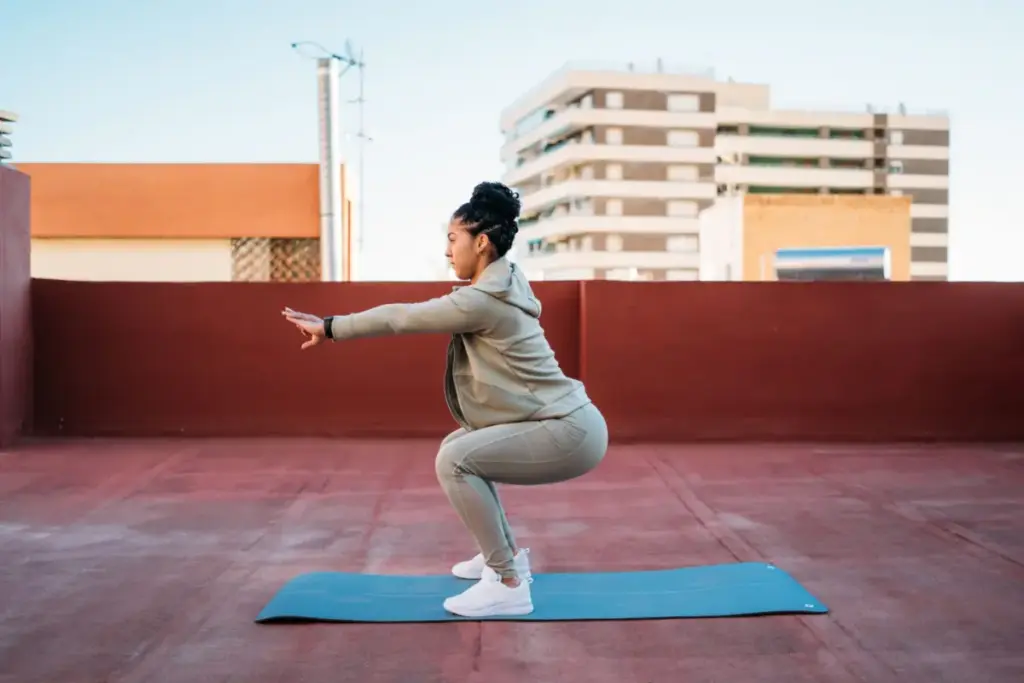
Lower-body mechanics operate on a similarly distinct scale. Movements like air squats and lunges engage some of the largest muscle groups in the human body, including the gluteus maximus, quadriceps, and hamstrings. Because these muscle groups are exceptionally powerful and accustomed to carrying body weight throughout daily life, unweighted lower-body movements often fail to provide enough stimulus to trigger significant hypertrophy (muscle growth) for individuals who are already physically active.
The Hypertrophy Threshold: Reaching "Failure"
The primary driver of muscle growth is not necessarily the presence of external metal plates, but rather the generation of mechanical tension. According to Dr. Stuart Phillips, a prominent kinesiology professor at McMaster University in Ontario, triggering hypertrophy requires bringing the target muscles close to the point of "failure"—the physiological state where completing another concentric repetition with proper form becomes impossible.
Dr. Phillips’s research indicates that whether an individual is lifting heavy weights, light weights, or relying entirely on body weight, the biological signaling pathways for muscle growth activate effectively if the working muscles experience high levels of tension and approach that proximity-to-failure threshold.
For the average person, this sensation of muscular failure feels akin to wading through thick mud. The final repetitions of a set should feel exceptionally difficult, slow, and nearly impossible to complete. While elite gymnasts achieve this state through brutal, high-level bodyweight maneuvers like iron crosses and handstand push-ups, everyday practitioners must navigate a narrower window of difficulty to achieve similar adaptations.
Supporting Context & Metrics: Who Benefits Most from Bodyweight Training?
While experienced lifters may find unweighted calisthenics insufficient for continuous muscular overload, bodyweight training remains an extraordinarily powerful tool for specific populations and training phases.
1. Beginners and Returning Athletes
The individuals who stand to gain the most from bodyweight exercises are those who are relatively inactive or returning to exercise after an extended hiatus or injury. Research consistently shows that untrained individuals experience rapid, substantial improvements in strength and muscle mass when introduced to even low-intensity resistance training.
For beginners, bodyweight squats, wall push-ups, and glute bridges do more than just challenge the muscles; they build critical neuromuscular pathways. Kristie Larson, CSCS, founder of Tension, a strength training studio for women in Brooklyn, emphasizes the neurological benefits: "You can teach your brain to recruit the muscle fibers that you maybe aren’t utilizing." This enhanced brain-body connection lays a solid foundation for future athletic endeavors.
2. Rehabilitation and Post-Injury Recovery
Following orthopedic surgery or soft-tissue injuries, heavy external loads are frequently contraindicated. Bodyweight exercises allow physical therapists and patients to titrate resistance carefully, ensuring joints are protected while surrounding musculature is gently reactivated and strengthened.
3. The Metrics of Progression
To evaluate whether a bodyweight routine is working, practitioners must track movement quality, perceived exertion, and repetition volume. Fitness experts note a critical threshold: once an individual can comfortably perform 30 or more repetitions of a bodyweight exercise without experiencing muscular fatigue, the physiological stimulus shifts.
"At that point, that’s not really resistance training—it’s much closer to endurance training," notes Dr. Phillips. While muscular endurance is a valuable fitness component, it does not stimulate the same structural adaptations as hypertrophy-focused training.
Official Statements & Expert Perspectives
Industry leaders and academic researchers offer critical insights into how bodyweight training fits into a balanced, long-term fitness regimen.
-
On Accessibility and Versatility:
"Bodyweight is a great, free option that can be done anywhere," explains Kristie Larson, CSCS. "It doesn’t matter if it’s storming outside or you’re traveling, you can crank out a few push-ups or lunges without any equipment (or even much space)." This accessibility democratizes fitness, removing financial and logistical barriers that often deter individuals from starting a health routine. -
On Lower-Body Limitations:
Meredith Witte, MS, CSCS, founder of the functional strength training platform The Playground, highlights the physiological reality of training large muscle groups with body weight alone: "For the average person, bodyweight squats are not going to be enough. Our legs are very strong, and so they’re going to feel challenged by body weight, but it’s still really not going to be enough to sufficiently build muscle, unless you truly have not worked out before, or you are an older adult who has not been working out." -
On Progression Without Equipment:
Progressive overload is the cornerstone of strength development. Traditionally, this is achieved by adding heavy free weights. However, Witte and other experts emphasize that progressive overload can be achieved creatively through bodyweight training. Adjusting leverage (e.g., transitioning from a standard squat to a single-leg pistol squat), altering tempo (slowing down the eccentric phase of a movement), or refining form to eliminate momentum can dramatically increase muscular stress.
Future Outlook: Finding the Balance Between Bodyweight and Iron
As the fitness industry continues to evolve past rigid dogmas—such as the belief that you must lift heavy iron to be fit, or conversely, that functional calisthenics is inherently superior—the future points toward a hybrid, individualized approach.
The Ceiling of Bodyweight Training
For individuals whose primary objective is lifelong longevity, metabolic health, functional mobility, and muscle maintenance, bodyweight training can be an effective lifelong strategy. As Larson observes, "If someone wants to just maintain muscle, then bodyweight could be appropriate indefinitely." Practitioners may not break records in powerlifting federations, but they will maintain the bone density, joint stability, balance, and functional capacity necessary for a vibrant, independent life.
However, for those seeking continuous physical transformation, muscular hypertrophy, and maximized raw strength, hitting a ceiling with bodyweight training is inevitable. Without the capacity to systematically increase external loads via dumbbells, barbells, or resistance bands, the human body adapts to the familiar stress, halting further growth.
Conclusion: The Ultimate Verdict
Bodyweight training is neither a magic bullet that replaces all gym equipment nor an inferior form of exercise fit only for warm-ups. It is a foundational, highly versatile modality with distinct biological rules. By understanding load mechanics, respecting the threshold of muscular failure, and creatively applying principles of progressive overload, anyone can harness the power of their own body to build strength, improve mobility, and lay the groundwork for a healthier, more resilient life—whether they choose to pick up a dumbbell or not.