

Executive Overview
Modern life is defined by convenience, but this convenience carries a profound physiological cost. Whether slumped over an ergonomic office desk, staring into a glowing monitor at home, or gripping a steering wheel during a grueling morning commute, the human body is spending more time in seated postures than at any other point in history. While uninterrupted sitting is frequently unavoidable in contemporary professional and personal environments, prolonged immobility triggers a cascade of negative physical consequences.
Chief among these is muscle and joint deconditioning, which directly impairs posture, diminishes core stability, and erodes the body’s capacity to perform foundational everyday movements. Over time, physical inactivity deactivates critical muscle groups, tightens hip flexors, and switches off the posterior chain—the complex network of muscles running down the back of the body that acts as our natural scaffolding.
To combat this widespread phenomenon—often colloquially termed "sitting sickness"—certified personal trainer Maxwell Thompson of David Lloyd Clubs has engineered a targeted, highly efficient workout routine. Designed specifically for beginner to intermediate trainees, this comprehensive regimen aims to resuscitate dormant hip flexors, re-engage the posterior chain, and recruit all major muscle groups using minimal equipment: bodyweight and versatile kettlebells.
Whether you are returning to the gym after an extended hiatus caused by a busy professional schedule, a bout of illness, or a well-deserved vacation, this structured routine offers a low-risk, high-reward pathway to re-establishing robust training habits, building functional strength, and reclaiming cardiovascular vitality.

Detailed Chronology: Understanding the Mechanics of Prolonged Sitting
To appreciate why targeted interventions like Thompson’s routine are necessary, one must examine the physiological toll that continuous sitting extracts from the human frame over the course of a day, a week, and a lifetime.
Phase 1: The Immediate Deactivation (Hours 1–2)
Within minutes of assuming a seated position, electrical activity in the leg muscles—particularly the primary postural stabilizers—plummets. Calorie-burning enzymes drop by as much as 90 percent. Blood circulation slows down, which can lead to pooling in the lower extremities, increasing stiffness and reducing the delivery of oxygenated blood to vital tissues. Meanwhile, the hip flexors (muscles responsible for lifting the knees toward the torso) remain in a chronically shortened, contracted state.
Phase 2: Structural Asymmetry and Postural Drift (Hours 3–6)
As fatigue sets in during a long sedentary stretch, the natural tendency is to slouch. The thoracic spine curves forward, the shoulders round inward, and the head juts forward to compensate. This protracted posture places an unnatural, compounding shear stress on the cervical and lumbar vertebrae. Simultaneously, the gluteal muscles—the body’s most powerful hip extensors—effectively fall asleep, a phenomenon known clinically as "gluteal amnesia." Because the glutes fail to fire properly, surrounding synergist muscles, such as the lower back extensors and hamstrings, must pick up the slack, leading to chronic overuse and discomfort.
Phase 3: Long-Term Muscular Atrophy and Kinetic Chain Dysfunction (Weeks to Years)
Over prolonged periods, the structural imbalances baked in by daily sitting manifest as functional deficits. The hip flexors become permanently tight, pulling on the pelvis and inducing an anterior pelvic tilt, which accentuates lower back arching and exacerbates spinal strain. The posterior chain weakens significantly, reducing explosive power, destabilizing the core, and degrading balance. Everyday activities—such as lifting a heavy box, climbing stairs, or even standing up from a deep chair—transition from effortless tasks to mechanical challenges fraught with injury risk.
[Prolonged Seating]
       │
       ▼
[Hip Flexor Shortening & Gluteal Amnesia]
       │
       ▼
[Posterior Chain Deactivation & Postural Drift]
       │
       ▼
[Functional Deficits & Increased Injury Risk]
Supporting Context & Metrics: The Science of the Hip-Hinge and Functional Recovery
Reversing the damage inflicted by the modern sedentary lifestyle requires more than random stretching or casual walking. While general movement throughout the day helps offset minor consequences, it is rarely enough to correct ingrained structural weaknesses. Targeted resistance training is required to remodel deconditioned tissues, restore neural pathways, and rebuild structural integrity.
At the heart of Thompson’s routine is mastery of the hip-hinge movement pattern. Foundational to exercises like the Romanian deadlift and the kettlebell swing, the hip-hinge involves flexing forward at the hip joints while maintaining a neutral, flat spine, and subsequently driving the hips forward to return to an upright standing position.
Why the Hip-Hinge Matters
- Glute and Hamstring Recruitment: The hip-hinge forces the glutes and hamstrings to bear the load, directly counteracting the deactivation caused by sitting.
- Spinal Protection: By learning to bend from the hips rather than rounding the lumbar spine, trainees protect their lower backs from excessive shear forces.
- Athletic Transferability: The mechanics of the hip-hinge underpin almost all athletic activities involving running, jumping, and lifting.
According to exercise science literature, incorporating compound movements that demand integrated multi-joint coordination yields superior neuromuscular adaptations compared to isolated machine-based exercises. By engaging the core, upper body, and lower body simultaneously, trainees maximize caloric expenditure, stimulate bone mineral density, and accelerate functional rehabilitation.
Official Guidelines & Workout Architecture
Maxwell Thompson’s routine is meticulously structured to balance accessibility with progressive challenge. Designed primarily for beginner to intermediate trainees, the workout emphasizes form over load.
General Protocols and Safety Guidelines
- Set Structure: Perform the first five exercises as straight sets. Complete all three sets of a single movement, resting for precisely 60 seconds between sets, before progressing to the next exercise.
- Kettlebell Selection: Choose a load that allows you to maintain pristine technique across every single repetition. If your form breaks down due to fatigue, immediately reduce the weight or utilize the prescribed movement modification.
- Pacing for Beginners: Those new to resistance training should prioritize learning movement patterns with light loads—or bodyweight variations—before introducing external resistance.
The 5-Step Core Routine
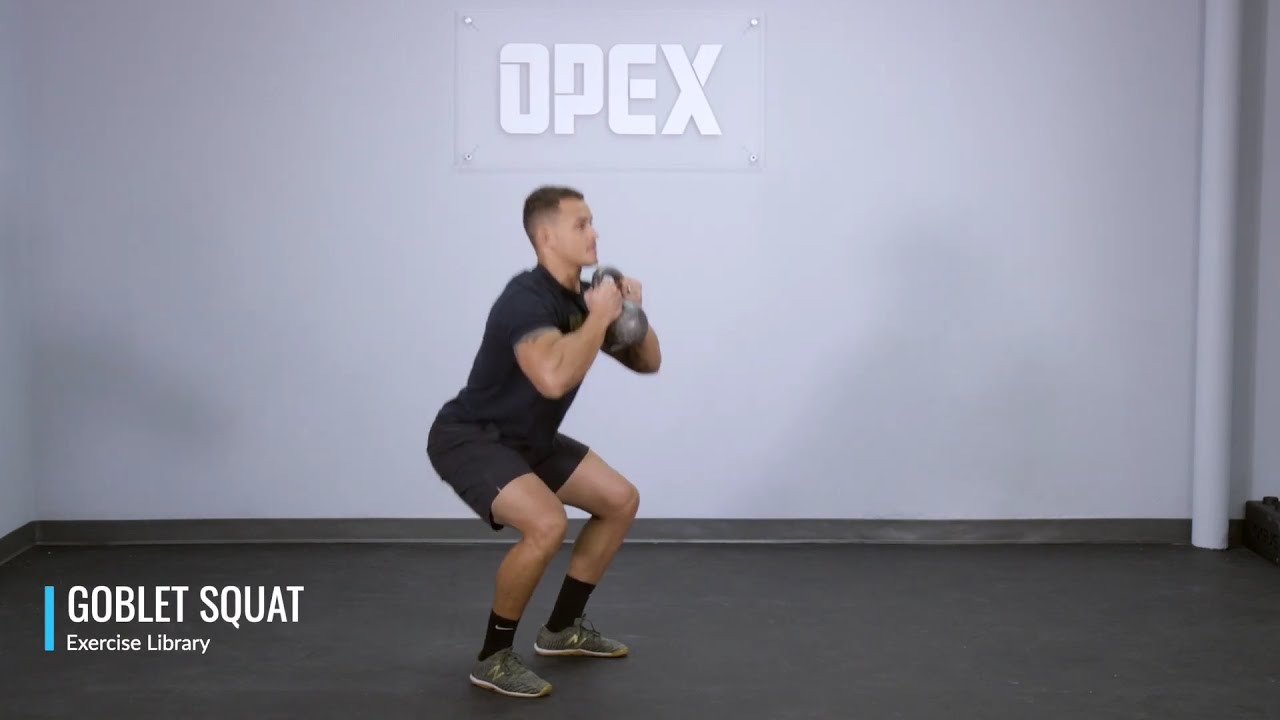
1. Goblet Squat
- Prescription: 3 sets | 12 repetitions | 60 seconds rest
- Execution: Hold a single kettlebell vertically against your chest like a goblet, keeping your elbows tucked down. Keeping your chest proud and core braced, push your hips back and bend your knees to lower into a deep squat, ensuring your knees track in line with your toes. Drive back up through your heels to the starting position.
- Regression (Make it easier): Perform the movement using bodyweight only (air squat) without the kettlebell.
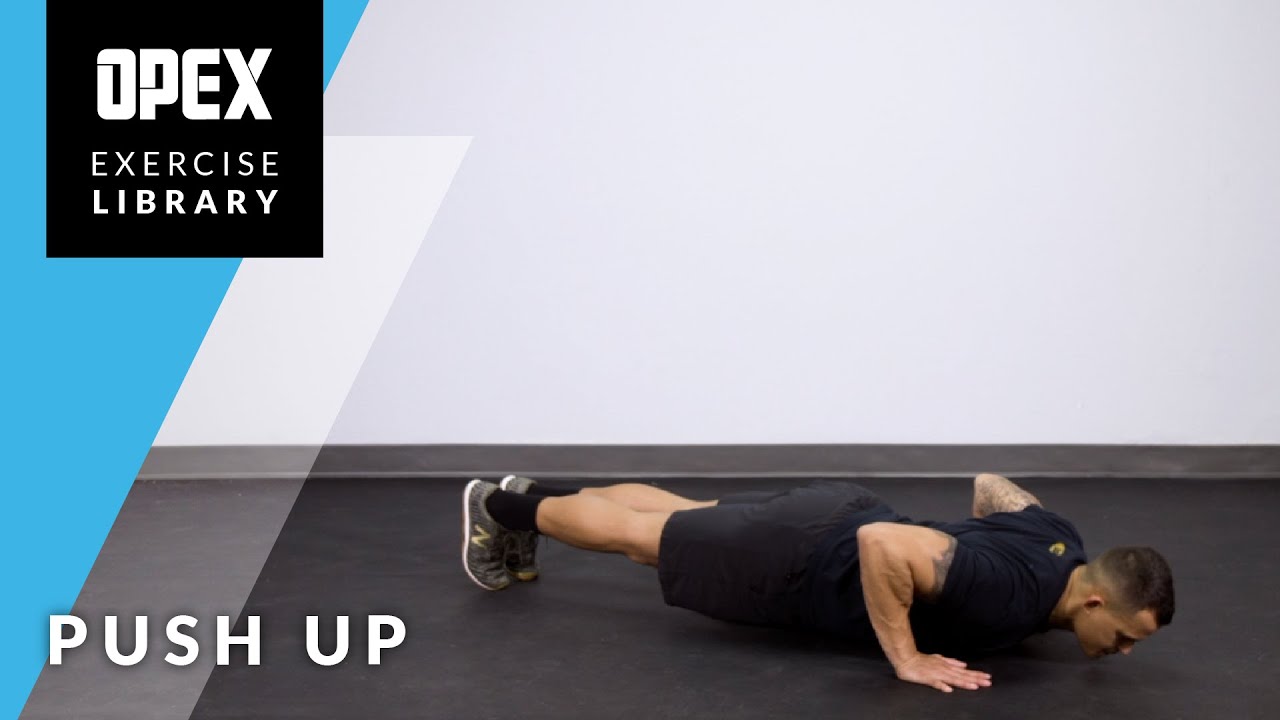
2. Push-Up
- Prescription: 3 sets | 10–12 repetitions | 60 seconds rest
- Execution: Assume a plank position with hands slightly wider than shoulder-width apart. Lower your chest to the floor by bending your elbows at a 45-degree angle relative to your torso. Press powerfully back up to full arm extension while maintaining a rigid, straight line from your head to your heels.
- Regression (Make it easier): Perform the push-up with your hands elevated on a sturdy bench or securely against a wall to reduce the relative load.
3. Kettlebell Romanian Deadlift (RDL)
- Prescription: 3 sets | 10–12 repetitions | 60 seconds rest
- Execution: Stand tall holding a kettlebell in front of your thighs. Keeping a slight bend in your knees and a neutral spine, hinge at your hips, pushing your buttocks backward as the weight tracks down your shins. Lower until you feel a deep stretch in your hamstrings, then drive your hips forward to return to standing.
- Regression (Make it easier): Reduce the weight or swap the kettlebell for a bodyweight "good morning" movement pattern.
4. Dual Kettlebell Bent-Over Row
- Prescription: 3 sets | 10 repetitions | 60 seconds rest
- Execution: Hinge forward at the hips into a stable, unsupported bent-over position with a flat back. Hold a kettlebell in each hand, arms hanging straight down. Drive your elbows up toward the ceiling, squeezing your shoulder blades together at the top of the movement before lowering with control.
- Regression (Make it easier): Perform a single-arm kettlebell row, placing your non-working hand and knee on a bench for structural support.
5. Plank
- Prescription: 3 sets | 30–45 seconds hold | 60 seconds rest
- Execution: Support your body weight on your forearms and toes, forming a straight line from your shoulders to your ankles. Engage your core, glutes, and quadriceps intensely to prevent your hips from sagging or rising.
- Regression (Make it easier): Perform the plank on an elevated surface such as a couch, bench, or drop down to your knees.
Optional Conditioning Finisher (Gym/Rower Access)
For those training in a fully equipped facility with a rowing machine, Thompson recommends an optional cardiovascular finisher designed to elevate heart rate while reinforcing structural resilience under light fatigue.
- Protocol: 3 rounds total
- Work: 500-meter row immediately followed by 10 kettlebell swings.
- Rest: 60 seconds rest between rounds.
- Kettlebell Swing Mechanics: Keep your arms long and relaxed; the explosive power must originate entirely from a violent, rapid drive of the hips.
- Regression (Make it easier): Shorten the rowing distance (e.g., to 250m) or insert an additional 30-second rest window between the rowing segment and the kettlebell swings.
Future Outlook: Building Long-Term Resilience
As remote work models and desk-bound occupations remain structural pillars of modern economies, the challenge of mitigating sedentary lifestyles is unlikely to disappear. However, proactive approaches to physical health—exemplified by Thompson’s targeted routine—demonstrate that the physical tolls of prolonged sitting are not permanent.
By systematically addressing muscular imbalances, fortifying the posterior chain, and re-establishing neuromuscular control through multi-joint movements, individuals can insulate themselves against chronic discomfort and postural degradation.
Integrating a structured, 20-to-30-minute routine two to three times a week serves as vital "physical insurance." As trainees transition from beginner phases to intermediate mastery, progressively loading these foundational movement patterns will unlock greater levels of strength, enhance metabolic health, and ensure that the modern lifestyle does not compromise long-term physical freedom.