Executive Overview
The intersection of digital media and American policymaking reached a critical milestone with the official launch of the Senate Creators Caucus. Spearheaded by a bipartisan coalition featuring Senator Cory Booker (D-NJ) and Senator John Kennedy (R-LA), this newly established legislative body aims to fundamentally reshape how the United States government perceives, regulates, and integrates the multi-billion-dollar creator economy.
For years, digital content creators have functioned as independent small business owners, massive cultural drivers, and vital employment engines largely outside the traditional legislative framework. However, as the political influence of online personalities has surged—crystalized during the political campaigns of recent election cycles—lawmakers have increasingly recognized a profound knowledge gap. Many elected officials remain unfamiliar with the mechanics of the social media ecosystem, monetization models, intellectual property rights, and the unique mental health pressures faced by digital entrepreneurs.
The Senate Creators Caucus seeks to bridge this divide. Building upon the groundwork laid by the Congressional Creators Caucus established in the House of Representatives, this new Senate initiative formalizes a direct channel of communication between digital media luminaries and federal policymakers. By positioning creators not merely as online entertainers, but as foundational pillars of the modern digital workforce, the Caucus intends to champion legislative solutions that protect, support, and modernize American small businesses operating in the digital sphere.
Detailed Chronology: From Grassroots Advocacy to the Senate Floor
The path toward institutionalizing digital creators within the halls of the United States Congress has been rapid, deliberate, and marked by a series of escalating political engagements.
The Turning Point: The 2024 "Influencer Election"
The foundational catalyst for formal creator-lawmaker collaboration crystallized during the 2024 election cycle. Often dubbed the "Influencer Election," this period demonstrated the undeniable sway that digital content creators hold over public discourse and voter turnout, particularly among younger demographics. Creators stepped out of their traditional studio setups and into political conventions, policy briefings, and campaign trails.
Yet, this collision of worlds exposed deep structural misunderstandings. Lawmakers frequently demonstrated a superficial—and occasionally adversarial—comprehension of platform operations, data privacy, and online entrepreneurship. It became glaringly obvious that if policymakers intended to draft regulations impacting the internet, they needed to consult the individuals who built and sustained it.
Establishment of the House Congressional Creators Caucus
Recognizing the urgent need for direct representation, digital industry leaders—including prominent educator and strategist MatPat—spearheaded the launch of the Congressional Creators Caucus in the House of Representatives. This initiative granted content creators a formalized platform to speak directly to congressional representatives, demystifying the creator economy and advocating for sensible, industry-literate policy frameworks.
The House caucus quickly bore fruit. Throughout late 2025 and early 2026, policymakers began taking unprecedented steps to integrate creator concerns into legislative agendas. Representative Ro Khanna (D-CA) introduced a landmark Creator Bill of Rights designed to protect digital workers from exploitative contracts and platform overreach. Meanwhile, other lawmakers experimented with novel outreach methods, such as Representative George Whitesides (D-CA) launching a congressional take on the popular interview show format Hot Ones, and various politicians adopting creator-centric discourse and linguistic styles to authentically engage digital-native constituents.
Hill Summits and the Push for Senate Engagement
Recognizing that the House caucus was only the first step, key senators began laying the groundwork for a broader legislative apparatus. Senator Cory Booker, alongside Senator Tina Smith (D-MN), championed proactive engagement by hosting high-profile summits on Capitol Hill that brought together digital creators, independent journalists, and new media voices.
These summits laid bare the necessity of a dedicated Senate vehicle. While the House provided a grassroots legislative foothold, the Senate—with its role in confirming federal agency heads, ratifying trade deals, and shaping sweeping federal regulations—was viewed as the ultimate frontier for long-term creator advocacy.
The Official Launch at the Dirksen Senate Office Building
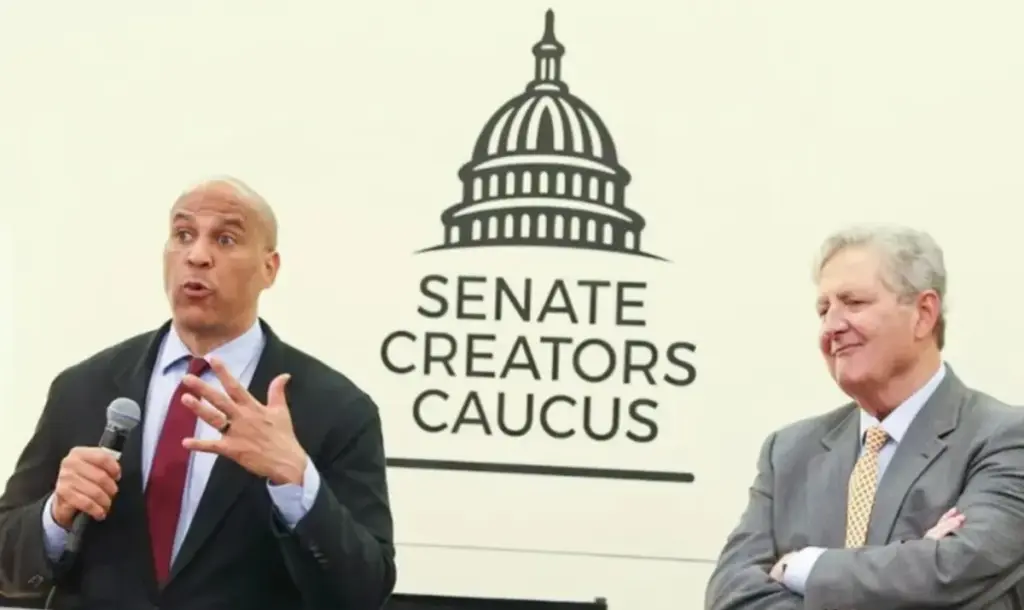
The culmination of these efforts materialized with the official kickoff event for the Senate Creators Caucus at the Dirksen Senate Office Building in Washington, D.C. Co-chaired by Sens. Booker and Kennedy, the inaugural panel brought together a remarkably diverse cross-section of the digital creator economy.
Among the attendees and speakers were industry veterans and cultural touchstones, including beauty and lifestyle icon Jackie Aina, digital theorist and creator advocate MatPat, wildlife conservationists Mark Vins (Brave Wilderness), media entrepreneur Shira Lazar (What’s Trending), and licensed therapist and mental health educator Kati Morton. The panel also featured family-oriented media pioneers like Dr. Javoris Hollingsworth of Gracie’s Corner, podcasting executives such as Ian Schwartzman of the Joe Budden Network, and traditional small business owners who leveraged digital platforms to scale operations, including Avery Smith of the Louisiana Crawfish Company.
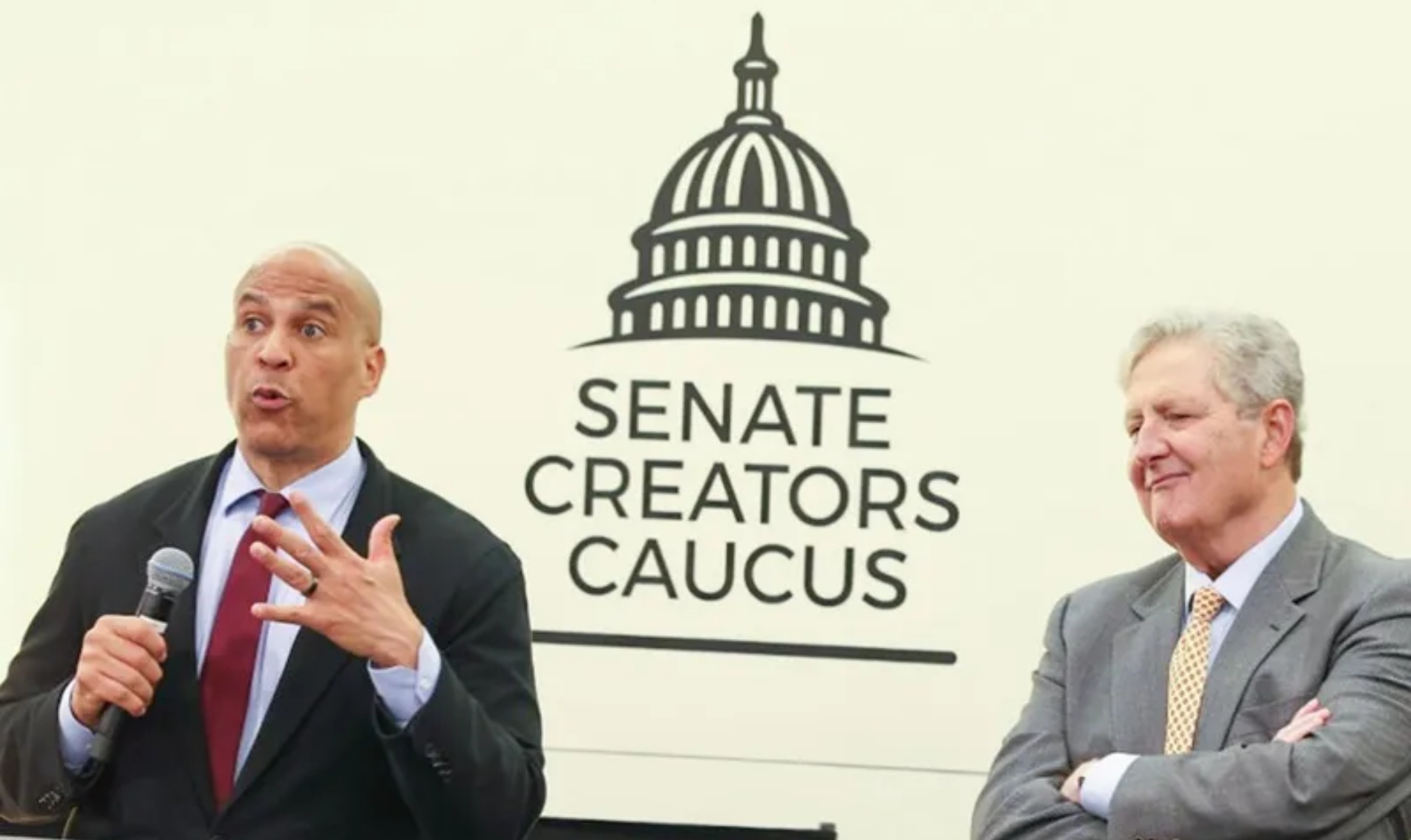
During the historic session, these creators testified directly to Senators Booker and Kennedy, detailing the day-to-day administrative, financial, and legal hurdles of running digital enterprises, and advocating for sensible regulatory guardrails ahead of the 2026 midterm elections.
Supporting Context & Metrics: The Economic and Political Power of Creators
To understand why the U.S. Senate has formalized a Creators Caucus, one must examine the staggering macroeconomic footprint of the creator economy. What began two decades ago as a hobbyist landscape of bedroom-recorded videos has matured into a multi-billion-dollar global economic sector.
The Creator Economy as a Small Business Engine
The Senate Creators Caucus explicitly seeks to recognize creators as small business owners, job engines, and culture drivers. Modern content creation enterprises frequently employ small-to-medium teams consisting of video editors, thumbnail designers, project managers, legal counsel, accountants, and marketing specialists.
- Job Creation: Major digital channels operate as fully incorporated production studios, contributing significantly to local economies through office leases, equipment purchases, and freelance contracting.
- Geographic Diversity: Unlike traditional tech startups concentrated in Silicon Valley or New York City, digital creators operate out of every U.S. state and territory—from rural Louisiana (as exemplified by the Louisiana Crawfish Company) to suburban New Jersey. This decentralized footprint makes the creator economy a uniquely powerful driver of local economic development.
Evolving Legislative and Regulatory Landscapes
As the economic footprint of creators has expanded, so too has federal scrutiny. While the initial legislative push focused on empowerment and rights, recent policy developments have highlighted the legal gray areas inherent in digital influence.
- The Creator Bill of Rights: Proposed by Rep. Ro Khanna, this legislative framework addresses persistent industry challenges, including algorithmic transparency, intellectual property protection, non-payment disputes with brands, and mental health resources for minor creators.
- Campaign Finance and Political Endorsements: The intersection of creators and politics has introduced complex regulatory questions. Senator Adam Schiff (D-CA) has increasingly focused on closing campaign finance loopholes that leave creator endorsements in an underregulated regulatory gray area. As political campaigns increasingly deploy influencer marketing budgets to sway voters, clarifying disclosure requirements and campaign contribution limits has become paramount.
- Mental Health and Well-being: The relentless demands of content creation—driven by algorithm-enforced posting schedules and public scrutiny—have triggered a mental health crisis among digital workers. Lawmakers and creators alike are exploring federal frameworks to support sustainable work practices, particularly for younger creators entering the industry.
Official Statements and Perspectives
The launch of the Senate Creators Caucus generated significant commentary from both legislative leaders and pioneering creators who participated in the historic Capitol Hill proceedings.
Congressional Leadership
While details of the bipartisan partnership underscore a shared recognition of the industry’s economic heft, the involvement of figures like Senators Booker and Kennedy highlights a rare instance of cross-aisle alignment on technology policy.
"Recognizing creators as small business owners, job engines, and culture drivers is essential to the future of our economy. These entrepreneurs are building sustainable businesses, creating jobs in their communities, and shaping the modern cultural landscape. The Senate Creators Caucus will ensure they have a seat at the table when federal policies are being debated."
— U.S. Senate Press Briefing on the Caucus Launch
Creator Perspectives
Participants in the Dirksen Senate Office Building panel emphasized the practical necessity of the Caucus, shifting the conversation away from internet fame and toward institutional legitimacy.
- MatPat, digital media strategist and co-founder of the congressional advocacy movement, stressed that policymakers must understand the operational realities of independent digital businesses: "When we talk to Congress, we aren’t just talking about views and likes—we are talking about payroll, intellectual property rights, and the livelihood of thousands of independent small business owners across the country."
- Jackie Aina, entrepreneur and beauty industry creator, highlighted the unique challenges faced by independent creators navigating corporate partnerships and financial institutions that often fail to understand modern digital business models.
- Dr. Javoris Hollingsworth (Gracie’s Corner) underscored the educational and cultural value of independent family programming, illustrating how digital platforms enable creators to bypass traditional media gatekeepers to serve diverse audiences nationwide.
Future Outlook: The Road Ahead for the Senate Creators Caucus
As the Senate Creators Caucus solidifies its operational structure, its immediate focus turns toward the upcoming 2026 midterm elections and the legislative agenda that will follow.
Influencing the Midterms and Beyond
With the 2026 midterms looming, the political influence of digital creators is projected to reach unprecedented heights. Political campaigns on both sides of the aisle are rewriting their playbooks to prioritize digital-first outreach, making the insights and networks of Caucus participants invaluable. The Caucus aims to serve as an educational touchstone for candidates and incumbents alike, promoting media literacy within government and discouraging reactionary or punitive policymaking against internet platforms.
Upcoming Legislative Priorities
Looking further ahead, the Senate Creators Caucus is expected to champion several key policy initiatives:
- Standardized Contracting and Labor Protections: Pushing for federal guidelines that protect independent creators from predatory brand deals and ensure timely compensation.
- Intellectual Property Modernization: Updating copyright and fair use frameworks to protect digital creators from unauthorized scraping, AI cloning, and copyright abuse on emerging platforms.
- Access to Capital and Financial Services: Working with traditional banking and financial institutions to ensure that digital creators—whose income streams differ markedly from traditional W-2 employment—have fair access to small business loans, mortgages, and commercial credit.
By institutionalizing dialogue between Washington and the digital vanguard, the Senate Creators Caucus marks a maturation of the internet era. Creators are no longer outsiders looking in at the legislative process; they are recognized architects of the American economy, actively helping to write the rules of the digital future.