Executive Overview
As the frantic pace of modern life accelerates, the psychological toll of urban existence—marked by relentless traffic noise, crowded transit systems, and perpetual digital connectivity—has sparked a quiet revolution in global travel. For travellers weary of the sensory overload associated with traditional European and Mediterranean hotspots, the post-summer shoulder season offers an alluring window of escape. With schools back in session and seasonal crowds dissipating, the quest for genuine solitude has taken centre stage.
Yet, escaping the clamour requires more than simply choosing an off-season destination; it demands strategic navigation away from over-touristed traps toward landscapes defined by vast expanses, stringent conservation policies, and intentional quiet. Enter the concept of the global "Quiet Index." According to comprehensive new data compiled by travel specialists Go2Africa, the world can be mapped not merely by GDP or geopolitical boundaries, but by its decibels, breathing room, and density of protected wilderness.
At the summit of this global tranquility index sits Bhutan—a Himalayan kingdom that famously shielded itself from mass international tourism until the 1970s. Scoring an impressive 89.44 out of 100 on the "Quiet Score," Bhutan represents the gold standard of low-impact, high-value experiential travel. Following closely behind is Namibia, a southern African titan of arid expanse and profound emptiness, which secured second place with a score of 86.69.
This deep-dive report explores the methodology behind the world’s quietest destinations, examines the economic and ecological frameworks that protect these sanctuaries, details the logistical realities of visiting the top-ranked nations, and forecasts how the travel industry must adapt as the demand for silence transforms from a luxury niche into a vital wellness necessity.
Detailed Chronology: The Evolution of Bhutanese Isolation and Tourism Reform
To understand why Bhutan reigns supreme as the quietest country on earth, one must examine its deliberate, meticulously managed historical trajectory—one that prioritizes Gross National Happiness over unchecked gross domestic product.
The Era of Complete Seclusion (Pre-1970s)
For centuries, the Kingdom of Bhutan remained virtually closed to the outside world. Tucked away in the eastern Himalayas, bordered by the Tibetan Autonomous Region to the north and India to the south, the kingdom functioned as a self-sustaining agrarian society. Geographic isolation, characterized by rugged mountain ranges and deep, impenetrable river valleys, naturally protected the nation from the colonial expansions and rapid industrialization that reshaped much of the rest of Asia. Foreigners were rarely permitted entry, and the rhythms of daily life were dictated entirely by seasonal agricultural cycles and Vajrayana Buddhism.
Controlled Opening and the Birth of Regulated Tourism (1974–2019)
Bhutan officially opened its borders to international leisure travellers in 1974, coinciding with the coronation of Jigme Singye Wangchuck, the fourth Druk Gyalpo (Dragon King). However, unlike neighbouring Himalayan regions that embraced backpacker trails and mass hotel construction, Bhutan’s leadership instituted a radical guiding philosophy: "High Value, Low Impact" tourism.
Instead of encouraging volume, the government mandated that all tourists must travel through licensed local tour operators on pre-planned, guided itineraries. This ensured that visitors would not overwhelm fragile mountain ecosystems or disrupt local cultural traditions. For decades, this policy was reinforced by a mandatory minimum daily tariff, which included a government royalty used to fund free healthcare and education for Bhutanese citizens.
The Pandemic Pause and the Sustainable Development Fee (2020–Present)
The global COVID-19 pandemic provided Bhutan with a rare opportunity to recalibrate its tourism strategy. Recognizing that mass tourism could easily erode the very tranquility and ecological integrity that made the country unique, the royal government enacted sweeping structural reforms upon reopening its borders.
In September 2022, Bhutan officially replaced its legacy tourist tariff with the modernized Sustainable Development Fee (SDF). Set at approximately £70 ($100 USD) per adult per night, this levy was designed not as a revenue grab, but as a robust economic filter and conservation engine. The SDF directly finances carbon-reduction projects, free education, free healthcare, infrastructure upgrades for local communities, and comprehensive preservation of cultural heritage sites.
Concurrently, the government launched comprehensive training programs for guides and hospitality workers, ensuring that every visitor who enters the kingdom contributes meaningfully to the preservation of its legendary quiet.
Supporting Context & Metrics: Decoding the "Quiet Score"
The metrics behind Go2Africa’s global quiet rankings move far beyond subjective traveller reviews or anecdotal impressions. Constructing an authoritative index required a multi-variable analytical framework designed to measure the physical, demographic, and sensory spaciousness of sovereign nations.
Methodology and Indicator Breakdown
The research team evaluated a comprehensive suite of indicators to establish the definitive Quiet Score for countries worldwide:
- Population Density: Measuring the average number of people per square kilometre to isolate wide-open spaces from cramped urbanized territories.
- Tourism Concentration: Assessing international arrival volumes relative to local infrastructure capacity to identify tourist bottlenecks.
- Protected Land and Wilderness Ratios: Calculating the total percentage of national territory designated as national parks, nature reserves, and strictly conserved forested areas.
- Rural Land Density: Examining the square mileage of untamed terrain, including mountains, forests, savannahs, and highlands.
- Traffic and Infrastructure Congestion: Factoring in road density, railway congestion, and acoustic pollution indices.
The Top 10 Quietest Countries on Earth
When all indicators were synthesized, the global standings revealed a fascinating geographical distribution, heavily favouring nations with vast protected wilderness areas and intentional conservation policies:
- Bhutan – Quiet Score: 89.44 (South Asia)
- Namibia – Quiet Score: 86.69 (Southern Africa)
- Botswana – Quiet Score: 83.12 (Southern Africa)
- Zambia – Quiet Score: 80.45 (Southern/Central Africa)
- Gabon – Quiet Score: 78.90 (Central Africa)
- Venezuela – Quiet Score: 76.50 (South America)
- Chad – Quiet Score: 74.80 (Central Africa)
- Central African Republic – Quiet Score: 73.25 (Central Africa)
- Mongolia – Quiet Score: 71.10 (East/Central Asia)
- Bolivia – Quiet Score: 69.95 (South America)
The Contrast: The Noisiest Nation
At the opposite end of the analytical spectrum stands Singapore, crowned as the world’s noisiest country with a startlingly low Quiet Score of just 6.78. Driven by ultra-high population density, intense urban flight paths, a bustling multi-modal public transit network, and continuous commercial activity across a constrained island footprint, Singapore represents the antithesis of the acoustic sanctuaries identified in the top ten.
Official Statements & Expert Analysis
The shift toward quiet tourism is not merely a passing consumer trend; it is backed by environmental scientists, travel economists, and tourism boards who recognize that acoustic ecology is inextricably linked to planetary health.
The Philosophy of Spatial Conservation
Dr. Tandin Dorji, a leading environmental researcher based in Thimphu, emphasizes that Bhutan’s silence is an active ecological achievement rather than a passive accident of geography:
"People often mistake Bhutan’s quiet for emptiness. In reality, it is a full ecosystem. Every decibel of silence we maintain is backed by constitutional mandates requiring us to keep at least 60 percent of our land under forest cover for all time. When tourists walk our trails or meditate in our valleys, they are stepping into an active covenant between man and nature. The Sustainable Development Fee ensures that our forests remain silent sanctuaries, free from the roar of unregulated mass transport."
Namibia: Scale and Emptiness
Securing second place with a score of 86.69, Namibia exemplifies a different kind of quiet—one born of hyper-arid desert expanses and geological grandeur. Tourism economists at Go2Africa note:
"Namibia is a nation quite literally built on scale and emptiness. From the towering orange dunes of Sossusvlei to the skeletal Atlantic swells of the Skeleton Coast, the country offers a profound sense of isolation that is increasingly difficult to find in our hyper-connected world. It is an antidote to sensory fatigue."
The Economic Realities of Quiet Travel
While paying a daily levy like Bhutan’s SDF or investing in long-haul expeditions to Namibia or Botswana requires a higher upfront financial commitment, travel industry analysts argue that the model represents the future of sustainable tourism. By pricing travel to reflect the true environmental and acoustic cost of hosting visitors, these nations successfully deter over-tourism while attracting conscious travellers willing to respect local ecosystems.
Future Outlook: Navigating the Autumn Escape and Beyond
For travellers looking to trade urban chaos for Himalayan serenity or African solitude in the near term, the upcoming autumn and winter seasons present optimal conditions.
Bhutan in the Autumn Season
Between the months of September and November, Bhutan emerges from its monsoon rains into a stunning window of crisp alpine sunshine. Daytime temperatures across the major valleys routinely hover in the pleasant mid-20s (Celsius), though visitors must account for micro-climatic shifts depending on altitude and valley orientation.
Autumn is widely considered the premier season for high-altitude trekking in the shadow of giants like Jomolhari and Gangkhar Puensum. It is also the season of major spiritual and cultural vibrancy, most notably the Thimphu Tshechu—a multi-day religious festival featuring masked ritual dances, sacred unfurlings of giant religious banners (thangkas), and joyous communal gatherings.
Iconic Landmarks and Practical Preparations
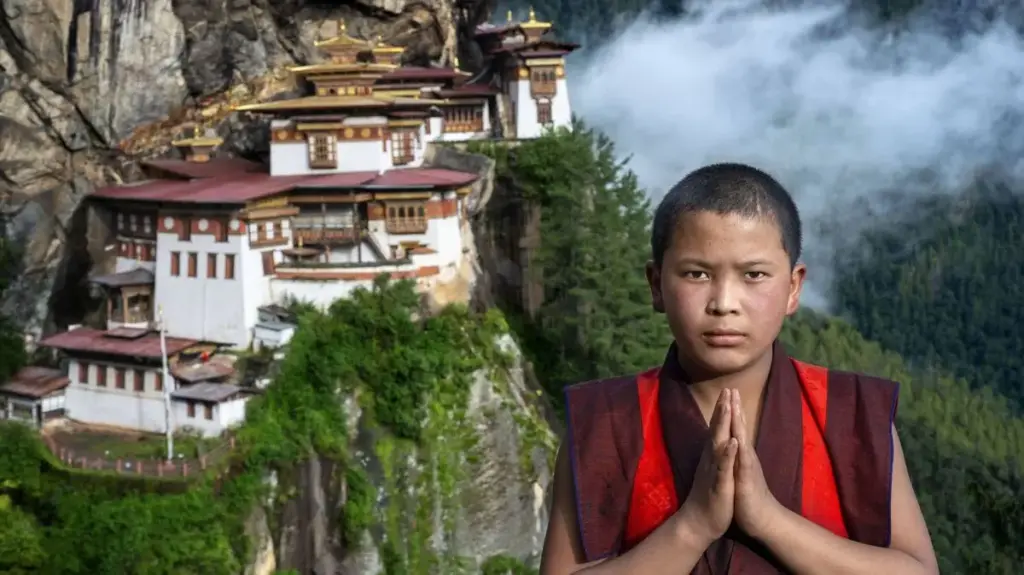
No journey to Bhutan is complete without a pilgrimage to Taktsang Palphug Monastery, universally known as the "Tiger’s Nest." Clinging precariously to a sheer granite cliff-face nearly 3,000 metres above sea level, this 17th-century architectural marvel is steeped in legend, said to be the site where Guru Rinpoche flew on the back of a tigress to subdue local demons.
Reaching the monastery is an exercise in both physical endurance and mental quietude. The demanding ascent requires a two-to-four-hour hike through cool pine forests draped in fluttering prayer flags. Visitors are advised to build in acclimatization days upon arrival in Paro (elevation 2,250 metres) to comfortably manage the steep gradient.
The Road Ahead for Acoustic Tourism
As urban noise pollution continues to be recognized as a public health hazard—linked by the World Health Organization to elevated stress, cardiovascular disease, and sleep disorders—the appeal of destinations like Bhutan, Namibia, and Botswana will only intensify.
The future of luxury travel is no longer defined by golden fixtures or marble lobbies, but by auditory space, dark skies, and uncrowded horizons. By safeguarding their acoustic landscapes through progressive governance, ecological preservation, and mindful tourism policies, these quiet nations offer a priceless commodity: the rare, restorative luxury of hearing oneself think.