Executive Overview
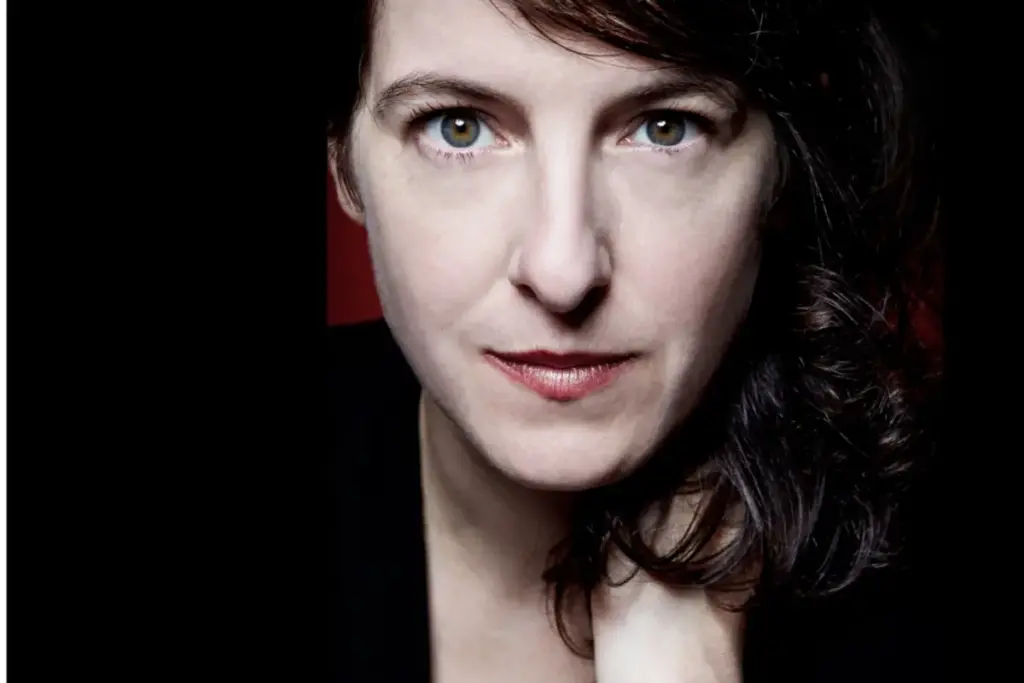
Acclaimed Swiss-French filmmaker Ursula Meier, renowned internationally for her piercing psychological dramas and socially charged narratives, is preparing to take the next major step in her distinguished career. Meier is officially slated to bring her long-gestating project, Quiet Land, to the prestigious Venice Gap-Financing Market, running from September 4 to 6. Described as a haunting detective story-cum-romantic drama set against the breathtaking, unforgiving expanse of the American West, Quiet Land marks Meier’s highly anticipated English-language feature film debut.
The project centers on Connor McCluskey, a respected 70-year-old Montana Highway Patrolman who relies on his trusty analog camera to investigate fatal highway accidents. Following a mandatory medical evaluation that results in his dismissal from the force, McCluskey refuses to drop his final cases. Driven by a deep-seated instinct—and growing concern that a local landowner named Maggy Jones might meet a similar mysterious fate—he continues his pursuit off the books. As the narrative unfolds, audiences will be left questioning whether McCluskey has genuinely uncovered an intricate, inexplicable criminal conspiracy, or if he is slowly and tragically losing his grip on reality.
Backed by a formidable creative team, including longtime collaborators and top-tier European production outfits, Quiet Land is scheduled to commence principal photography in the fall of 2027. Production will span the striking vistas of Alberta, Canada, and Switzerland. As Meier transitions to a broader international canvas, the film promises to blend the atmospheric tension of a procedural mystery with the sweeping emotional resonance of an intimate character study, exploring timeless questions of truth, aging, and human legacy.
Detailed Chronology: The Evolution of Quiet Land
The journey toward Quiet Land has been nearly a decade in the making, reflecting Ursula Meier’s deliberate, meticulous approach to her craft. The conceptual seeds for the film were planted years ago, deeply rooted in the striking imagery of Swiss police photographer Arnold Odermatt. Over a career spanning more than four decades, Odermatt documented vehicular accidents across Switzerland using stark, black-and-white analog photography. His work captured not only the mangled steel of automobiles but also the eerie, profound silence of the alpine landscapes surrounding them.
For years, Meier carried Odermatt’s aesthetic and thematic impact with her. However, the project was temporarily sidelined as Meier turned her attention to other ambitious endeavors, most notably her 2022 feature The Line (La Ligne). That film, a volatile yet deeply sensitive portrait of a woman legally ordered to keep a strict physical distance from her family following an act of domestic violence, competed for the prestigious Golden Bear at the Berlinale and earned widespread critical acclaim.
With The Line successfully launched, Meier revived Quiet Land, shifting her creative focus back to the transcontinental American detective story she had long envisioned. To ensure absolute authenticity in her depiction of highway accident investigation, Meier undertook extensive on-the-ground research. Breaking away from traditional desk-bound screenwriting, she embedded herself with the crash reconstruction unit of a highway patrol department in North Dakota. There, she worked closely with officers, studying skid marks, debris patterns, and the forensic physics of highway collisions—an immersive experience that heavily informed the procedural architecture of her script.
Now, with two A-list actors already privately attached to the project and casting actively underway, Quiet Land is entering its most crucial developmental phase. The presentation at the Venice Gap-Financing Market serves as a vital bridge toward finalizing the film’s international financial package ahead of its scheduled 2027 cameras-rolling date.
Supporting Context & Metrics: Meier’s Filmography and Artistic Influences
To understand the weight and expectation surrounding Quiet Land, one must examine Ursula Meier’s impressive track record within European and international cinema. Meier has consistently chosen challenging, unconventional narratives that probe the fault lines of human relationships and institutional pressures.
A Decorated Filmography
- Home (2008): Meier’s feature directorial debut made waves internationally upon its selection for the Cannes Film Festival’s Critics’ Week. A surreal yet grounded drama about a family living beside an abandoned highway that suddenly reopens to heavy traffic, the film established Meier’s signature style: blending hyper-realistic performances with high-concept, metaphoric settings.
- Sister (L’Enfant d’en Haut) (2012): This gripping drama about a young boy who steals from wealthy patrons at a Swiss ski resort to support his older sister earned widespread acclaim, culminating in the prestigious Silver Bear Jury Grand Prix at the Berlin International Film Festival. The film was also selected as Switzerland’s official submission for the Academy Awards in the Best Foreign Language Film category.
- The Line (La Ligne) (2012/2022 production timeline): Competing once again for the Golden Bear at the Berlinale, this intense family drama cemented Meier’s reputation as a master of tension and emotional nuance.
The Aesthetic and Linguistic Pivot
Quiet Land represents a convergence of several longstanding creative ambitions for Meier. Her desire to direct an English-language film was seeded years ago and nurtured by previous collaborations with prominent English-speaking talent, including X-Files icon Gillian Anderson and Scottish actor Martin Compston, both of whom worked with Meier on Sister.
Furthermore, the extensive North American travel required during the Oscar campaign for Sister fundamentally shifted Meier’s perspective. Exposed to the vast, epic scale of the American landscape, the director felt an irresistible urge to expand her artistic boundaries. According to Meier, the sheer physical scale of the American Rockies and the open roads of the West do not merely serve as a scenic backdrop; they actively invite characters—and filmmakers—to transcend their limitations and dream on a grander scale.
Official Statements & Directorial Vision
In interviews with Variety from her home in Geneva, as well as in official director’s statements provided to the trade publication, Ursula Meier elaborated extensively on the creative impulses driving Quiet Land.
Speaking on the profound influence of Arnold Odermatt’s photography, Meier explained:
"There is a great power in the photographs. And also in the landscape. It’s very calm, surrounded by mountains. The space is very important, too. There is nothing [in the frame]. It opens a lot of place for the imagination to go. It works like a movie. You see the photograph, and you picture what happened before. You imagine the ‘script’ of the crash. This idea crossed my mind and stayed with me."
Meier further detailed how she translated these Swiss-born photographic principles onto American terrain:
"What if his lifelong expertise in using photographic prints to investigate car crashes led him to believe that he’s uncovered a series of murders passed off as run-of-the-mill auto accidents? Car accidents are all the same, be they in the Swiss Alps or the American Rockies. The primary difference lies in the larger-than-life scale of the American landscape, as if urging us to surpass ourselves."
Addressing her shift toward English-language storytelling and her admiration for Anglo-American acting styles, Meier noted:
"My desire to work with actors from an English-speaking background dates back several years, and my collaboration with Gillian Anderson and Martin Compston on Sister only reinforced it. I love what these actors bring to the table, their physical work, their approach to characters stripped of over-psychologizing, and their wholehearted commitment to understanding and doing them justice. And then I had this desire that, one day, I would make a film on American soil, telling an American story."
Finally, Meier emphasized the philosophical and deeply human core beneath the procedural framework of Quiet Land:
"It’s about the question of truth. What is truth? Especially now, I think the question is very important. This man dedicated his life to truth and justice. It’s a human story. It’s an investigation about [what it means to be] human… A police investigation, a love story and above all, a highly personal emotional journey to the self. A meditation on what remains of us when we’re gone. I feel free to go very deep into the love story. Maybe to shoot in this large space will give me more freedom. I don’t know. In my imagination, I don’t censor myself."
Future Outlook: Production Roadmap and Industry Prospects
As the international film community turns its eyes toward the Venice Gap-Financing Market from September 4 to 6, Quiet Land stands out as one of the most intellectually compelling and artistically ambitious packages on the slate.
Key Production Details
- Director: Ursula Meier
- Writers: Ursula Meier and Lionel Baier
- Lead Producer: Lionel Baier (Bande à part Films)
- Co-Producer: Émilie Georges (Paradise City Films)
- Key Crew Reunions: Cinematographer Agnès Godard and editor Nelly Quettier, both frequent collaborators of Meier, are officially attached to the project.
- Casting Status: Active, with two prominent A-list actors already secured.
- Principal Photography: Slated for fall 2027.
- Locations: Alberta, Canada, and Switzerland.
By marrying the atmospheric precision of European arthouse cinema with the expansive, mythic geography of the American West, Quiet Land positions itself as a major crossover event for international cinema. As casting announcements unfold and pre-production milestones are met ahead of the 2027 cameras-rolling date, industry observers will be watching closely to see how Meier successfully translates her acute psychological lens to the vast, open roads of Big Sky country.