Executive Overview
In the hyper-competitive landscape of digital media, the battle for user attention has long been dictated by opaque, black-box recommendation algorithms. For nearly two decades, platforms like YouTube have held absolute dominion over what billions of viewers watch next, relying on automated systems that analyze watch history, click-through rates, and session lengths. However, a seismic shift is underway. Consumers are demanding greater agency over their digital diets, and platforms are being forced to adapt.
Enter YouTube’s latest experiment: "Custom Feeds."
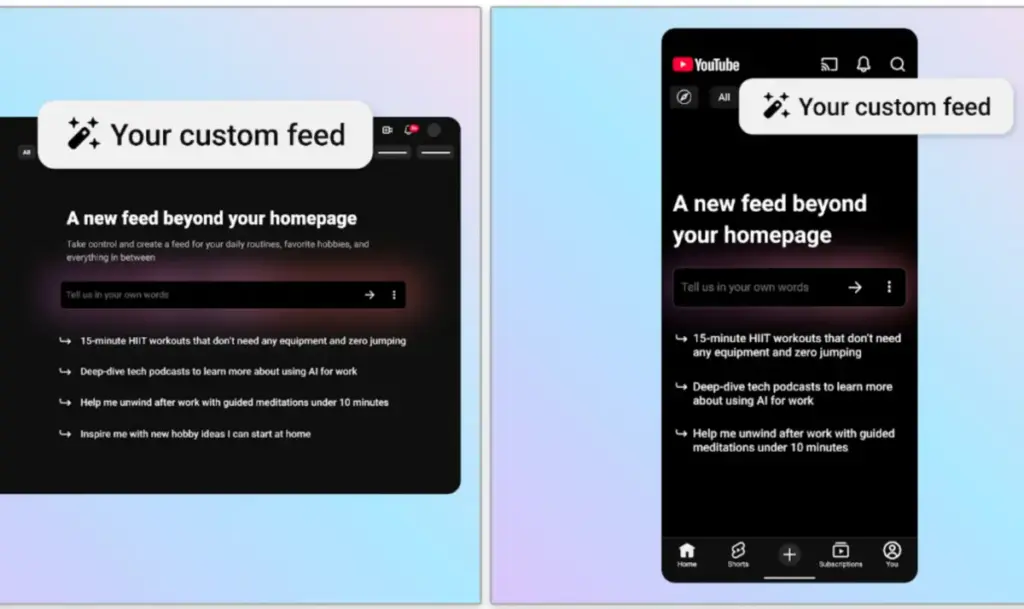
First rolled out as a limited test earlier this year, YouTube is now significantly expanding this feature for signed-in users in the United States. The update allows individuals to move beyond the traditional, algorithmic homepage and curate multiple, highly specific video feeds tailored to exact moods, topics, or productivity goals. Instead of relying solely on YouTube to guess what they want to see, users can now establish distinct landing pages—such as a dedicated feed for "guided meditations under 10 minutes" or specialized technical tutorials—complete with their own custom labels at the top of the Home interface.
While framed as a consumer-friendly leap toward personalization, this strategic pivot is far from a mere cosmetic update. It represents a calculated defensive and offensive maneuver in an evolving social media ecosystem. As decentralized platforms like Bluesky redefine digital curation with user-built feeds—and aggressively encroach upon traditional video territory by expanding native video runtimes to ten minutes—tech giants are scrambling. YouTube’s custom feeds are an attempt to marry its unrivaled, multi-billion-user video library with the granular, user-directed flexibility that defines the next generation of social media.
This report explores the mechanics of YouTube’s new feature, traces the timeline of its development, analyzes the competitive pressures forcing tech platforms to relinquish algorithmic control, and evaluates what this means for creators, viewers, and the future of online video.
Detailed Chronology: How YouTube Built the Custom Feed
The journey toward user-controlled custom feeds on YouTube has been iterative, driven by both internal user experience (UX) data and external competitive disruption.
Phase 1: The Era of "Topic Chips" (The Precursor)
For years, YouTube’s primary method of helping users navigate their homepages outside of direct searches was the introduction of "topic chips"—those horizontal pills appearing at the top of the feed that dynamically sort content based on recent viewing activity (e.g., "Gaming," "Lo-Fi Music," "Podcasts"). While effective for broad categorization, these chips remained fundamentally bound to the platform’s standard recommendation architecture. They served algorithmic content within a silo, offering little room for hyper-specific curation or user-defined parameters.
Phase 2: The Initial Experiment (May 2026)
In late May 2026, Google-owned YouTube quietly initiated an experiment tracked closely by digital observers like 9to5Google. The test introduced the concept of "custom feeds"—landing pages designed to cluster videos around a specific topic, focus, or "vibe." Rather than letting the platform dictate the boundaries of a category, this initial test hinted at a future where users could actively shape how their homepages were organized. However, the functionality was restrictive, limiting accounts to a single experimental setup.
Phase 3: The Multi-Feed Expansion (August 2026)
According to official updates logged on the Google support pages tracking ongoing YouTube experiments, the platform significantly escalated its testing phase on August 24, 2026.
Targeting signed-in viewers in the United States, the updated experiment removed previous limitations, allowing single accounts to establish and toggle between multiple custom feeds simultaneously. Under this new layout, these user-defined feeds take the physical place traditionally occupied by the legacy topic chips at the top of the Home feed. Users can now flip effortlessly between distinct curation streams, transforming a traditionally chaotic homepage into a segmented, highly personalized dashboard.
Supporting Context & Metrics: The User Control Movement & The Bluesky Factor
To understand why YouTube is pivoting toward custom feeds, one must examine the broader cultural and competitive currents reshaping the digital landscape. Two primary forces are at play: the global regulatory and cultural push for user agency, and the looming threat of nimble competitors like Bluesky.
The Consumer Revolt Against Black-Box Algorithms
User choice has rapidly evolved into one of the hottest topics in technology policy and product design. Across the globe, consumers are suffering from algorithmic fatigue. The endless, passive scrolling promoted by traditional recommendation engines has drawn heavy criticism from psychologists, watchdogs, and lawmakers alike.
Regulatory frameworks, such as the European Union’s Digital Services Act (DSA), have placed unprecedented pressure on tech platforms to offer depersonalized or user-controlled recommendation alternatives—as seen when TikTok rolled out options to view content free of its hyper-personalized algorithm for EU users.
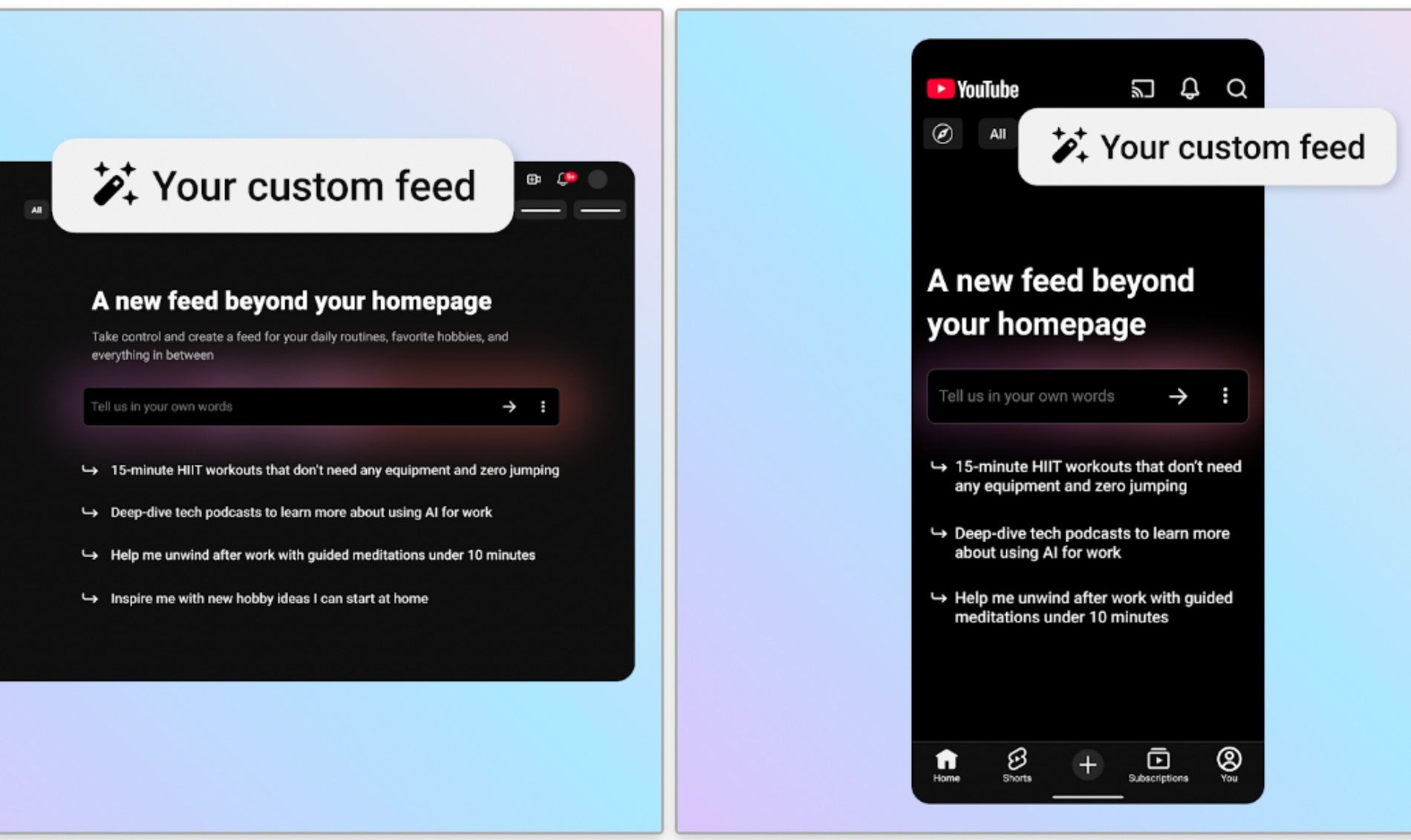
YouTube’s custom feeds tap directly into this psychological shift. By handing the steering wheel back to the viewer—allowing them to explicitly command the platform to filter content based on strict criteria (e.g., "help me unwind after work with guided meditations under 10 minutes")—YouTube is attempting to foster a healthier, more intentional relationship with its audience.
The Bluesky Blueprints
While regulatory pressures provide a macro-level justification, the micro-level catalyst for YouTube’s move can be found in the rise of Bluesky.
The decentralized social media platform captured the tech world’s attention through its innovative approach to content curation. Bluesky popularized customizable, algorithmic feeds built not just by corporate engineers, but by independent developers and everyday users. The platform famously put this feature on full display during Super Bowl LVIII, offering distinct "Swiftie" and "non-Swiftie" feeds to cater to polarized cultural segments tuning into the big game.
This modular, community-driven approach gave Bluesky an approachable, highly customized feel that resonated deeply with digital natives. More importantly, Bluesky is no longer just a text-and-image microblogging site. Having introduced native video support, Bluesky recently raised the stakes by expanding its maximum video runtime to ten minutes.
For a long-form video titan like YouTube, this is a clear warning shot. Bluesky is actively encroaching on traditional video territory, offering a decentralized space where users can curate their video consumption streams. YouTube’s custom feeds are, in many ways, a preemptive strike: an effort to offer the customizable, niche-feed experience that users love about emerging platforms, while leveraging YouTube’s massive, insurmountable creator economy.
Official Statements and Platform Mechanics
While Google has kept official announcements regarding the ongoing experiment relatively measured—relying primarily on community support threads and experimental feature logs—the underlying mechanics of the update reveal a thoughtful UX overhaul.
When enabled for test participants in the U.S., the custom feeds completely overhaul the top tier of the mobile and desktop interface:
- Dedicated Real Estate: The custom feeds replace the legacy "topic chips." Instead of generic categories like "Recently Uploaded" or "New to You," the interface displays user-labeled tabs.
- Granular Prompts: The system encourages natural-language or highly specific thematic inputs. YouTube’s own documentation highlights use cases like separating high-intensity workout videos from short, pre-sleep relaxation clips without requiring the user to manually search for them every evening.
- Seamless Toggling: Users can swipe or click between their established feeds instantaneously, keeping their viewing sessions organized by context rather than letting disparate interests bleed together in a messy algorithmic stew.
Digital rights and product design analysts point out that this feature represents a hybrid approach: it retains the efficiency of machine learning to find the relevant videos, but chains that machine learning to a strict, user-defined leash.
Future Outlook: What Custom Feeds Mean for Creators and the Industry
As YouTube continues to test and refine its custom feed architecture, the long-term implications for the digital video ecosystem are profound. If the experiment rolls out globally, it could permanently alter how creators produce content and how viewers interact with the platform.
1. The Death of the Monolithic Homepage?
For nearly two decades, the YouTube homepage has been treated as a single, sacred digital real estate where winning the algorithm meant capturing the mainstream. If users routinely segment their homepages into distinct custom feeds (e.g., "Deep Dives," "Quick Humor," "Study Music"), creators may find that broad, catch-all packaging becomes less effective. Instead, optimizing metadata to appeal to specific "vibes" and niche curation tags will become paramount.
2. Creator Adaptability in the Age of Modular Discovery
Creators who build content that serves very specific functional purposes—such as educational tutorials, ambient noise, fitness routines, or serialized deep-dives—stand to benefit immensely from custom feeds. When users actively build feeds designed to solve specific problems or moods, hyper-targeted content is far more likely to be consumed in high-intent sessions, potentially boosting engagement metrics and viewer loyalty.
3. The Convergence of Platforms
YouTube’s adoption of Bluesky-style custom feeds illustrates a broader industry convergence. As decentralized architectures popularize user choice, traditional walled gardens are adopting those very features to prevent user churn.
Whether YouTube’s custom feed experiment expands beyond the U.S. test group to a permanent global rollout remains to be seen. However, the writing is on the wall: the era of the passive, unalterable algorithmic feed is drawing to a close. By giving users the tools to architect their own viewing experience, YouTube is betting that control—not just convenience—is the ultimate currency of the modern internet.