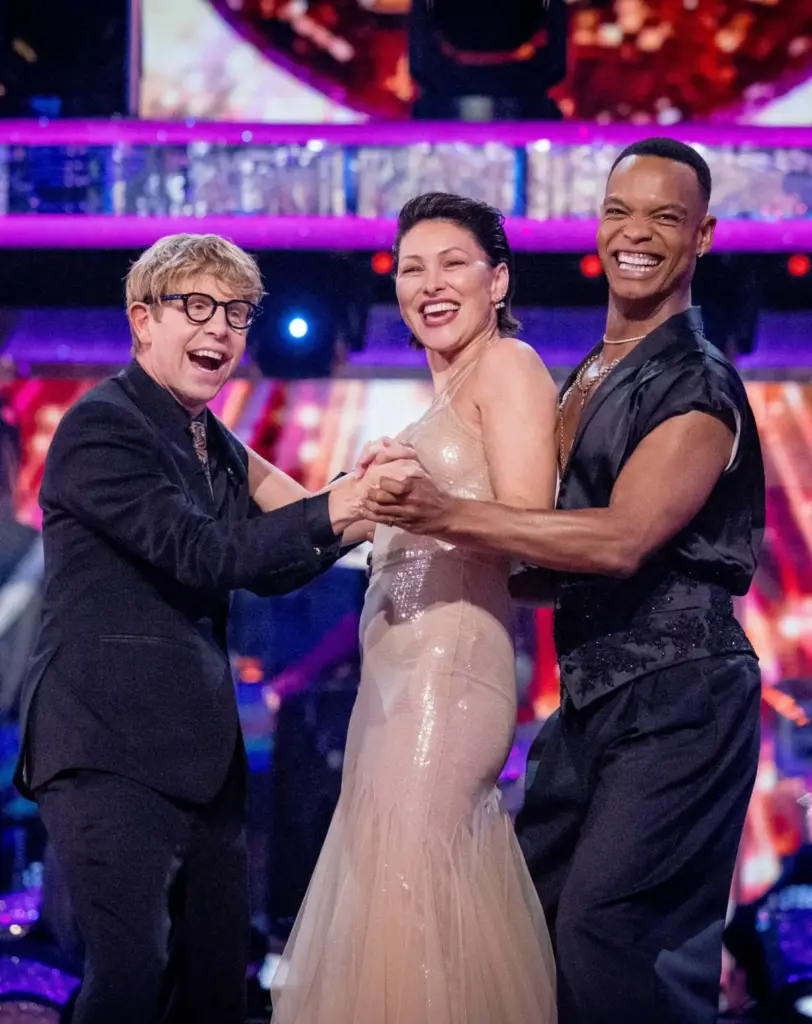
The ballroom doors have officially swung open for the 2026 season of Strictly Come Dancing, but the premier BBC One entertainment juggernaut has returned with a seismic shake-up that has left viewers fiercely divided. In a move that signals the end of an era, long-standing fixtures Tess Daly and Claudia Winkleman are entirely absent from the screen, replaced by a newly minted, untested presenting trio comprising seasoned broadcaster Emma Willis, fan-favourite professional dancer Johannes Radebe, and stand-up comedian Josh Widdicombe.
As the launch show aired, setting up the celebrity pairings for the upcoming weeks—featuring stars such as Dani Dyer, Lacey Turner, Bethany Antonia, and Will Best—social media erupted. While some fans praised the dynamic chemistry and fresh energy brought by the three hosts, others condemned the format as overcrowded and unnecessary. This deep-seated division highlights the inherent risks of tampering with a national television institution. This comprehensive report explores the reception of the new hosting lineup, the strategic rationale behind the BBC’s casting choices, the celebrity pairings dominating early discussions, and what this transition means for the future of Britain’s most beloved weekend entertainment show.
Detailed Chronology: The Launch Night Debrief and Social Media Fallout
The road to the 2026 season has been paved with anticipation, skepticism, and high-stakes speculation. When the BBC announced its fresh hosting line-up back in May, the broadcasting world paused. Replacing Tess Daly and Claudia Winkleman—who anchored the show through its golden years with effortless grace and chemistry—was always going to be an uphill battle.
As the opening titles rolled on Saturday night, viewers immediately clocked the altered landscape. Gone were the familiar balcony chats overseen by Claudia; instead, the studio space was re-engineered to accommodate a multi-person presenting team moving freely across the floor.
Within minutes of the broadcast, social media platforms—particularly X (formerly Twitter)—became a digital amphitheatre where viewers delivered immediate, unfiltered verdicts.
The Critics: "Three’s a Crowd"
For many traditionalists, the transition proved jarring. A significant faction of the audience argued that the traditional dynamic of a duo worked best, claiming that three presenters cluttered the screen.
A viewer named Owen posted that Emma Willis was "outshining the other two so much," sparking a broader debate about screen time distribution. Another user, Ryan, voiced specific reservations regarding the inclusion of Josh Widdicombe, writing:
"I get we can have comic relief, but I think Emma & Johannes can do that too."
Further compounding these critiques were complaints about pacing. Suzi noted that "3 presenters just seems unnecessary, don’t see the point of it," while Sue lamented the length of the opening sequence, adding: "The intro was far too long, and as for presenters, two’s company, three’s a crowd!"
The Supporters: Embracing the Fresh Perspective
Conversely, a resilient wave of viewers embraced the structural overhaul, praising the hosts for injecting modern vibrancy into a format that has run for over two decades.
Olivia admitted her initial doubts were unfounded, posting: "Josh is doing well. And I was sceptical. This year just feels so fresh and new. Loving it." Another user, writing under the handle Mrs Brightside, embraced the controversial dynamic: "I’m going to be controversial here… I like Emma, JoJo and Josh!"
Beverly shared a similar sentiment, noting: "I wanted to hate the new #Strictly, but here I am digging it! Even Josh!" Meanwhile, viewers like Helen confessed that the refreshed energy had successfully lured them back after contemplating skipping this season entirely.
Moderation and patience were also championed by fans like JD, who urged the wider fandom to keep perspective:
"I really hope people give things a chance to bed in and settle. It’s the launch show, nerves are huge, and all launches are different to the main show. Just give them all time!"
Supporting Context & Metrics: The Anatomy of the 2026 Line-Up
To fully understand the weight of this hosting gamble, one must examine the broader changes implemented for the 2026 series. The BBC has not merely changed its presenters; it has overhauled the ecosystem of the show.
The Contestants and Professional Pairings
The launch show confirmed the highly anticipated pairings between the celebrity contestants and the professional dance troupe. This year’s roster boasts high-profile names from across British television, drama, and reality spheres:
Dani Dyer paired with her respective professional partner amid heavy early buzz.
Lacey Turner, fresh off major career moves and intense media speculation regarding her future on EastEnders.
Bethany Antonia, bringing youthful dynamism to the floor.
Will Best, partnered with Dianne Buswell, who has already caught the eye of bookmakers and fans alike.
Other pairings include Lauren Oakley and Graeme Hall, Amy Dowden and Chris Appleton, and Katya Jones and John Nellis.
The Evolution of the Hosts
The selection of Willis, Radebe, and Widdicombe represents a deliberate diversification of skill sets:
Emma Willis: A seasoned multi-camera live television veteran whose credits include Big Brother and The Voice UK. Willis brings stability, warmth, and an established rapport with Saturday-night audiences.
Johannes Radebe: Having risen through the ranks as a professional dancer since 2018, Radebe transitions from the dance floor to the microphone. His deep understanding of the emotional and physical toll placed on the celebrities provides an unprecedented level of empathy and insider knowledge.
Josh Widdicombe: A celebrated stand-up comedian and television panellist who previously tested the ballroom waters during the 2024 Christmas special alongside Karen Hauer. Widdicombe was brought in to inject spontaneous wit and self-deprecating humour, though his transition from comedy clubs to prime-time entertainment hosting remains the most scrutinized element of the trio.
Official Statements and Behind-the-Scenes Perspectives
When the appointments were formally announced by the BBC in May, the incoming hosts expressed a mixture of awe, reverence, and trepidation regarding the shoes they were stepping into.
Emma Willis addressed the legacy of her predecessors directly, acknowledging the unique challenges of the role:
"It’s impossible to fill the shoes that Tess and Claudia have left behind – two wonderful, iconic women who have been the beating heart of Strictly for so long. I can only hope that we are able to help to steer the ship as beautifully as they have, into this new chapter."
Johannes Radebe emphasized his lifelong connection to the values underpinning the show, describing his appointment as a profound privilege:
"I feel deeply honoured. Strictly has always stood for joy, heart, and togetherness. To stand on this side of the stage and help facilitate that magic is a dream come true."
Josh Widdicombe leaned into his trademark comedic humility, recalling his brief tenure on the 2024 Christmas special:
"When I danced in the Christmas special, I thought that was my one and only brush with the glitterati. To be asked back as a host leaves me giddy with excitement, honoured, and a little overawed."
BBC executives have defended the triple-head format as a necessary evolution to keep the format competitive in a rapidly shifting media landscape, arguing that dividing responsibilities allows for deeper engagement with the contestants in the Clauditorium and smoother transitions across the sprawling live broadcasts.
Future Outlook: Can the Trio Win Over the Die-Hard Traditionalists?
As the dust settles on the launch episode, the real test for Emma Willis, Johannes Radebe, and Josh Widdicombe lies ahead. Launch shows are notoriously frantic affairs—overstuffed with introductions, performance teasers, and introductory group numbers where the primary objective is simply getting through the running order.
Moving forward into the live weekly shows, the pressure will mount exponentially. The hosts will be required to manage live timing issues, comfort weeping or injured contestants, banter with an increasingly vocal judging panel (Shirley Ballas, Craig Revel Horwood, Motsi Mabuse, and Anton Du Beke), and maintain viewer engagement across a multi-hour broadcast.
For Widdicombe, the challenge is proving that his comedic timing can anchor a mainstream entertainment vehicle without overshadowing the contestants. For Radebe, it is maintaining his signature warmth while projecting authority as a main-stage host. For Willis, it is serving as the steady anchor holding the disparate elements together.
If the reactions from Saturday night prove anything, it is that Strictly Come Dancing remains a cultural touchstone capable of provoking intense national debate. While the fence-sitters and purists may take several weeks to adjust to the new rhythm of the ballroom, the BBC’s bold gamble has undeniably breathed new life into the conversation. Whether this trio becomes as iconic as Daly and Winkleman will ultimately be decided by the British public over the coming months of sequins, sambas, and Sunday night results.
Strictly Come Dancing continues on Saturday nights on BBC One and is available to stream on BBC iPlayer.