Executive Overview
Literature has long served as a mirror to society, a political compass, and an intimate sanctuary. Few contemporary figures have woven reading quite so publicly into their personal brand and political ethos as the 44th president of the United States, Barack Obama. For over a decade, his annual summer reading lists and year-end roundups have driven literary sales, sparked nationwide discourse, and offered a rare, intellectual window into the mind of a world leader.
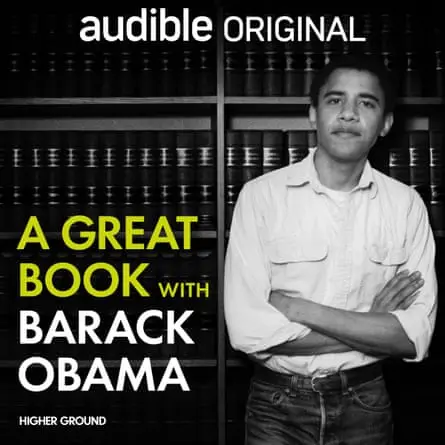
Now, Obama is taking his lifelong passion for the written word to a new auditory frontier. Launching on September 24, a brand-new six-part podcast titled A Great Book with Barack Obama will debut exclusively on Audible. Produced by the Amazon-owned audiobook giant in collaboration with Higher Ground—the production company founded by Barack and Michelle Obama—the series is designed as an intimate, probing exploration of literary works that have “profoundly shaped his worldview and our society.”
Unlike his viral seasonal roundups, which lean heavily toward contemporary releases, A Great Book with Barack Obama reaches deep into the literary canon of the 20th and early 21st centuries. The curated selection features monumental titles by Toni Morrison, John le Carré, James Baldwin, Cormac McCarthy, Marilynne Robinson, and Robert Penn Warren. Across six episodes, Obama will sit down with an array of yet-to-be-announced special guests to unpack how these works transcend their pages to diagnose the complexities of the human condition.
This strategic venture represents more than just a standard celebrity-backed podcast; it is a masterclass in cultural preservation, a philosophical inquiry into empathy, and a timely defense of the humanities at a moment when reading habits and the societal appreciation for literature face unprecedented digital headwinds.
Detailed Chronology: The Evolution of Obama’s Public Literacy
To understand the significance of A Great Book with Barack Obama, one must trace the former president’s public relationship with books, a journey that spans from his early academic days to his post-presidential cultural empire.
The Formative Years and the White House Study
Long before he took the oath of office in 2009, Barack Obama’s identity was deeply intertwined with reading. In his memoirs, Dreams from My Father and The Audacity of Hope, he frequently reflects on literature as a means of navigating his biracial identity, his absence of a traditional paternal figure, and his evolving philosophical outlook. As a constitutional law professor and community organizer, books were tools of both academic rigor and personal grounding.
During his presidency, glimpses of his reading habits occasionally leaked to the press—famously captured in a 2008 New York Times profile detailing his nightly reading rituals, where titles by Doris Lessing, Abraham Lincoln biographies, and contemporary fiction sat on his nightstand. Books were his respite from the grinding pressures of the Oval Office.
The Post-Presidency Curatorial Era
Upon leaving the White House in January 2017, Obama formalized his role as America’s unofficial literary tastemaker. Abandoning the strict formalities of the presidency, he began publishing annual summer reading lists and end-of-year favorites on social media.
These lists quickly morphed into a phenomenon known in the publishing industry as the "Obama Bump." Authors fortunate enough to secure a spot on his roster frequently experienced immediate spikes in sales, catapulting backlist titles onto bestseller lists. His selections consistently demonstrated a deliberate effort to spotlight diverse voices, international perspectives, and complex socio-political commentaries.
Timeline of Key Milestones:
├── Pre-2009: Formative reading habits establish his worldview.
├── 2009–2017: White House tenure; books serve as private presidential solace.
├── 2018–Present: Public release of viral summer and year-end reading lists.
├── 2024 (Late July): Publication of the 2024 summer reading list (Tayari Jones, George Saunders, etc.).
└── September 24: Launch of "A Great Book with Barack Obama" on Audible.
The trajectory culminated in the announcement of the Higher Ground-Audible partnership. By moving from static text lists to an immersive, conversational audio format, Obama is shifting from a passive recommender to an active literary interlocutor.
Supporting Context & Metrics: The Anatomy of the Six Selected Masterpieces
The core of the upcoming podcast rests on six meticulously chosen texts. Five were published during the 20th century, while one—Marilynne Robinson’s Gilead—arrived in the early 2000s. Together, they represent an eclectic mix of American historical reckoning, espionage, moral philosophy, and tragic romance.
1. Song of Solomon by Toni Morrison
Published in 1977, Morrison’s masterwork traces the life of Macon "Milkman" Dead III, an African American man living in Michigan, as he embarks on a journey of self-discovery back to the American South. The novel explores themes of family legacy, cultural identity, and the heavy burden of historical trauma. For Obama, whose own autobiographical work grapples intensely with lineage, Morrison’s exploration of Black American identity is a natural anchor.
2. Tinker Tailor Soldier Spy by John le Carré
A departure from American domestic struggles, le Carré’s 1974 classic stands as the pinnacle of Cold War espionage fiction. Following the retired intelligence officer George Smiley as he hunts a Soviet mole within the British Secret Intelligence Service, the novel deals heavily in institutional paranoia, moral ambiguity, and the quiet tragedies of statecraft—themes that undoubtedly resonate with a former commander-in-chief intimately familiar with the machinery of national security.

3. The Fire Next Time by James Baldwin
Comprising two searing essays—“My Dungeon Shook: Letter to my Nephew on the One Hundredth Anniversary of the Emancipation” and “Down at the Cross: Letter from a Region of My Mind”—Baldwin’s 1963 masterpiece is a moral indictment of American racism and an urgent plea for spiritual and social redemption. Baldwin’s rhetoric has long served as a touchstone for civil rights leaders, and his influence on Obama’s own speeches and racial philosophy is profound.
4. All the Pretty Horses by Cormac McCarthy
The opening volume of McCarthy’s celebrated Border Trilogy (1992) follows young John Grady Cole as he rides south into Mexico after the ranch of his childhood is sold. Blending stark, biblical prose with a romanticized yet brutal vision of the American frontier, McCarthy’s work examines the loss of innocence, the myth of the West, and the indomitability of the human spirit.
5. Gilead by Marilynne Robinson
Published in 2004, Robinson’s Pulitzer Prize-winning epistolary novel takes the form of an aging Congregationalist minister, John Ames, writing a final letter to his young son in 1956 Iowa. The book is a meditative triumph on grace, faith, family history, and the quiet beauty of ordinary life.
- Contextual Note: Robinson and Obama share a well-documented intellectual kinship. Following a White House dinner invitation, the two maintained a thoughtful correspondence, culminating in Obama awarding her the National Humanities Medal in 2012.
6. All the King’s Men by Robert Penn Warren
Winner of the 1947 Pulitzer Prize, Warren’s political classic charts the meteoric rise and moral corruption of Willie Stark, a populist southern politician loosely modeled on Huey Long. Narrated by Stark’s disillusioned press secretary, Jack Burden, the novel remains the definitive American literary examination of power, idealism, corruption, and the inescapable weight of the past.
Official Statements & Industry Perspective
In official promotional materials released by Audible and Higher Ground, the intent behind the series is framed as both deeply personal and culturally urgent.
"Great books have always helped me figure out who I am and what I believe,"
— Barack Obama
Expounding on the ethos of the project, the former president emphasized the communal aspect of literature in an increasingly fragmented digital age:
"The six books featured in this series have stayed with me throughout my life, and each one has something to teach us about the human experience. For this podcast, I invited some friends to explore why they resonate, how they can shape our understanding of ourselves and each other, and why literature matters now more than ever. I hope listeners will be inspired to discover or rediscover books that change the way they see themselves and the world."
Industry analysts note that the partnership between Audible and Higher Ground leverages the booming audio market. As consumers increasingly turn to spoken-word entertainment for intellectual stimulation during commutes, workouts, and quiet evenings, celebrity-helmed curation offers a trusted navigational beacon in an oversaturated media landscape.
While the specific identities of the guest speakers remain tightly under wraps, speculation is rampant across literary and political circles. Observers anticipate a mix of acclaimed contemporary authors, cultural critics, and longtime associates who can match Obama’s intellectual rigor and conversational cadence.
Future Outlook: Cultural Impact and the Road Ahead
As the September 24 premiere approaches, A Great Book with Barack Obama stands poised to influence not only Audible subscription metrics but also broader literary consumption patterns.
In an era dominated by short-form video algorithms, diminishing attention spans, and polarized public discourse, the podcast champions deep reading and prolonged, nuanced reflection. By unpacking works that challenge comfort zones—from the racial fire of James Baldwin to the moral mazes of John le Carré—Obama is effectively staging a public intervention on behalf of the humanities.
The success of the series could pave the way for subsequent seasons, expanding the literary canon under discussion and cementing Higher Ground’s status as a premier content house for thoughtful, high-end cultural media. Ultimately, the podcast reinforces a core thesis that has defined Obama’s public life: that stories matter, that literature has the power to bridge divides, and that understanding our collective history requires listening closely to those who have mapped the human soul on the written page.