As we age, our skin undergoes structural transformations that can catch us by surprise. Among the most common yet misunderstood concerns is "crepey skin"—a delicate, thin, and finely wrinkled texture that often resembles the appearance of crepe paper. Typically manifesting on areas frequently exposed to environmental elements, such as the forearms, upper arms, thighs, neck, and chest, this skin type is far more than a superficial cosmetic annoyance. It serves as a visual indicator of biological changes occurring deep within the integumentary system.
According to board-certified dermatologists, crepey skin is fundamentally driven by the progressive depletion of collagen and elastin—the vital structural proteins that provide firmness, elasticity, and resilience. This degradation is accelerated by a combination of intrinsic aging (our body’s natural chronological timeline) and extrinsic aging (primarily long-term, cumulative ultraviolet radiation exposure). Over time, these cumulative factors weaken and thin the skin barrier, leaving it increasingly fragile, prone to bruising, and susceptible to micro-tears.
Fortunately, modern advancements in skincare chemistry and clinical dermatology offer a robust arsenal of evidence-based treatments capable of visibly improving, smoothing, and restructuring lax skin. To identify the absolute best products on the market, beauty experts, dermatologists, and a diverse panel of testers evaluated a series of targeted topicals. From luxury multi-peptide creams to accessible drugstore formulas utilizing low-percentage retinoids and omega fatty acids, this comprehensive guide examines the top-performing treatments designed to restore a firmer, more youthful texture to the body and face.
Detailed Chronology: Understanding the Science of Skin Aging and Crepiness
To effectively treat crepey skin, one must first understand its evolutionary timeline. The skin does not lose its structural integrity overnight; rather, the process is a gradual, multi-stage degradation of cellular mechanisms that begins long before the first fine lines become visible in the mirror.
The Biological Onset: The 30s and Early 40s
During our twenties, collagen and elastin production remains robust, allowing the skin to bounce back effortlessly from mechanical stress and environmental insults. However, as individuals enter their late twenties and early thirties, natural collagen production begins to decline at a rate of approximately 1% per year.
In this initial phase, the changes are largely microscopic. The cellular turnover rate slows down, meaning dead skin cells linger longer on the surface, causing a dull appearance. Concurrently, the skin’s natural lipid production decreases, leading to subtle dehydration. For individuals who have spent years soaking up the sun without adequate protection, photoaging begins to compound these intrinsic factors, setting the stage for structural breakdown.
Manifestation and Progression: The 40s and Beyond
By the time individuals reach their forties and fifties, the cumulative loss of structural scaffolding becomes physically apparent. The dermis—the thick layer of skin beneath the epidermis containing collagen, elastin, and blood vessels—thins significantly. The supporting fibers that anchor the upper layers of the skin to the lower layers weaken and stretch.
When skin loses this internal support, it can no longer snap back smoothly into place. Instead, it folds, creases, and sags, forming the characteristic "crepey" web of fine wrinkles. This is often exacerbated by life transitions, such as menopause, where a sharp drop in estrogen levels leads to rapid decreases in skin thickness, hydration, and collagen density.
Furthermore, weight fluctuations, rapid weight loss, or post-surgical changes (such as liposuction) can stretch the skin beyond its elastic limit, leaving behind empty spaces, damaged fat cells, and loose tissue that accentuate the crepey appearance. Recognizing this timeline has allowed cosmetic chemists to formulate targeted treatments that address these specific structural deficits at every stage of life.
Supporting Context & Metrics: Key Ingredients and Product Evaluations
Dermatological consensus emphasizes that treating crepey skin requires active ingredients proven to stimulate collagen synthesis, enhance moisture retention, and reinforce the compromised skin barrier. Through extensive trials conducted with testers ranging from their 30s to their 60s, a definitive hierarchy of top-performing treatments has emerged.
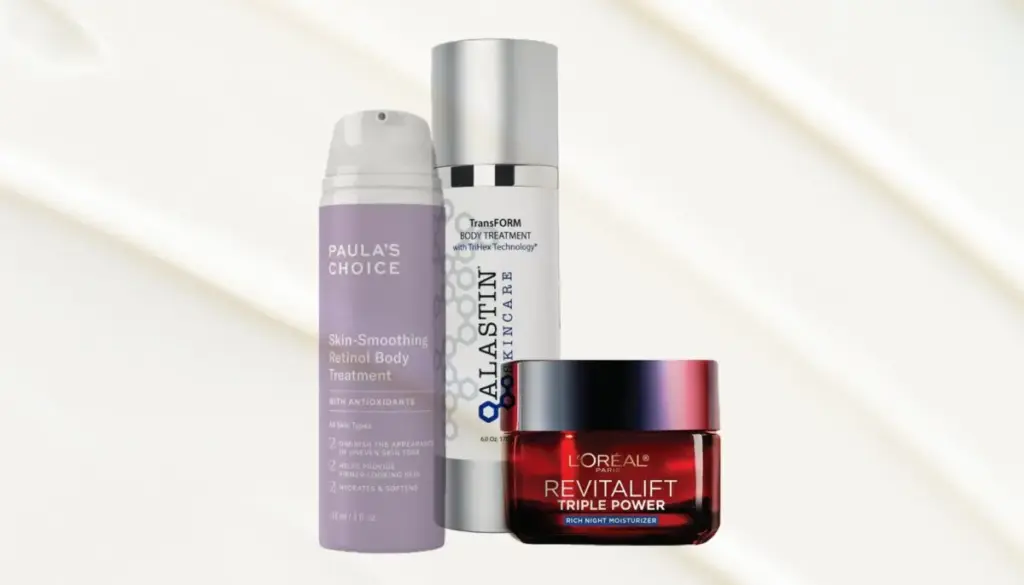
1. Best Overall: Alastin Skincare TransForm Body Treatment
For individuals contending with advanced crepiness driven by a combination of aging and sun damage, this barrier-repair body treatment stands out as a clinical-grade powerhouse. Formulated with a proprietary blend of peptides and dill extract, it is designed to support the natural production of elastin and collagen while visibly firming lax areas.
Beyond general anti-aging benefits, the formula is uniquely equipped to assist skin recovering from rapid weight loss or body-contouring procedures like liposuction, helping to clear out cellular debris left behind in excess skin. Testers praised its feather-light lotion consistency, which absorbs rapidly without leaving a greasy residue. While premium-priced, users noted that a little goes a long way, successfully smoothing the delicate skin on the neck, chest, arms, and knees within weeks of consistent nightly application.
2. Best for Body: Paula’s Choice Retinol Skin-Smoothing Body Treatment
Retinol remains the gold standard in topical anti-aging, and this specialized body treatment translates facial-grade science into a potent, full-body formula. Featuring a gentle 0.1% concentration of retinol, it stimulates new collagen production without overwhelming sensitive skin.
Dermatologists endorse this concentration for its proven clinical efficacy in firming lax skin over time. The inclusion of soothing hydrators like panthenol, shea butter, and evening primrose oil ensures the skin barrier remains supported, preventing the flaking and irritation commonly associated with retinoids. Testers reported a visible reduction in roughness and crepiness on the chest, arms, and thighs, with many noting that the fragrance-free formula delivered buttery-smooth results with zero redness.
3. Best for Deep Wrinkles: Augustinus Bader The Rich Cream
Positioned at the pinnacle of luxury skincare, this intensive moisturizer is engineered to combat deep-seated wrinkles and severe textural irregularities. Utilizing a sophisticated blend of amino acids and targeted peptides, it actively repairs the skin barrier, plumps fine lines, and restores radiance to sun-damaged or hyperpigmented skin.
Testers highlighted its ability to lock in long-lasting moisture, providing immediate relief from cold-weather dryness and creating a resilient canvas that prevents makeup from settling into fine lines throughout the day.
4. Best for Discoloration: L’Oréal Paris Revitalift Triple Power Rich Night Cream
Addressing both texture and tone, this rich night cream targets the "double whammy" of aging: increasing crepiness accompanied by stubborn hyperpigmentation and redness. The formulation relies on a synergistic blend of exfoliating and brightening acids alongside deeply hydrating hyaluronic acid.
Testers described the texture as a luxurious, soft balm that melts effortlessly into the skin, delivering an instant visual plumping effect while systematically fading dark spots and evening out overall complexion over weeks of use.
5. Best Value: Gold Bond Age Renew Crepe Corrector Body & Face Lotion
For full-body maintenance without a luxury price tag, this drugstore favorite receives high praise from board-certified dermatologists. Formulated specifically to address larger surface areas prone to dryness and thinning, it harnesses the power of omega fatty acids to visibly thicken the superficial skin surface. This immediate action offsets the dullness and fine lines characteristic of crepey skin, providing instant visual improvement and long-lasting hydration at an accessible price point.
6. Best for Under Makeup: Lancôme Rénergie H.P.N. 300-Peptide Cream
Price: ~$140–$150
Key Ingredients: Hyaluronic acid, 300 types of peptides, niacinamide.
Combining high-potency peptides with skin-brightening niacinamide, this lightweight cream addresses volume loss and sagging without the heavy, occlusive feel of traditional night creams. It absorbs instantly, making it the premier choice for daytime wear under foundation or tinted moisturizers, ensuring hydration and firming benefits without pilling or excess weight.
7. Best for Saggy Arms: Maëlys B-Flex Lift & Firm Arm Cream
Price: ~$52
Key Ingredients: Brazilian peppertree, red algae, kangaroo flower.
Designed specifically for the thin skin of the upper arms, this specialized formula utilizes botanicals to target sagging and loss of elasticity. Red algae and kangaroo flower work in tandem to tighten the appearance of loose skin, while Brazilian peppertree smooths out textural roughness. Although it features a temporary vibrant purple hue that requires thorough rubbing during application, clinical and consumer testing confirmed noticeable improvements in arm firmness and skin texture.
Official Statements & Dermatological Insights
To contextualize consumer experiences with hard science, leading dermatological voices emphasize the importance of a multifaceted approach to reversing and managing crepey skin.
Dr. Geeta Yadav, board-certified dermatologist and founder of Facet Dermatology in Toronto, explains the core physiological shift:
"Over time, the collagen and elastin that provide structure start to break down, and the skin barrier becomes weaker and thinner. Retinol is an essential anti-aging ingredient for the treatment of lax, crepey skin as it helps promote new collagen production, which in turn works to firm and tighten skin."
Dr. Rachel Nazarian, a board-certified dermatologist based in New York City, elaborates on the vulnerability of affected areas:
"Crepey skin occurs when skin has lost much of its collagen and elastin. This makes it wrinkled and thin, similar to crepe paper—it becomes super fragile. It can happen from natural loss of collagen due to aging, or environmental loss of collagen from exposure to ultraviolet radiation and external factors."
Highlighting advancements in ingredient synergy, Dr. Yadav notes:
"Some newer studies suggest that pairing ingredients like collagen with vitamin C can further enhance results. Hyaluronic acid, especially when combined with amino acids or antioxidants, leaves skin hydrated and plumper. And gentle actives like mandelic acid or Centella asiatica can improve skin elasticity and reduce crepiness, even for those with more sensitive skin."
Future Outlook: Reversal, In-Office Procedures, and Prevention
A frequent question among those experiencing skin thinning is whether crepey skin can truly be reversed. Dermatological science answers with a qualified yes: while complete restoration to adolescent skin is biologically impossible, significant structural improvement and partial reversal can be achieved through consistent, long-term interventions.
At-Home Regimens vs. In-Office Innovations
At-home topical treatments work progressively by stimulating collagen synthesis and reinforcing the dermal-epidermal junction. However, for those seeking accelerated or more profound structural changes, in-office dermatological procedures offer powerful adjunctive solutions.
Microneedling and Radiofrequency (RF): Technologies such as Morpheus8 combine microneedling with controlled thermal energy delivered deep into the dermis. This process triggers a powerful wound-healing response, forcing the skin to generate fresh, dense collagen networks.
Fractional Laser Resurfacing: Treatments like Fraxel remove microscopic columns of damaged tissue, stimulating rapid cellular renewal and smoothing out stubborn micro-wrinkles on the arms, legs, and chest.
Ultrasound-Based Therapy: Procedures like Ultherapy utilize focused ultrasound energy to lift and tighten deeper foundational layers of tissue without surgical intervention.
Red-Light Therapy: An increasingly popular at-home adjunct, LED red-light therapy supports cellular mitochondria, encouraging collagen production and softening lines with zero downtime.
The Ultimate Preventative Rule
Regardless of whether one relies on luxury topicals, clinical retinoids, or advanced in-office treatments, experts universally agree on one non-negotiable rule: sun protection is paramount. Because extrinsic aging driven by ultraviolet radiation remains the primary catalyst for collagen degradation, daily application of a broad-spectrum SPF 30 (or higher) is essential. Protecting the skin from continuous UV damage ensures that the structural gains achieved through skincare regimens and professional treatments are preserved for years to come.



.png)
.png)
.png)