Executive Overview
The intersection of physical fitness and cultural entertainment has officially crossed a strategic Rubicon. For decades, traditional gym chains operated on a transactional, utilitarian premise: provide heavy machinery, a clean locker room, and a lap pool, and let the consumer do the heavy lifting in isolation. However, the post-pandemic landscape—marred by persistent cultural isolation and a profound psychological need for community—has permanently altered consumer expectations. Today’s wellness consumer is no longer merely looking to shave seconds off a mile split or achieve a personal best in deadlifts; they are searching for shared experiences, authentic human connection, and a lifestyle ecosystem that transcends the four walls of a traditional workout room.
This evolution mirrors a broader marketing playbook pioneered by the beauty and consumer packaged goods (CPG) sectors. Industry leaders like E.l.f. Beauty and Dr. Squatch have long demonstrated that turning a brand into an entertainment hub—complete with unexpected collaborations, high-concept activations, and culturally resonant storytelling—drives unmatched customer loyalty and retention. Now, the heavyweights of the fitness industry are borrowing directly from this manual.
At the vanguard of this movement is Life Time, the Minneapolis-based luxury gym and athletic country club chain founded in 1992. Recognizing that its members increasingly view its nearly 200 locations not as sweatboxes, but as social hubs where friendships are forged and weekends are planned, the company is formalizing its entertainment strategy. Enter LT Social: an expansive, high-production programming pillar designed to merge elite fitness with city-specific cultural moments.
Simultaneously, the wider wellness economy is undergoing a massive structural transformation. Dyson is officially making its long-anticipated push into oral care with a $499 toothbrush, signaling a luxury crossover into everyday personal care devices. Meditation pioneer Headspace is reportedly poised for acquisition, and veteran supermodel Carolyn Murphy is lending her iconic status to supplement brand Infinity Wellness. Together, these moves underscore a booming, interconnected wellness marketplace where lifestyle, luxury, and longevity collide.
Detailed Chronology: The Evolution of Life Time’s LT Social
To understand the scale of LT Social, one must trace its roots back through Life Time’s quiet, methodical experimentation over the past several years. What began as grassroots adjustments to member feedback has now blossomed into a national entertainment strategy.
The Beta-Testing Phase: From Group Runs to Rooftop Parties
For years, Life Time management noticed an intriguing anomaly in member behavior. While traditional fitness metrics like class attendance and machine usage remained steady, informal gatherings—such as impromptu group runs, parking lot social hours, and seasonal pool parties—were consistently hitting maximum capacity and generating extensive waitlists.
According to Michelle Duffy Smith, Vice President of Marketing, Retail, and Events at Life Time, these informal gatherings revealed a deeper truth about the modern gym-goer. "Our members are already viewing our locations not as traditional fitness, a place where they work out, but a place where they want to hang out, where they’re making plans, they’re making friends," Smith noted in an interview with Glossy. "It’s happening naturally."
Prior rooftop pool party pilot programs routinely drew crowds exceeding 800 people per market, proving that members were hungry for daytime social programming that integrated seamlessly with their fitness regimens.
The Formal Rollout: Aligning with National Cultural Pulses
Rather than deploying sporadic events on arbitrary weekends, Life Time has engineered LT Social to operate on a national, high-impact schedule. The core philosophy is simple: go where the cultural energy is already concentrated.
"We’re programming at a more national level by saying, ‘These are experiences worth getting on a plane for,’" Smith explained. "We’re not going to show up with the LT Social on a random weekend in March. We’re going to go to a particular city because the city is buzzing on that weekend in March."
The inaugural launch of LT Social is slated for September 12–13 in New York City, strategically timed to coincide with two of the city’s most high-profile cultural touchstones: the finals of the U.S. Open and New York Fashion Week. By positioning its clubs as secondary cultural hubs, Life Time is capturing affluent consumers who are already traveling for major events. A client visiting New York or Phoenix for a sporting event or fashion gala now has a pre-integrated wellness and social venue to anchor their trip.
Inside the NYC Kickoff: The "Night After Done Differently"
The two-day New York City launch exemplifies the multi-sensory, highly curated nature of the LT Social program:
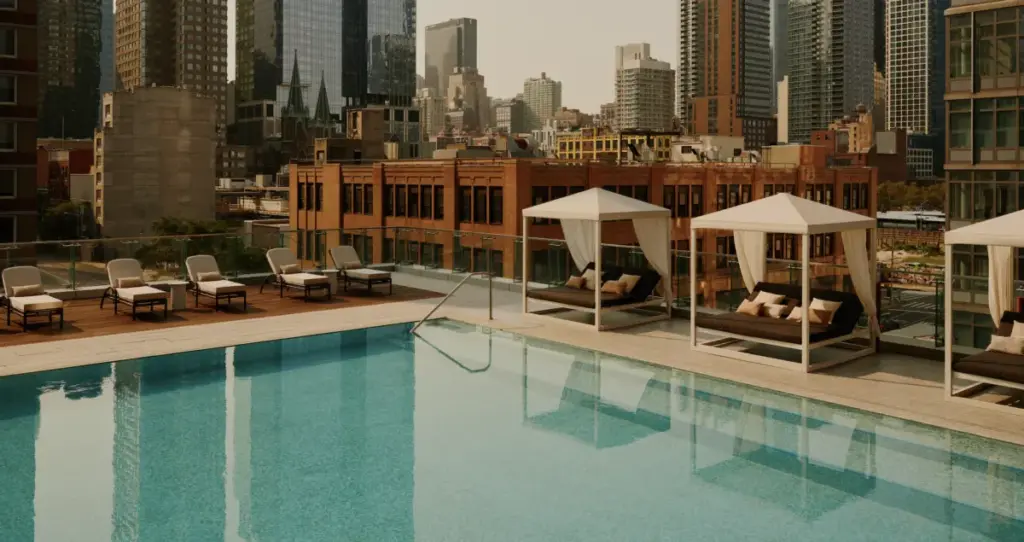
- Saturday Night Rooftop Social: Hosted at Life Time’s flagship Sky location in Hell’s Kitchen, the evening features celebrity DJ sets, live performances, high-end food and beverage pairings, red-carpet step-and-repeat photography opportunities, and extended on-site childcare to accommodate working parents.
- Sunday Morning Recovery Session (7:00 AM): Billed as the "night after done differently," this early-morning session prioritizes wellness and rehabilitation. It features specialized nutrition, body-work offerings such as massages and mini-facials, and a dedicated recovery lounge powered by Hyperice tools.
- Sunday Midday Transition (11:30 AM): In a sharp pivot from rest and relaxation, the programming shifts instantly into a high-energy rooftop pool party, blending day-club culture with upscale fitness recovery.
Significantly, tickets for LT Social events are entirely free for Life Time members and their invited guests, functioning primarily as a powerhouse customer retention engine designed to solidify brand affinity in an increasingly competitive landscape.
Supporting Context & Metrics: The Loneliness Epidemic and the Shift to Social Wellness
The rapid rise of fitness-entertainment hybrids is not happening in a vacuum. It is a direct response to profound socio-cultural shifts, most notably the modern loneliness epidemic.
The Psychological Imperative of Community
The global COVID-19 pandemic accelerated a crisis of isolation that has stubbornly persisted. According to a landmark 2024 Harvard study, approximately one in five survey respondents report experiencing serious, chronic feelings of loneliness. The demographic most acutely affected? Adults aged 30 to 44—precisely the core demographic of luxury gym members who possess the disposable income and lifestyle flexibility to invest in premium wellness experiences. Among this cohort, an alarming 29% reported feeling "frequently" or "always" lonely.
Fitness brands are uniquely positioned to combat this isolation. As run clubs replace traditional nightclubs as the weekend social venue of choice, and grassroots wellness meetups like Coffee & Chill and the Capri Wellness Club surge in popularity, marketers are realizing that community is the product.
The Competitive Landscape: Southern California and Beyond
While Life Time is scaling its entertainment programming nationally across nearly 200 locations, a wave of boutique, social-first wellness clubs has populated metropolitan hubs like Los Angeles, attempting to capture the same demographic.
- Heimat: Opened in Los Angeles in 2022 to immense fanfare, this members-only mega-club offers a rooftop pool, a fine-dining restaurant, boutique fitness studios, co-working spaces, and a robust social calendar.
- Remedy Place: A pioneer in the "social self-care" movement, this club was specifically engineered to allow groups to socialize while undergoing biohacking and recovery treatments like ice baths and infrared saunas.
- Love Life: Developed by a co-founder of Whole Foods, this concept merges community, longevity, and functional fitness into a unified retail and social footprint.
Despite the innovation coming out of Southern California, many of these concepts have struggled to scale nationally. Life Time’s distinct advantage lies in its expansive real estate footprint and its ability to deploy standardized, high-production social programming across multiple major U.S. markets simultaneously.
Official Statements and Industry Insights
The convergence of fitness, retail, and entertainment is generating vital dialogue among industry leaders. Speaking on the strategic rationale behind LT Social, Michelle Duffy Smith emphasized that the traditional boundaries of the gym industry have permanently dissolved.
"We’re seeing it happen very quickly through the explosion of run clubs, race participation, social programming, and fitness brands hosting events. Fitness and social are married. All of this change is because people are seeking companionship, and they’re looking for more than just the workout."
— Michelle Duffy Smith, VP of Marketing, Retail, and Events at Life Time
Smith further noted that the evolution is organic, driven by the consumer’s desire to integrate wellness into every facet of their social lives.
"Wellness is how you feel, both inside and out, and so I think this explosion within the industry is on a really great trajectory to continue. People are looking to build connections, to laugh and have fun. This is just the start."
Future Outlook: The Intersection of Wellness, Beauty, and Lifestyle
As the wellness industry charges deeper into the latter half of the decade, several adjacent market developments indicate where the consumer economy is heading:
- High-Tech Personal Care Integration: Dyson’s aggressive entry into the oral care market with a $499 premium toothbrush proves that high-end engineering and luxury aesthetics are bleeding into everyday personal hygiene and grooming routines.
- Corporate Consolidation: The anticipated acquisition of meditation titan Headspace points to continued institutional investment in mental health infrastructure, positioning mindfulness apps as essential components of corporate and consumer wellness packages.
- Cross-Industry Talent Endorsements: The recruitment of veteran supermodels like Carolyn Murphy to supplement brands such as Infinity Wellness signals that the longevity and anti-aging sectors are adopting high-fashion marketing codes to appeal to discerning, mature consumers.
- The Sports-to-Leadership Pipeline: A compelling new study commissioned by E.l.f. Beauty in partnership with Parity—surveying 9,500 working women across the U.S., Canada, the U.K., and Germany—revealed that girls who play team sports for at least three years during primary or secondary school are 50% more likely to hold leadership roles later in life, 37% more likely to aspire to senior leadership, and 25% more likely to successfully negotiate their salaries. This data cements the cultural narrative that physical activity builds foundational professional equity.
Conclusion
The launch of LT Social and the broader maturation of the wellness entertainment sector signal the end of the solitary gym era. By transforming sweat into a social currency and aligning physical spaces with major cultural calendars, luxury operators like Life Time are proving that the future of fitness belongs to those who can successfully build communities. As consumers continue to prioritize connection, mental health, and shared joy over mere physical exertion, the boundary between working out and going out will continue to blur, establishing a lucrative new paradigm for the modern lifestyle economy.