Executive Overview
For centuries, the global fashion industry has operated under a strict and unyielding caste system of raw materials. Value has historically been inextricably tied to rarity, provenance, tactile indulgence, and historical mythology. Mulberry silk, harvested meticulously from the cocoons of Bombyx mori caterpillars; vicuña wool, sheared from wild, protected Andean camelids under strict governmental watch; and baby cashmere, gathered from the underbelly fibers of young goats in the harsh winds of Inner Mongolia—these are the materials that occupy the apex of sartorial prestige. They carry intrinsic economic weight and cultural capital, bolstered by centuries of aristocratic patronage, global supply chains, and romanticized origin stories.
Beneath them sit velvet, Chantilly lace, and full-grain leather, each anchored by deeply entrenched historical associations and craft traditions. But what happens to the creative imagination when a garment is stripped of these pre-approved mythologies? What occurs when the designer’s palette consists not of gossamer textiles woven in ancient mills, but of discarded transit tickets, melting candle wax, industrial plastics, and mannequin limbs?
Enter project. extraordinary, a groundbreaking, multidisciplinary photography and fashion initiative curated and directed by New York-based art director Shibo Chen. Operating as both a visual manifesto and an experimental laboratory, project. extraordinary seeks to dismantle the traditional hierarchies of fashion by interrogating the mundane. For its inaugural chapter, Chen enlisted 13 distinct creative teams from across the globe, uniting photographers, stylists, set designers, and image-makers under a singular, deceptively simple mandate: take an entirely conventional, utilitarian, or discarded object and transform it into an unexpectedly expressive, high-fashion narrative.
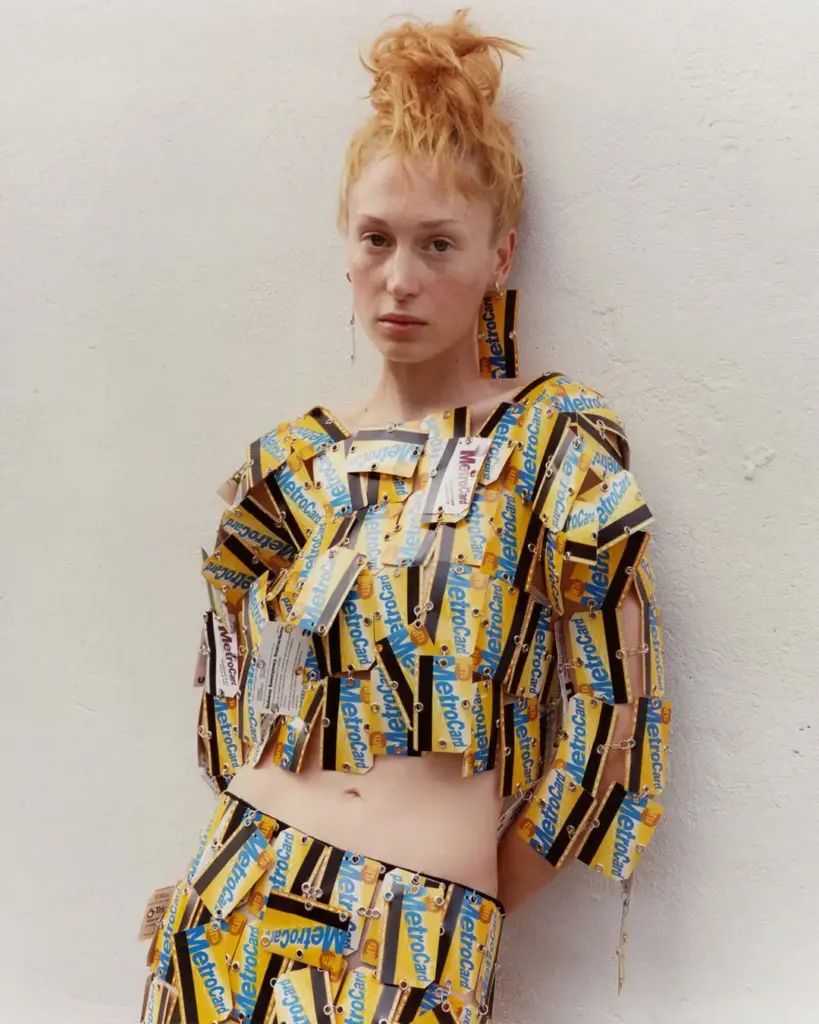
The results are as conceptually challenging as they are visually arresting. A mountain of discarded New York City MetroCards is meticulously stitched into a structured two-piece runway set, complete with a matching architectural clutch and earrings. Fragile candles are systematically melted, molded, and engineered into a blazing, wearable crown, bra, and skirt ensemble. Industrial paper is aggressively draped and sculpted into a floor-length evening frock that mimics the fluid grace of silk gazar.
Featuring contributions from a vanguard of rising industry tastemakers and established image-makers—including Richie Talboy, Nico Daniels, Ryan Wohlgemut, Javier Castán, Lulu Mcardle, Claudio Robles, and Ricardo Arenas—project. extraordinary forces both the fashion industry and the viewing public to confront an uncomfortable yet exhilarating question: Why do we assign beauty only to that which is rare, expensive, and packaged for consumption, while ignoring the extraordinary potential humming quietly within the everyday?
Detailed Chronology and Creative Genesis
To understand the mechanics of project. extraordinary, one must trace its conceptual origins back to the mind of Shibo Chen, an art director whose work consistently probes the intersection of commercial imagery, conceptual art, and human perception. Frustrated by the homogenization of contemporary visual culture—where digital algorithms frequently dictate what is considered "aesthetic" or "luxury"—Chen envisioned a platform that could decentralize creativity and force artists back into a state of raw, unmediated resourcefulness.
Phase One: Conceptualization and the Global Brief (Late 2024 – Early 2025)
The genesis of the project began with a deliberate inversion of standard fashion production pipelines. While traditional luxury houses spend months—sometimes years—sourcing exotic fibers from remote corners of the earth before designing a single silhouette, Chen’s teams were handed a wide-open, constraints-based brief: Find the poetry in the pedestrian.
Thirteen creative teams were selected not for their adherence to commercial trends, but for their distinct, idiosyncratic visual languages. Spanning multiple continents, these teams were given total autonomy over their choice of medium, subject matter, and narrative structure. The only rule was that the primary material could not be a traditional textile or leather; it had to be an ordinary, mass-produced object stripped of inherent luxury associations.
Phase Two: Execution and Material Metamorphosis (Mid-to-Late 2025)
As the teams embarked on their respective transformations, the project fractured into a fascinating study of psychological projection, material resistance, and physical endurance.
For photographer Nico Daniels, the exploration centered on the uncanny valley between human and inanimate forms. Accustomed to framing living models, Daniels turned his lens toward mannequins—objects that serve as the silent, skeletal foundation of retail display windows worldwide. By introducing dramatic, chiaroscuro lighting and reflective mirror surfaces, Daniels orchestrated a visual dialogue where human models and their fiberglass counterparts blurred into indistinguishable silhouettes. "Looking in the reflection of the mirror and seeing the mannequins and models interacting with each other in silhouette was the point in which they started to come alive for me," Daniels notes. The mundane retail prop ceased to be a silent placeholder and became an active participant in the fashion narrative.
Meanwhile, stylist Ryan Wohlgemut and photographer Lulu Mcardle embarked on an exploration of illumination that required navigating profound personal vulnerability. Choosing candles, flame-resistant ribbons, and molten wax as their medium, Wohlgemut confronted a deeply rooted childhood trauma. At age eleven, a devastating fire destroyed his family home, leaving him with a lifelong, visceral phobia of uncontrolled flames. "Working directly with fire to mold and shape the crown, bra, and skirt pushed me far beyond my comfort zone," Wohlgemut admits. The physical act of heating, melting, and sculpting wax required him to harness a destructive element and transmute it into haute couture. In doing so, the creative process mirrored psychological healing: the agent of past trauma was successfully co-opted to generate extraordinary beauty.
Phase Three: The MetroCard Archival Rescue (September 2025)
Perhaps no single piece within the inaugural chapter of project. extraordinary captures the grassroots, scavenger-hero ethos of New York City quite like the contribution of photographer Claudio Robles and stylist Ricardo Arenas. Operating against a ticking historical clock in September 2025—just weeks before the iconic, canary-yellow magnetic stripe MetroCard was officially slated for permanent retirement by the Metropolitan Transportation Authority (MTA)—Robles and Arenas set out to immortalize a dying urban artifact.
The hunt for raw material proved arduous. Initial sweeps of subway station turnstiles and discard slots yielded virtually nothing, as commuters increasingly migrated to tap-to-pay digital systems. Undeterred, the duo persisted until they discovered a massive cache of over 500 discarded cards piled behind one of the last functioning ticket-vending machines at the 34th Street station, with some specimens bearing transaction dates as far back as 2003.
Transporting their gritty bounty back to Claudio’s apartment, the artists washed the grime of millions of commutes off the cards in a residential kitchen sink. Over the span of just forty-eight hours, the discarded plastic passes were cut, laced, and engineered into a structured, wearable dress that radiated a brilliant, neon-yellow patina under studio lights. "The whole thing felt like the ultimate New York story," Robles reflects. "Snatching something the city was literally about to throw away forever and turning it into something beautiful you can actually wear."
Supporting Context and Metrics: The Shift in Global Fashion
To view project. extraordinary merely as a conceptual art exercise is to miss its broader economic and cultural implications. The project arrives at a critical inflection point in the global fashion ecosystem, intersecting with sweeping shifts in consumer behavior, supply chain economics, and ecological consciousness.
The Upcycling and Deadstock Revolution
For decades, the luxury fashion machine was propelled by a linear economic model: take virgin raw materials, manufacture garments at scale, sell them at a hyper-inflated markup, and discard the unsold or out-of-season inventory into landfills or incinerators. However, macroeconomic pressures, rising raw material costs, and mounting regulatory scrutiny regarding textile waste have forced a radical reassessment.
| Metric / Indicator | Traditional Luxury Model | The project. extraordinary Paradigm |
|---|---|---|
| Primary Material Sourcing | Virgin fibers (Silk, Cashmere, Vicuña) | Discarded urban waste, industrial scraps, everyday objects |
| Value Proposition | Scarcity of raw agricultural/animal input | Ingenuity of transformation and conceptual depth |
| Environmental Impact | High carbon footprint, intensive land and water use | Zero-waste or waste-repurposing framework |
| Production Timeline | Months-long global supply chain | Immediate, localized, hyper-resourceful fabrication |
The un-synonymizing of the words "new" and "better" is no longer just the domain of avant-garde fringe galleries; it is increasingly penetrating mainstream consciousness. According to recent sustainability metrics in the apparel sector, the secondary materials market—including deadstock upcycling, post-consumer textile recycling, and industrial salvage—is projected to grow at a compound annual growth rate (CAGR) significantly outpacing traditional virgin textile manufacturing over the next decade. Designers are no longer evaluated solely on their ability to drape expensive silk velvet, but on their cognitive agility: What can you make out of nothing?
The Psychology of "Re-Seeing"
At the core of Chen’s curatorial philosophy is the psychological phenomenon of habituation—the human brain’s tendency to stop noticing stimuli that remain constant or familiar. A MetroCard is a utilitarian tool for transit; a candle is a household utility for light; a mannequin is a silent prop for merchandising. By lifting these objects out of their functional contexts and subjecting them to the rigorous grammar of high-fashion photography and styling, project. extraordinary forces a neurological reset in the viewer.
This act of "re-seeing" bridges the gap between Dadaist readymades (pioneered by Marcel Duchamp in the early 20th century) and modern digital-age image consumption. In an era saturated by millions of high-definition images scrolling past human eyes every minute, projects that demand cognitive friction—that require the viewer to pause, recalibrate, and ask, "Wait, what is that made of?"—possess an outsized cultural resonance.
Official Statements and Curatorial Vision
The intellectual architecture of project. extraordinary is anchored by the reflections of its creator and contributing artists, whose quotes illuminate the delicate balance between chaos and control inherent in multidisciplinary collaboration.
"I believe we can find beauty in everything," states Shibo Chen, articulating the foundational creed of the project. "project. extraordinary centers on transformation, on the act of re-seeing. I constantly ask myself, ‘Who is going to be the next person to shape the industry?’ Every legend had a starting point."
This commitment to discovering and elevating emergent talent is not merely a philosophical talking point for Chen; it is actively operationalized through his ongoing initiatives. Alongside project. extraordinary, Chen manages proof of concept, a dedicated digital and physical platform designed to give voice to underrepresented visual storytellers, stylists, and photographers who operate outside the traditional gatekept corridors of Paris, Milan, and New York fashion weeks.
The psychological weight of the artistic process was further underscored by Ryan Wohlgemut when discussing his work with molten wax and flame:
"When I was 11, there was a fire in my childhood home, an experience that left me with a lasting fear of flames. Working directly with fire to mold and shape the crown, bra, and skirt pushed me far beyond my comfort zone. In the process, fire, like the act of creating, took on new meaning."
Meanwhile, Claudio Robles captured the poetic absurdity of urban salvage in his commentary on the MetroCard dress:
"The whole thing felt like the ultimate New York story: snatching something the city was literally about to throw away forever and turning it into something beautiful you can actually wear."
These testimonies reveal that the true medium of project. extraordinary is not plastic, paper, or wax—it is human perspective. The transformation of the object is inextricably linked to the transformation of the artist.
Future Outlook: The Expansion of the Project Ecosystem
With the successful rollout and critical reception of Chapter One, Shibo Chen shows no signs of slowing down. The project. extraordinary framework has proven to be a scalable, infinitely adaptable intellectual property capable of housing diverse cultural narratives and speculative design exercises.
Several major follow-up bodies of work are already deep in production:
- project. extraterrestrial: A speculative design and photography series inspired by leaked classified government documents concerning unidentified anomalous phenomena (UAP) and extraterrestrial research. This chapter pushes the boundaries of materiality further into the realm of science fiction, exploring what futuristic, non-human aesthetics might look like when interpreted through contemporary fashion styling.
- project. yellow: A global curatorial initiative that gathers Asian creatives from across the diaspora and home countries to interrogate cultural identity, heritage, media representation, and modern aesthetics through collaborative visual storytelling.
- The Expansion of proof of concept: As Chen’s incubator platform continues to scale, it aims to forge direct pipelines between experimental digital image-makers and commercial luxury houses seeking genuine, non-formulaic creative direction.
The Legacy of the Everyday
As the fashion industry navigates an era defined by ecological reckoning, technological disruption, and the exhaustion of traditional luxury tropes, initiatives like project. extraordinary offer a vital roadmap forward. They remind us that the future of style does not depend on the continuous extraction of rare and costly resources from a strained planet. Instead, true luxury lies in human ingenuity, lateral thinking, and the radical willingness to look at the discarded trash of modern civilization and declare: This, too, is art.
In the hands of Chen and his global collective of tastemakers, the ordinary is no longer ordinary at all. It is the raw material of legends.