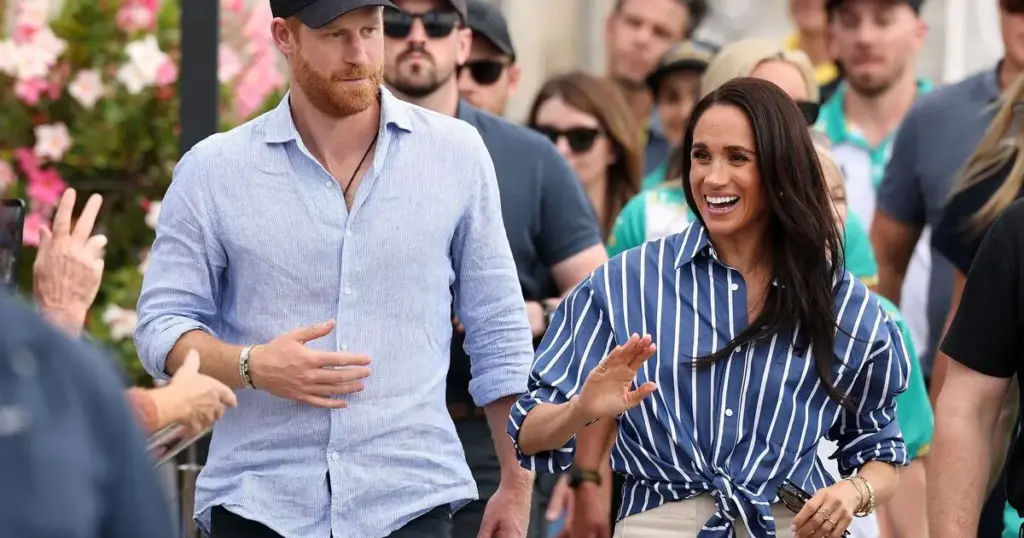
LONDON — The long-running, deeply personal security dispute between Prince Harry and the British government has taken a dramatic new turn. The Duke of Sussex has lodged formal concerns with the highest levels of the Home Office, accusing the leadership of the state’s executive protection committee of withholding vital counter-terrorism intelligence regarding an alleged al-Qaeda assassination plot.
The escalating feud—which centers on the state-funded police protection for the Duke, his wife, Meghan Markle, and their two children, Prince Archie and Princess Lilibet—comes as the Home Office quietly initiates a fresh review of the family’s risk profile. With the Duke pressing for direct political intervention from Home Secretary Shabana Mahmood, the case reignites intense public and legal debate regarding the threshold of security owed to members of the British royal family, regardless of their working status.
Executive Overview
The core of the dispute involves the Executive Committee for the Protection of Royalty and Public Figures (RAVEC), the elite body comprised of government, royal household, and police representatives that decides who receives publicly funded protection in the United Kingdom.
According to legal correspondence reportedly sent to Home Secretary Shabana Mahmood earlier this month, Prince Harry’s representatives have leveled serious allegations against the former chair of RAVEC. The Duke claims that the committee was aware of specific, credible intelligence concerning a 2023 terror threat originating from al-Qaeda, yet allegedly failed to pass this vital information to either the Duke’s private security detail or American law enforcement authorities operating in the United States, where the family resides.
This latest revelation pierces the heart of Harry’s ongoing crusade to overturn the removal of his automatic, round-the-clock police protection. Having lost a high-profile legal challenge earlier this year over RAVEC’s decision to downgrade his security status following his departure from frontline royal duties in 2020, the Duke’s camp argues that the current assessment mechanisms are compromised, opaque, and fundamentally inadequate to deal with the unique, immutable threat levels he faces as the son of the reigning monarch.
Detailed Chronology: The Intelligence Breakdown and Escalation
To understand the gravity of the current standoff, it is necessary to examine the timeline of threat intelligence and legal maneuvers that have defined the Sussexes’ security saga since their relocation to North America.
February 2020: The Loss of Automatic Status
When the Duke and Duchess of Sussex announced their decision to step back as senior working members of the Royal Family, RAVEC ruled that their change in official status warranted a fundamental alteration in their security arrangements. Consequently, their automatic entitlement to taxpayer-funded, 24-hour armed Metropolitan Police protection while in the UK was rescinded, shifting the burden onto private arrangements and case-by-case evaluations.
Late 2023: The Al-Qaeda Telegram Threat
The friction point behind the current controversy dates back to late 2023. According to security sources, intelligence emerged through the international "Five Eyes" network—comprising the UK, the United States, Canada, Australia, and New Zealand—indicating that senior figures within al-Qaeda had begun circulating material on a private Telegram channel specifically discussing an assassination plot against Prince Harry.
The information was reportedly intercepted and flagged by the Federal Bureau of Investigation (FBI), which subsequently passed the intelligence down to the Duke’s private security team in the United States. However, legal filings and sources close to the Duke allege that RAVEC leadership at the time possessed this same intelligence stream but failed to adequately communicate the warning to Harry’s private detail or coordinate defensive protocols with American counterparts.
Early to Mid-2024: Legal Defeat and Growing Vulnerability
Prince Harry’s legal battles reached a significant milestone earlier this year when a UK court ruled against his challenge of the Home Office’s security downgrading. The judiciary upheld RAVEC’s authority to determine security provisions on a "bespoke" basis rather than granting a blanket right to round-the-clock protection.
Despite this legal setback, subsequent independent security assessments commissioned by the Duke’s private team underscored a volatile threat environment. Reports submitted ahead of his intermittent UK visits indicated multiple active plots against him, a majority of which were believed to originate domestically.
August 2026: Direct Appeal to the Home Secretary
With tensions mounting, the Duke has taken the extraordinary step of writing directly to Home Secretary Shabana Mahmood. Rather than relying solely on the standard administrative appeals process, Harry is asking the Cabinet minister to exercise personal oversight and intervene in the risk-evaluation process, arguing that systemic failures within RAVEC have jeopardized his family’s safety.
Supporting Context & Metrics: The Anatomy of a Modern Royal Threat
The security debate surrounding Prince Harry is underpinned by a confluence of unique risk factors that distinguish his profile from both ordinary citizens and other non-working members of the Royal Family.
Military Service and Memoir Fallout
A primary catalyst for extremist targeting stems from the Duke’s decade-long career in the British Army, during which he completed two tours of duty in Afghanistan as an Apache helicopter pilot. In his 2023 memoir, Spare, Harry disclosed that he had killed 25 Taliban combatants during his active service.
This disclosure immediately drew widespread condemnation from extremist organizations, including regional factions and global networks such as al-Qaeda and the Afghan Taliban, who utilized the figures in propaganda campaigns calling explicitly for his assassination.
The Limits of Private Security
Sources close to the Duke have frequently highlighted the stark limitations placed upon his private security team compared to state-backed protection officers. Under UK law, private security personnel do not possess the legal authority to carry firearms, nor do they have access to real-time intelligence feeds, secure police communications networks, or tactical convoy support.
"His security team cannot even carry a cricket bat as a means of defence — all they’d have is angry rhetoric and their physical strength if someone attacked him or his family," a source close to the Duke told The Sunday Times. "With his return home, the game has changed: the first duty of a government is to protect its citizens and that includes Harry, his wife and his children. It’s not about the role he has here — it’s about the risk he and his family face, and he cannot simply stop being the son of the King."
Threat Metrics and Domestic Vulnerability
Ahead of a high-profile return to Britain, independent security reports prepared for the Sussexes’ team revealed that the Duke had faced as many as six distinct terrorist plots, with five of those threats assessed as originating within the United Kingdom. These metrics sharply contrast with the government’s official stance that his risk level can be managed adequately through short-term, ad-hoc security planning coordinated around specific public appearances.
Official Statements and Government Response
The British government has consistently maintained a wall of administrative discretion regarding the mechanics of royal and VIP protection.
In response to the latest developments, a Home Office spokesperson reiterated the government’s standard policy:
"The UK government’s protective security system is rigorous and proportionate. It is our long-standing policy not to provide detailed information on those arrangements, as doing so could compromise their integrity and affect individuals’ security."
While the Home Office has ordered a fresh, secondary review of the security risks facing the Duke and his family following his recent extended visits to Britain, government insiders stress that any review must follow established legal and administrative protocols rather than bowing to political or legal pressure from applicants. RAVEC continues to operate as an independent expert committee designed to insulate protection decisions from political interference—a principle the government is keen to uphold despite the Duke’s appeals to the Home Secretary.
Future Outlook: A Precedent-Setting Standoff
The unfolding confrontation between Prince Harry and the Home Office carries profound implications not only for the Duke of Sussex but for the broader architecture of British state security.
As the Home Office conducts its newly ordered risk review, several critical questions remain unresolved:
The Scope of Ministerial Intervention: Will Home Secretary Shabana Mahmood take a direct, unprecedented hand in reviewing RAVEC’s past decisions, or will she defer strictly to the committee’s established institutional independence?
Intelligence Sharing Protocols: Will the allegations regarding the mishandling of the 2023 al-Qaeda intelligence trigger an internal inquiry into how threat data is communicated between international partners and private protection details?
The Future of Sussex Visits: With the Duke and Duchess contemplating extended stays in the UK—potentially ranging from several months to years—the current ad-hoc security arrangements are widely viewed by security experts as unsustainable for long-term residency.
Ultimately, Prince Harry’s ongoing legal and political campaign forces the British establishment to confront an unprecedented paradox: how to reconcile the security obligations owed to a high-profile member of the royal bloodline with the administrative boundaries drawn when an individual steps away from official working duties. As this high-stakes battle enters its next phase, the outcome will likely establish a definitive legal precedent regarding the state’s duty of care toward royals living in the global spotlight.