Executive Overview
For years, the cutting edge of dermatological science and aesthetic rejuvenation was a realm strictly confined to high-end clinics in Seoul, Gangnam, and elite medical spas across the globe. Among the most closely guarded secrets of this exclusive world is PDRN (Polydeoxyribonucleotide)—a bioactive compound derived from salmon DNA that has long powered South Korea’s most advanced regenerative treatments. Celebrated for its remarkable ability to accelerate cellular repair, stimulate collagen synthesis, and restore optimal dermal hydration, PDRN quickly transitioned from medical-grade wound healing to the holy grail of anti-aging skincare.
However, accessing this powerhouse ingredient traditionally required a significant financial investment, often tied to invasive in-office procedures like micro-needling infusions or mesotherapy injections.
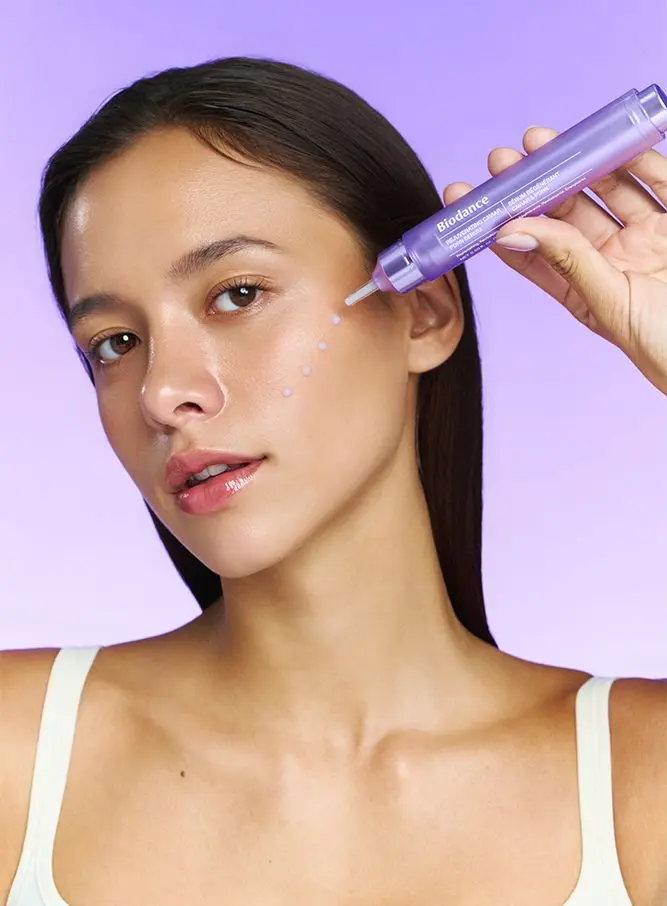
Enter the democratization of high-tech skincare: Biodance, a brand celebrated for its rigorous, results-driven formulations, has successfully bridged the gap between clinical efficacy and everyday accessibility with its latest release—the Rejuvenating Caviar PDRN Serum. Priced at an astonishingly modest $18, this product has sent shockwaves through the beauty industry, prompting skincare enthusiasts and experts alike to ask how such advanced science could be packaged at a drugstore price point.
Designed to mimic the comprehensive effects of an in-office skin booster, the formulation pairs high-purity liposomal salmon PDRN with an unprecedented 67 percent concentration of caviar water. Combined with a robust matrix of barrier-supporting lipids, including panthenol, squalane, and soothing guaiazulene, the serum promises—and clinically delivers—a dramatic transformation in skin texture, firmness, and radiance.
This deep-dive investigative report examines the historical trajectory of Pdrn, analyzes the scientific formulation of Biodance’s breakout serum, reviews user and clinical metrics, and explores the broader future outlook of regenerative aesthetics in the consumer market.
Detailed Chronology: From Regenerative Medicine to the Vanity Table
To understand the current obsession with PDRN, one must trace its origins backward through decades of biomedical research and aesthetic evolution. The journey of Polydeoxyribonucleotide is a classic tale of medical innovation spilling over into consumer wellness.
The Biomedical Origins (Late 20th Century)
Long before it was utilized to diminish fine lines or impart a glass-skin glow, PDRN was developed in Europe and perfected in South Korea as a powerful tissue-healing agent. Initially extracted from the germ cells of salmon (specifically chosen for its profound DNA homology to human cellular structures), PDRN was utilized in clinical settings to treat chronic wounds, diabetic ulcers, and severe burn injuries. Researchers discovered that when applied to compromised tissue, PDRN acts as a cellular catalyst. It binds to adenosine A2A receptors, triggering a cascade of anti-inflammatory responses while simultaneously stimulating fibroblasts—the primary cells responsible for producing collagen and extracellular matrix proteins.
The Aesthetic Pivot in South Korea (Early 2010s)
As dermatologists and plastic surgeons in South Korea continuously pushed the boundaries of regenerative medicine, they noticed a fascinating side effect in patients treated with PDRN for therapeutic healing: the surrounding skin underwent a radical rejuvenation. Skin became noticeably thicker, more elastic, highly hydrated, and deeply radiant.
This observation sparked a revolution in aesthetic dermatology. Clinics began incorporating PDRN into anti-aging protocols, utilizing micro-injections (often marketed under proprietary names like "Rejuran Healer") to revitalize aging, damaged, or dull skin from the inside out. For over a decade, this treatment remained a cornerstone of K-beauty luxury tourism, accessible primarily to those willing to travel to specialized clinics and undergo frequent, mildly uncomfortable procedures.
The Topical Transformation (Late 2010s – Present)
As biochemical engineering advanced, formulators faced a major challenge: how to adapt a high-molecular-weight DNA fraction into a stable, topically absorbable skincare ingredient without losing its bio-activity. The breakthrough arrived with advanced delivery systems, most notably liposomal encapsulation. By wrapping PDRN in microscopic lipid spheres, scientists enabled the molecule to penetrate the stratum corneum and reach the viable epidermis and dermis.
The skincare market was suddenly flooded with PDRN essences, ampoules, and serums. Yet, high-efficacy formulations remained prohibitively expensive, often retailing well north of $80 to $150 per bottle. The recent entry of brands like Biodance—utilizing state-of-the-art biotechnology to lower production costs without compromising purity—marks the definitive final phase of this chronology: the mass democratization of regenerative skincare.
Supporting Context & Metrics: Inside the Biodance Formulation
To evaluate whether a budget-friendly PDRN serum can truly measure up to its clinical predecessors, one must examine its ingredient deck, delivery mechanisms, and empirical test results.
Key Active Ingredients Breakdown
- Liposomal Salmon PDRN: Acting as the core engine of the serum, the PDRN utilized by Biodance is processed for high purity and wrapped in liposomes. This ensures optimal transdermal delivery, allowing the DNA fractions to signal fibroblasts, support endogenous collagen production, and repair compromised cellular architecture.
- 67% Caviar Water: Eschewing plain water as a base, the formula utilizes a hyper-concentrated infusion of caviar water. Rich in essential amino acids, omega-3 fatty acids, vitamins, and minerals, this luxurious base deeply nourishes the skin, enhances moisture retention, and provides raw building blocks for cellular repair.
- Barrier-Supporting Lipids (Panthenol & Squalane): Recognizing that active rejuvenation must be balanced with barrier protection, the formula incorporates panthenol (pro-vitamin B5) to attract and lock in moisture while soothing inflammation, alongside lightweight squalane to mimic the skin’s natural sebum and prevent transepidermal water loss.
- Guaiazulene: A potent derivative of azulene (derived from chamomile), this ingredient serves a dual purpose. Biochemically, it offers exceptional anti-inflammatory and calming properties, making the serum ideal for reactive or redness-prone skin. Visually, it imparts a sophisticated pastel purple tint to the gel-cream without the use of synthetic dyes.
Packaging, Texture, and User Experience
Formulation is only half the battle; user experience dictates compliance and long-term results. Biodance approaches this through an innovative delivery system and textural design:
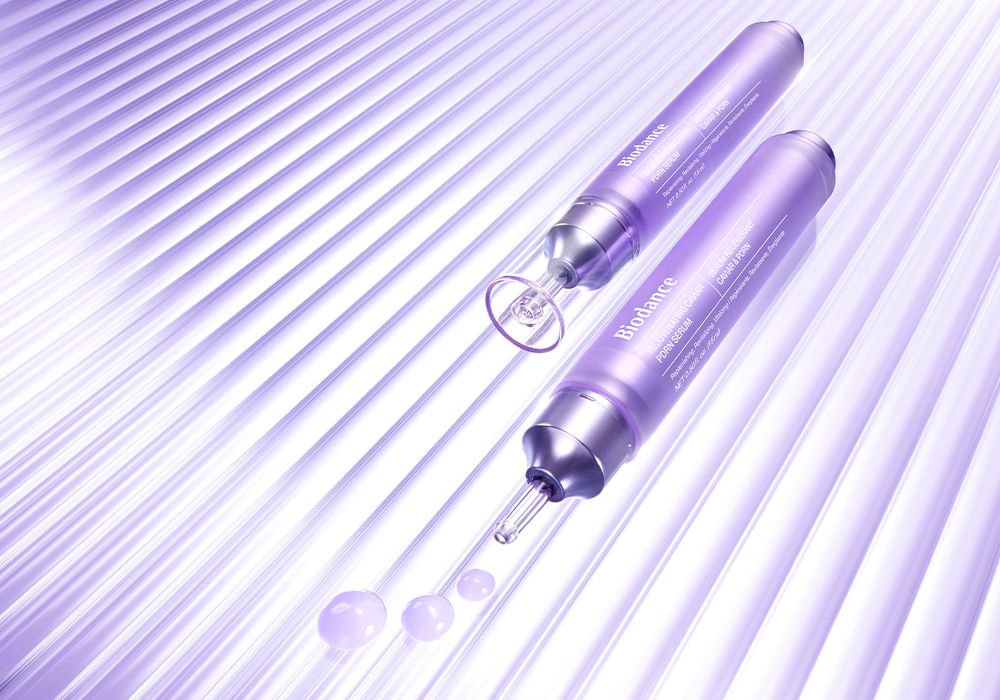
- The Syringe-Style Precision Applicator: Moving away from traditional droppers or pumps that expose the product to air and bacteria, the serum utilizes a syringe-inspired dispenser. This allows users to control dosage down to the exact drop.
- Dosage & Longevity Metrics: The brand recommends a precise dosage of three pumps per day, designed to cover the entire face. Each bottle contains exactly 90 pumps, engineered precisely to provide a standardized 30-day (one-month) supply. For targeted spot treatment (e.g., forehead lines or nasolabial folds), one to two pumps suffice.
- Sensory Profile: The texture occupies the sweet spot between a rich gel and a lightweight cream. It glides effortlessly across the skin, absorbs rapidly without a trace of tackiness, and—crucially for sensitive skin types—is entirely fragrance-free, aligning with the clean, minimalist ethos of modern K-beauty.
Clinical Testing and Empirical Results
Rather than relying solely on marketing claims, Biodance subjected the Rejuvenating Caviar PDRN Serum to rigorous clinical trials. After four weeks of consistent, daily application, dermatological testing recorded measurable improvements across all six fundamental markers of skin quality:
- Hydration Levels: Significant elevation in immediate and sustained epidermal moisture.
- Moisture Barrier Integrity: Measurable reduction in transepidermal water loss.
- Skin Density: Enhanced structural compaction of the dermal matrix.
- Firmness: Increased skin elasticity and bounce.
- Texture: Smoothing of micro-relief and reduction of roughness.
- Radiance: Amplified light-reflecting properties, yielding the coveted "glass skin" glow.
Furthermore, independent user panels over a two-week testing period reported visible mitigation of chronic redness, accelerated soothing of occasional irritation, and a profound, luminous plumpness—all at a price point that defies industry norms.
Official Statements and Industry Perspectives
The rapid ascent of consumer-grade PDRN has prompted commentary from dermatologists, cosmetic chemists, and brand executives who view this trend as a watershed moment for the beauty industry.
The Dermatological Viewpoint
Leading aesthetic dermatologists have long praised PDRN for its safety profile. Unlike retinoids, which can cause intense peeling, purging, or retinization in sensitive skin types, PDRN is inherently biocompatible and non-irritating.
"PDRN represents one of the most versatile advancements in topical skincare because it works with the skin’s natural repair mechanisms rather than forcing an aggressive turnover," notes Dr. Elena Vance, a board-certified dermatologist specializing in regenerative aesthetics. "When formulated correctly with a delivery system like liposomes, topical PDRN can successfully signal fibroblasts to synthesize new collagen. Seeing this technology scaled down to an accessible price point means patients who could never afford clinic-based skin boosters can now access foundational regenerative care at home."
Cosmetic Chemistry and Formulation Challenges
Formulating with high concentrations of active marine extracts and DNA fractions presents significant hurdles. Cosmetic chemists point out that stabilizing PDRN alongside high percentages of nutrient-dense bases—such as 67 percent caviar water—requires sophisticated emulsion technology.
- “The challenge with consumer PDRN is not just sourcing the raw material, but ensuring it remains biologically active inside a bottle that sits on a bathroom shelf for months,” explains lead cosmetic chemist Marcus Chen. “By pairing liposomal encapsulation with intelligent preservation systems and barrier-supportive lipids like squalane and panthenol, brands are now achieving what was previously thought impossible outside of a refrigerated clinical lab.”
The Brand Strategy Behind the Price Tag
At just $18, the Biodance Rejuvenating Caviar PDRN Serum challenges traditional luxury markup models. Industry analysts suggest that K-beauty’s vertically integrated manufacturing capabilities, combined with massive economies of scale, have allowed forward-thinking brands to bypass the inflated margins historically associated with "clinical" skincare. By offering a high-performance product at a fraction of the cost, brands are capturing immense market share, building fierce consumer loyalty, and disrupting legacy beauty conglomerates.
Future Outlook: Where Regenerative Skincare Is Headed
As we look toward the future of the skincare industry, the boundary between clinical regenerative medicine and daily topical maintenance will continue to blur. The success of products like Biodance’s Rejuvenating Caviar PDRN Serum signals several major shifts in consumer demand and product development:
1. The Normalization of Biomimetic Ingredients
Consumers are increasingly moving away from harsh, stripping acids and sensitizing actives in favor of biomimetic ingredients—substances that naturally mimic the body’s own cellular signals. PDRN is merely the vanguard of this movement. Future formulations will likely explore a wider array of DNA and RNA derivatives, growth factor analogs, and peptide complexes designed to communicate directly with skin cells.
2. The Death of the "Luxury Markup"
The democratization of high-tech ingredients will put immense pressure on legacy luxury brands to justify their exorbitant price points. As biotechnology advances and manufacturing becomes more efficient, consumers will no longer accept paying $150 for a serum simply because of brand heritage or ornate packaging. Efficacy, transparency, and clinical validation will reign supreme.
3. Cross-Category Synergy
We are likely to see a convergence between professional in-office treatments and home-care regimens. Rather than viewing topicals as a replacement for clinical procedures, future protocols will utilize at-home PDRN serums to prep the skin prior to micro-needling or laser treatments, and to prolong, enhance, and maintain the regenerative results post-procedure.
Conclusion
The arrival of accessible, high-efficacy PDRN products marks a definitive turning point in modern skincare. What was once an exclusive luxury reserved for the elite clientele of Seoul’s most advanced aesthetic clinics is now safely housed within an $18, syringe-dispensed bottle on mainstream vanity tables. By marrying cutting-edge liposomal technology with a nutrient-dense caviar water base and clinically proven barrier protectors, Biodance has not only delivered an exceptional product—it has rewritten the rules of what consumers should expect from functional, science-backed skincare.