Executive Overview
On the morning of September 11, 2001, the American fashion industry was operating at the height of its seasonal delirium. New York Fashion Week for the Spring 2002 collections was in full swing, drawing international buyers, globe-trotting editors, high-profile celebrities, and pioneering designers to Manhattan. Late-night parties buzzed with anticipation, and the global style press eagerly awaited the next wave of aesthetic innovation. Just hours before the first hijacked commercial airliner struck the World Trade Center, Marc Jacobs had staged the final, dazzling event of the previous evening along a sun-drenched West Side Pier.
Then came the rupture.
The tragedy that unfolded that crisp September morning did not merely disrupt a cultural calendar; it dismantled the illusion of absolute security that defined turn-of-the-millennium New York, forcing an insular, high-glamour industry to reckon with its own profound triviality. This retrospective investigation examines how the events of 9/11 reverberated through the fashion ecosystem—from the immediate paralysis of the runways and the frantic reality of journalists covering a historic crisis without modern mobile infrastructure, to the psychological paradox of seeking solace in luxury. Furthermore, this report analyzes the long-term structural transformations that redefined how the industry communicates value, processes trauma, and maintains its resilience in the shadow of historical memory.
Detailed Chronology: The Day the Runway Collapsed
The Eve of Destruction: September 10, 2001
The atmosphere on the evening of Monday, September 10, was characteristic of peak New York Fashion Week. Sweating public relations representatives managed notoriously antsy crowds outside the West Side Pier where Marc Jacobs was set to show his Spring 2002 ready-to-wear collection. The event ran hours late in the sweltering heat, yet the energy remained infectious. It was an industry built on the pursuit of the ephemeral, completely unaware that this would be the final traditional mega-show executed before the city’s geographic and emotional landscape was irrevocably shattered.
The Phone Call at 9:00 AM
At slightly before 9:00 a.m. on Tuesday, September 11, the landline rang in the apartment of a prominent Village Voice fashion reporter. The call came from fashion week colleague Mickey Boardman. The initial assumption—that Boardman was calling to dish industry gossip about the Jacobs spectacle—evaporated instantly.
Looking out the apartment window provided a surreal and terrifying confirmation: one of the Twin Towers was still standing, but a massive, burning gash cut through its upper floors like a jagged slice of pie.

Calls made across the city met with disbelief and scrambled logic. A panicked ring to best friend and fellow Village Voice writer Michael Musto woke him with the warning: "Mikey, something terrible happened." Musto’s deadpan guess—"The Voice folded?"—captured the insular mindset of Manhattan’s creative class, for whom professional displacement still outranked apocalyptic imagination.
Navigating the Vacuum: The Street-Level Reality of 2001
In an era predating ubiquitous smartphones and real-time social media alerts, information traveled via landlines, transistor radios, and word-of-mouth panic. The daily ritual of professional life persisted through sheer muscle memory. Despite the literal smoke choking the downtown air, closets were opened, outfits were selected, and clothes were ironed. A typical uniform of the era—perhaps a Club Monaco skirt as a faint homage to Dries Van Noten, paired with a baggy gray sweater from Eskandar or Shirin Guild over a lace camisole—was donned out of ritualistic defiance.
Armed with a pocket transistor radio, the reporter walked south toward Cooper Union and Washington Square, navigating a stunned populace. Young men wandered the streets in sheer desperation, asking strangers for updates on loved ones trapped downtown. Meeting Musto, they retreated to the Manatus Diner on Bleecker Street—one of the few establishments stubbornly keeping its doors open amidst the gathering dread.
Within days, the physical topography of the city transformed. Light posts were blanketed with makeshift flyers bearing photographs of the missing. Oceans of paper—the detritus of thousands of obliterated offices—drifted through the southern neighborhoods, accompanied by a distinct, acrid smell of burning debris that lingered in the New York air for months.
Supporting Context & Metrics: The Paralyzed Industry
The immediate consequence for the business of fashion was total paralysis. Major houses scrambled to react to an unprecedented logistical and moral crisis.
- Cancellations and Reschedulings: The remainder of the New York Fashion Week calendar was summarily canceled. High-profile labels including Donna Karan and Ralph Lauren subsequently scrapped their massive theatrical presentations, opting instead for heavily scaled-down, intimate showings or private appointments.
- Emerging Designers on the Brink: For young, independent designers whose financial survival hung by a thread, the cancellation threatened total ruin. To salvage the season, Vogue and Style.com stepped in to organize a collective presentation titled “An American View.” This collaborative effort offered a lifeline to avant-garde visionaries like Miguel Adrover and the collective Imitation of Christ, whose experimental Spring 2002 collections risked being buried beneath the geopolitical fallout.
- The Crisis of Meaning: For fashion journalists and critics, the disaster triggered a severe existential crisis. The hyper-intellectualized hermeneutics applied to hemlines, fabric weights, and conceptual tailoring suddenly felt embarrassingly trivial against the backdrop of mass casualties and the loss of civic safety. The absolute certainty of urban security had evaporated overnight.
Official Statements and Institutional Reactions
In the wake of the attacks, leadership across major cultural and corporate institutions struggled to articulate a path forward that balanced solemnity with economic necessity.

- The Re-centering of American Identity: Major publishing houses and corporate conglomerates issued statements emphasizing solidarity with New York City, shifting their marketing narratives away from detached European-style fantasy toward American pragmatism, resilience, and utility.
- The Retail Rebound: The luxury sector faced a profound philosophical dilemma: Is the consumption of luxury goods during a national tragedy an act of callous frivolity or an essential economic stabilizer? Industry executives quietly encouraged consumption as a patriotic duty—a way to keep the engine of commerce alive.
- A Consumer’s Perspective on Solace: Individual consumers and professionals found their own idiosyncratic paths through the trauma. Many turned to retail therapy not out of superficial greed, but as a mechanism for control and comfort. For instance, purchasing a long-coveted Fendi velvet bag adorned with brown double-F’s at the Fifth Avenue flagship store became an act of emotional reclamation. Amidst weeping sales staff, the transaction transcended commerce to become a shared human moment of seeking normalcy in the ruins of the old world.
Future Outlook: The Resilient Runway and Enduring Memory
As years passed, the visceral anguish of September 11 gradually receded into historical memory, allowing both the broader world and the high-fashion industry to construct a "new normal."
The Return of the Calendar
The relentless machinery of Fashion Week eventually resumed its breakneck pace. In subsequent years, shows were once again scheduled on the anniversary of September 11 itself, integrated into the calendar without active protest, proving that commerce and cultural life must ultimately push forward.
The Modern Skyline and Eternal Vigil
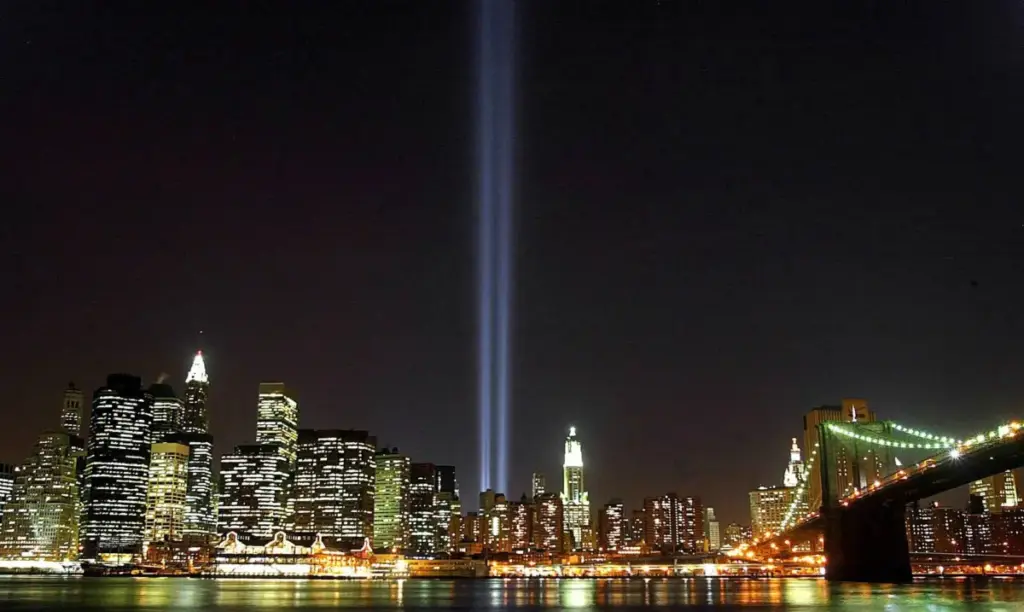
Today, the legacy of 9/11 persists in the subtle undertones of New York’s creative community. When contemporary editors and designers finish a grueling day of runway shows during Fashion Week, a glance out a taxi window often reveals the Tribute in Light—two soaring, radiant blue beams reaching into the night sky from the footprints of the fallen Towers.
Ultimately, the intersection of fashion and tragedy in 2001 revealed a profound duality: while clothing and style can seem painfully trivial in the face of mortality, they also provide a vital armor of joy, solace, and defiant hope for the future. In raging against the dying of the light, the fashion industry learned that beauty and creativity are not mutually exclusive from grief—they are, in fact, essential tools for survival.