Executive Overview
In the modern landscape of the global luxury market, navigating the fashion industry as an emerging independent designer is an exercise in relentless endurance. Today’s young creatives must contend with a hyper-saturated ecosystem dominated by social-media-first labels, celebrity-backed start-ups, and an endless churn of transient trends that drown out authentic craftsmanship. To carve out a viable space requires more than just aesthetic sensibility; it demands a radical reimagining of how clothing intersects with art, architecture, and performance.
Despite the steep financial barriers, shifting consumer habits, and structural gatekeeping that define the contemporary market, a new guard of artisans is steadily rising to the top. Eschewing cheap viral stunts and hollow marketing gimmicks, these designers are staking their claims through uncompromised visions, meticulous technical execution, and an innate ability to capture the cultural zeitgeist. Their creations are favored by boundary-pushing musicians, industry tastemakers, and global style icons. As this new wave of talent reshapes the stylistic vocabulary of the 2020s, a close examination reveals a cohort defined by uncompromising artistry, material innovation, and a fearless disregard for conventional industry boundaries.
Detailed Chronology: The Evolution of the 2026 Emerging Vanguard
The trajectory of independent fashion over the past half-decade has mirrored the broader economic and digital shifts of the post-pandemic era. The following chronology outlines the pivotal milestones, runway debuts, and pivotal collection moments that have defined the ascent of these ten revolutionary labels.
- 2021: Amid ongoing global uncertainty, Antonio Tarantini launches ATXV, bringing a fresh, club-centric energy to the Italian design ecosystem. Simultaneously, Gabe Gordon establishes his independent label in New York, setting the stage for a distinct brand of downtown subversion and whimsical knitwear.
- 2023–2024: Digital platforms become the primary incubator for raw talent. Ilya Migmoon utilizes Instagram as a living CV, capturing the attention of international stylists with his dramatic, hyper-Victorian corsetry and avant-garde staging. Across the Atlantic, Freddy Coomes and Matt Empringham begin turning heads with architectural silhouettes, dressing cultural figures like Emma Corrin in uniquely camp, sculptural garments.
- Late 2024 – Early 2025: Material innovation takes center stage. Daniel Del Valle’s TheVxlley shakes up London Fashion Week with porcelain teacup corsets and garments integrating living botanical elements, proving that nature and high fashion can successfully coexist. Meanwhile, the Institut Français de la Mode graduate showcase introduces Tidjane Tall to the Parisian establishment, where his razor-sharp tailoring and high-glamour maximalism instantly captivate industry insiders.
- 2026 (The Breakthrough Year):
- February 2026: Andrew Curwen makes his official New York Fashion Week debut, solidifying his status as the city’s premier purveyor of romantic darkness and world-class corsetry. Simon Carle catches global attention as his vintage-reworked hosiery and molded tattoo-clothing outfits adorn Rosalía and Björk’s dance troupes at the BRIT Awards.
- Mid-2026: Patrick Taylor transitions from his tenure under Thom Browne to stage his independent NYFW debut, expanding his technical knitwear expertise into his inaugural womenswear collection. A Letter (formerly Coomes and Empringham) prepares its official runway debut at London Fashion Week, building on years of viral digital success. Meanwhile, Geordie Campbell distills British queer history and working-class iconography into his debut ready-to-wear collection, "Rough Pointe."
Supporting Context & Metrics: The Anatomy of Modern Independent Success
Operating an independent fashion house in the mid-2020s requires balancing high artistic integrity with nimble operational strategies. To understand how these designers survive and thrive, industry analysts look at several structural metrics:
- Direct-to-Consumer & Social Capital: Unlike heritage houses backed by massive luxury conglomerates, emerging labels leverage platforms like Instagram and TikTok not merely as advertising vectors, but as direct archives and direct-to-consumer pipelines. Migmoon and A Letter have successfully built global client bases entirely through digital curation before ever staging traditional runway shows.
- Deadstock and Sustainable Sourcing: With environmental scrutiny at an all-time high, modern artisans are inherently sustainable. Designers like Simon Carle (utilizing deadstock hosiery and vintage fabrics) and Gabe Gordon (optimizing fabric consumption to minimize waste) demonstrate that ecological responsibility is no longer an add-on, but a fundamental design constraint.
- Cross-Disciplinary Collaborations: The modern designer does not operate in a vacuum. By bridging fashion with fine art, sexual wellness (Gabe Gordon’s partnership with LBDO), and architectural sculpture, these brands diversify their cultural touchpoints, creating multiple revenue streams and securing long-term cultural relevance.
Official Profiles of the Designers Reshaping Fashion
ATXV: The Party-Girl Whisperer
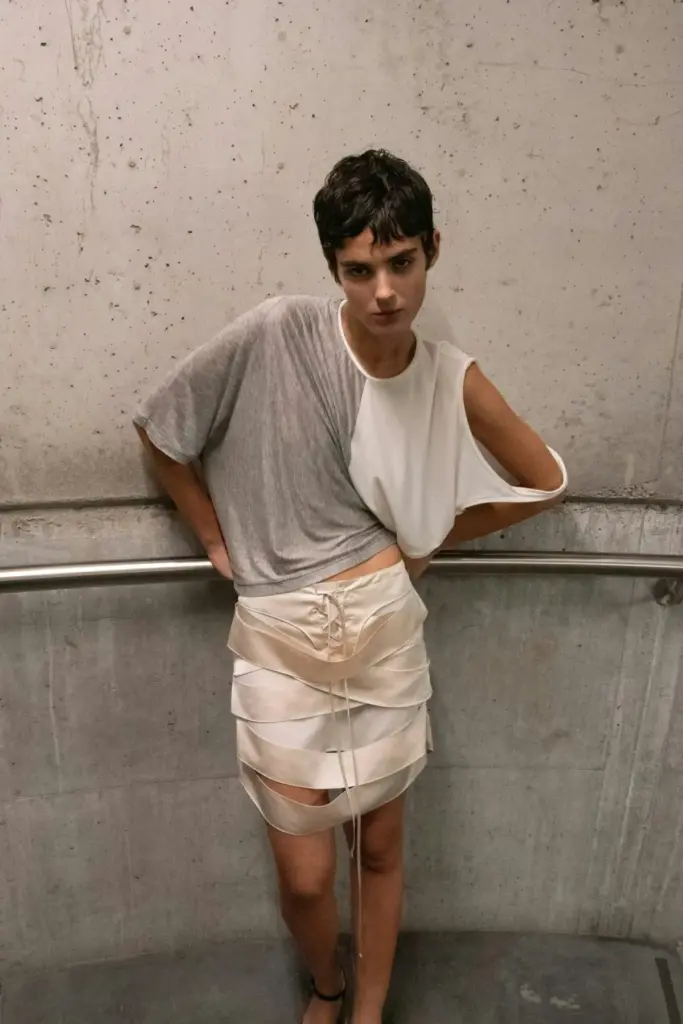
While the old guard of Milan continues to master the traditional linen suit and day dress, the new generation is heading straight for the subterranean glamour of the club. Founded in 2021 by Antonio Tarantini, ATXV sits comfortably at the vanguard of this shift. Specializing in slinky, tiered cotton separates and unapologetically sexy party dresses, Tarantini has amassed a devoted following across the fashion and music industries, counting Charli xcx, Rosé, and Adéla among his repeat clients.
The Spring/Summer collection showcases the core appeal of the label: layered slip dresses featuring intricate cutouts and sheer paneling that create visual intrigue while maintaining structural coverage. Paired with itty-bitty tank tops and silk uniform-inspired shirts, ATXV delivers the ultimate wardrobe for those seeking to look arrestingly undressed while executing precise technical restraint.
Andrew Curwen: The New Romantic
New York fashion has always maintained a healthy duality: for every pristine, daylight-ready dress brand, the ecosystem demands a dark romantic to capture the city’s underlying grit. Enter Andrew Curwen. Making his official New York Fashion Week schedule debut, Curwen presented a tightly curated collection of fantastical all-black corsetry, delicate spun-knit wisps, and decadent eveningwear.
His work expertly navigates the tensions between light and dark, the undone and the meticulously perfected, fantasy and grit. Serving clients such as 2hollis, Lady Gaga, and Slayyyter—for whom he famously crafted the black rabbit look for the "Brand New Chanel$" music video—Curwen pairs unbridled romanticism with elite construction standards, proving that niche subcultural specificity can successfully converse with global pop superstardom.
Gabe Gordon: The Downtown Freak
Operating his eponymous label since 2021, Gabe Gordon has cultivated a dedicated fan base including Troye Sivan, PinkPantheress, and Dua Lipa. Recently, through a collaborative expansion of perspective and craftsmanship alongside his husband, costume designer Timothy Gibbons, Gordon’s vision has reached new heights.
His Fall/Winter collection evokes the surreal aesthetic of Tonya Harding subleasing an apartment in Bushwick—blending skater skirts, corseted plaid tops, and cutesy knits with prop ice skates and tousled 1980s hair. Underpinning the whimsical, campy, and unapologetically humorous ethos of Gordon and Gibbons is a rigorous commitment to sustainability and intelligent fabric utilization. Their collaborative scope extends beyond apparel, highlighted by an object collection created in partnership with Australian sexual wellness brand LBDO, featuring a bespoke vibrating ring housed in a metal, egg-like vessel.
TheVxlley: The In-Betweener
The integration of natural elements into contemporary clothing has been explored by numerous creators, yet none have achieved the surreal resonance of Daniel Del Valle’s TheVxlley. Capturing global attention at London Fashion Week, the self-trained designer disrupted traditional runways with porcelain teacup corsets and living, organic silhouettes that married the rawness of nature with high-drama costuming.
In an industry heavily reliant on printed representations of flora, Del Valle’s physical incorporation of actual plant life breathes biological vitality back into structural garments like dresses and skirts. Operating as a fresh face on the international stage, Del Valle has already secured high-profile placements, including styling nods from Lady Gaga.
Patrick Taylor: The Sporty Knitter
It is a rare occurrence to encounter a lifejacket fashioned entirely from fine merino wool, yet Patrick Taylor treats technical impossibility as a baseline challenge. Drawing deeply from a childhood immersed in competitive sailing and skiing in Great Britain, the designer channels his active upbringing into sophisticated knitwear engineering.
Following a foundational tenure under Thom Browne, Taylor launched his independent enterprise, producing oversized quarter-zip sweaters, intricately laced knit tops, and versatile denim separates. Making his New York Fashion Week debut, Taylor introduces his inaugural womenswear offering, translating his mastery of masculine sportswear silhouettes into a broader, highly anticipated feminine vocabulary.
Simon Carle: The Avant-Garde Minimalist
When Rosalía took the stage at the 2026 BRIT Awards to perform "Berghain" alongside Björk, the sartorial focus immediately gravitated toward the backup dance troupe. The architectural garments were the work of Simon Carle, an avant-garde minimalist who transforms vintage and deadstock fabrics, hosiery, and athletic wear into Margiela-esque artifacts of iterative design.
The crown jewel of Carle’s output, however, is his on-skin tattoo-clothing methodology—most notably demonstrated when Tyla wore a custom-molded snakeskin-printed top during Paris Fashion Week. Carle successfully merges performance art, textile preservation, and bodily adornment without collapsing into predictable stylistic tropes.
Ilya Migmoon: The Modern Couturier
While digital media often receives critique for flattening culture, platforms like Instagram remain indispensable incubators for undiscovered genius. Enter Ilya Migmoon, whose digital footprint functions as an active portfolio, drawing international stylists and celebrities to his heavily Victorian-coded, hyper-dramatic atelier pieces.
Migmoon’s portfolio features ultra-rigid corsets with exaggerated side bustles, midi dresses blanketed entirely in feathers with architectural wings protruding from the waist, and a ten-foot train constructed from human wigs. Worn by cultural forces such as Rosalía and Joey King, Migmoon’s work proves that geographical isolation from traditional fashion capitals is entirely surmountable when technical mastery speaks for itself.
Tidjane Tall: The Parisian Peacock
Men’s Fashion Week in Paris serves as a vital scouting ground for editors seeking the next paradigm-shifting talent. During the Institut Français de la Mode’s graduate showcase, the undisputed breakout star was Tidjane Tall. Presenting a tightly edited collection of just six looks, Tall opened the exhibition with an explosion of fringed sheath tops engineered from laser-cut viscose crepe, complemented by a low-cut maroon shearling dress and Swarovski-encrusted wool briefs.
Tall’s architectural black wool dress displayed a level of structural maturity rarely seen in a debutante collection. His maximalist, high-glamour interpretations of foundational menswear staples immediately resonated with luxury insiders, leading Paloma Elsesser to pull his maroon dress for a high-profile Bvlgari celebration during Couture Week.
A Letter: The Fabric Sculptors
Previously operating under individual credits—most notably Freddy Coomes crafting Emma Corrin’s wind-swept, campy polo dress featuring a red taffeta skirt and exaggerated black bow—the creative duo has officially rebranded as A Letter. Ahead of their official London Fashion Week runway debut, Coomes and Empringham have dominated digital feeds with their geometric, architectural interpretations of scarves, footwear, and dresses, alongside sculptural botanical imagery featuring single yellow silk roses cradled in the mouths of close friends.
Treating wool and silk not merely as textiles, but as malleable artistic mediums, the duo’s design philosophy prioritizes sculptural form both on and off the body. Their debut retail offering, the Francesca dress—a striking turquoise shift featuring a singular chest bow—perfectly encapsulates their witty, direct approach to modern garment construction.
Geordie Campbell: The British Humorist
What narrative thread connects contemporary dancers, British queer culture, and classic boxing culture? For Geordie Campbell, they collectively formed the conceptual springboard for his debut ready-to-wear collection, "Rough Pointe." Drawing inspiration from seminal cultural touchstones like Billy Elliot alongside archival 1980s dance knitwear, Campbell celebrates the eccentricities of daily life through the disarming medium of denim, graphic tees, and utilitarian workwear.
The resulting collection is charmingly idiosyncratic and quintessentially English, carefully avoiding the traps of nostalgic pastiche. The inherent wearability of Campbell’s garments anchors a distinctly tongue-in-cheek humor that signals a refreshing, grounded direction for British menswear.
Future Outlook
As the luxury fashion market stabilizes in the latter half of the decade, the dominance of algorithmic trend-forecasting and fast-trend iterations faces an increasingly skeptical consumer base. The designers profiled here—spanning ATXV’s club-ready sensuality, TheVxlley’s botanical architecture, and A Letter’s sculptural minimalism—represent a vital corrective to this commercial fatigue.
The future of independent fashion relies on this exact synthesis of uncompromising artisanal rigor and digital agility. By refusing to compromise their singular artistic visions for short-term commercial expedience, these ten design houses are not merely participating in the contemporary fashion conversation—they are authoring its next definitive chapter. As they step onto international schedules, scale their production, and continue to dress the defining cultural icons of our time, the global fashion establishment would do well to take note: the new avant-garde has arrived, and it is here to stay.