Executive Overview
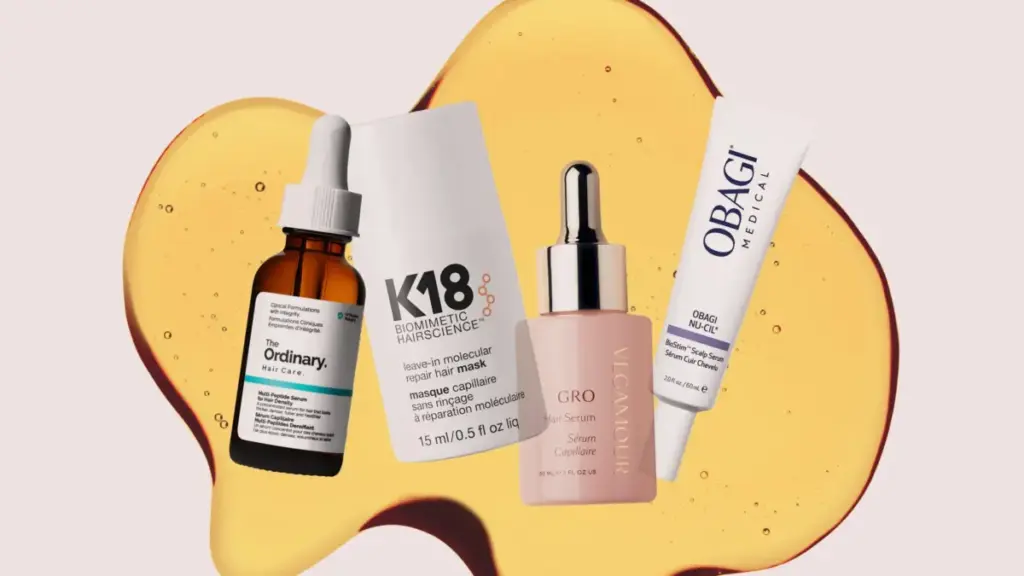
Over the past few years, the beauty and wellness market has experienced a massive surge in scalp-care innovations, shifting away from aggressive chemical treatments toward biomimetic science. Among the most popular ingredients dominating cosmetic shelves and digital ads are peptide hair serums. Touted for their ability to promote thicker, fuller, and healthier-looking hair, these serums have become a staple in modern preventative hair-care routines.
However, as consumer spending on hair thinning solutions increases, so does the confusion surrounding what these products can—and cannot—realistically achieve.
To separate marketing hype from dermatological reality, this report investigates the science of peptide hair serums. Drawing on insights from leading board-certified dermatologists, including Dr. Obayomi and Dr. Hovenic, we examine how peptides function on a cellular level, how they compare to gold-standard hair loss treatments like minoxidil, and whether they are worth integrating into your daily regimen.
While peptide serums excel at fostering an optimal scalp environment, extending the anagen (growth) phase, and reinforcing the connective matrix of the hair follicle, experts emphasize that they are not a standalone cure for diagnosed hair loss conditions such as androgenetic alopecia. Instead, they are best deployed as a strategic supportive adjunct—or an early-intervention tool for those noticing the first signs of thinning.
Detailed Chronology: The Evolution of Scalp Care and Peptide Science
To understand where peptide hair serums fit into the current landscape, it is necessary to trace how hair-care science has evolved from a superficial focus on the hair strand to a deep, biological focus on the scalp ecosystem.
Phase 1: The Era of Topical Cosmetics (Pre-2010s)
For decades, the commercial hair-care industry treated hair primarily as dead protein. Formulas focused heavily on silicones, heavy oils, and heavy surfactants designed to coat the cuticle, mask damage, and provide temporary smoothness or volume. Scalp health was largely reduced to anti-dandruff shampoos containing zinc pyrithione or ketoconazole. Little attention was paid to the hair follicle itself unless a consumer was turning to pharmaceutical interventions like minoxidil.
Phase 2: The Skintification of Hair (2010s–2020)
As consumer awareness grew around skincare ingredients—such as hyaluronic acid, niacinamide, and chemical exfoliants—the beauty industry underwent a paradigm shift known as the "skintification of hair." Brands began applying dermatological principles to the scalp, recognizing that healthy hair growth originates from a well-nourished, balanced dermal environment. Scalp serums, physical and chemical scalp scrubs, and targeted follicle treatments entered the mainstream market.
Phase 3: The Rise of Biomimetic Peptides (2020–Present)
Most recently, cosmetic chemistry has leaned heavily into biotechnology, specifically utilizing peptides. Originally popularized in high-end anti-aging skincare for their ability to signal collagen production and cellular repair, peptides have naturally transitioned into trichology (the scientific study of the health of hair and scalp). Today, specialized peptide complexes—such as acetyl tetrapeptide-3 and copper peptides—are formulated into advanced serums designed to communicate directly with hair follicles, marking a new frontier in targeted, non-invasive scalp care.
Supporting Context & Metrics: Understanding the Science of Peptides
To evaluate the efficacy of peptide hair serums, one must first understand what peptides are and how they interact with human biology.
What Are Peptides?
Peptides are short chains of amino acids linked together by peptide bonds. While proteins are long, complex chains of amino acids folded into specific 3D structures, peptides are smaller and can act as precise signaling molecules within the body.
When applied topically to the scalp, specific peptide sequences can bind to cellular receptors, triggering targeted biological responses. According to dermatological evaluations, these signaling molecules can:
- Extend the Growth Phase: Help prolong the anagen (growth) phase of the hair cycle, reducing premature shedding (telogen phase).
- Reinforce Follicular Anchoring: Strengthen the extracellular matrix surrounding the hair root, helping to secure the strand within the follicle.
- Boost Micro-Environment Health: Support overall scalp vitality by encouraging cellular turnover and tissue repair.
Peptides vs. Clinical Gold Standards
While the cellular mechanisms of peptides sound promising, experts caution against conflating them with clinically proven medical treatments.
| Attribute | Peptide Hair Serums | Minoxidil / Finasteride | PRP & Low-Level Laser Therapy |
|---|---|---|---|
| Primary Function | Scalp health, signaling, follicle support | Vasodilation / Hormonal DHT blocking | Growth factor stimulation, cellular repair |
| Primary Use Case | Early thinning, preventative care, density support | Diagnosed androgenetic alopecia | Accelerated healing and localized hair revival |
| Regulatory Status | Cosmetic / Over-the-counter | FDA-approved pharmaceutical | In-office medical procedures |
| Results Timeline | 3 to 6 months of consistent use | 4 to 6 months | Varies by protocol |
As highlighted in clinical comparisons, peptide serums operate primarily as supportive players. They create an ideal environment for hair to thrive, but they do not alter systemic hormones (like finasteride) or dramatically upregulate localized blood flow in the aggressive manner that minoxidil does.
Official Statements & Expert Insights
To provide authoritative guidance, we look directly to leading medical professionals regarding safety, application, compatibility, and limitations.
Can Peptide Serums Regrow Hair?
Dr. Obayomi clarifies the boundary between cosmetic improvement and medical treatment:
"Peptide serums can encourage density and scalp health, and some ingredients have clinical data behind them, but they are not a substitute for evidence-based treatments for diagnosed hair loss. For conditions like androgenetic alopecia, the gold standards remain minoxidil, finasteride, and in-office treatments like PRP or low-level laser therapy."
For individuals experiencing early, subtle thinning, Dr. Obayomi notes that peptides serve as a reasonable starting point or adjunct therapy. However, rapid, patchy, or significant hair loss requires professional medical evaluation. Conditions such as telogen effluvium, traction alopecia, central centrifugal cicatricial alopecia (CCCA), and thyroid-related shedding present distinct clinical profiles and necessitate specialized, individualized treatment plans from a board-certified dermatologist.
Safety Profiles and Special Populations
Generally, peptide hair serums boast high tolerability and a favorable safety profile.
"The most common issues are scalp irritation or contact dermatitis, usually from other ingredients in the formula like fragrance or alcohol, not the peptides themselves," explains Dr. Obayomi.
She advises individuals—especially those with sensitive skin—to perform a patch test on the inner arm before committing to daily scalp application.
When navigating pregnancy and breastfeeding, extra caution is required. While large-molecule peptides feature minimal systemic absorption and are generally considered low-risk, multi-ingredient serums often harbor complex formulations. Expecting and nursing parents are advised to review full ingredient lists with their OB-GYN and strictly avoid serums containing minoxidil.
Layering and Combination Therapies
Can peptides be integrated with existing hair-growth routines? According to Dr. Hovenic, the answer is a resounding yes, largely due to complementary mechanisms of action:
"Minoxidil increases blood flow to stimulate growth, while peptides boost follicle health and longevity."
Rather than mixing topical products simultaneously, experts recommend staggering applications—such as applying a peptide serum in the morning and minoxidil at night—to minimize potential formula interference and skin irritation. Furthermore, topical peptides can comfortably complement oral hair-loss medications, providing localized follicle support to match systemic benefits.
Customizing by Hair Texture and Type
Peptide serums are universally compatible across all hair types and textures because the active biological mechanisms remain consistent. However, product selection and application methodology must be tailored to individual hair architecture:
- Textured or Curly Hair: Experts recommend lightweight, water-based serums applied precisely to the scalp in sections to avoid disrupting natural curl patterns or styling.
- Oily or Fine Hair: Nongreasy, fast-absorbing, non-comedogenic formulas work best to prevent weighing the hair down or exacerbating oil production.
- Dry or Damaged Hair: Combining a scalp-focused peptide serum with a bond-repair peptide treatment applied directly to the hair lengths addresses dual concerns.
Consistency remains the ultimate predictor of success. Experts universally emphasize that consumers must commit to a three-to-six-month window of continuous use before evaluating visible outcomes.
Future Outlook: The Next Generation of Scalp and Hair Science
As trichology and biotechnology continue to converge, the future of hair-care formulations looks increasingly sophisticated. We are moving past generalized botanical extracts into hyper-customized, bio-engineered peptide sequences tailored to specific forms of alopecia and individual scalp microbiomes.
1. Targeted Biomimetic Engineering
Future peptide serums will likely feature synthetic peptide chains engineered to mimic specific human growth factors with microscopic precision. By targeting exact cellular receptors responsible for follicle miniaturization, these next-generation formulas may narrow the efficacy gap between cosmetics and pharmaceuticals.
2. Advanced Delivery Systems
One of the primary challenges with topical scalp treatments is penetration through the stratum corneum of the scalp. Upcoming formulations are exploring advanced delivery technologies—such as micro-encapsulation and liposomal delivery systems—to ensure active peptides reach the dermal papilla cells deep within the hair follicle rather than remaining on the skin’s surface.
3. Holistic, Multi-Modal Regimens
The future of hair restoration will not rely on a single miracle product. Instead, dermatologists anticipate an era of highly personalized, multi-modal regimens where topical peptide serums, oral supplements, customized light therapies, and lifestyle modifications work synergistically to preserve and optimize hair density over a lifetime.
Conclusion
Peptide hair serums represent an exciting, scientifically backed evolution in scalp care. While they should not be viewed as a standalone cure for clinical hair loss, their ability to nourish the scalp environment, strengthen follicular anchoring, and support overall hair density makes them a valuable addition to a proactive, comprehensive hair-wellness routine.