For decades, the cultural narrative surrounding type 1 diabetes (T1D) has been firmly anchored in childhood. Millions grew up understanding the autoimmune condition as a pediatric diagnosis—a sudden, life-altering reality that strikes young people, forcing them and their families into an abrupt education on insulin therapy, blood glucose tracking, and dietary restrictions.
However, medical epidemiology tells a vastly different and increasingly common story: adult-onset type 1 diabetes is a distinct reality for a significant portion of the patient population. According to recent clinical data, roughly 37 percent of all new T1D diagnoses occur in adults over the age of 30.

This is the narrative of Dr. Alisha Brown, who at 35 years old joined this statistical demographic. Diagnosed mid-pandemic while balancing a demanding business and doctoral studies, Brown faced not only the existential shock of a chronic, lifelong medical condition but also a wave of discouraging medical advice. Early encounters with healthcare providers yielded a reductive prognosis: that her days of high-intensity endurance athletics were over, and that a sedentary or heavily restricted lifestyle was her new baseline.
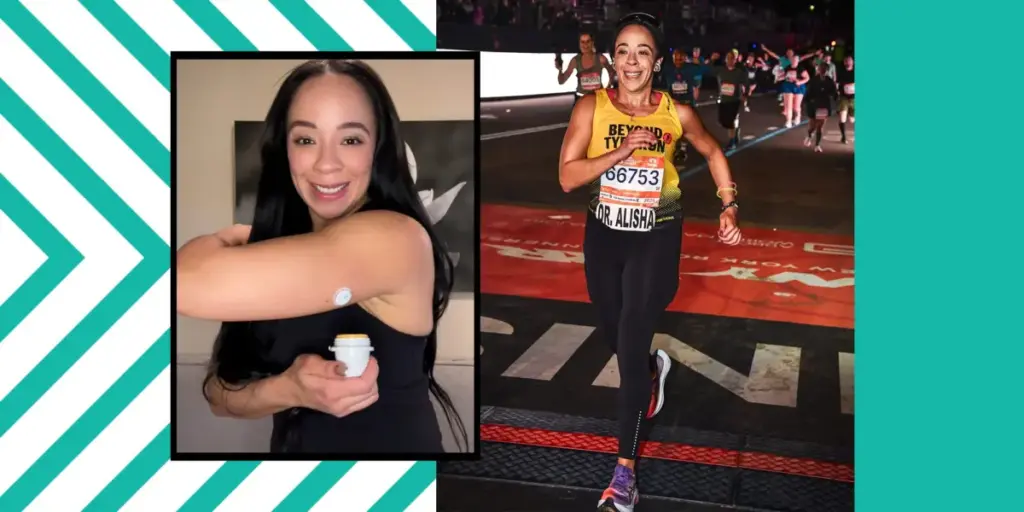
Refusing to accept a diminished quality of life, Brown charted an extraordinary counter-narrative. Within six months of crossing the finish line of her first 5K, she transitioned from a novice runner to completing the New York City Marathon. Today, she is an endurance athlete, a fundraiser raising tens of thousands of dollars for diabetes advocacy, and a prominent voice for adult-onset T1D patients. Her journey—supported by advanced continuous glucose monitoring technology, specialized endocrinological care, and a robust community—dismantles antiquated medical stereotypes and redefines what is physically possible with a chronic condition.

Detailed Chronology: From Pandemic Burnout to the ICU
The Overtworked Months and Unrecognized Fatigue
Like many professionals navigating the final quarter of 2020, Brown’s life was defined by high stress and high output. Operating her own business while racing to complete her doctoral dissertation meant long hours, screen fatigue, and a general state of exhaustion. Naturally, she attributed her profound, lingering tiredness to the extraordinary global circumstances of the COVID-19 pandemic and the routine year-end corporate crunch.
"Leading up to my diagnosis, I remember feeling really, really tired, but I attributed that fatigue to what was happening in my life at the time," Brown recalls.

Historically, Brown had relied on traditional holiday breaks—periods spent unplugged and surrounded by family—to reset her physical and mental reserves. But the winter of 2020 proved different. The exhaustion did not lift; instead, it entrenched itself deeper into her physiology, compounding quietly beneath the surface of her daily routine.
The Turning Point: The Zumba Class Breakdown
The undeniable catalyst for Brown’s diagnosis arrived not in a doctor’s office, but in a familiar fitness studio. Attending a Zumba class—a routine she knew intrinsically, with choreography deeply embedded in her muscle memory—she encountered a sudden, terrifying biological disconnect.

"I knew the choreography like the back of my hand, but all of a sudden those moves felt unfamiliar," she says. "I knew what moves were coming next, but my body just would not do them."
As each subsequent song played, her energy evaporated into profound sluggishness. Her performance degradation was so pronounced that the instructor, who knew Brown well, publicly remarked on her uncharacteristic lethargy. Despite this physical failure, diabetes remained entirely off her radar. She had zero family history of the disease, and her comprehensive annual physicals and lab work had consistently returned pristine results.

The Urgent Care Awakening and Diabetic Ketoacidosis
It required maternal intuition to pivot Brown toward medical intervention. During a phone call recounting the Zumba incident, her mother observed that Brown appeared to have rapidly lost weight. Though Brown mentally dismissed the observation—her clothes still fit adequately—her mother’s insistence prevailed. "Just go," her mother urged. "If it’s nothing, then it’s nothing. But if it’s something, we need to know."
At the urgent care clinic, a thorough battery of diagnostics was initiated. Panels for pregnancy and COVID-19 returned negative results. Finally, the nurse practitioner performed a simple finger-stick blood glucose test.

The resulting digital readout was staggering: 362 mg/dL.
For clinical context, a normal post-meal blood sugar level hovers around 140 mg/dL two hours after eating, while fasting levels range from 70 to 99 mg/dL. Brown was in a state of diabetic ketoacidosis (DKA)—a life-threatening medical emergency wherein the pancreas ceases insulin production entirely, forcing the body to break down fat for fuel at an unsustainable rate. This metabolic crisis generates toxic acids called ketones, triggering acute symptoms such as severe dehydration, nausea, vomiting, and, ultimately, multi-system physiological distress.

Supporting Context & Metrics: The Adult-Onset T1D Reality
Brown’s experience highlights a critical blind spot in modern primary care: the under-recognition of adult-onset type 1 diabetes.
Epidemiological Shift
For decades, medical training framed type 1 diabetes as "juvenile diabetes," frequently misdiagnosing adult-onset cases as type 2 diabetes due to the patient’s age. However, recent clinical studies published in medical literature emphasize that adult-onset T1D accounts for a substantial percentage of total diagnoses, with roughly 37 percent of patients receiving their initial diagnosis after the age of 30.

The Psychological Toll and Identity Crisis
The medical trauma of transitioning from a healthy, high-functioning adult to an ICU patient dependent on exogenous insulin is profound. Brown describes her initial weeks post-diagnosis as an identity crisis.
"My first diabetic episode weighed heavily on me," she admits. "I wondered, What did I do to myself? How much red tape did I run through? But I didn’t know the signs, and my symptoms were not necessarily obvious, so I had to learn to give myself grace."

Reflecting on her time in the ICU, Brown wrestled with misplaced self-blame—regretting that she had not questioned her extreme fatigue sooner or pushed for diagnostic blood panels weeks earlier. This psychological burden is common among adult-onset T1D patients, who must grieve the sudden loss of metabolic autonomy while simultaneously mastering complex disease-management protocols.
Official Statements and Medical Friction: Challenging the Status Quo
The Flawed Early Prognosis
Upon discharge, Brown’s initial encounters with endocrinology reinforced restrictive, generalized paradigms of chronic illness management. Several physicians delivered a disheartening verdict: "You’re not going to be able to sustain your level of activity."

These early medical professionals insisted that maintaining stable glucose levels while engaging in high-intensity exercise was virtually impossible for someone with her profile, prescribing rigid, low-carbohydrate diets and fixed insulin dosages that failed to account for her athletic background.
The result was a dangerous biochemical mismatch. Her first endocrinologist prescribed an excessive volume of insulin without factoring in her physical exertion, triggering severe, recurrent post-workout hypoglycemic crashes.

Finding the Right Clinical Partnership
It took nearly two years of advocacy and searching before Brown secured a partnership with an endocrinologist who viewed her athletic ambitions as an asset rather than a liability. This new provider directly addressed her lifestyle goals, systematically decreasing her baseline insulin dosages based on real-time activity metrics.
Furthermore, this specialist integrated a diabetes care and education specialist and a registered dietitian into her care team—both of whom possessed deep clinical experience managing T1D patients with intense athletic lifestyles. This collaborative, holistic medical approach transformed her disease management from a restrictive cage into an optimized science.

Future Outlook: Miles Beyond Limits
From a Single 5K to the World Marathon Majors
Brown’s athletic renaissance began humbly in March 2025, when a gym friend invited her to participate in a local 5K. Crossing that finish line unlocked an immediate psychological and physical breakthrough.
Fueled by a community comment in an online T1D forum, Brown pivoted from a 5K finish to applying for a charity slot with Beyond Type 1 for the prestigious New York City Marathon—one of the elite Abbott World Marathon Majors. Selected against her own expectations, she plunged into a grueling training regimen combining four to five days of running and three to four days of heavy strength training weekly.

Mastering T1D Endurance Fueling
Marathon training with type 1 diabetes requires meticulous physiological tracking. Utilizing a continuous glucose monitor (CGM)—specifically the Abbott FreeStyle Libre 3 Plus—Brown and her clinical team engineered a precise fueling strategy:
- Carbohydrate Intake: Consuming 20 to 30 grams of carbohydrates every hour during long runs, sourced from gels, fruit snacks, and sports drinks.
- Timing Simulations: Executing training runs later in the day to mirror the 11:00 AM race start time, allowing her to understand and pre-empt natural midday glucose spikes.
- Safety Protocols: Carrying emergency glucose pens and maintaining direct communication checkpoints with friends and family stationed along the race route.
Setting Global Sights
Today, Brown’s athletic calendar is international and ambitious. After conquering New York, she set her sights on the Sydney Marathon running alongside Team Abbott, followed by a personal record (PR) attempt at the Chicago Marathon (raising funds for Black Girls Run), and a return to New York with Beyond Type 1. In total, her racing calendar spans three major marathons in a single calendar year, complemented by over $13,000 raised for chronic illness charities.

Her ultimate athletic ambition? To complete all eight Abbott World Marathon Majors, proving definitively that an autoimmune diagnosis is not a full stop, but merely a pivot point toward a resilient, unbound future.