Executive Overview
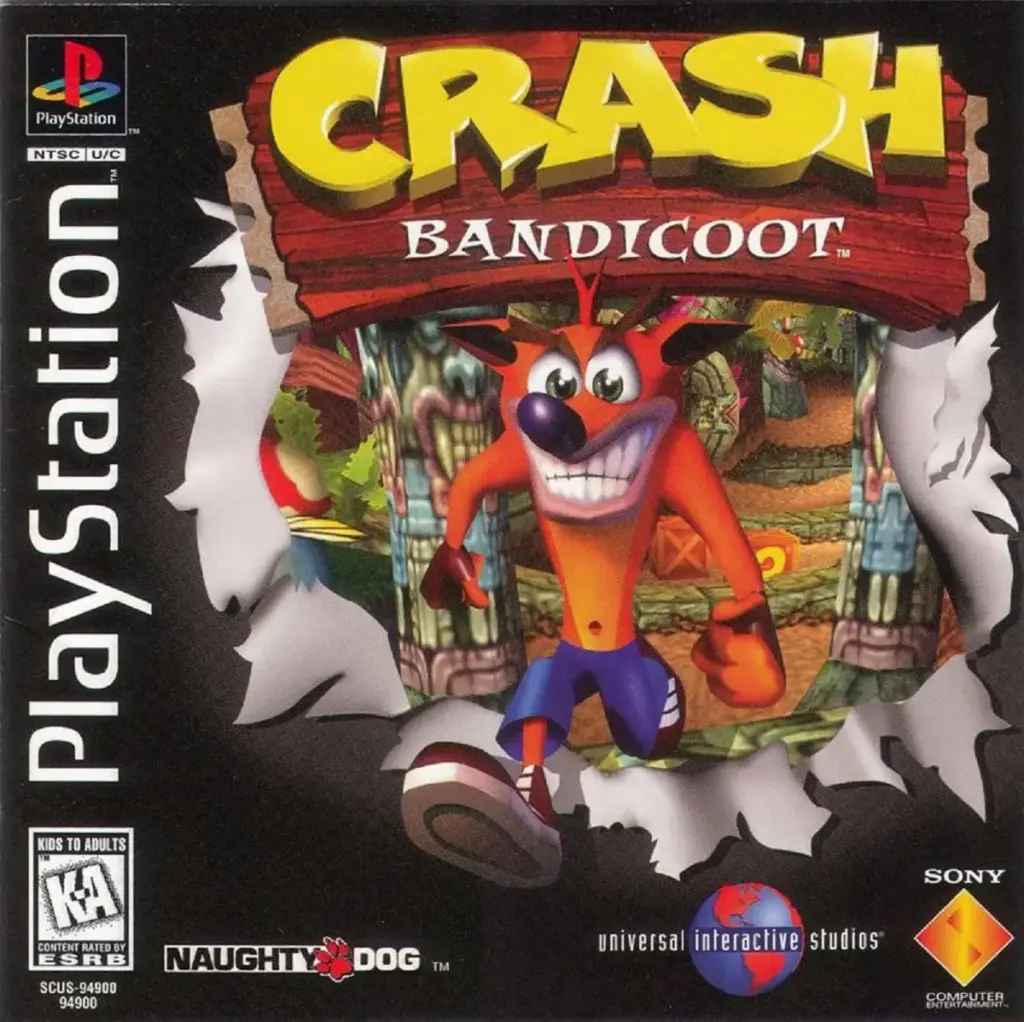
Thirty years ago, a quirky, denim-clad orange marsupial bounced onto the original PlayStation and fundamentally altered the landscape of 3D platforming. Created by Naughty Dog, Crash Bandicoot was engineered to be Sony’s definitive mascot—a direct, attitude-heavy counter-offensive to Nintendo’s ubiquitous Super Mario and Sega’s lightning-fast Sonic the Hedgehog.
Yet, as the franchise officially marks its monumental third decade, a stark dichotomy defines its existence. While cultural fondness, active communities, and lucrative remasters prove that consumer demand for the character remains robust, Crash himself has largely vanished from active release schedules. He makes fleeting cameo appearances—such as a skin in Fortnite—but anchors virtually no marquee single-player adventures.
This modern absence is not a symptom of creative bankruptcy or audience apathy; rather, it serves as a glaring case study in contemporary AAA gaming economics. Major Western publishers, fixated on astronomical margins and chasing hyper-scalable live-service juggernauts, increasingly view critically acclaimed, profitable mid-tier or even solid hit-level releases as institutional liabilities. As fans and industry critics celebrate thirty years of Wumpa fruit, boulder escapes, and agonizing difficulty spikes, the pressing question remains: why has one of gaming’s most recognizable icons been left to languish in corporate limbo?
Detailed Chronology: From 90s Phenom to Remaster Boom
The Golden Era of the PlayStation 1
In the mid-1990s, the transition from two-dimensional sprite-based graphics to three-dimensional polygons was fraught with awkward camera angles and clunky controls. Naughty Dog bypassed these teething issues by pioneering a forward-scrolling perspective affectionately dubbed "butt-kick" platforming. The original 1996 Crash Bandicoot introduced players to the eponymous hero, his floating wooden protector Aku Aku, and his nemesis, the mad scientist Dr. Neo Cortex.

The game was a visual and technical marvel for its time, testing players’ patience and hand-eye coordination with infamous levels featuring crumbling bridges, barrel-riding trials, and claustrophobic boulder chases. Sequels such as Crash Bandicoot 2: Cortex Strikes Back (1997) and Crash Bandicoot: Warped (1998), alongside the multiplayer spin-off Crash Bash (2000), cemented the franchise as a cornerstone of late-90s youth culture.
The Wilderness Years and the N. Sane Resurgence
Following the original trilogy, the rights bounced across various developers and publishers, leading to a sprawling era of uneven spin-offs and mid-tier platformers that slowly eroded the character’s prestige. By the late 2000s, Crash had retreated entirely into the shadows of the video game industry.
The turning point arrived in 2017 with the release of the Crash Bandicoot N. Sane Trilogy. Developed by Vicarious Visions and published by Activision, the ground-up remasters of the first three PlayStation classics caught the industry flat-footed. Propelled by pure 90s nostalgia and tight, modernized controls, the collection sold over 20 million copies—surpassing the lifetime sales of any individual legacy title in the franchise.
This unexpected commercial triumph proved that the market for classic platforming was far from dead. It paved the way for a remake of the beloved kart racer Crash Team Racing Nitro-Fueled in 2019, followed closely by the long-awaited, critically acclaimed true sequel: Crash Bandicoot 4: It’s About Time in 2020.

Supporting Context & Metrics: The Economics of Modern AAA Publishing
While Crash Bandicoot 4 was widely praised by critics and fans alike as an authentic, challenging love letter to the original games, its commercial trajectory exposed the shifting priorities of its corporate parent, Activision.
According to internal documentation shared via developer LinkedIn profiles, Crash Bandicoot 4 crossed the five million copies sold threshold by 2024. By virtually any historical standard in the games industry, selling five million units of a single-player platformer represents a resounding commercial success. However, when juxtaposed against the 20-million-plus sales of the N. Sane Trilogy, the stark influence of built-in nostalgia becomes immediately apparent.
[Crash Franchise Sales Milestone Comparison]
├── Crash Bandicoot N. Sane Trilogy (2017)  ──> 20+ Million Copies (Nostalgia-Driven)
└── Crash Bandicoot 4: It’s About Time (2020) ──> 5+ Million Copies (Critical Hit / Moderate Scale)
This sales discrepancy highlights a systemic malaise infecting major Western publishers. Corporations like Activision—now subsumed into the colossal Microsoft gaming ecosystem—operate under hyper-consolidated financial mandates. Unless a property possesses the mathematical potential to generate tens of millions of sales annually on par with Call of Duty or Fortnite, publishers frequently deem the profit margins "not worth the trouble."
Consequently, hundreds of millions of dollars are routinely funneled into volatile live-service gambles, while modestly budgeted, artistically sound platformers with guaranteed mid-tier profitability are left on the cutting room floor. Evidence of this corporate risk-aversion is found in the cancellation of a planned Crash-and-Spyro crossover platforming project at developer Toys For Bob, shelved directly in the wake of Crash Bandicoot 4’s "modest" commercial performance.

Fan Perspectives & Nostalgia: Voices from the Trenches
To understand why Crash Bandicoot retains such cultural gravity, one need only look to the personal reflections of those who grew up dodging venomous plants and spinning robotic turtles in the dark hours of the night.
- Myles Goode (Picture Editor): Recalling his first exposure to 3D platforming after Sonic the Hedgehog, Goode notes how the franchise tested his patience in unprecedented ways. "I’d sometimes be up at 5am, determined to finish a level that had beaten me the night before, refusing to let it win… It wasn’t just a platformer to me—it felt like a genuine adventure, one that tested my patience, curiosity, and determination in equal measure."
- Joshua Halm (Freelance Reporter): Remembering his transition from arcade Space Invaders to a PlayStation bundle containing Rayman and Crash Bandicoot, Halm emphasizes the enduring nature of the gameplay. "When a friend said he still had the game in the loft a few years ago, a group of us spent hours reacclimatising… Turns out it’s still as fun now as it was nearly 30 years ago, even if my hand-eye coordination now leaves a bit to be desired!"
- Duncan Lindsay (Editorial Manager): Highlighting the sheer difficulty spikes of the early PlayStation 1 titles, Lindsay remarks on the franchise’s staying power. "The core three PS1 games are unashamedly difficult, and I have lost count of the amount of times I have fallen down holes from that insane broken bridge… If the 30th anniversary doesn’t present us with a new entry—or, at the very least, a Crash Bash re-release—then I will not be a happy bandicoot."
Future Outlook: Where Does the Marsupial Go From Here?
As the dust settles on Crash Bandicoot’s milestone thirtieth year, the immediate future of the franchise remains shrouded in ambiguity.
Following its split from Activision, developer Toys For Bob has pivoted toward working on sister franchise Spyro the Dragon, riding the momentum of the Spyro Reignited Trilogy’s impressive 11 million copy milestone. Meanwhile, persistent rumors regarding potential new racing titles or animated transmedia adaptations on platforms like Netflix continue to circulate among enthusiast communities, though concrete corporate confirmations remain absent.
For Crash to break free from his current holding pattern, a paradigm shift in how publishers evaluate intellectual property is likely required. If a high-profile multimedia play—such as a feature film or prestige streaming series—can successfully re-introduce the marsupial to a younger demographic, corporate hesitance may dissolve.

Crash Bandicoot may never again dominate global sales charts alongside multi-billion-dollar live-service ecosystems, nor does he need to. Thirty years of passionate community backing prove that the appetite for tight, creative, character-driven platforming is as ravenous as ever. He remains an indelible pillar of gaming history—one that richly deserves to be retrieved from corporate limbo and given the modern adventures his legacy demands.