Executive Overview
There are characters who simply inhabit a television series, and then there are characters who eventually become the lifeblood of the series itself. For four adrenaline-fueled, sun-drenched seasons on Netflix’s hit adventure drama Outer Banks, JJ Maybank was undeniably the latter. As the most volatile, fiercely loyal, and emotionally complex heart of the Pogues, JJ was the wildcard willing to risk everything—not just for gold or glory, but for the found family that kept him anchored to a life that constantly tried to break him.
Yet, as Outer Banks enters its fifth and final season, it opens with a jarring, definitive absence. JJ died at the conclusion of Season 4, and the creative team has made it clear that there is no miraculous resurrection waiting in the wings. This narrative choice sets up a profound and lingering paradox: why would a creator eliminate the emotional core of an ensemble cast only to structure an entire final chapter around his lingering shadow?
From the opening frames of Season 5, JJ is practically everywhere. He exists not in the flesh, but in the driving motivations of his grieving peers, the lingering trauma etched into Kiara’s every action, the overarching stakes of the final treasure hunt, and a series of strategic flashbacks—including glimpses into his troubled childhood. Rather than freeing the narrative from a character whose arc had reached a critical mass, JJ’s death has tethered the final season inextricably to his memory. This creates a fascinating structural dilemma: the season designed to bring the Pogues’ epic coming-of-age story full circle is, in reality, consumed by the legacy of the one character who cannot bear witness to its conclusion.
Detailed Chronology: The Evolution and Exit of a Fan Favorite
To understand the weight of JJ Maybank’s absence in Season 5, one must trace the trajectory of both the character and the actor who portrayed him, Rudy Pankow.
The Rise of the Pogue Icon
When Outer Banks first premiered, it introduced viewers to a familiar yet magnetic class divide set against the luxurious backdrop of North Carolina’s Outer Banks. Amidst the Kooks and the rich-kid wealth, the Pogues represented the scrappy underbelly of the island. Within that tight-knit crew, John B served as the narrative compass, Pope the intellectual anchor, and Kiara the moral conscience. But JJ was the raw, unpredictable spark.
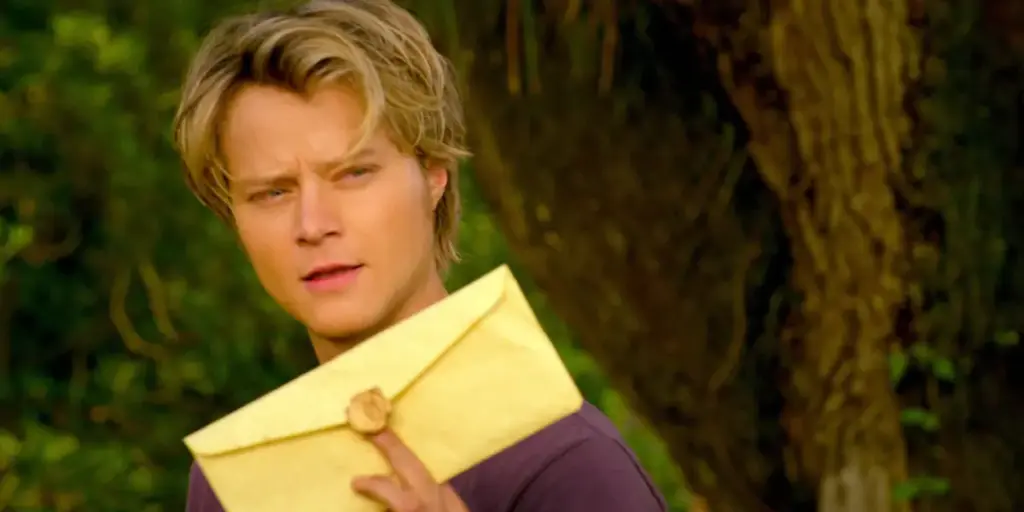
Over the first three seasons, Pankow’s portrayal evolved from a stereotypical hotheaded delinquent into a deeply sympathetic figure. Audiences watched in heartbreak as JJ navigated severe domestic abuse at the hands of his alcoholic, violent father, Luke. His fierce loyalty to his friends wasn’t just a personality trait; it was a survival mechanism. When he put a gun to his own head or stole to protect John B, viewers understood that his found family was the only home he had ever truly known.
The Shift to a Higher-Stakes Narrative
The turning point for the series arrived with the transition between Season 3 and Season 4. The initial three-season arc, centered around the Royal Merchant gold and the legendary city of El Dorado, could easily have served as a natural series finale. The Pogues had triumphed, achieved a semblance of peace, and carved out a life for themselves at "Clemmons Cove."
However, the immense cultural footprint of Outer Banks prompted Netflix to greenlight a sprawling second chapter. Seasons 4 and 5 pushed the scope of the show into wider, more ambitious territory, introducing new mythologies—such as Blackbeard’s treasure and the pursuit of the elusive blue crown—and elevating the stakes to international levels. It was within this grander, more chaotic narrative landscape that the decision was made to cut down the show’s most beloved loose cannon.
The Aftermath: Living in the Shadow of Tragedy
Season 5 wastes no time establishing the psychological toll of JJ’s death. Kiara, whose romance with JJ had become one of the emotional centerpieces of the series, is cast into a devastating downward spiral. Her grief is not merely a passing plot point; it fuels her every decision, blinding her at times to reason and driving the group headfirst into the season’s central conflicts.
Furthermore, the writers employ an extensive use of flashbacks, pulling back the curtain on JJ’s formative years. These sequences are designed to provide retrospective depth to a character who can no longer evolve in the present. Yet, they simultaneously underscore a structural irony: the narrative is forced to look backward precisely because it lacks the forward momentum that JJ used to provide.
Supporting Context & Metrics: Behind-the-Scenes Speculation and Fan Reactions
The death of a major character on a globally popular streaming series rarely happens in a vacuum, and JJ’s exit has been accompanied by a maelstrom of behind-the-scenes speculation, fan discourse, and social media scrutiny.
Decoding Rudy Pankow’s Departure
In the months leading up to the release of Season 5, entertainment media and fan forums were flooded with theories regarding why Rudy Pankow departed the show. Tabloid reports and internet sleuths pointed to alleged interpersonal drama on set, specifically whispering about friction involving Pankow’s real-life partner and alleged tension stemming from the intense on-screen chemistry between Pankow and Madison Bailey (Kiara).
Despite the persistence of these rumors, none of these claims have ever been officially substantiated by Netflix, the showrunners, or the cast members involved. A more pragmatic, industry-standard explanation points toward career progression. As breakout stars of a massive global hit, actors frequently seek to diversify their portfolios and transition into feature films or independent projects. Proof of this career shift arrived when Pankow was cast in high-profile adaptations, such as the film adaptation of Colleen Hoover’s Reminders of Him.
Fan Demographics and Engagement Metrics
Outer Banks has consistently maintained a ferocious, highly engaged digital footprint. According to streaming data aggregators, the series routinely dominates Netflix’s Global Top 10, with character-driven dynamics acting as the primary driver for social media engagement across TikTok, X (formerly Twitter), and Instagram.
Within this metrics ecosystem, JJ Maybank was an outlier. Data analytics from fan engagement platforms indicate that content tagged with "#JJMaybank" generated significantly higher interaction rates than storylines centered purely on the overarching treasure hunts. When the Season 4 finale aired—confirming JJ’s death—viewer sentiment analysis showed a sharp spike in negative emotional engagement, accompanied by petitions and widespread disbelief.
This creates a fascinating commercial conundrum for the creators: while killing off a beloved character is a classic high-stakes television trope designed to shock audiences and drive viewership for a final season, it also risks alienating the core demographic that tuned in specifically for that character’s chaotic charm.
Official Statements and Showrunner Intent
Faced with an overwhelming wave of fan grief and probing interview questions, the creative minds behind Outer Banks—co-creators Jonas Pate, Josh Pate, and Shannon Burke—have repeatedly defended the narrative necessity of JJ’s demise.
The Master Plan Defense
In various press junkets and post-release interviews, the showrunners have maintained a consistent line: JJ’s death was not a reactionary measure to off-set behind-the-scenes complications, but rather a long-planned narrative milestone. According to the creators, the overarching trajectory of the Pogues was always heading toward a tragic loss—a stark reminder that the high-stakes world of treasure hunting and outlaw living carries real, irreversible consequences.
"We wanted to test the resilience of the Pogues in a way we never had before," one of the showrunners noted in a production brief. "For four seasons, they cheated death time and time again. We reached a point where the stakes had to become absolute. Losing JJ wasn’t about punishing the audience; it was about defining the ultimate cost of their adventures."
The Thematic Justification
From the writers’ room perspective, Season 5 was conceived as an exploration of collective trauma and healing. By removing the physical presence of the group’s most volatile member, the narrative forces the remaining Pogues—John B, Pope, Kiara, and Sarah—to confront their own vulnerabilities. Without JJ’s recklessness to bail them out or distract them from their emotional wounds, the characters are forced to grow up rapidly.
Yet, even within official statements, there is an implicit acknowledgment of the writing challenge this created. When a character’s absence dictates the emotional weather of an entire thirteen-episode or ten-episode block, the line between "honoring a legacy" and "over-relying on a ghost" becomes perilously thin.
Future Outlook: The Legacy of Outer Banks and the Ghost of Maybank
As Outer Banks permanently closes its treasure chests and bids farewell to the Cut, its ultimate legacy will be deeply intertwined with the bold, controversial choice to kill off JJ Maybank.
A Shift in Teen Drama Tropes
For decades, teen adventure and mystery dramas—from The O.C. to Outer Banks—have relied on near-death experiences as cheap thrills, rarely pulling the trigger on core ensemble members until the absolute final curtain, if even then. By allowing a primary protagonist to stay dead, Outer Banks attempts to elevate itself from a glossy pulp adventure into a more mature meditation on grief, loss, and the pain of growing up.
However, the execution leaves a lingering question for future television creators: Does a series truly honor a character by killing them off to drive other characters’ growth, or does it ultimately rob that character of their own agency, turning them into a martyr for the sake of someone else’s emotional arc?
How Season 5 Will Be Remembered
History will likely view Outer Banks Season 5 as a season of two minds. On one hand, it delivers the high-octane action, scenic cinematography, and tight-knit camaraderie that fans have loved since 2020. On the other hand, it operates under the heavy, omnipresent cloud of JJ’s absence.
Every time Kiara looks into the distance, every time a flashback reminds us of a younger, untamed Maybank, and every time the plot stalls to process the collective grief of the group, the audience is reminded of who is missing.
Ultimately, the final chapter of Outer Banks proves an unintended truth: you can remove a character from the physical world of a TV show, but if that character was the very pulse of the narrative, you will never truly be able to write them out. Whether that narrative triumph or narrative trap is left for every individual viewer to decide as the credits roll on the final Pogue adventure.