Executive Overview
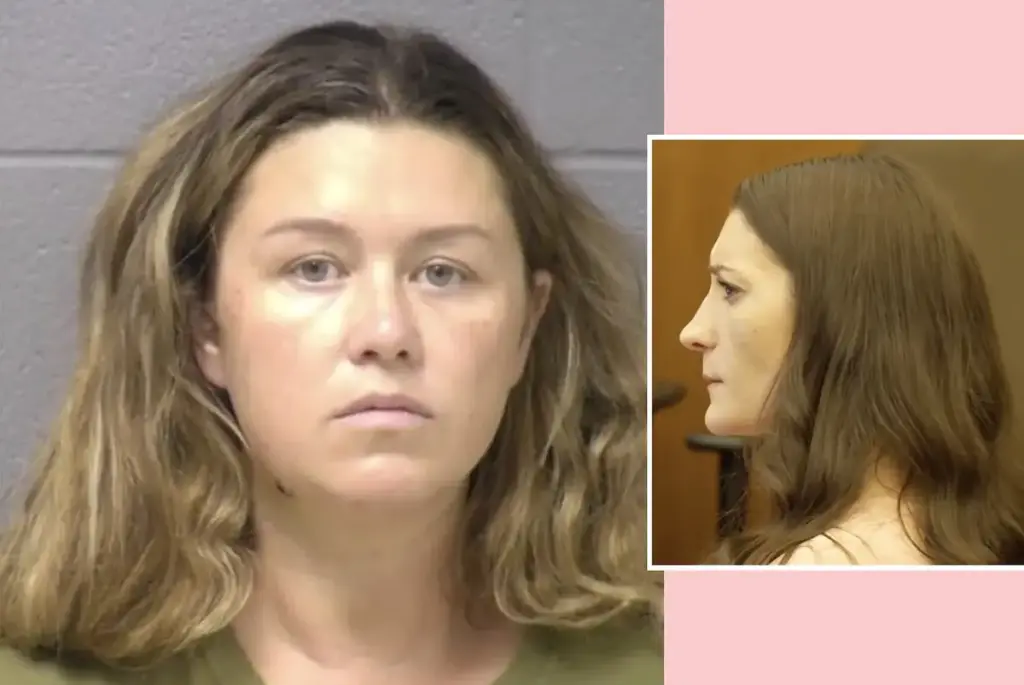
In a profoundly disturbing case that underscores the tragic confluence of acute severe mental illness, maternal filicide, and the psychological impact of high-profile court cases, a 40-year-old Illinois woman has been formally charged with the murder of her two-year-old son. Corie A. Walsh of Frankfort, Illinois, faces three counts of first-degree murder following the death of her toddler, Barrett "Bear" Walsh.
According to charging documents and local law enforcement reports, the incident occurred shortly after Walsh engaged in persistent discussions regarding the high-profile Massachusetts murder trial of Lindsay Clancy—a mother accused of killing her three young children while allegedly suffering from postpartum psychosis. Court filings reveal that Walsh exhibited severe psychiatric delusions prior to the act, reportedly expressing beliefs that her young son was possessed or represented the "anti-Christ."
The defense maintains that Walsh was experiencing a severe, acute psychotic episode during the commission of the act. As Walsh remains in custody receiving medical and psychiatric treatment, the case has reignited national discussions regarding maternal mental health interventions, the legal standards surrounding the insanity defense, and the potential trigger mechanisms posed by media saturation of traumatic criminal proceedings.
Detailed Chronology of Events
+-----------------------------------------------------------------------------------+
|                                 TIMELINE OF EVENTS                                |
+-----------------------------------------------------------------------------------+
| Prior Hours     | Walsh actively discusses the Lindsay Clancy trial in group texts|
|                 | and exhibits alarming fixation.                                 |
|-----------------+-----------------------------------------------------------------|
| ~4:00 PM        | Emergency services alerted; neighbor discovers 2-year-old       |
|                 | Barrett unresponsive in the basement. CPR initiated.            |
|-----------------+-----------------------------------------------------------------|
| Shortly After   | Frankfort Police arrive; Barrett pronounced dead. Walsh found   |
|                 | upstairs with self-inflicted knife wounds.                      |
|-----------------+-----------------------------------------------------------------|
| Mid-Week        | Will County prosecutors file three counts of first-degree murder|
|                 | against Corie A. Walsh.                                         |
+-----------------------------------------------------------------------------------+
Preceding Circumstances and Media Fixation
In the hours leading up to the incident, witnesses and acquaintances reported that Walsh had become intensely fixated on the ongoing legal proceedings of Lindsay Clancy, a former labor and delivery nurse from Duxbury, Massachusetts. Text message records subpoenaed by investigators indicate that Walsh actively engaged in a group chat with friends, repeatedly discussing the nuances of the Clancy trial, the dynamics of maternal psychosis, and the legal outcomes of the case.
According to sources familiar with the investigation, Walsh’s messages transitioned from observational commentary to increasingly erratic and distressed statements concerning her own household and child.
The Emergency Response in Frankfort
At approximately 4:00 p.m., emergency dispatchers in Frankfort, Illinois—a suburban village situated in Will and Cook counties—received an urgent call reporting an injured and non-responsive toddler at a residential address.
Upon arrival, first responders encountered a neighbor who had entered the property after recognizing signs of acute distress. The neighbor discovered two-year-old Barrett "Bear" Walsh hanging by his neck from a wooden support rafter in the basement. The neighbor immediately cut the child down and attempted cardiopulmonary resuscitation (CPR) until emergency medical personnel took over. Despite resuscitation efforts, the toddler succumbed to his injuries and was declared deceased at the scene.
Police Discovery and Initial Custody
While securing the residence, officers from the Frankfort Police Department conducted a sweep of the upper level of the home. In an upstairs bathroom, officers located Corie Walsh inside a bathtub. She was suffering from non-life-threatening lacerations determined to be self-inflicted knife wounds.
Walsh was taken into custody without further physical escalation and immediately transported under police guard to an area medical center to receive treatment for her physical injuries and undergo urgent psychiatric evaluation.
The Lindsay Clancy Parallel & Psychiatric Context
High-Profile Filicide and Hyper-Fixation
The case bears striking structural parallels to the widely publicized case of Lindsay Clancy, which served as the focus of Walsh’s fixation immediately prior to the event. In January 2023, Clancy allegedly strangled her three children—Cora (5), Dawson (3), and Callan (8 months)—at their home in Duxbury, Massachusetts, before jumping from a second-story window in an attempted suicide.
+-----------------------------------------------------------------------------------+
|                        COMPARATIVE CASE PROFILE MATRIX                            |
+-----------------------------------------------------------------------------------+
| Metric / Feature      | Lindsay Clancy Case (MA)     | Corie A. Walsh Case (IL)   |
+-----------------------+------------------------------+----------------------------+
| Defendant Age         | 32 at time of incident       | 40 at time of incident     |
| Victim(s)             | Three children (5, 3, 8mos)  | One child (2 years old)    |
| Method Alleged        | Ligature strangulation       | Suspension / Hanging       |
| Self-Harm Attempt     | Fall from 2nd-story window   | Lacerations in bathtub     |
| Defense Position      | Postpartum Psychosis / Meds  | Acute Psychotic Episode    |
| Public Status         | Mistrial (Hung Jury)         | Pretrial / Charged         |
+-----------------------+------------------------------+----------------------------+
The Clancy trial garnered immense national media attention, sparking intense debate regarding post-partum depression, severe psychosis, and overmedication. The proceedings recently concluded in a mistrial after a jury failed to reach a unanimous verdict, leaving the prosecution to decide whether to re-try the case. Forensic psychiatrists note that high-profile, highly publicized infanticide cases can occasionally act as an accelerant or focus point for individuals already suffering from prodromal or active psychotic symptoms, providing a narrative framework onto which deep delusions attach.
The Dynamics of Acute Psychosis and Religious Delusions
Court documents reveal that in the hours surrounding the tragedy, Walsh allegedly expressed severe paranoid and religious delusions, asserting that her toddler was the "anti-Christ" and "the devil."
Psychiatric literature identifies religious and demonic delusions as frequent manifestations of acute psychosis, particularly in cases involving capgras syndrome, severe bipolar mania with psychotic features, or post-partum/major depressive psychosis.
- Clinical Delusion Patterns: Patients suffering from severe command hallucinations or persecutory delusions frequently perceive loved ones as threats, impostors, or malignant entities.
- Impairment of Reality Testing: During an acute episode, an individual’s capacity to evaluate reality, perceive moral criminality, or foresee consequence is entirely distorted by internally generated stimuli (hallucinations) and unshakeable false beliefs (delusions).
- Self-Harm Volatility: Such psychotic states carry an extremely high risk of secondary self-harm or suicide, often driven by intense guilt immediately following a brief loss of delusional clarity or as part of a catastrophic global delusion.
Legal Analysis: Charges and the Insanity Defense in Illinois
First-Degree Murder Framework
Will County prosecutors have formally charged Corie A. Walsh with three counts of First-Degree Murder under the Illinois Compiled Statutes (720 ILCS 5/9-1). In Illinois, first-degree murder charges are structured to cover various mental states, including:
- Intending to kill or do great bodily harm to an individual.
- Knowing that such acts create a strong probability of death or great bodily harm.
- Attempting or committing a forcible felony.
By filing multiple counts, prosecutors preserve legal avenues to establish guilt based on varying levels of intent and factual findings as the judicial process unfolds.
                  ILLINOIS FIRST-DEGREE MURDER STATUTE
                           (720 ILCS 5/9-1)
                                  |
         +------------------------+------------------------+
         |                                                 |
Intentional/Knowing Act                          Knowledge of Strong
Creating Death/Harm                             Probability of Death
[720 ILCS 5/9-1(a)(1)]                          [720 ILCS 5/9-1(a)(2)]
The Affirmative Defense of Insanity
Given the explicit statements from defense counsel regarding a "psychotic episode," the legal strategy in the Walsh prosecution will almost certainly center on the affirmative defense of insanity under Illinois law (720 ILCS 5/6-2).
- Statutory Requirement: To be found Not Guilty by Reason of Insanity (NGRI) in Illinois, the burden of proof rests on the defendant to establish by clear and convincing evidence that, as a result of a mental disease or mental defect, she lacked substantial capacity to appreciate the criminality of her conduct at the time of the offense.
- Distinction Between Mental Illness and Legal Insanity: Merely proving the presence of a severe psychiatric diagnosis (such as major depressive disorder with psychotic features or schizophrenia) is insufficient. The defense must prove a direct causal link between the condition and the inability to appreciate the moral or legal wrongfulness of the act.
- Role of Medically Recorded Self-Harm: The self-inflicted wounds found at the scene will likely be presented by the defense as evidence of extreme mental distress and emotional dysregulation, while prosecutors may evaluate whether the acts represented self-preservation, cover-up, or post-crime remorse.
Official Statements and Defense Positioning
Following the formal filing of charges, official representatives from both the defense and law enforcement issued public statements addressing the tragedy.
Defense Counsel Position
In a formal statement provided to media outlets, legal counsel representing Corie Walsh highlighted the severe mental health crisis underlying the incident:
"She was experiencing a psychotic episode. This is a tragedy for the Walsh family, all of whom are mourning the loss of this child."
— Legal Counsel for Corie A. Walsh
The defense’s initial framing strongly indicates that medical history, psychiatric evaluations, and expert witness testimony will form the core of the defense’s strategy as pretrial motions begin.
Law Enforcement and Community Impact
Local authorities in Frankfort expressed profound grief regarding the loss of life while emphasizing the thoroughness of the ongoing investigation. The Frankfort Police Department, working in conjunction with the Will County State’s Attorney’s Office, confirmed that the investigation remains active as digital evidence, medical records, and forensic data are compiled.
Community members in Frankfort have set up temporary memorials in remembrance of two-year-old Barrett "Bear" Walsh, while local crisis intervention teams have made services available to neighbors and first responders impacted by the scene.
Future Outlook and Procedural Next Steps
As the case moves forward through the Will County judicial system, several critical procedural steps are anticipated:
+-----------------------------------------------------------------------------------+
|                            UPCOMING JUDICIAL STAGES                               |
+-----------------------------------------------------------------------------------+
| 1. Medical & Psychiatric Stabilization | Inpatient psychiatric care under guard   |
| 2. Forensic Fitness Evaluation         | Formal assessment of competency to stand |
|                                        | trial (understand charges / assist defense)|
| 3. Arraignment & Plea Entry            | Formal reading of 1st-degree murder counts|
| 4. Evidentiary Discovery               | Analysis of digital chats, medical history|
| 5. Pretrial Motions & Mental Health    | Filings regarding NGRI defense status     |
+-----------------------------------------------------------------------------------+
1. Competency Assessment
Prior to any substantive criminal trial proceedings, the court will likely order a formal Fitness to Stand Trial evaluation. Under Illinois law, a defendant is unfit if, because of a mental or physical condition, she is unable to understand the nature and purpose of the proceedings against her or to assist in her defense. If deemed unfit, Walsh will be remanded to a secure Department of Human Services mental health facility for treatment aimed at attaining fitness.
2. Forensic Psychiatric Discovery
Both the prosecution and the defense will retain forensic psychiatrists to conduct independent evaluations. Experts will examine:
- Walsh’s complete medical and psychiatric history prior to the incident.
- Toxicology reports from the day of the arrest to rule out or assess drug-induced psychosis.
- Digital footprint data, specifically the timeline and content of the group text messages concerning the Lindsay Clancy trial.
3. Societal and Systemic Implications
The tragic death of Barrett Walsh highlights ongoing gaps in identifying red-flag indicators in individuals experiencing severe psychiatric decomposition. Public health experts continue to advocate for enhanced community-level mental health interventions, early screening for severe maternal depression and psychosis, and increased awareness of how media consumption can impact individuals suffering from severe, unmanaged mental illnesses.
Corie Walsh remains in custody, receiving specialized care as legal proceedings continue in Will County Circuit Court.
Emergency Resources and Crisis Support
If you or someone you know is experiencing a mental health crisis, severe postpartum distress, or thoughts of self-harm, immediate help is available:
- National Suicide & Crisis Lifeline: Call or text 988 (Available 24/7, free, and confidential).
- Postpartum Support International (PSI): Call 1-800-944-4773 or text "HELP" to 800-944-4773.
- Childhelp National Child Abuse Hotline: Call 1-800-4-A-Child (1-800-422-4453) or visit childhelp.org.
- National Domestic Violence Hotline: Call 1-800-799-7233 or text "START" to 88788.