Executive Overview
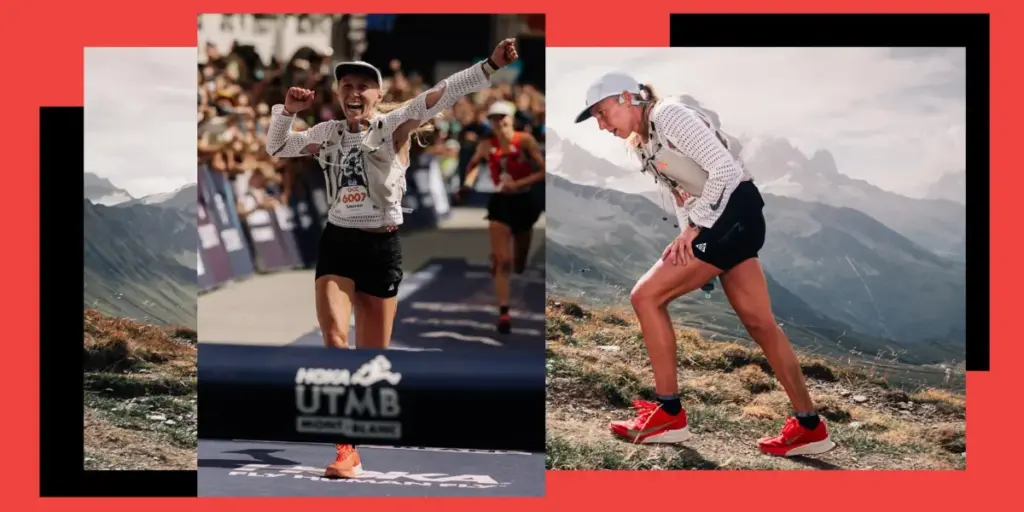
The alpine air in Chamonix, France, was thick with anticipation as the climax of the prestigious Orsières–Champex–Chamonix (OCC) race unfolded at the 2024 Hoka Ultra-Trail du Mont-Blanc (UTMB) festival. What began as a tactical masterclass evolved into one of the most breathtaking, edge-of-your-seat finishes in the history of elite trail running. In a breathtaking display of grit, tactical patience, and sheer speed, 27-year-old American runner Lauren Gregory rewrote the script of her burgeoning endurance career, clinching the women’s OCC crown in an astonishing time of 6 hours, 8 minutes, and 7 seconds.
Spanning over 37 miles (60 kilometers) across the punishing, postcard-worthy trails of the Swiss and French Alps, the OCC is far from a standard footrace. It demands relentless climbing, technical descents, and an indomitable psychological fortitude, featuring an eye-watering elevation gain of more than 11,482 feet. For Gregory, a Nike ACG-sponsored athlete whose competitive pedigree was forged largely on high-speed track ovals and shorter-distance 5Ks rather than grueling mountain passes, the event was an exercise in boundary-pushing.
Yet, as the race crested its final dramatic miles, Gregory did not merely survive the distance—she conquered it. In a fierce tactical duel through the streets of Chamonix, she erased deficits with ruthless efficiency, overtaking long-time race leader Naomi Lang with just one kilometer remaining. Lang crossed the finish line mere seconds behind, while Spain’s Sara Alonso rounded out the podium just over a minute adrift in a fiercely contested podium sweep.
This comprehensive report explores the anatomy of Gregory’s historic victory, dissecting the race-day chronology, the physiological and mental mechanics bridging track speed to ultra-distance success, the shifting paradigm of women’s ultrarunning depth, and what lies ahead for a champion ready to trade high-altitude training for an Italian beach getaway.
Detailed Chronology: Anatomy of a Come-From-Behind Triumph
To understand the magnitude of Lauren Gregory’s victory, one must examine the micro-movements of a race where the margins for error were razor-thin. For the first two-thirds of the 60-kilometer journey, the narrative of the women’s OCC was dictated by European powerhouses Naomi Lang and Sara Alonso. The duo set a punishing early tempo that tested the physiological limits of a stellar international field.
Gregory, meanwhile, was executing a meticulously calculated patient race plan. Making her debut at the iconic UTMB-associated event, the Colorado-based athlete spent the early hours of the race quietly gathering data on her own capabilities. Having previously tasted success at shorter trail competitions—including notable victories at the Golden Trail World Series and the Speedgoat 50K—Gregory was navigating uncharted territory. At 60 kilometers, the race represented the outer perimeter of her established comfort zone.
As the course wound its way from Orsières through Champex-Lac and deep into the rugged alpine valleys, the gaps between the leaders stabilized. Heading into the race’s final crucial stretch, Gregory found herself locked in the bronze-medal position, trailing both Lang and Alonso.
Then came the turning point.
With just three kilometers remaining—a distance that in track terms feels like a leisurely cool-down, but in an ultra-marathon is a crucible of accumulated fatigue—Gregory ignited her move. First, she smoothly bypassed Sara Alonso, shifting from third into second place. The physical toll of nearly six hours of climbing and descending was etched onto every competitor’s face, but Gregory’s stride retained a distinct, economical cadence.
With precisely one kilometer left on the course, the race reached its crescendo. Emerging onto the boulevard leading toward the iconic finish line in the heart of Chamonix, Gregory locked her sights on Naomi Lang. Drawing upon the anaerobic reserves developed during years of collegiate and post-collegiate track racing, Gregory accelerated past the British runner.
The final straightaway was a roar of Alpine fans, camera shutters, and synchronized heartbeats. Gregory broke the tape at 6:08:07, holding off a valiant, counter-punching Lang by mere seconds. Alonso swept across the finish line roughly a minute later, completing a podium separated by a margin typically seen in a 1,500-meter track event rather than a 60-kilometer mountain odyssey.
Supporting Context & Metrics: Bridging the Track to the Trail
The juxtaposition between Gregory’s athletic background and the brutal demands of the OCC highlights an evolving trend in elite endurance sports: the successful translation of speed-oriented track and field mechanics into the world of technical mountain ultras.
The Course Metrics: OCC at a Glance
- Total Distance: ~37.3 miles (60 kilometers)
- Total Elevation Gain: 11,482 feet (3,500 meters)
- Route Trajectory: Orsières (Switzerland) through Champex-Lac to Chamonix (France)
- Winning Time (Women’s Division): 6:08:07 (Lauren Gregory)
Historically, ultra-running was dominated by seasoned athletes with decades of high-mileage mountain experience. However, modern champions like Gregory are proving that a background in explosive, shorter-distance racing—ranging from 5Ks to 10Ks—provides a distinct tactical advantage during the closing stages of a race.

When asked about the mental transition from a 5K to a 60K, Gregory offered a brilliant philosophical breakdown of athletic suffering. "The last quarter of everything hurts," she remarked during an interview in Chamonix just hours before the starting gun. "A 60K is a low-level hurt for a few hours, whereas in a 5K, it’s a high-level hurt for three laps or so."
This unique psychological framework allowed Gregory to normalize the deep, systemic fatigue that cripples many first-time ultra-marathoners. Having experienced the acute, lung-burning agony of track racing, the sustained muscular ache of the Alps felt familiar. "You know the last quarter of everything’s going to suck, so I’m prepared mentally for something like that," she explained. "It doesn’t feel as foreign because I know it in other distances too. Even though this is an unknown distance, I can always make it through the last quarter."
Official Statements and Insider Perspectives
The aftermath of the race was characterized not just by competitive exhaustion, but by profound sportsmanship and a shared recognition of a historic moment for the sport.
Upon crossing the finish line, Gregory was immediately embraced by runner-up Naomi Lang. In front of thousands of spectators packed into the Chamonix square, the two athletes celebrated an unforgettable battle. Moments later, Sara Alonso arrived, seizing the crowd’s attention by executing a celebratory "worm" dance move on the finish line mat—a testament to the vibrant, high-energy culture permeating modern trail running.
Beyond the celebratory atmosphere, Gregory offered sharp, authoritative insights into the current state of women’s ultra-running. As participation rates surge and prize purses grow, the competitive depth of women’s fields at premier events like UTMB has reached unprecedented heights.
"It’s really cool that, to me, the depth and the overall quality of the women’s race is on par with the men’s, and in some fields, the women’s race is stronger than the men’s," Gregory asserted. "Running is all one event. We are all here together. We’re all equally doing the same distance and have the same quality of competition."
This perspective underscores a broader cultural shift within the sport. Women’s trail running is no longer viewed as a supplementary division; it is a marquee spectacle capable of delivering the weekend’s most compelling athletic theater.
Future Outlook: Recovery and What Lies Ahead
Having conquered one of the most prestigious and demanding mid-distance trail races in the world, Lauren Gregory has earned the right to step away from the stopwatch. Yet, transitioning from the relentless discipline of professional training back to civilian life requires a deliberate change of environment.
For Gregory, returning home to Boulder, Colorado, was not an option immediately following her victory. Knowing herself well enough to recognize the addictive pull of local training groups, she deliberately chose to detour away from temptation.
"I’ll be getting out of my normal rhythm—drinking coffee, maybe having a beer in the middle of the day—getting to do what I would never do when training," she shared with a smile.
Her post-OCC itinerary featured a well-earned burger at Chamonix’s legendary local haunt, Poco Loco, followed by an immediate escape to the sun-drenched beaches of Italy for an extended period of true rest and relaxation.
As for the future? The mountain running community will be watching closely. By proving she can seamlessly scale her tactical brilliance and speed from the track to a grueling 60-kilometer alpine course, Gregory has signaled that her ceiling in ultra-endurance racing is virtually limitless. Whether she returns to defend her crown at future UTMB festivals or explores further frontiers in the global trail circuit, one thing is certain: Lauren Gregory knows how to finish strong.