Executive Overview
For decades, the fitness landscape has been dominated by an ethos of extreme optimization. Modern exercise routines frequently lean into hyper-complicated biomechanics, grueling high-intensity interval training (HIIT) protocols, and hyper-specialized splits that can reduce physical activity to a monotonous chore. To the average individual seeking health, longevity, and vitality, stepping into a contemporary gym can feel less like a restorative wellness practice and more like punching a time clock at a second job.
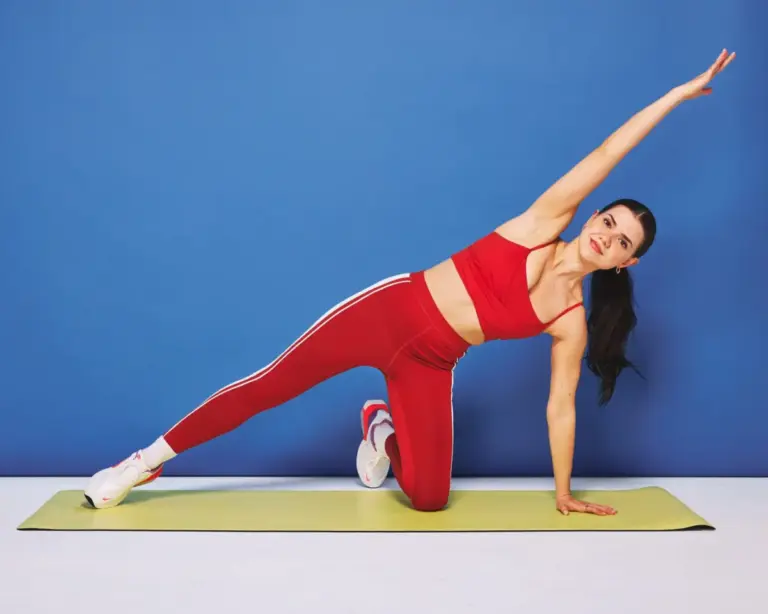
Enter a growing counter-movement within the fitness industry, spearheaded by forward-thinking trainers who argue that movement should be intrinsically joyful rather than purely utilitarian. At the forefront of this shift is Lucy Borrie, creator of the innovative workout method BeBody. Drawing direct inspiration from the neon-lit, high-energy aerobic explosion of the 1980s, Borrie’s methodology strips away the intimidation factor of modern fitness without sacrificing physiological rigor.
By fusing the rhythmic cardiovascular demands of traditional aerobics with contemporary strength training and the core-stabilizing precision of Pilates, BeBody delivers a comprehensive full-body experience in a single session. This investigative report explores the philosophy behind retro-inspired fitness, analyzes the biomechanical advantages of multi-disciplinary circuits, and provides a breakdown of a signature two-move strength and cardio workout designed to reintroduce fun into your weekly routine.
Detailed Chronology: The Evolution from Legwarmers to Functional Fusions
To understand why methodologies like BeBody are capturing the public imagination today, it is essential to examine the historical trajectory of group fitness.
The 1980s Aerobic Boom
In the late 1970s and throughout the 1980s, fitness underwent a profound democratization. Driven by cultural icons, infectious pop music, and the commercialization of the leotard-and-legwarmer aesthetic, aerobic dance became a massive cultural phenomenon. It taught millions—particularly women—that cardiovascular conditioning could be social, musical, and expressive. However, as sports science evolved into the 1990s and 2000s, traditional aerobics was often sidelined. Critics pointed out that high-impact dance moves could occasionally lead to repetitive strain injuries, and fitness purists argued that aerobics lacked sufficient progressive overload for optimal muscle hypertrophy.
The Era of Hyper-Specialization
The subsequent decades saw a massive divergence in how people trained. On one side, bodybuilding culture and powerlifting claimed dominance in traditional gym spaces, focusing heavily on isolated muscle groups and linear resistance training. On the other side, the rise of extreme conditioning programs popularized metabolic conditioning that favored speed and metabolic fatigue over structural integrity and movement quality. While effective for specific populations, these trends often left casual exercisers feeling alienated, burned out, or injured due to poor foundational conditioning.
The Modern Multi-Disciplinary Renaissance
Recognizing the limitations of single-discipline training, contemporary fitness innovators have begun looking backward to move forward. The modern renaissance combines the cardiovascular joy of 1980s group fitness with twenty-first-century understandings of functional anatomy. Trainers like Lucy Borrie recognized that modern clients do not want to choose between getting strong, getting lean, and protecting their joints. By bridging the gap between cardio, strength, and Pilates, the fitness industry has entered an era where efficiency, sustainability, and enjoyment are paramount.
Supporting Context & Metrics: The Science of Multi-Disciplinary Training
The rationale behind combining aerobics, strength training, and Pilates is rooted in contemporary exercise physiology. Traditional workouts often force practitioners to silo their training: Monday is for cardio, Tuesday is for upper-body hypertrophy, Wednesday is for core. While effective for dedicated athletes, this fragmented approach is often unsustainable for people juggling demanding personal and professional lives.
The Trifecta of Fitness Benefits
- Cardiovascular Conditioning (Aerobics): Elevating the heart rate through rhythmic, continuous movement improves stroke volume, enhances capillary density, and supports long-term metabolic health. Incorporating music—a staple of 1980s aerobics—has been shown in numerous psychological studies to reduce perceived exertion and elevate mood.
- Structural Integrity (Strength Training): Resistance work is non-negotiable for maintaining bone mineral density, preventing age-related sarcopenia, and preserving metabolic rate. Even bodyweight-based strength movements create the mechanical tension required to stimulate tissue remodeling.
- Core Stability and Alignment (Pilates): Originating in the early 20th century, Pilates emphasizes deep core engagement, pelvic stability, and spinal articulation. Integrating these principles ensures that high-speed or loaded movements are executed with immaculate structural support, minimizing injury risk.
The Circuit-Training Advantage
Borrie’s methodology relies heavily on circuit-style training—performing exercises sequentially with minimal rest. From a physiological standpoint, this approach elevates excess post-exercise oxygen consumption (EPOC), meaning the body continues to burn calories at an elevated rate long after the workout concludes. Furthermore, moving seamlessly between varied movement patterns challenges the nervous system, improving neuromuscular coordination, agility, and balance.
Official Statements and Expert Philosophy
At the core of the BeBody philosophy is a rejection of the "no pain, no gain" mentality that has historically plagued the fitness industry.
"We’ve combined aerobics, strength training, and Pilates into a single session, giving you the benefits of three workout types in one full-body experience," explains Lucy Borrie.
This statement underscores a fundamental shift in how personal trainers view modern wellness. Exercise does not need to feel like an arduous penance to be effective. By prioritizing enjoyment, practitioners are significantly more likely to adhere to their fitness routines over months and years—the true metric of any successful health program.
Borrie emphasizes that her method is designed for individuals who want robust physical results without sacrificing their love for movement:
"Start slow and then speed up your movement," Borrie advises, highlighting the importance of meeting your body where it is on any given day.
Furthermore, Borrie places immense emphasis on the psychological environment of exercise. She notes that executing a mini-workout to an upbeat, carefully curated playlist is not merely an accessory feature, but an "essential" component of the experience. Music acts as a cognitive dissociative agent, distracting the brain from physical fatigue while synchronizing motor units to external rhythms, thereby optimizing movement efficiency.
Try the Two-Move Strength and Cardio Workout
To experience the ethos of multi-disciplinary fitness firsthand, Borrie has designed a streamlined, circuit-style mini-workout. This routine requires no equipment, making it accessible for home practitioners, yet it delivers a potent blend of cardiovascular challenge and muscular endurance.
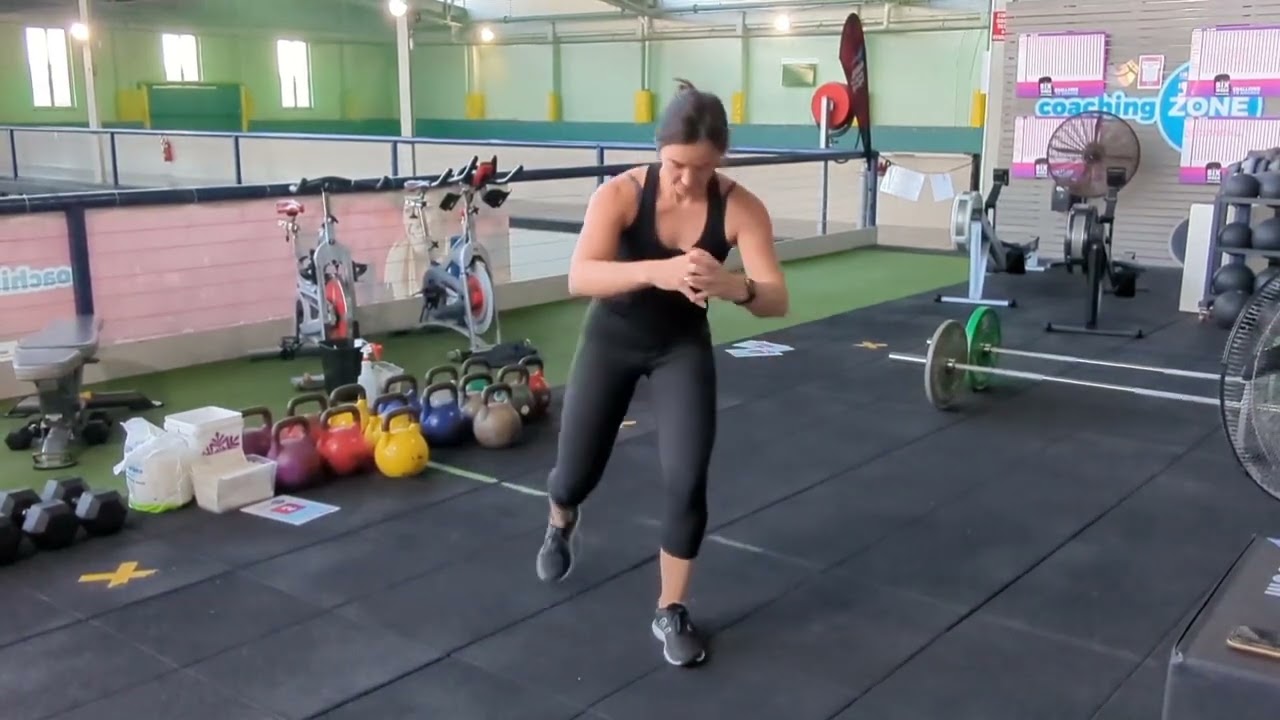
Workout Guidelines
- Structure: This is a circuit-style workout, meaning you perform the exercises one after another.
- Rounds: Complete the entire circuit twice with minimal rest between exercises and rounds.
- Pace: Begin slowly to establish proper biomechanical form, then gradually increase your speed as your nervous system adapts.
- Environment: Blast a high-energy playlist that you genuinely enjoy. Music is your pacing partner.
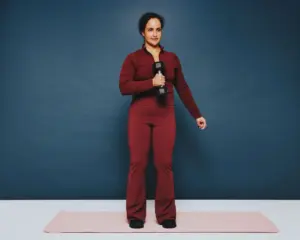
1. Squat to Lunge Combo
The squat-to-lunge combination is a compound powerhouse that targets the entire lower body while simultaneously spiking the heart rate. By transitioning fluidly from a bilateral squat to a unilateral lunge pattern, this movement tests lower-body stability, glute activation, and quadriceps endurance.
- Target Muscles: Quadriceps, glutes, hamstrings, adductors, and deep core stabilizers.
- Repetitions: 5 to 10 repetitions on each side.
Step-by-Step Execution:
- The Starting Position: Stand tall with your feet shoulder-width apart, chest proud, and core engaged. Keep your weight distributed evenly across your entire foot.
- The Squat Phase: Inhale as you push your hips back and bend your knees, lowering your torso until your thighs are roughly parallel to the floor. Keep your chest up and your knees tracking in line with your toes.
- The Transition: Drive powerfully through your heels to return to the standing position.
- The Lunge Phase: From the top, immediately step your right foot backward into a reverse lunge. Lower your hips until both knees form approximately 90-degree angles, ensuring your front knee stays stacked directly above your ankle and your back knee hovers just above the floor.
- The Return: Push off your front foot to return to the starting stance. That completes one repetition. Alternate legs or complete all designated reps on one side before switching.
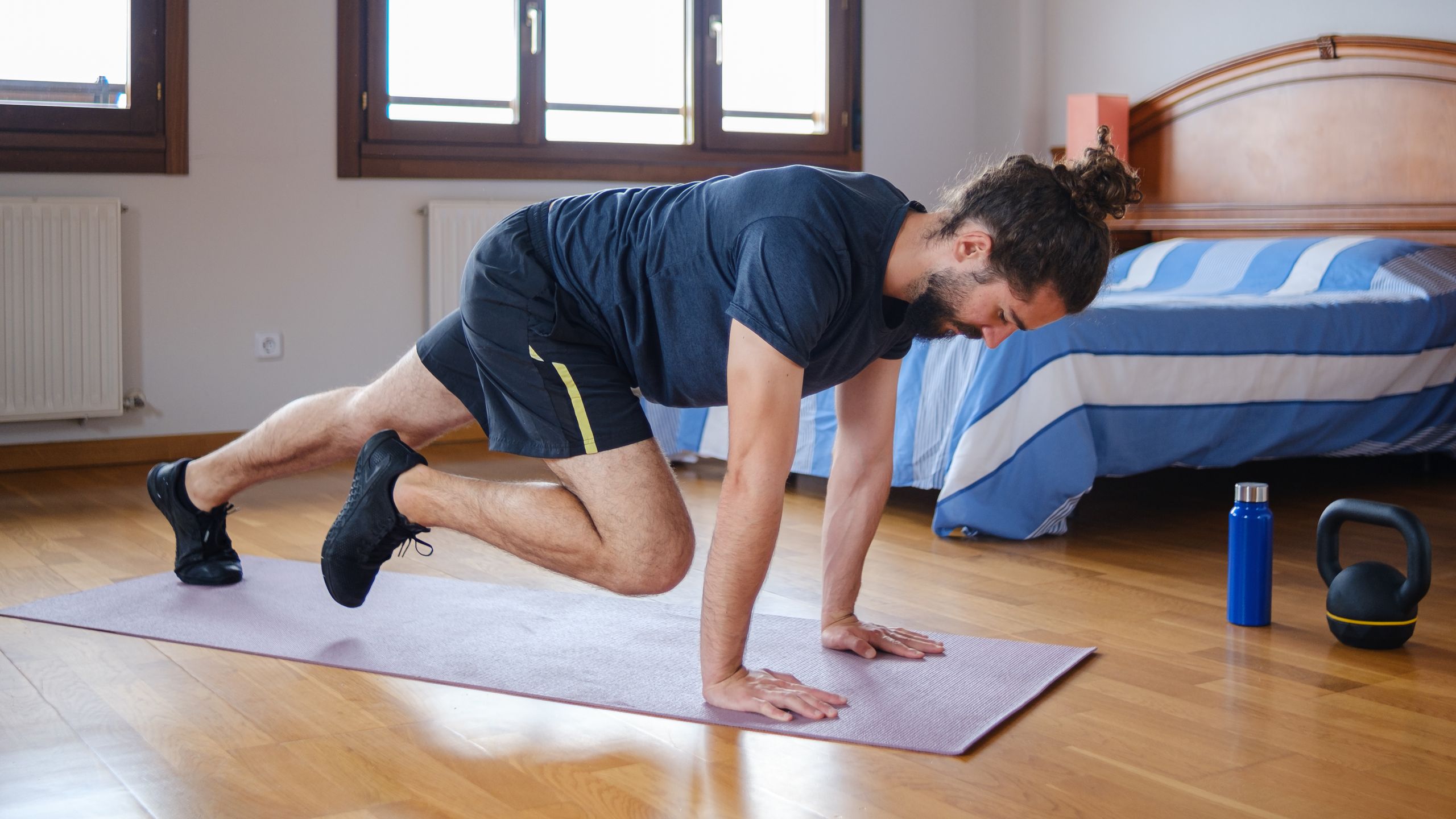
2. Plank Combination (Shoulder Tap with Cross-Body Mountain Climber)
This dynamic upper-body and core exercise challenges your stability under fatigue. By combining high-plank shoulder taps with cross-body mountain climbers, you force your oblique musculature, shoulders, and deep transverse abdominis to work in unison to prevent rotational sway of the pelvis.
- Target Muscles: Transverse abdominis, obliques, rectus abdominis, anterior deltoids, chest, and upper back stabilisers.
- Repetitions: 5 to 10 repetitions on each side.
Step-by-Step Execution:
- The Starting Position: Assume a strong high-plank position with your hands stacked directly beneath your shoulders, your body forming a straight line from your head to your heels, and your core braced tightly.
- The Shoulder Tap: Keeping your hips as stable and parallel to the floor as possible, lift your right hand off the floor and tap your left shoulder. Return your right hand to the floor, then lift your left hand to tap your right shoulder.
- The Cross-Body Mountain Climber: Once you have completed the shoulder taps, drive your right knee diagonally across your body toward your left elbow. Return your right foot to the starting plank position.
- The Continuation: Repeat the knee drive with your left leg moving toward your right elbow.
- Counting Reps: A full repetition consists of tapping both shoulders followed by driving both knees across the body. Perform 5 to 10 total rounds of this sequence, maintaining a steady, controlled breathing cadence.
Future Outlook: Where Fitness is Headed
As we look toward the future of the health and wellness industry, the pendulum is swinging firmly away from unsustainable extremes and toward balanced, joyful longevity. The success of retro-inspired, multi-disciplinary methods like BeBody signals a broader cultural fatigue with fitness as a punishing obligation.
Consumers are increasingly demanding workouts that respect their joints, stimulate their minds, and fit seamlessly into multifaceted lifestyles. By democratizing exercise through accessible movements, nostalgic music integration, and intelligent cross-training, the industry is paving the way for a healthier populace. Ultimately, the future of fitness belongs to methods that prove you do not need to dread your workout to transform your body—you just need to find the beat and start moving.