Martin McDonagh has once again proven his mastery of tragicomic storytelling with his latest cinematic venture, Wild Horse Nine. Premiering to a rapturous, festival-stopping 14-minute standing ovation at the prestigious Venice Film Festival, the film marks McDonagh’s first major project since his nine-time Oscar-nominated feature The Banshees of Inisherin.
Transporting audiences back to the precipice of the turbulent 1973 Chilean coup, Wild Horse Nine marries sharp, laugh-out-loud dark comedy with a scathing critique of United States foreign intervention. Anchored by a phenomenal lead performance from John Malkovich—alongside longtime McDonagh collaborator Sam Rockwell—the film trades the moody coastal plains of Ireland for the stark, sun-bleached majesty of Easter Island (Rapa Nui).
As a biting political satire that refuses to reduce complex historical atrocities to a stale history lesson, Wild Horse Nine investigates the shadowy, often absurd underbelly of the Central Intelligence Agency (CIA). With a stacked ensemble cast that features Steve Buscemi, Parker Posey, Tom Waits, and breakout international talents Mariana di Girolamo and Ailín Salas, McDonagh’s latest work is shaping up to be one of the most provocative and fiercely anticipated releases of the autumn awards season.
Detailed Chronology: From Production to the Lido
The journey of Wild Horse Nine began quietly before capturing the global film community’s undivided attention on the Lido during the 2026 Venice Film Festival.
Development and Rapa Nui Shoot
Following the critical and commercial success of The Banshees of Inisherin, writer-director Martin McDonagh retreated to his writing desk to conceptualize a project exploring the mechanics of Cold War-era regime changes. Eslo, the production secured rare, highly coveted permission to film on location at Rapa Nui (Easter Island)—making Wild Horse Nine one of the very few major international motion pictures permitted to shoot amidst the island’s iconic, brooding moai statues.

The physical remoteness of the location mirrors the psychological isolation of the film’s protagonists. Set against the ticking clock of September 1973, the narrative tracks two American intelligence operatives unceremoniously yanked from the bustling espionage playground of Santiago, Chile, and dropped onto the isolated Polynesian island.
The Venice Premiere
On September 3, 2026, the global curtain rose on Wild Horse Nine at the Venice Film Festival. The atmosphere inside the palazzo was electric, culminating in a 14-minute standing ovation that immediately positioned the picture as an early frontrunner for the upcoming Academy Awards circuit. Critics and industry insiders singled out John Malkovich’s ferocious, unhinged turn as the cynical veteran operative Chris, with many predicting it will finally earn the legendary actor his long-overdue Oscar win. Following its festival triumph, Searchlight Pictures slated the film for a wide theatrical rollout in the UK and US on November 6, 2026.
The Plot and Character Dynamics: Chaos Meets Experience
At its core, Wild Horse Nine relies on a classic structural blueprint that McDonagh previously perfected in his 2008 breakthrough feature, In Bruges: an odd-couple pairing defined by generational friction, ideological clashes, and a begrudging, deeply human bond.
The Veterans: Chris and Lee
John Malkovich stars as Chris, a grizzled, deeply cynical CIA veteran whose decades of service have curdled into a cocktail of bitter regret, petulance, and sheer exhaustion. Chris is a loose cannon on the verge of total structural collapse.
"Don’t pull rank on me, I’ve been killing people since before you were born," Chris snaps at his junior colleague, Lee, encapsulating the exhaustion of a man who has outlived his own moral compass.

Sam Rockwell plays Lee, the exasperated, straitlaced associate tasked with babysitting his unhinged elder. Rockwell, who won the Academy Award for Best Supporting Actor in McDonagh’s Three Billboards Outside Ebbing, Missouri (2018), slips effortlessly into the role of the stressed bureaucrat. Their dynamic balances razor-sharp, rapid-fire banter with moments of profound, unexpected tenderness.
The Catalyst: Rebellious Youth and Memoir Madness
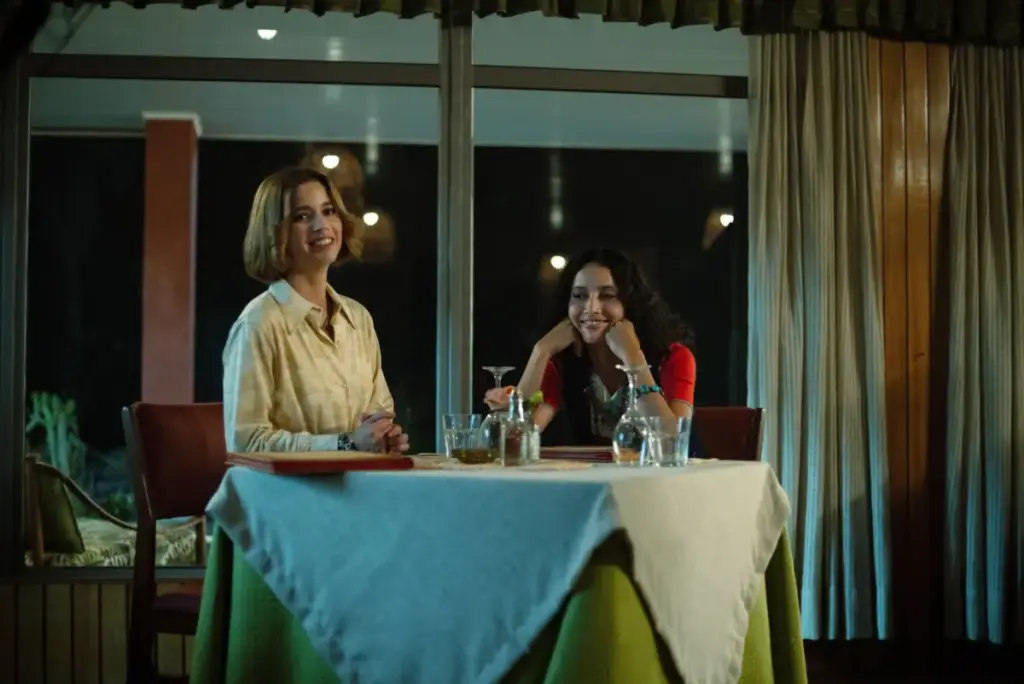
Chris’s mental unraveling accelerates when he decides to befriend a pair of local, politically radicalized students on the island, played by Mariana di Girolamo and Ailín Salas. Their introduction threatens to blow the agents’ cover and steer their quiet exile dangerously sideways.
Adding to Lee’s unending migraine is Chris’s obsession with writing a tell-all memoir. The manuscript details a harrowing, clandestine resume of previous interventions:
- Guatemala (1954): The CIA-orchestrated coup deposing Jacobo Árbenz.
- Congo (1960): The destabilization and assassination of Patrice Lumumba.
- The Bay of Pigs (1961): The "less successful" failed invasion of Cuba.
- Dallas (1963): Lingering, provocative cinematic allusions to deep-state involvement in John F. Kennedy’s assassination.
The Supporting Ensemble
The narrative is further enriched by a phenomenal supporting cast. Steve Buscemi stars as MJ, the foul-mouthed, stressed-out handler who delivers some of the film’s most memorable lines—including a profanity-laden catchphrase destined to echo through pop culture. Meanwhile, Parker Posey portrays Marge, Lee’s boozy wife, though her presence is largely restricted to frantic, one-sided phone calls that amplify the psychological strain of overseas espionage. Tom Waits also rounds out the ensemble in a mysterious, texture-rich cameo that grounds the film’s eerie atmosphere.
Supporting Context & Metrics
To fully appreciate the weight of Wild Horse Nine, it is essential to look at the historical, political, and cinematic metrics surrounding its production.

Historical Context: The 1973 Chilean Coup
The backdrop of the film is the September 11, 1973 military coup led by General Augusto Pinochet, which violently overthrew Chile’s democratically elected Marxist president, Salvador Allende. Declassified historical documents have long confirmed covert CIA actions and economic warfare directed by the Nixon administration to "make the economy scream" in Chile. McDonagh weaves these dark historical realities into the film’s DNA, ensuring that the comedy never trivializes the profound human toll of American imperialistic policy.
Modern Political Relevance
While written well in advance, the film’s themes have gained startling contemporary relevance. Analysts have noted eerie parallels between the film’s skewering of clandestine regime-change operations and recent geopolitical headlines—such as the United States’ military actions in Venezuela and the high-profile capture of President Nicolás Maduro. McDonagh’s script refuses to offer easy answers, utilizing satire as a scalpel to examine how global superpowers manipulate sovereign nations.
Production and Technical Specifications
| Metric / Detail | Specification |
|---|---|
| Director & Writer | Martin McDonagh |
| Starring Cast | John Malkovich, Sam Rockwell, Steve Buscemi, Parker Posey, Mariana di Girolamo, Ailín Salas, Tom Waits |
| Cinematographic Location | Rapa Nui (Easter Island) & Santiago, Chile |
| Run Time | 1 hour 58 minutes (118 minutes) |
| Festival Premiere | Venice Film Festival (September 3, 2026) |
| Theatrical Release Date | November 6, 2026 (UK & US) |
| Distributor | Searchlight Pictures |
Official Statements and Critical Reception
The critical response following the Venice Film Festival has been nothing short of rapturous, with industry publications and critics praising McDonagh’s singular ability to blend high-concept political commentary with character-driven farce.
The Venice Triumph
The 14-minute ovation on the Lido stands as one of the longest sustained applauses for a narrative feature in recent festival memory. Festival organizers noted that the audience remained glued to their seats long after the credits rolled, visibly moved by the film’s tonal balance between side-splitting humor and devastating tragedy.
Critical Consensus
Early reviews have heavily championed John Malkovich’s performance. Film critics have noted that despite an illustrious career spanning iconic roles—from the Pope and a criminal hijacker to a seductive French aristocrat—Wild Horse Nine grants Malkovich his meatiest, most rewarding cinematic showcase in decades.

"McDonagh’s brain should be marvelled at," wrote one leading critic. "He takes familiar tropes of espionage and isolation, infuses them with crackling, theatrical dialogue born of his playwriting roots, and delivers an experience that is both intellectually stimulating and wildly entertaining."
Another reviewer highlighted the film’s fearless handling of dark subject matter: "The steady supply of jokes and ridiculousness never cheapens the film’s political message. Instead, it makes the pill easier to swallow while ensuring the bitter aftertaste lingers long after the lights come up."
Future Outlook: Awards Season and Cultural Impact
As Wild Horse Nine prepares for its wide theatrical release on November 6, 2026, via Searchlight Pictures, all eyes are turned toward the upcoming awards season.
The Oscar Race
Given Martin McDonagh’s strong track record with the Academy—including nine nominations for The Banshees of Inisherin and an Oscar win for Sam Rockwell in Three Billboards Outside Ebbing, Missouri—industry forecasters expect Wild Horse Nine to be a major player across multiple categories. Key contenders for nominations include:
- Best Actor: John Malkovich (widely tipped as a frontrunner for his career-best work as Chris).
- Best Supporting Actor: Sam Rockwell, continuing his streak of magnetic performances in McDonagh’s cinematic universe.
- Best Original Screenplay: Martin McDonagh, whose dialogue-driven pedigree remains virtually unmatched in modern cinema.
- Best Picture & Director: Backed by Searchlight Pictures’ formidable awards campaign machine.
Cultural Legacy
Beyond the gold statuettes, Wild Horse Nine is poised to spark vital public conversations about the historical legacy of intelligence operations in Latin America. By choosing Rapa Nui as its canvas, the film achieves a rare visual and thematic harmony, framing the timeless, silent stone figures of the moai as solemn witnesses to the petty, destructive machinations of modern empires.

When audiences flood cinemas this November, they will not merely be treated to a masterclass in dark comedy; they will bear witness to a visionary filmmaker operating at the absolute peak of his creative powers.