Executive Overview
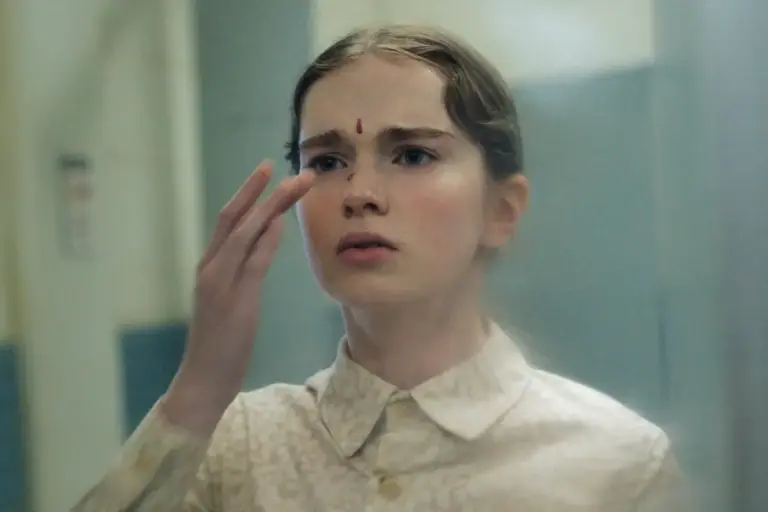
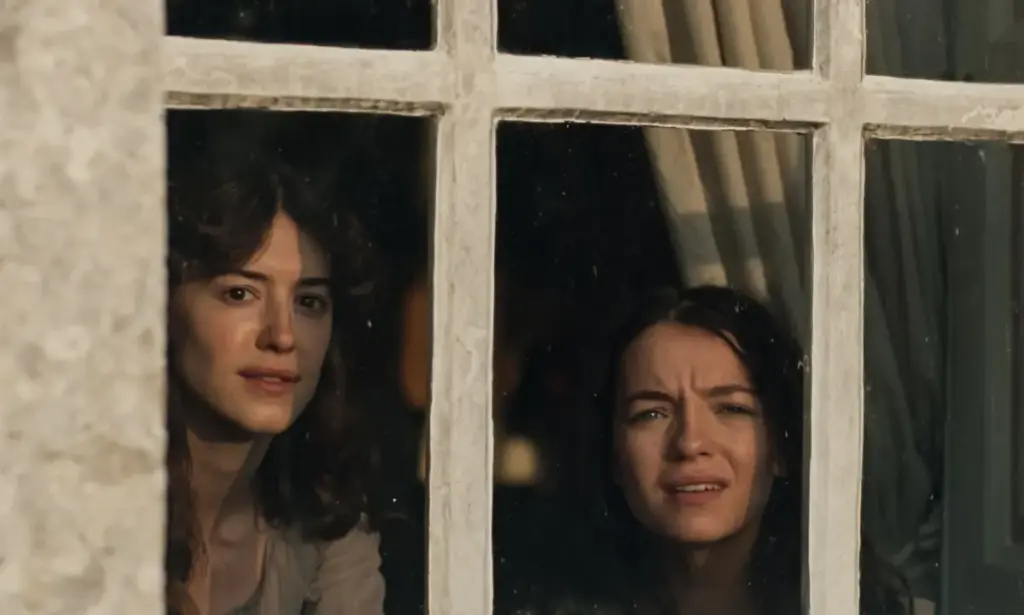
More than two centuries after its initial publication and over three decades since Emma Thompson’s generation-defining, Oscar-winning cinematic triumph, Jane Austen’s Sense and Sensibility is once again preparing to grace the silver screen. With an enviable, star-studded ensemble cast featuring George MacKay, Daisy Edgar-Jones, Esmée Creed-Miles, Herbert Nordrum, Caitríona Balfe, Frank Dillane, and Fiona Shaw, this upcoming adaptation arrives with immense cultural capital and fiercely high expectations.
Yet, the project steps into a daunting historical shadow. For millions of devoted Austenites worldwide, Thompson’s 1995 adaptation—directed by Ang Lee—is not merely a movie; it is the definitive cinematic rendering of the text. It gave us Kate Winslet’s windswept, passionate Marianne Dashwood, Emma Thompson’s quietly devastating Elinor, Hugh Grant weaponizing social awkwardness as the height of romantic charm, and Alan Rickman immortalizing Colonel Brandon as the undisputed blueprint for the emotionally mature, "green flag" partner decades before the internet even had a term for it.
However, unlike Pride and Prejudice, which functions as a glittering, perfectly balanced romantic comedy of manners, Sense and Sensibility has never felt like a novel that has completely finished revealing its secrets. Beneath its drawing rooms, piano-fortes, and empire-waist gowns lies a profoundly unsentimental, structurally grim exploration of systemic vulnerability, economic coercion, and female survival. As the cinematic landscape prepares for a bold new interpretation arriving in UK cinemas on September 25, the critical conversation is shifting: instead of competing with Thompson’s comforting, chocolate-mug reliability, this new adaptation has the golden opportunity to lean into Austen’s darker, sharper, and more unsettling edges.
Detailed Chronology: The Evolution of Sense and Sensibility on Page and Screen
To understand the weight of the upcoming adaptation, one must trace the historical trajectory of Austen’s debut novel and its subsequent journeys into popular culture.
- 1795–1797 (The Genesis): Originally drafted under the epistolary working title Elinor and Marianne, Austen later revised the manuscript into narrative form, shifting its structural focus toward the complex interplay between rational restraint and emotional intensity.
- October 30, 1811 (First Publication): Published anonymously by Thomas Egerton of the Military Library, Whitehall, bearing the simple attribution "By a Lady." The first edition of 1,000 copies sold out by July 1813, netting Austen a modest profit of £140.
- 1995 (The Cinematic Paradigm Shift): Released by Columbia Pictures and directed by Ang Lee from a meticulously crafted screenplay by Emma Thompson, the film shattered prevailing industry assumptions that period dramas were dusty or irrelevant. It grossed over $134 million worldwide, earned seven Academy Award nominations, and won Thompson the Oscar for Best Adapted Screenplay.
- 2008 (The BBC Miniseries Television Adaptation): Written by Andrew Davies and directed by John Alexander, this three-part television serial brought a lush, novelistic breathing room to the narrative, introducing a slightly more visceral, serialized approach to the Dashwood sisters’ financial precarity.
- September 25 (The Upcoming Cinematic Release): A new, star-studded feature adaptation lands in UK cinemas, boasting contemporary casting choices like Daisy Edgar-Jones and George MacKay, prompting critics and fans alike to question whether modern cinema is finally ready to embrace the novel’s inherent bleakness.
Supporting Context & Metrics: The Economics of Austen Adaptations
The endurance of Jane Austen’s intellectual property within the global entertainment market remains a financial and cultural phenomenon. According to film industry box-office trackers, cinematic adaptations of Austen’s six major novels have collectively grossed well over half a billion dollars worldwide unadjusted for inflation, with modern iterations proving increasingly lucrative due to international streaming syndication and physical media collectors.
| Adaptation Title | Year | Key Talent | Critical/Commercial Impact |
|---|---|---|---|
| Pride and Prejudice | 1940 | Greer Garson, Laurence Olivier | Established the classical Hollywood blueprint for Austen rom-coms. |
| Sense and Sensibility | 1995 | Emma Thompson, Kate Winslet, Alan Rickman | 7 Oscar nominations, 1 win (Adapted Screenplay); global gross of $134M+. |
| Pride & Prejudice | 2005 | Keira Knightley, Matthew Macfadyen | 4 Oscar nominations; redefined Regency aesthetics with gritty realism. |
| Emma. | 2020 | Anya Taylor-Joy, Johnny Flynn | $26M+ box office interrupted by pandemic; praised for high-fashion pastels. |
| Sense and Sensibility | Upcoming | Daisy Edgar-Jones, George MacKay, Fiona Shaw | High anticipation; shifts focus toward contemporary psychological depth. |
The Financial Brutality of the Regency Era
While modern audiences often consume Austen through the rose-tinted lens of romance, the foundational engine driving Sense and Sensibility is cold, hard cash—or rather, the absolute lack of it. Following the death of Mr. Dashwood senior, his estate at Norland Park passes entirely down the patriarchal line to his son by a first marriage, John Dashwood.
Consequently, Mrs. Dashwood and her three daughters—Elinor, Marianne, and Margaret—are legally dispossessed, reduced to a meager annual income of £500. In an era where primogeniture dictated that women could neither inherit landed property nor easily engage in independent professions, the Dashwood women are cast out into a hyper-capitalist marriage market where a failure to secure a wealthy match spells financial ruin or social obscurity. This economic baseline transforms every dance, promenade, and polite conversation into a high-stakes survival exercise.
Official Statements and Critical Perspectives
As pre-release marketing material and trailers for the new adaptation roll out, industry insiders and cultural critics have begun debating the philosophical direction of the project.
In a recent industry roundtable discussing the adaptation, lead creative stakeholders emphasized a desire to strip away the "chocolate box" nostalgia that has calcified around nineteenth-century literature. "We are not interested in making a museum piece," noted a production insider close to the project. "Jane Austen’s brilliance lies in her social satire and her unflinching observation of human cowardice. The upcoming film aims to honor the psychological claustrophobia the Dashwood sisters experience when society closes its doors on them."

Literary critics have long argued over whether Sense and Sensibility is fundamentally a conservative cautionary tale or a subversive critique of patriarchal limitation. Prominent Austen scholar Dr. Helena Vance remarked:
"For generations, readers have viewed Marianne’s near-fatal illness as a form of moral punishment—a narrative correction forcing a wild, passionate romantic into the rigid box of polite society. But if you read the text closely, the cost of that suppression is terrifying. It isn’t just a lesson; it’s a near-death experience brought on by grief and systemic powerlessness. Any adaptation that glosses over that physical and emotional toll is missing Austen’s darkest genius."
Future Outlook: What to Expect from the New Adaptation
The central artistic challenge facing the creative team behind the new Sense and Sensibility is navigating the long shadow cast by Ang Lee and Emma Thompson while carving out a distinct, contemporary identity. Just as Greta Gerwig’s Little Women (2019) utilized non-linear storytelling to recontextualize Louisa May Alcott’s classic themes of female ambition and economic anxiety, the new Austen adaptation has the runway to ask uncomfortable, modern questions.
1. Re-evaluating the "Villainy" of John Willoughby
In Pride and Prejudice, George Wickham functions as a charming, predatory sociopath whose malicious nature is ultimately unmasked. In contrast, John Willoughby is far more unsettling precisely because he lacks pure malice. He genuinely loves Marianne—or loves her as much as his shallow, hedonistic nature allows.
When mounting debts, social expectations, and the lure of Miss Grey’s £50,000 fortune beckon, Willoughby chooses self-preservation over affection. He is a coward rather than a monster. Modern psychological storytelling is uniquely equipped to explore Willoughby not as a traditional storybook villain, but as a tragic portrait of a weak man making devastating, deeply recognizable human compromises. Expect the new film to dig deeper into the moral gray areas of his betrayal.
2. The Medical and Psychological Cost of Grief
Marianne Dashwood’s physical collapse—historically diagnosed in the text as a malignant fever brought on by emotional exposure and heartbreak—can easily be modernized through a contemporary understanding of trauma. Rather than playing her illness purely as romantic melodrama, a grit-focused adaptation can frame her fever as the physiological manifestation of female grief in a world that demands emotional containment. When women are denied the right to rage against injustice, their bodies often internalize the war.
3. Redefining Colonel Brandon
Alan Rickman’s portrayal of Colonel Brandon set an impossibly high standard: the stoic, melancholic protector who loves from a distance without ever demanding reciprocity. A fresh adaptation must decide whether to lean into this archetype of the saintly, emotionally mature guardian or to excavate the haunted, war-scarred background hinted at in Austen’s text. Brandon’s past—marked by duels, tragic wards, and profound isolation—offers fertile ground for a more complex, psychologically rugged interpretation.
4. A Triumph of Unsentimental Hope
Ultimately, the enduring brilliance of Sense and Sensibility does not reside in the promise that love conquers all, but in the gritty realization that life is perpetually unfair, yet happiness remains painstakingly achievable anyway. Elinor and Marianne do not secure their futures through fairy-tale magic; they build them out of compromise, mutual resilience, and hard-won maturity.
As UK audiences settle into cinema seats this coming September 25, the new adaptation will succeed not by erasing Emma Thompson’s masterpiece, but by inviting us back into the conversation. If it manages to trust how strange, unsentimental, and sharp Jane Austen’s debut novel truly is, it will prove once and for all that classic literature is never finished speaking to us—it simply waits for each generation to ask it better questions.