Executive Overview
In the architecture of modern personal style, few elements possess the instantaneous transformative power of a concentrated splash of color. Whether expressed through a sculptural handbag, an architectural heel, or a strategically placed piece of jewelry, vibrant hues possess the capacity to elevate even the most understated outfit into a masterclass in intentional dressing. Yet, among all accessory categories, none delivers maximum visual impact with such minimal effort quite like the red sneaker.
Striking the ultimate equilibrium between athletic heritage and high-fashion sensibility, the red sneaker occupies a coveted sweet spot in the contemporary wardrobe. It functions simultaneously as a grounded casual staple and a bold statement accessory. Season after season, regardless of shifting micro-trends and cyclical runway rotations, red kicks endure as a default favorite for style icons and industry insiders alike. They inject an effortless jolt of personality into minimalist ensembles, serving as a unifying thread across international fashion weeks, street style photography, and celebrity off-duty documentation.
Far from being a fleeting flash-in-the-pan trend tied to a specific calendar year, red sneakers have transitioned into bonafide closet classics. Their longevity is rooted in an unexpected versatility that allows them to bridge the gap between heavy transitional seasons. Whether paired with end-of-summer linen separates or anchored by the deep, rich textures of autumn outerwear, red sneakers command attention while remaining remarkably wearable. This comprehensive investigation examines the cultural rise, stylistic versatility, market landscape, and future trajectory of fashion’s favorite crimson footwear.
Detailed Chronology: From Athletic Roots to High-Fashion Runways
To understand the current ubiquity of the red sneaker, one must trace its lineage through the dual histories of athletic performance and countercultural subversion.
The Athletic Genesis
For decades, sneakers were strictly utilitarian objects designed for specific athletic pursuits on the hardwood, the track, or the tennis court. While white canvas and black leather dominated early athletic footwear, the introduction of color into sports equipment during the mid-to-late 20th century changed the landscape forever. Brands like Nike, Adidas, and Puma began releasing team-color variants and specialized running shoes that incorporated vibrant shades of red. These early iterations were engineered for visibility and team allegiance rather than stylistic expression, yet they laid the groundwork for what was to come.
The Subcultural Shift
As sneakers leaked out of stadiums and gymnasiums into the streets of major urban centers during the 1970s, 1980s, and 1990s, subcultures adopted them as symbols of identity and rebellion. Skateboarding communities, hip-hop pioneers, and youth movements embraced bold colorways to signal individuality. The red sneaker, in particular, carried a natural bravado. It was loud, confident, and impossible to ignore. Skaters wearing classic canvas models and basketball enthusiasts rocking crimson high-tops inadvertently built the cultural capital that contemporary luxury houses now leverage.
The Celebrity Catalyst and Modern Ubiquity
In the modern era, the democratization of street style and the rise of off-duty model aesthetics cemented the red sneaker’s status as a wardrobe essential. Trendsetters like Gigi Hadid and Hailey Bieber frequently incorporated low-profile red kicks into their daily wardrobes, pairing them with everything from oversized leather jackets to tailored trousers. Their endorsement bridged the gap between accessible streetwear and high-end luxury.
Simultaneously, heritage brands began digging into their archives, reissuing retro silhouettes in rich cherry, crimson, and burgundy tones. Concurrently, luxury powerhouses recognized the shift, introducing their own elevated interpretations on the runway. Today, the red sneaker is no longer just a piece of athletic gear or a subcultural artifact; it is a blank canvas for luxury expression, bridging sportswear heritage with haute couture sensibility.
Supporting Context & Metrics: The Anatomy of a Wardrobe Staple
The enduring appeal of the red sneaker is not merely anecdotal; it is supported by structural shifts in how consumers approach footwear and wardrobe investments.
The Versatility Equation
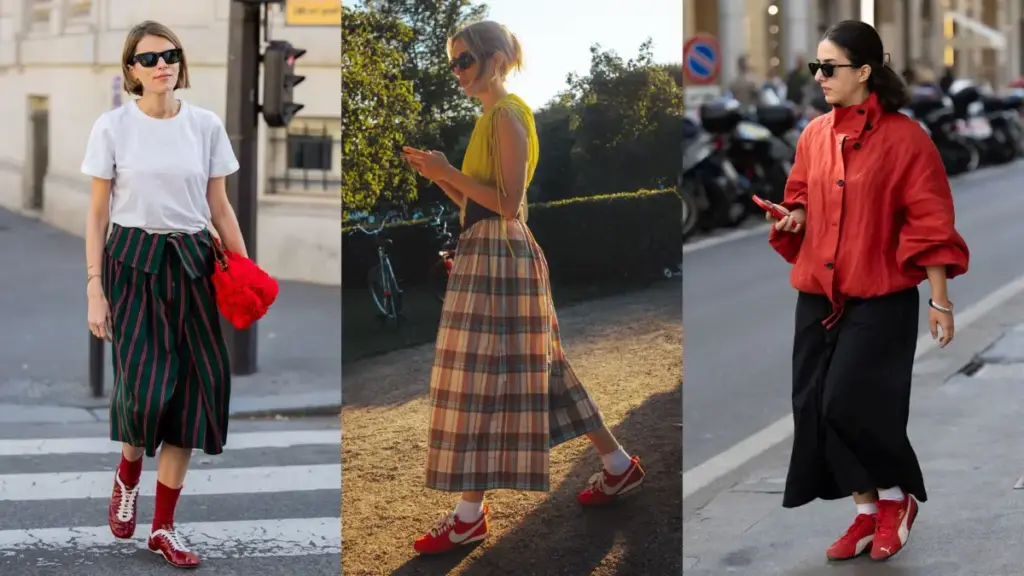
What separates the red sneaker from other colorful footwear options is its remarkable chameleon-like ability to harmonize with disparate aesthetics. Stylists and wardrobing experts frequently point to the color red’s unique psychological positioning: while bold and attention-grabbing, red also functions remarkably well as a neutral when styled against classic palettes of navy, black, camel, grey, and white.
- The 9-to-5 Pivot: Modern office dress codes have relaxed significantly, allowing for high-low styling to dominate professional environments. Pairing a crisp button-up shirt and tailored trousers with a low-profile red sneaker introduces a calculated nonchalance that feels fresh and modern.
- The Transitional Weekend Look: As seasons shift from late summer to crisp autumn, red sneakers provide an effortless bridge. They look just as correct worn bare-ankled with a slip dress and a chunky cardigan as they do paired with heavy-weight denim, a cashmere crewneck, and a classic trench coat.
Market Segmentation and Price Architecture
The current market for red sneakers spans a broad spectrum, accommodating diverse consumer segments and price points:
| Category | Representative Brands | Price Range | Aesthetic Focus |
|---|---|---|---|
| Accessible Heritage | Keds, Vans | $50 – $60 | Classic canvas, California cool, timeless simplicity. |
| Athletic Classics | Nike, Adidas, Puma | $90 – $100 | Retro-inspired silhouettes, suede textures, archival revivals. |
| Contemporary & Designer | Proenza Schouler, Dries Van Noten | $650 – $990 | Architectural shapes, technical fabrics, eel-effect leathers, track-inspired hybrids. |
| Ultra-Luxury Collaborations | Miu Miu x New Balance | $1,200+ | High-fashion deconstruction, technical luxury, collector-tier exclusivity. |
When analyzing this market spread, industry analysts note that consumers are increasingly willing to invest across tiers. A buyer who owns a pair of classic canvas Keds or Adidas retro runners may simultaneously covet a high-end designer spin from Dries Van Noten or a coveted collaboration piece like the Miu Miu x New Balance 530 SL.
Official Industry Perspectives & Expert Styling Insights
To gain a deeper understanding of why red sneakers continue to dominate editorial spreads and retail shelves, we turn to the insights of leading fashion editors, stylists, and brand directors.
The Minimalist Silhouette Mandate
According to leading accessories directors across major fashion publications, the key to mastering the red sneaker trend lies entirely in silhouette selection. Because red is an inherently dominant color, bulky or overly complicated designs can quickly overwhelm an outfit.
"When shopping the red sneaker category, the golden rule is to focus on designs that balance the richness of the color with a minimalist, streamlined shape," notes one leading footwear editor. "Retro-inspired or low-profile silhouettes—such as slim track shoes, classic canvas low-tops, and sleek leather court shoes—feel polished enough to complement everything from a razor-sharp tailored suit to relaxed, puddle-hem denim."
High-Low Styling as a Philosophy
Stylists emphasize that the red sneaker functions best when used to create intentional juxtaposition. Rather than leaning entirely into a sporty aesthetic, the most successful outfits pit the casual, athletic nature of the sneaker against refined, luxurious garments.
- Tailoring Counterpoints: Wearing a structured, double-breasted wool blazer with matching trousers is instantly modernized when anchored by a cherry-red suede sneaker. It signals that the wearer understands tailoring but refuses to take themselves too seriously.
- Textural Play: Combining the flat texture of canvas or smooth leather sneakers with tactile fabrics like cashmere, tweed, silk, and trench-coat gabardine adds depth and visual dimension to an ensemble.
Future Outlook: Where the Trend is Heading
As the fashion industry looks toward upcoming seasons, the red sneaker shows no signs of relinquishing its hard-won real estate in the modern wardrobe. Several key trajectories indicate how this footwear phenomenon will evolve in the near and distant future.
1. The Consolidation of Archival Revivals
Heritage brands are expected to continue digging deep into their archives, resurrecting obscure 1970s and 1980s training shoes and giving them the crimson treatment. The success of low-profile, suede-heavy silhouettes—exemplified by models like the Puma Speedcat and the Adidas Tokyo—proves that consumers are actively moving away from chunky, oversized "dad shoe" aesthetics in favor of sleeker, more streamlined profiles that hug the foot.
2. Sustainable Material Innovations
As consumer demand for eco-conscious luxury grows, sneaker manufacturers are under increasing pressure to explore sustainable alternatives to traditional leather and synthetic textiles. Future iterations of red sneakers will likely feature plant-based leathers, recycled cotton canvases, and bio-based rubber soles, allowing eco-conscious consumers to participate in the trend without compromising their environmental values.
3. Continued High-Low Luxury Collaborations
The intersection of sportswear giants and luxury fashion houses will remain a fertile ground for innovation. Following the immense commercial and cultural success of collaborations like Miu Miu x New Balance, we can anticipate more unexpected cross-pollinations. These partnerships will continue to push the boundaries of materials—incorporating satin finishes, distressed treatments, and technical mesh—solidifying the red sneaker’s status as a permanent fixture in both the streetwear canon and the haute couture lexicon.
Final Verdict
The red sneaker has successfully graduated from a functional athletic necessity and a rebellious subcultural marker to become an undisputed pillar of modern style. Its enduring appeal lies in its unique duality: it is simultaneously daring and dependable, loud and versatile. For those looking to inject vitality, personality, and effortless chic into their rotational dressing, investing in a meticulously shaped pair of red sneakers remains one of the most reliable style choices one can make. Whether opting for a classic canvas kick under $60 or a high-fashion designer statement piece, the crimson sneaker is an investment in timeless, unapologetic self-expression.