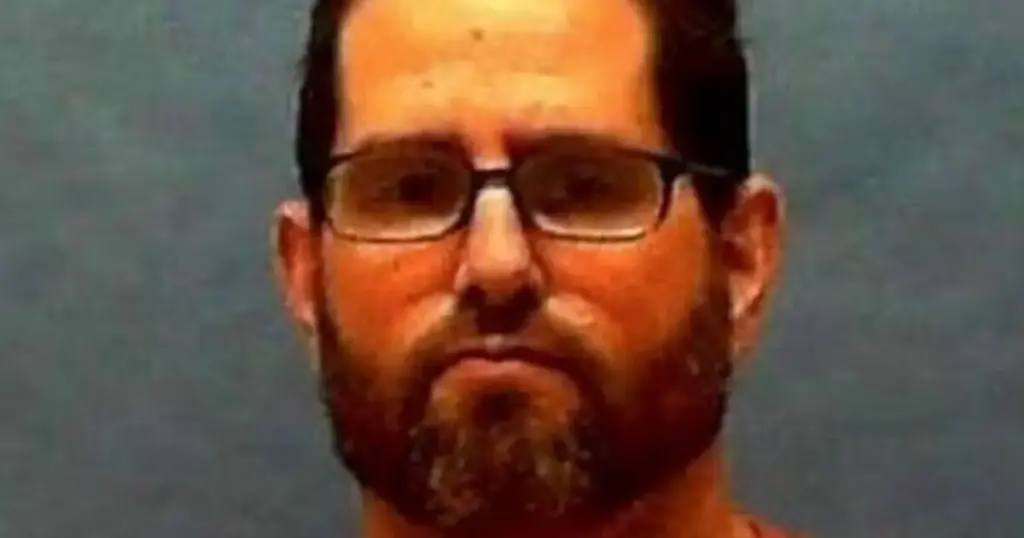
STARKE, Fla. — On a quiet Tuesday evening at Florida State Prison, the decades-long legal and personal reckoning for William Frances Silvia, Jr. reached its ultimate conclusion.
Silvia, a 61-year-old inmate whose brutal 2006 attack during an Orlando-area family gathering earned him the grim moniker of the "cookout killer," was executed via a three-drug lethal injection protocol on August 18, 2026. The Florida Department of Corrections (FDOC) confirmed that the lethal process commenced shortly after 6:00 p.m. local time, with Silvia officially pronounced dead at 6:11 p.m. EST.
With this execution, Silvia became the 13th prisoner put to death in Florida this calendar year. His death underscores an aggressive, sustained capital punishment wave in the Sunshine State—one that continues to set records and outpace the rest of the United States by a significant margin.
Executive Overview: A Twenty-Year Journey to the Death Chamber
The path that led William Silvia to the gurney at Starke began two decades ago, rooted in domestic estrangement, escalating alcoholism, and a violent refusal to accept the end of his marriage. In 2006, Silvia ambushed his estranged wife, Patricia, and her family during an outdoor backyard gathering, executing a point-blank shooting that shattered a family and left a mother-in-law permanently disfigured.
Silvia’s execution is not an isolated event; rather, it highlights a broader, highly active capital punishment landscape in Florida. As state correctional authorities continue to clear long-standing death row dockets, Florida has established itself undeniably as the epicenter of capital punishment in the United States. Having carried out more than half of the nation’s 22 executions thus far in 2026, the state’s judicial and penal systems are operating at a frequency not witnessed in decades.
This in-depth investigative report examines the crime that shocked Central Florida, the convoluted legal battles that prolonged Silvia’s stay on death row, the broader statistical surge of capital punishment in the state, and what the future holds as scheduled executions stretch into the autumn months.
Detailed Chronology: From Domestic Turmoil to Carnage at the Cookout
The Descent and the Separation
To understand the tragedy that unfolded in 2006, investigators and court records point to a months-long spiral of desperation and volatility. Following a marital breakdown that prompted Patricia Silvia to leave her husband, William Silvia found himself unmoored. Displaced from his home, he spent months living out of his truck and various cheap motel rooms across Central Florida.

During this transient period, court documents indicate that Silvia became increasingly dependent on alcohol. His attempts to orchestrate a reconciliation with Patricia were repeatedly rebuffed. Two months prior to the fateful attack, Patricia sought refuge at the home of her mother, Betty Woodard, located in the Orlando area.
Consumed by rejection and fueled by alcohol, Silvia made a fatal decision in 2006: he purchased a shotgun, effectively arming himself for a confrontation that he intended to be absolute.
The Attack at the Family Gathering
On the day of the attack, the Woodard family had gathered for a routine backyard cookout—a scene meant for familial bonding and relaxation. Silvia pulled up to the residence in his truck, initially attempting once more to convince Patricia to return to him.
When those efforts inevitably failed, Silvia’s demeanor shifted from desperation to lethal aggression. According to law enforcement and witness testimonies, he walked back to his vehicle, retrieved the newly purchased shotgun, and returned to the gathering.
Without warning, Silvia opened fire on the two women. Patricia Silvia was struck and killed instantly at the scene. Her mother, Betty Woodard, was targeted at point-blank range; the blast inflicted catastrophic injuries, resulting in the permanent loss of her left eye and the top portion of her nose.
Silvia fled the scene shortly after the shooting but was ultimately apprehended by law enforcement, setting into motion a complex web of legal proceedings that would span twenty years.
Legal Battles, Appeals, and the Death Row Process
The Judicial Back-and-Forth
William Silvia’s journey through the Florida judicial system was marked by landmark legal shifts regarding how the state applies capital punishment.

- The Initial Trial and Sentence (2008): Following a formal trial, a jury convicted Silvia of first-degree murder for the death of Patricia Silvia and attempted first-degree murder for the near-fatal wounding of Betty Woodard. The trial court formally sentenced him to death.
- The Vacated Sentence: Years later, Silvia’s initial death sentence was vacated. This legal reversal was part of a broader wave of post-conviction challenges triggered by rulings concerning Florida’s historical death penalty sentencing procedures—specifically addressing jury unanimity requirements.
- Resentencing (2018): Granted a new death penalty phase, Silvia was brought back before the courts. In 2018, a new jury and judge reviewed the case, resulting in a reaffirmation of the death sentence.
The Final Legal Hurdles
In the months and weeks leading up to his execution date, Silvia’s legal team mounted last-ditch efforts to halt the lethal injection. Attorneys focused heavily on institutional constraints within Florida’s legal defense infrastructure.
Arguments were brought before the courts on behalf of the Capital Collateral Regional Counsel (CCRC), the state agency tasked with providing legal representation to Death Row inmates. Silvia’s defense argued that the CCRC was fundamentally incapable of providing constitutionally adequate and effective assistance of counsel, citing severe overwork and a conflict of interest because the agency was simultaneously handling the defense of another prominent Death Row inmate.
Ultimately, the Florida Supreme Court rejected the appeal, clearing all remaining legal roadblocks and greenlighting the Department of Corrections to proceed with the execution warrant.
Supporting Context & Metrics: Florida’s Capital Punishment Surge
The Lethal Injection Protocol
According to the Florida Department of Corrections, all executions in the state are carried out via a standardized three-drug lethal injection protocol. The process is administered in a strict sequence:
- A Sedative: Designed to render the inmate unconscious and insensate to pain.
- A Paralytic: Used to immobilize the skeletal muscles and halt respiration.
- A Heart-Stopping Agent: Typically potassium chloride, which induces cardiac arrest.
The execution chamber at Florida State Prison near Starke has seen unprecedented traffic recently, serving as the physical focal point for the nation’s most active capital punishment state.
A Historic Rebound in Executions
The execution of William Silvia occurs against the backdrop of a broader, aggressive revival of the death penalty in America, led primarily by Florida.
- The 2025 Milestone: The United States witnessed a total of 47 executions in 2025. Of that national total, Florida accounted for 19 executions—representing a historic state record since the death penalty was reinstated in Florida in 1976.
- Double Executions: Demonstrating the speed with which the state is processing its death row population, Florida executed two prisoners on a single day last July, marking the first time a U.S. state had executed multiple inmates in a single day in nearly a decade.
- The 2026 Trajectory: With Silvia’s execution marking the 13th in the state for 2026, Florida alone accounts for more than half of the 22 total executions carried out nationwide thus far this year. Legal analysts note that this pace reflects a concerted effort by state prosecutors, governors, and the judiciary to enforce long-delayed death sentences, drawing both sharp praise from victims’ advocates and intense scrutiny from human rights organizations.
Official Statements and Institutional Response
Following the pronouncement of death at 6:11 p.m., the Florida Department of Corrections released an official statement confirming the execution:

"The sentence of the State of Florida v. Inmate William Frances Silvia, Jr. was carried out at 6:11pm EST on August 18, 2026, at Florida State Prison, via lethal injection in accordance with Florida law."
While state officials and proponents of capital punishment argue that these executions provide long-overdue closure to the families of victims and uphold the rule of law for heinous crimes, opponents and abolitionist groups continue to voice deep concerns. Critics point to the psychological toll on correctional staff, questions regarding the pharmaceutical supply chains for lethal injection drugs, and the systemic pressures placed on public defense agencies as evidence that the state’s current pace warrants a moratorium.
For Betty Woodard and the extended family of Patricia Silvia, however, the execution brings an end to a protracted chapter of legal appeals, media attention, and haunting memories of the 2006 cookout. Though Woodard survived the point-blank shotgun blast, the physical and emotional scars left behind by William Silvia have endured for two decades.
Future Outlook: September Executions on the Horizon
There is no indication that Florida’s aggressive capital punishment schedule will slow down as the year progresses. State records indicate that two additional execution warrants have already been signed and scheduled for the month of September 2026, ensuring that Starke’s execution chamber will remain active.
- Harold Gene Lucas (September 1, 2026): The 74-year-old inmate is scheduled to be executed next. Lucas was convicted of the brutal fatal shooting of a 16-year-old girl who rejected his romantic advances, as well as the wounding of two of her friends during the same attack.
- Daniel Owen Conahan Jr. (September 10, 2026): The 72-year-old inmate is scheduled to follow later in the month. Conahan was convicted of the kidnapping and strangulation of a man whom he had paid to pose for nude photographs. Furthermore, law enforcement authorities have long suspected Conahan of being a serial killer responsible for a series of similar, unsolved homicides committed throughout southwest Florida during the 1990s.
As these autumn execution dates approach, legal scholars, human rights advocates, and victims’ families will continue to watch Florida closely. What is definitively clear is that the Sunshine State has firmly cemented its position at the vanguard of American capital punishment, navigating a path of relentless legal execution that shows no signs of abating.