Executive Overview
The boundaries separating the high-fashion runway from the neighborhood fitness studio are dissolving. In a seismic shift that is rapidly redefining the modern retail landscape, fashion houses, activewear labels, and luxury conglomerates are making massive investments in the health and wellness sector. No longer content to merely dictate what consumers wear while stationary, brands are embedding themselves deeply into how their customers move, eat, and live.
From exclusive sound-healing Pilates sessions on the Spanish coast to global gym takeovers in world capitals, physical marketing has taken on a distinctly athletic, health-conscious tone. This is far more than a passing seasonal fad. It represents a profound evolution in consumer identity—a recognition that what a person wears to a yoga class is just as vital to their self-expression as an evening gown or a tailored suit.
Driven by staggering macroeconomic realities—including a U.S. wellness market valued well north of $500 billion—brands across the pricing spectrum are waking up to the power of experiential marketing. By trading traditional window displays for protein smoothie bars, run clubs, and mindfulness workshops, fashion labels are discovering a lucrative route to consumer loyalty: offering experiences to participate in, rather than simply products to purchase. Yet, as this trend accelerates, a critical question looms: are these wellness crossovers authentic manifestations of a lifestyle brand, or are they opportunistic marketing ploys destined to be sniffed out by savvy consumers?
Detailed Chronology: How Fitness and Fashion Collided
The marriage of health and style is not entirely new, but its recent acceleration marks a distinct turning point in retail strategy. Over the last several quarters, the intersection of wellness and apparel has evolved from casual brand collaborations into a full-scale, immersive retail movement.
Spring: The Rise of In-Person Activations
As global retail emerged from post-pandemic stabilization, brands quickly realized that digital ad fatigue was setting in. Consumers were craving physical connection, tactile experiences, and community. In response, marketing executives began conceptualizing in real life (IRL) campaigns centered around physical vitality.
During the spring fashion circuit, brands began experimenting with active lifestyle integrations. Rather than traditional after-parties fueled exclusively by champagne, forward-thinking fashion houses started hosting morning yoga sessions, run clubs, and breathwork classes. These events provided a holistic alternative that aligned neatly with the shifting habits of affluent, health-conscious consumers.
Summer: Global Takeovers and Pop-Ups
By the summer months, the trend had exploded onto the global stage. High-end fashion houses and outdoor performance brands alike began executing ambitious, multi-city pop-ups designed to capture the attention of wellness enthusiasts.
Balenciaga executed a masterclass in experiential marketing by launching a series of healthy smoothie and juice pop-ups across international style capitals, including Paris, Beijing, Shanghai, and Bangkok. Taking the concept a step further, the brand coordinated full studio takeovers of Barry’s boot camp locations in major metropolitan hubs spanning Los Angeles, New York, London, Paris, Milan, Dubai, Singapore, and Sydney. These comprehensive takeovers featured custom-designed classes, bespoke workout playlists, immersive environmental decor, and exclusive co-branded smoothies served directly from the gym bars.
Simultaneously, outdoor and activewear brands leaned into their core competencies. Salomon, a brand experiencing a massive lifestyle crossover, partnered with boutique fitness institutions like Los Angeles’ Natural Pilates to host intimate class series in retail environments.
Fall: Cohesive Brand Ecosystems
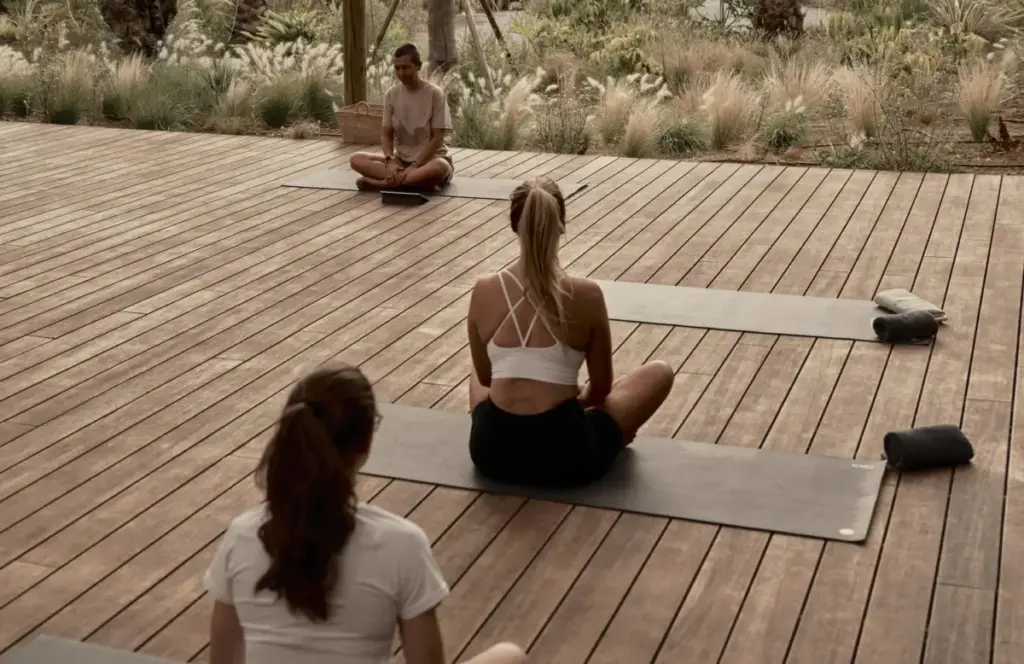
As autumn arrived, brands began synthesizing these one-off activations into long-term strategic pillars. Earlier this month, sustainable lifestyle brand Pangaia launched the "Pangaia Wellness Club" in collaboration with OKU Hotels in Spain. The initiative introduced three distinct wellness modalities—yoga, pilates, and sound-based healing—imbued with the brand’s own auditory identity. Specifically, the ambient music Pangaia originally produced for its Milan Fashion Week debut played softly in the background during the sessions, creating a seamless sensory loop between high fashion and deep relaxation. Attendees were subsequently welcomed at the Nourishment Bar for functional juices and protein smoothies, cementing an end-to-end lifestyle ecosystem.
Supporting Context & Metrics: The Economics of the Wellness Economy
To understand why the fashion industry is pouring millions of dollars into Pilates mats, cold-pressed juices, and mindfulness apps, one need only look at the numbers. The global wellness industry is no longer a niche subculture; it is a macroeconomic juggernaut.
The $500 Billion Reality
According to landmark research from McKinsey & Company’s Future of Wellness report, American consumers alone spend upwards of $500 billion annually on wellness-related products and experiences. More importantly for retail strategists, this market is expanding at a robust rate of roughly 5% each year.
This financial commitment is underpinned by a profound ideological shift among consumers. Recent data from the Business of Fashion indicates that an astonishing 84% of Americans now consider personal well-being to be a top daily priority. For fashion brands struggling against stagnant or declining discretionary spending in traditional apparel categories, aligning with this high-growth sector represents a vital lifeline.
The Shift Toward Experiential Spending
Consumer spending habits have undergone a structural transformation. Additional data from McKinsey’s ongoing studies on consumer behavior reveals that while discretionary retail spending on traditional goods has softened, spend on travel, leisure, and live experiences continues to climb.
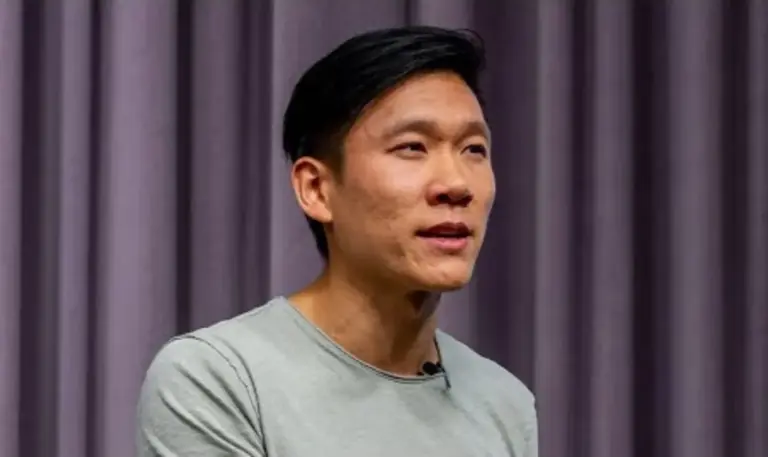
Ryan Glick, founder of CNC Agency—a creative firm that has engineered high-profile collaborations, including Prada’s roaming floral and aromatherapy installations and Gap’s partnership with skin-care favorite Summer Fridays—notes that this behavioral shift makes wellness activations exceptionally effective.
"A pilates class, run club or smoothie bar gives people something to actually participate in rather than simply shop," Glick explains. "That creates community, as well as a much deeper interaction with the brand."
By anchoring marketing spend to physical participation, brands are able to circumvent the transactional friction of traditional retail, transforming passive shoppers into active community members.
Official Statements and Industry Insights
The convergence of fashion and wellness is being propelled by marketing leaders and creative directors who recognize that the modern consumer’s identity cannot be neatly compartmentalized.
Redefining the Modern Lifestyle
According to Ryan Glick, the traditional boundaries of what constitutes a "lifestyle brand" have fundamentally collapsed.
"Fashion brands are leaning into wellness because the definition of lifestyle has expanded," says Glick. "What you wear, how you work out, what you eat, where you spend your time—they’re increasingly part of the same identity. Wellness gives fashion brands permission to show up in more of these moments."
This expanded definition of identity allows heritage fashion houses and technical activewear companies alike to occupy spaces that were previously off-limits.
The DNA of Movement
For performance-focused brands, in-person activations are not a pivot; they are a doubling down on foundational principles. Jenny Taylor, Vice President of Marketing for Salomon North America, emphasizes that community workout sessions are baked into her brand’s corporate identity.
"In-person experiences have always been a part of our DNA as a brand," Taylor notes. "We have launched ‘How to Trail Run’ video series on YouTube, our Gravel tour of community running events, community hikes with our retail partners, and so much more. Now that some of our own Salomon stores are open, it’s been fun to test different event formats to see what resonates."
Salomon’s experiential strategy is supported by rapid brick-and-mortar expansion. The brand recently opened 13 new stores in the U.S. in a single quarter, bringing its global retail footprint to 315 locations. As these physical spaces multiply, they increasingly double as community hubs where consumers can sweat, test product durability in real-world scenarios, and connect with fellow enthusiasts.
The Product in Motion
For brands like Pangaia, the utility of wellness events extends straight to product validation and sales. Pangaia’s collaboration with OKU Hotels included an exclusive capsule collection of T-shirts, sweatshirts, and hoodies available for purchase strictly on-site during the wellness classes.
A Pangaia brand representative highlighted the unique commercial value of these environments to Glossy:
"There’s something particularly valuable about seeing our products in motion and allowing guests to experience how they look, feel, and function in moments of movement and relaxation."
Rather than relying on static mannequins or digital lookbooks, the brand demonstrates the functional performance of its sustainable textiles within the exact context for which they were designed.
The Authenticity Imperative and Potential Pitfalls
Despite the clear commercial upside, rushing into the wellness space is fraught with operational and reputational risks. Consumers today are increasingly discerning, and the proliferation of corporate wellness initiatives has created an environment of skepticism.
Navigating Consumer Skepticism
Natalie Trice, founder of Rare Street Pilates who recently expanded her wellness expertise into the fashion space with the launch of activewear brand Stay Rare, warns that superficial marketing tactics are easily spotted by modern buyers.
"In my mind, adding a pilates class or putting a green juice into a pop-up doesn’t automatically make a fashion brand a wellness brand," Trice cautions. "Consumers are increasingly savvy, and can spot a marketing exercise over a brand that genuinely understands and wants to offer something new and different."
When a fashion brand attempts to leverage wellness purely as a fleeting trend without foundational credibility, the activation can ring hollow. True integration requires more than a co-branded water bottle or a guest-list yoga class; it demands a genuine respect for the physical and mental disciplines being showcased.
Furthermore, logistics present significant hurdles. Coordinating multi-city gym takeovers, maintaining partnerships with elite fitness studios, and managing pop-up hospitality require specialized operational expertise that many traditional apparel brands simply do not possess in-house.
Future Outlook
As the dust settles on the initial wave of post-pandemic experiential marketing, the intersection of fashion and wellness is poised to mature into a permanent fixture of the retail economy.
What Lies Ahead for Brand Collaborations
Looking forward, industry analysts predict a move away from generic pop-up workouts toward hyper-targeted, long-term brand integrations. We are likely to witness:
- Permanent Wellness Spaces within Flagship Retail: Major fashion flagships are expected to permanently integrate juice bars, recovery lounges, and movement studios directly into their architectural footprints, turning retail stores into holistic community centers.
- Data-Driven Health Partnerships: As wearable technology and biometric tracking become central to the consumer wellness journey, expect forward-thinking apparel brands to partner with health tech companies to offer hyper-personalized physical experiences.
- Stricter Authenticity Standards: As consumers continue to penalize greenwashing and trend-chasing, brands will need to prove genuine commitments to health, sustainability, and community building to maintain credibility.
Ultimately, the great sweat-style convergence proves that consumers no longer view fashion and fitness as distinct pursuits. They are dual expressions of a singular, intentional lifestyle. For fashion brands willing to invest sincerely in the well-being of their customers—moving beyond the transactional sale to foster genuine community and physical vitality—the rewards will extend far beyond the bottom line, securing lasting relevance in an evolving cultural landscape.