Executive Overview
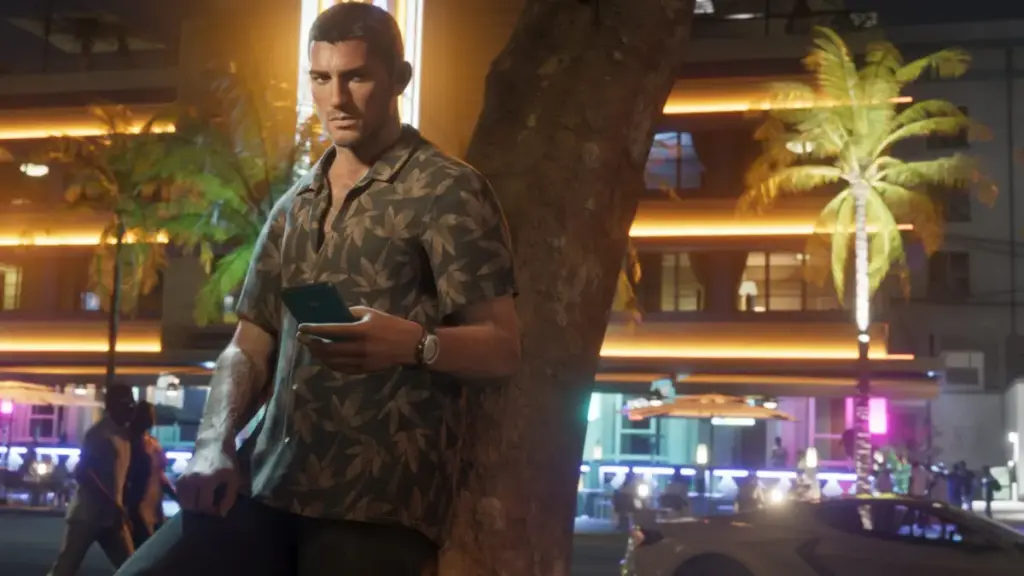
The video game industry has reached a paradoxical pinnacle. Never before has the intersection of artistic fidelity, photorealistic rendering, and staggering financial investment produced digital landscapes as jaw-dropping as those showcased in Rockstar Games’ latest deep dive into Grand Theft Auto VI. With development budgets estimated to span an unprecedented $1 billion to $3 billion, GTA 6 stands as the single most expensive piece of entertainment software ever conceived. Across the industry, commentators and developers alike are posing a provocative question: Could this title represent the absolute peak of conventional video game graphical fidelity for decades to come, bounded as we are by the punishing economics of hardware manufacturing and development cycles?
Yet, beneath the glossy veneer of ray-traced reflections, hyper-detailed vehicle interiors, and breathtaking lighting models lies a creeping sense of creative stagnation. Following an extended 26-minute gameplay showcase distributed via Netflix, a segment of the gaming community—exemplified by seasoned critics and long-time franchise players—has begun to question whether the pursuit of ultimate graphical fidelity has eclipsed the desire for systemic innovation.
While nobody disputes the artistic mastery required to push current-generation consoles to their absolute limits, the fundamental architecture of play remains largely unchanged. For a project commanding a royal ransom and backed by decades of institutional prestige, GTA 6 appears frustratingly content to rely on well-worn mechanics, predictable narrative frameworks, and iterative upgrades. As the medium’s self-appointed apex predator, Rockstar Games faces a crucial reckoning: if the industry’s wealthiest developer is unwilling to take bold creative risks, what message does that send to an ecosystem desperately searching for its next creative frontier?
Detailed Chronology: The Evolution of a Cultural Juggernaut
To understand the weight of current criticisms, one must trace the trajectory of Rockstar Games’ promotional rollout and the public’s shifting perception of its crown jewel.
The Leak Era and Initial Reveals
The journey toward Grand Theft Auto VI has been anything but conventional. Long before Rockstar officially pulled back the curtain, the project suffered one of the most catastrophic security breaches in entertainment history. Early, unpolished development builds leaked onto public forums, offering raw, unoptimized glimpses into Vice City, its twin protagonists, and rudimentary AI routines. While these leaks sent shockwaves through the corporate offices of Take-Two Interactive, they inadvertently set off a feeding frenzy of speculative analysis across social media platforms.
When Rockstar finally debuted its official trailers, the conversation shifted dramatically from sympathy for the developers to sheer awe. The transition from the sprawling fictionalized Los Angeles of GTA V back to the neon-soaked, sun-drenched reimagining of Vice City was rendered with an unbelievable density of detail.
The 26-Minute Netflix Showcase
The discourse intensified following an extended 26-minute gameplay showcase distributed through Netflix. Designed to offer a deeper, uninterrupted look at how missions unfold, how the open world breathes, and how the narrative threads tie together, the footage was intended to silence skeptics.
Instead, it exposed a deeper ideological split among the player base. While technical analysts marveled at the crowd densities, physics-based cloth simulations, and complex traffic patterns, veterans of the franchise experienced a sense of déjà vu. Sequence after sequence revealed mission structures rooted firmly in the past: high-stakes robberies, explosive getaways, and classic crime-drama tropes that mirror missions players have been completing since the PlayStation 2 era. Even minor stylistic choices—such as the presentation of dialogue sequences during driving segments, where characters converse while framed tightly inside vehicles—felt tethered to the systemic limitations and design philosophies of Grand Theft Auto V, released over a decade prior.

Supporting Context & Metrics: The Economics and Engineering of a $3 Billion Blockbuster
To contextualize the grievances of players looking for structural innovation, one must examine the staggering financial and technological realities governing modern AAA development.
The Financial Stratosphere
The fiscal scale of GTA 6 defies traditional economic logic within entertainment. Financial analysts and leaked corporate documents place the game’s total budget anywhere from $1 billion to $3 billion when factoring in multi-year development costs, global marketing campaigns, and ongoing post-launch infrastructure. To put this into perspective, GTA V—which itself held records for profitability and cost efficiency—is dwarfed by its successor, with GTA 6 costing at least twice as much to produce as any other interactive entertainment product in history.
| Metric / Category | Grand Theft Auto V (2013) | Grand Theft Auto VI (Projected 2026) | |
|---|---|---|---|
| Estimated Budget | ~$265 Million (Development & Marketing) | $1 Billion – $3 Billion | |
| Primary Platform Focus | PS3 / Xbox 360 | PlayStation 5 / Xbox Series X | S |
| Lead Setting | Los Santos (San Andreas) | Vice City (Leonida) | |
| Protagonists | Michael, Franklin, Trevor | Jason and Lucia | |
| Stated Campaign Length | ~30 to 50 Hours | Up to 80 Hours (Rockstar estimate) |
The Graphical Ceiling
Because the cost of hardware development has skyrocketed alongside the labor required to build assets at a 4K standard, industry economists suggest we are approaching a plateau. The marginal gains in visual fidelity achieved by moving from GTA V to GTA 6 require exponential leaps in compute power and human labor.
Consequently, experts note that GTA 6 may represent the absolute peak of what traditional silicon-based hardware can achieve for graphical realism before economic realities force developers to pivot entirely toward procedural generation or cloud-compute solutions. Every single cent of that multi-billion-dollar budget is visible on screen: the way rain beads on asphalt, the refraction of light through a storefront window, and the individual strands of hair reacting to wind velocity.
Yet, this triumph of computer graphics introduces a bitter irony: when a game costs billions of dollars to produce, the financial risk associated with failure becomes so immense that creative experimentation is effectively priced out of the equation. Publishers cannot afford to gamble on radical new gameplay mechanics when they must guarantee a return on investment for shareholders.
Official Statements and Critical Perspectives
The tension between technical excellence and creative conservatism has sparked a wide-ranging debate across the gaming press and community spaces.
Rockstar Games has historically maintained a posture of quiet confidence, letting their trailers and finished products speak for themselves. In communications surrounding the game’s scope, developers have emphasized immersion, open-ended systemic interactions within Vice City, and an epic narrative arc inspired loosely by the legendary outlaws Bonnie and Clyde. Lucia, the franchise’s first major modern female protagonist, has been widely praised as a step forward in representation and character diversity.
However, critical voices within the community argue that surface-level changes do not mask underlying systemic stagnation. As noted by early reviewers of the extended footage:

"At times the footage almost made the game look like a remake of GTA 5, even though it’s a different city with different characters. I didn’t see a single new gameplay idea in the whole 26 minutes… If GTA 6 is too scared to do anything but play it safe, what chance does the rest of gaming have?"
Furthermore, specific mechanical elements—such as combat loops, shooting mechanics, and mission pacing—have drawn scrutiny. Critics point out that Rockstar’s core third-person gunplay has remained largely iterative for over two decades. While enemy artificial intelligence and environmental destruction have undoubtedly evolved, the fundamental rhythm of "drive here, clear the room, escape the police" remains untouched.
Questions have also been raised regarding character dynamics. While Lucia’s narrative motivations appear sharp and grounded, early glimpses of Jason have led some community members to characterize him as a "charisma vacuum," threatening to unbalance the chemistry that made past dual- or triple-protagonist setups like GTA V so magnetic. Combined with Rockstar’s projection of an 80-hour campaign length, skeptics worry that padding and repetition may dilute the narrative impact.
Future Outlook: What GTA 6 Means for the Horizon of Interactive Entertainment
As the industry counts down the months toward its official release, Grand Theft Auto VI occupies a singular throne. There is virtually no doubt that the title will be a commercial juggernaut, shattering entertainment sales records within its first weekend on shelves and dominating digital storefronts for years through its inevitable online ecosystem.
From a pure quality assurance perspective, Rockstar’s commitment to polish ensures that GTA 6 will function as a masterclass in open-world engineering. The simulated ecosystems, physics engines, and meticulous attention to environmental storytelling will set a new baseline for the medium.
Yet, the broader philosophical question remains: Is master-level iteration enough for an industry that once prided itself on paradigm-shifting innovation?
By refusing to stray far from the formula that made Grand Theft Auto a global household name, Rockstar has chosen the path of least resistance—albeit executed at an astronomical level of craftsmanship. For independent developers and mid-tier studios striving to inject genuinely novel ideas into the interactive space, GTA 6 serves as both an inspiration and a sobering reminder. It proves that spectacle wins markets, but it also highlights the suffocating gravity of budgets so immense that they extinguish creative risk-taking.
When players finally boot up GTA 6 on their consoles, they will undoubtedly be mesmerized by the sights, sounds, and technical wizardry of Vice City. Whether they will find a game that challenges their expectations of what interactive storytelling can achieve, however, remains the defining question of our current gaming era.