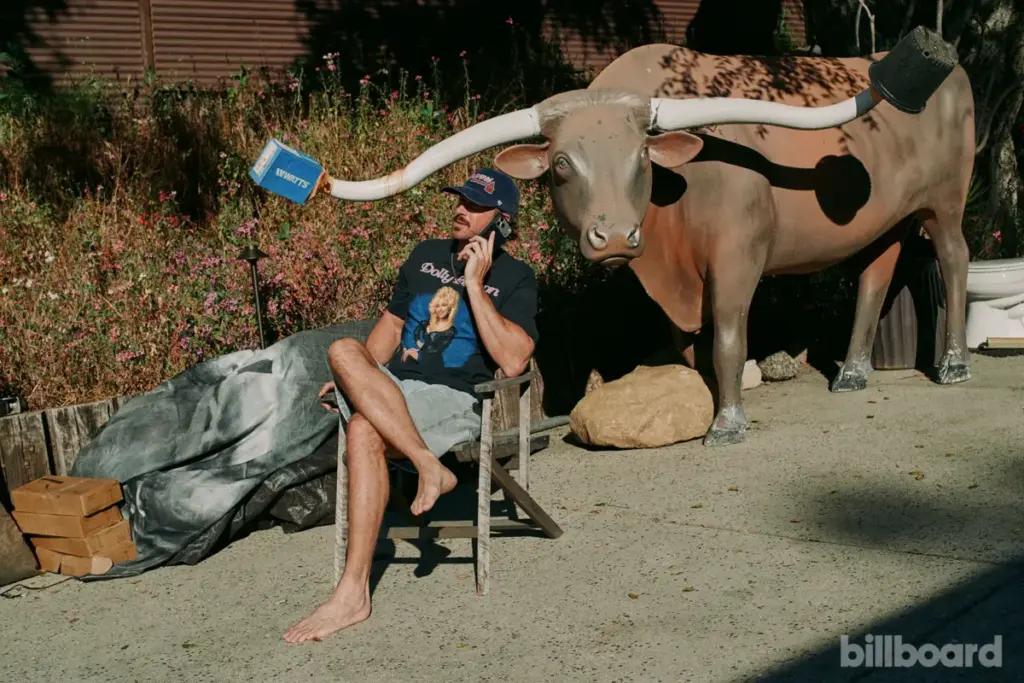
In the contemporary landscape of American country music, few multi-hyphenate artists manage to balance the demands of mainstream television, high-end entrepreneurship, and traditional songwriting with the poise of Riley Green. The Billboard cover star and multi-platinum recording artist has officially expanded his formidable catalog with the release of his fourth studio album, That’s Just Me. Released via Nashville Harbor Records & Entertainment, the 19-track project arrives at a career-defining zenith for Green, who has spent the better part of the decade building a reputation as both a fiercely independent-minded purveyor of timeless-feeling country songs and an astute modern businessman.
Produced by veteran studio maestro Dann Huff, That’s Just Me follows closely on the heels of Green’s critically acclaimed 2024 album, Don’t Mind If I Do. That previous effort yielded major milestones, including the Billboard Country Airplay chart-toppers "Worst Way" and the album’s titular track, ultimately solidifying his presence inside the top 10 of the Billboard Top Country Albums chart. With That’s Just Me, Green doubles down on the classic themes that have defined his meteoric ascent: unflinching explorations of heartbreak, longing, temptation, romantic freedom, and small-town nostalgia.
Yet, the album’s release is merely one component of a much larger cultural footprint. Green’s recent professional trajectory reads like a masterclass in modern brand expansion. From his prominent coaching seat on NBC’s cultural phenomenon The Voice to his dramatic acting turn in the Yellowstone universe spinoff Marshals, Green has successfully bridged the gap between traditional country stardom and mainstream multimedia ubiquity. Furthermore, his entrepreneurial endeavors—including the launch of Duck Club Bourbon and the 2024 opening of his Nashville hotspot, Riley Green’s Duck Blind—have established him as a heavyweight in the commercial sector.
As he prepares to headline California’s premier country music festival, Stagecoach, alongside genre titans Garth Brooks and Zach Top in 2027, That’s Just Me serves as the artistic anchor for Green’s sustained dominance. This in-depth report explores the chronology of his rise, the complex architecture of his new record, the metrics defining his chart success, official perspectives on his creative process, and the future outlook for one of country music’s most reliable torchbearers.
Detailed Chronology: From Small-Town Roots to Multimedia Empire
To understand the weight of That’s Just Me, one must trace the deliberate trajectory that brought Riley Green to this juncture. Hailing from Jacksonville, Alabama, Green’s early life was steeped in the rich traditions of outdoor sporting, southern lifestyle, and classic country music, largely inspired by his grandfather, who ran a local music venue. However, his initial footprint in the public consciousness was shaped just as much by athletics as it was by acoustics; Green played collegiate football for Jacksonville State University and even tried his hand at professional baseball before fully committing to the guitar.
His breakthrough in Nashville was characterized by hard-nosed touring and the independent release of a series of EPs—Outlaws Like Me, County Lines, and Bury Me in Dixie—that established a grassroots fan base across the American Southeast. By the time he signed with BMLG/Big Machine Label Group, Green possessed a fully formed artistic identity that eschewed the hyper-processed pop-country trends of the late 2010s in favor of a rugged, acoustic-driven, neo-traditionalist sound.
The release of his 2019 debut studio album, Different ‘Round Here, produced his first major crossover smash, "I Wish Grandpas Never Died," a poignant track that struck a chord with a generation of listeners mourning the loss of traditional values and familial anchors. The song eventually earned multi-platinum certification and positioned Green as a primary standard-bearer for a new wave of country traditionalists.
Following the disruptions of the early 2020s, Green accelerated his output. His subsequent projects showcased an artist growing more comfortable with vulnerability. Behind the Bar (2021) and Ain’t My Last Rodeo (2023) expanded his sonic palette while maintaining the lyrical authenticity that fans demanded. It was during this period that Green began to consciously diversify his professional portfolio.
Recognized for his natural charisma and rugged exterior, Hollywood came calling. Green secured a much-discussed acting role in the Yellowstone universe via the spinoff series Marshals, introducing his face and persona to millions of mainstream television viewers who might not have previously identified as dedicated country music fans. Simultaneously, he stepped into the coaching chair on NBC’s The Voice, a move that cemented his status as a mentor and tastemaker within the broader American entertainment complex.
Business acumen soon followed art. Capitalizing on his deep-rooted affinity for outdoor culture and hunting, Green launched Duck Club Bourbon, creating an authentic lifestyle brand that resonated with his core demographic. In 2024, he planted a permanent physical flag in Music City by opening Riley Green’s Duck Blind in Nashville, transforming a hospitality venture into a live-music hub and physical manifestation of his brand.
The convergence of these multimedia achievements culminated in a banner year in 2026. Crowned as a major Billboard cover star, Green capped off the summer by being revealed as a headliner for Stagecoach 2027—a marquee booking that places him shoulder-to-shoulder with living legends like Garth Brooks. Rather than letting these external ventures dilute his musical output, Green funneled the experiences of a touring headliner, television coach, and entrepreneur straight into the recording studio, resulting in the September 18, 2026 release of That’s Just Me.
Supporting Context & Metrics: Analyzing the Numbers Behind the Star
An examination of Riley Green’s commercial viability reveals an artist whose streaming numbers, radio airplay, and chart placements place him firmly in the upper echelon of modern country music. While trend-chasers often rely on fleeting social media virality, Green’s metrics demonstrate deep, sticky engagement rooted in traditional album sales, ticket demand, and sustained radio rotation.
Chart Performance and Airplay Dominance
Prior to the drop of That’s Just Me, Green’s 2024 studio album, Don’t Mind If I Do, served as a critical commercial springboard. The record cracked the top 10 of the Billboard Top Country Albums chart, propelled by the relentless momentum of its singles. Among them, "Worst Way" and the title track, "Don’t Mind If I Do," both climbed to the summit of the Billboard Country Airplay chart, bringing Green’s career tally of number-one radio hits to four.
The launch of That’s Just Me builds directly upon this foundation. Its lead radio single, "Think as You Drunk," has steadily climbed the charts, currently sitting at No. 13 on the Country Airplay tally. The track functions as both a radio-friendly earworm and a direct tribute to one of Green’s primary artistic heroes, the late, great Toby Keith.
Album Composition and Collaborative Metrics
That’s Just Me is a sprawling 19-track project that challenges the modern streaming era’s preference for concise, bite-sized releases. Producer Dann Huff has helped curate a sonic landscape that balances high-production gloss with raw, barroom instrumentation.
Lyrically, Green maintains rigorous quality control over his writing credits. He is listed as a writer on the vast majority of the album’s tracks, notably handling five songs entirely as a solo writer—a rare feat in contemporary Nashville songwriting, where co-writing rooms often feature four or five people per track.
Furthermore, the album boasts a strategic blend of guest appearances that bridge multiple generations of country music royalty:
- Randy Owen (Alabama): Bringing legendary southern-rock-infused country pedigree to the project.
- Brooks & Dunn: Lending their unmistakable harmony-driven honky-tonk swagger.
- Jake Worthington: Representing the neo-traditionalist vanguard alongside Green.
- Hannah McFarland: Adding contemporary female perspective and vocal depth to the project.
Touring and Live Metrics
Live performance metrics remain the ultimate litmus test for country artists, and Green’s transition from support slots to undisputed arena and festival headliner status is mirrored in his ticket sales. His routing consistently sells out major amphitheatres and multi-night runs across the United States. The announcement of his headlining slot at Stagecoach 2027—alongside Zach Top and Garth Brooks—signals that festival promoters view Green not merely as a rising star, but as a proven box-office anchor capable of carrying the genre’s largest multi-day events.
Official Statements & Industry Perspectives
The rollout of That’s Just Me has brought forth numerous reflections from Green, his collaborators, and industry observers regarding his unique positioning as a traditionalist in a rapidly modernizing genre.
In recent interviews surrounding his Billboard cover story, Green has been vocal about his commitment to the songwriting traditions established by icons like Alan Jackson, Merle Haggard, and Toby Keith. Addressing the thematic gravity of his new album, Green noted that while his life has undeniably changed—encompassing television sets, business boardrooms, and global stages—his creative compass remains locked on the everyday realities of ordinary people.
"You can put yourself in all these different rooms—whether you’re on a television set, running a business, or writing songs in Nashville—but at the end of the day, country music has to sound like real life," Green has shared regarding his creative philosophy. "If you lose touch with heartbreak, small-town nostalgia, and the simple mistakes people make on a Saturday night, you lose the whole point of the genre."
Producer Dann Huff, who steered the sonic ship for That’s Just Me, praised Green’s unwavering sense of self during the recording process. In industry roundtables, Huff emphasized that Green’s writing style resists the temptation to over-complicate arrangements for the sake of radio trends.
"Working with Riley is refreshing because he knows exactly who he is," Huff noted during the album’s release cycle. "He doesn’t need a committee to tell him what a country song should sound like. Whether he’s tackling a comedic heartbreak track or writing a solo acoustic ballad, his perspective is entirely his own. That authenticity is what translates through the speakers, whether you’re listening in a pickup truck or streaming it across the globe."
Industry critics and media outlets have similarly lauded Green’s deliberate pacing. In assessing That’s Just Me, reviewers have pointed out that Green occupies a rare middle ground: he possesses the crossover appeal necessary to star on network television and headline premier lifestyle festivals, yet his music retains the blue-collar grit of a troubadour who cut his teeth in smoke-filled honky-tonks. By honoring late influences like Toby Keith while actively mentoring newer acts like Jake Worthington, Green has positioned himself as an institutional bridge between country music’s past and its future.
Future Outlook
As the dust settles on the release of That’s Just Me, the horizon for Riley Green indicates an intensification of his multi-pronged career. Rather than slowing down to savor his current milestones, Green appears primed to leverage the momentum of his 19-track opus into a massive global touring cycle and expanded commercial dominance.
The immediate professional landmark on the calendar is his headlining performance at Stagecoach 2027. Sharing a marquee with Garth Brooks and Zach Top places Green at the absolute epicenter of the genre’s live touring ecosystem. Industry analysts anticipate that his 2027 tour routing will expand significantly, incorporating larger stadium and arena footprints both domestically and internationally, buoyed by the streaming longevity of That’s Just Me and his previous chart-toppers.
On the multimedia and entrepreneurial fronts, Green’s trajectory suggests further integration of his personal brand with his creative outputs. With Duck Club Bourbon establishing a loyal consumer base and Riley Green’s Duck Blind serving as a permanent cultural anchor in Nashville, his business ventures are expected to scale in tandem with his music. Furthermore, his ongoing visibility through television projects like The Voice and potential acting engagements ensure that his cultural footprint will continue to extend far beyond traditional country music radio dials.
Ultimately, Riley Green’s future rests on the bedrock that got him here: his pen. In an era where genres constantly reinvent themselves under the pressure of algorithms and viral moments, Green’s dedication to writing timeless, story-driven country songs acts as a stabilizing force. With That’s Just Me, he has proven that an artist can simultaneously conquer Hollywood, build corporate brands, and remain entirely faithful to the timeless art of the three-chord country song. As he looks toward Stagecoach 2027 and beyond, Green is not merely maintaining a winning streak—he is actively defining the modern standard for country music authenticity.