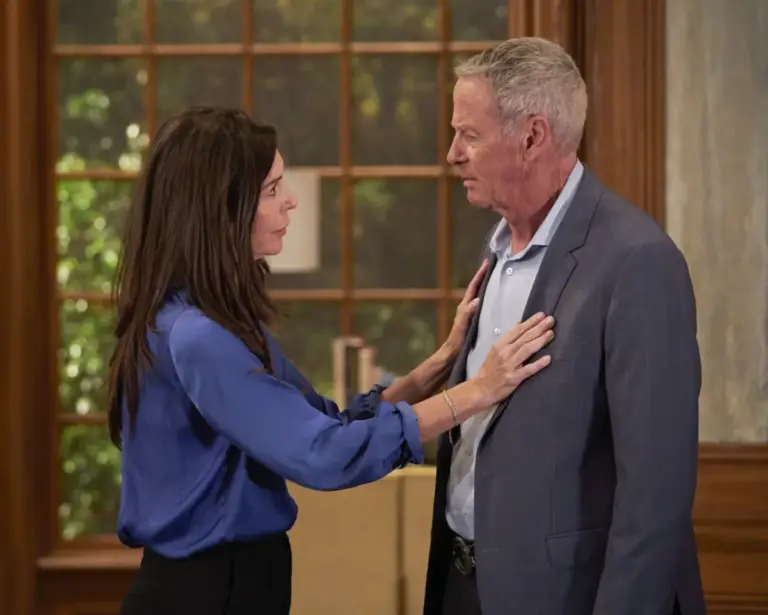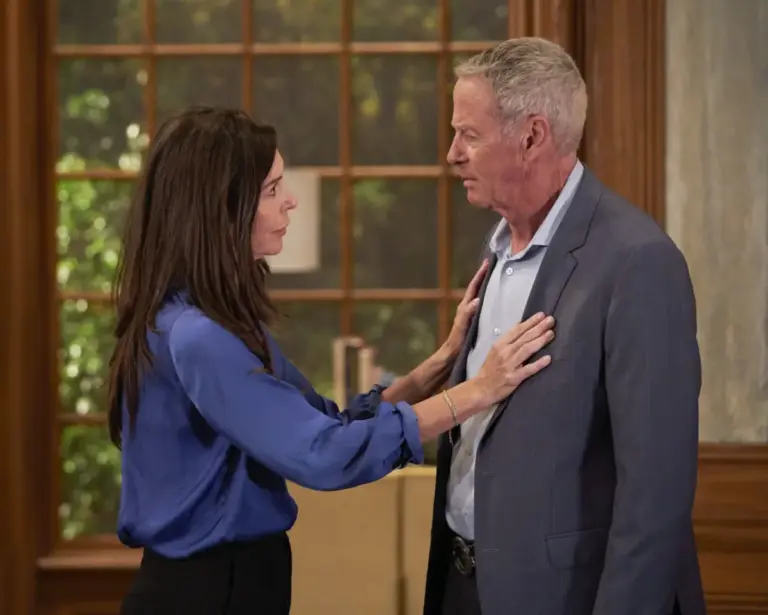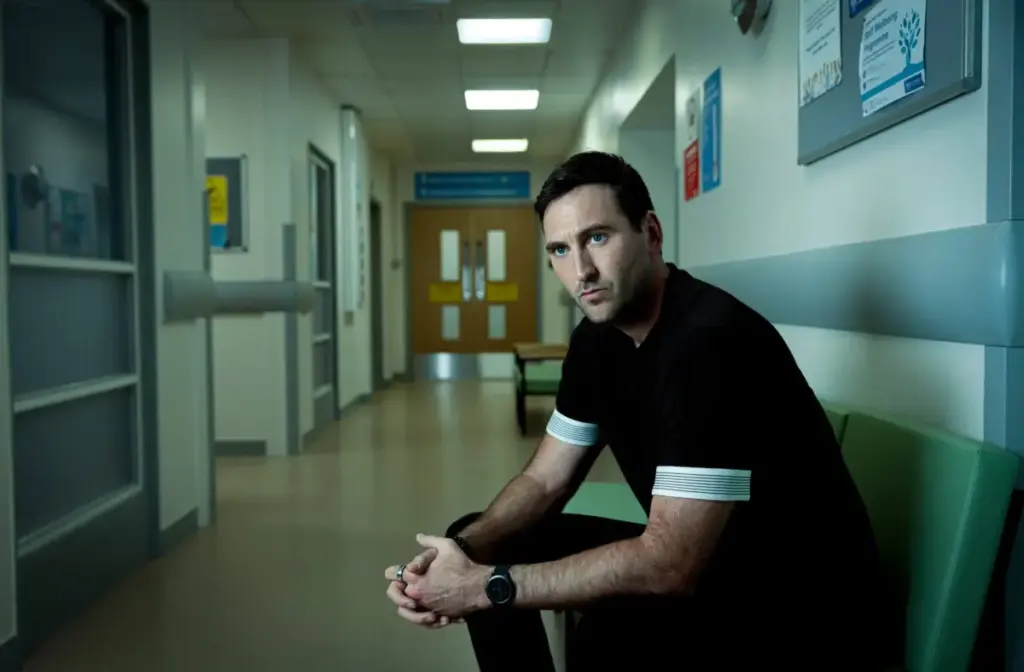
In a groundbreaking move that underscores the power of serial drama to reflect and address real-world health taboos, Coronation Street is set to launch a compelling and vital new storyline. Next week, Weatherfield’s resident detective, Kit Green—played by actor Jacob Roberts—will be diagnosed with stage three breast cancer. The plotline, developed in close collaboration with leading health charities Macmillan Cancer Support and Breast Cancer Now, aims to shatter the persistent misconception that breast cancer is an exclusively female illness.
By turning the lens on a traditionally stoic, strong male character, the long-running ITV soap opera is stepping into uncharted territory. Approximately 500 men are diagnosed with breast cancer in the UK each year. However, a severe lack of public awareness, coupled with deep-seated social embarrassment and the absence of targeted information in clinical settings, frequently results in delayed diagnoses and higher mortality rates among male patients.
In an exclusive first interview, Jacob Roberts opens up about the emotional weight of portraying this groundbreaking storyline, the extensive research behind it, and why exploring vulnerability on screen is essential for breaking the silence surrounding men’s health.
Detailed Chronology: Uncovering Kit Green’s Diagnosis
The Warning Signs and Initial Hesitation
For weeks, eagle-eyed viewers have noted that Detective Kit Green has not been acting like his usual self. Behind closed doors, the hardened policeman has been wrestling with mounting physical concerns that he initially pushed to the back of his mind.
"I think this is something that Kit has maybe been putting off for a while," Roberts explains. "Something was concerning him, but then with so much else going on, he never had the time to go and actually follow it up."
The gravity of the situation finally hits when Kit discovers an undeniable physical abnormality. "When it comes to it, he finds a lump and goes to get it checked out," says Roberts. "There’s some discharge and he knows that something’s wrong. Kit doesn’t know what it is at this point, but he just knows this isn’t normal."
The Genetic Link and Isolation
Initially, Kit remains entirely detached from conversations surrounding the disease, even when a relative, Celeste, tragically passes away from breast cancer. Because Kit did not know her, her death barely registers on his radar—at least until Gemma Winter-Brown reveals that Celeste carried the faulty BRCA gene.
It is this genetic revelation that serves as the catalyst for Kit’s internal panic. He begins to question whether his symptoms are tied to a hereditary mutation, forcing him to confront a terrifying possibility. Yet, true to his guarded nature, Kit chooses to shoulder the burden in absolute isolation.
"I think blokes generally keep their health concerns to themselves—you don’t want to worry people," Roberts notes. "You feel like keeping it inside will help everyone, but it doesn’t, really. Also, with this involving the faulty BRCA gene, it affects the full family. So Kit really doesn’t want to worry anyone until he knows for certain that he’s got it and he can gradually tell people. It must be such a hard thing to tell people—especially family. Kit’s son Brody could have it, so there are so many elements to it."

The Consultant’s Office: Shock and Disbelief
When Kit finally attends his consultant appointment, the reality of the situation crashes down upon him. He is diagnosed with stage three breast cancer, with the disease having already spread to his lymph nodes.
For Roberts, capturing this moment authentically meant tapping into genuine ignorance regarding the illness. "I genuinely didn’t know that men could get breast cancer, so I felt—to make it authentic—that Kit shouldn’t know either," the actor shares. "Speaking to charities about this storyline has been really insightful, because a lot of men didn’t know they could get it. I wanted to explore Kit’s utter disbelief as he asks: ‘How have I got this?’"
Roberts deliberately requested that Kit’s initial check-ups take place off-screen to preserve the raw, unfiltered shock of the diagnosis for the audience. By allowing Kit to voice the bewildered question, "How can blokes get breast cancer?", the production team hopes to echo the exact disbelief felt by many viewers at home.
Supporting Context & Metrics: The Reality of Male Breast Cancer
While breast cancer is overwhelmingly diagnosed in women, the medical reality is that men possess breast tissue and can, therefore, develop the disease. According to health statistics, roughly 500 men are diagnosed with breast cancer in the UK annually.
Despite these figures, the societal perception of the illness remains heavily gendered. This creates systemic barriers for male patients, manifesting in several distinct ways:
- Delayed Diagnoses: Because men do not routinely check their chest tissue for lumps, symptoms are often ignored or misattributed to other conditions until the cancer has reached an advanced stage.
- Clinical Alienation: Male patients frequently report feeling out of place in clinical environments dominated by pink branding, female-centric literature, and waiting rooms colloquially referred to by patients as "girly rooms."
- Stigma and Embarrassment: Societal taboos surrounding male vulnerability and perceived threats to masculinity often discourage men from seeking medical advice promptly.
By collaborating with Macmillan Cancer Support, Breast Cancer Now, and Prevent Breast Cancer, Coronation Street is leveraging its immense platform to challenge these very barriers, ensuring that informational materials and public discourse become fully inclusive.
Official Statements and Actor Preparation
Immersing in the Role
Stepping into a narrative arc of this magnitude required rigorous preparation and dedication from Jacob Roberts. When producer Kate Brooks first pitched the storyline, Roberts jumped at the opportunity to delve into deeper, more vulnerable psychological territory for his character.
"As soon as our producer, Kate Brooks, told me about it, I wanted to go away and do some research on this," Roberts says. "That’s what actors want. I want to know that I can get involved with something, be obsessive with it and hopefully tell it in the right way."
To ensure accuracy, the actor participated in collaborative calls facilitated by Macmillan and Breast Cancer Now. He also sought counsel from fellow Corrie star Sally Dynevor (Sally Metcalfe), who has famously navigated a breast cancer journey both on and off-screen, and who connected him with the research charity Prevent Breast Cancer. Crucially, Roberts was added to a support group chat with male breast cancer survivors, granting him profound insights into their emotional landscapes.

The Physical Transformation
Commitment to the role will also manifest physically in the coming weeks. As Kit prepares to undergo chemotherapy, the character decides to take control of his transition by shaving his head.
"Yes, that’s coming up soon—Kit takes it upon himself to shave his head, as soon as he hears that he’s going into chemo," Roberts reveals. "It’s a lovely scene with Brody, where Kit thinks he’s going to shave it before it gets worse. It felt a bit weird at first. No one wants to shave their head—I never wanted to—but I’m not going to do this part justice if I don’t."
In addition to shaving his head, Roberts has been adjusting his lifestyle and working to alter his physical appearance to reflect a man undergoing intensive cancer treatments.
Future Outlook: Breaking the Silence
The introduction of Kit Green’s storyline marks a significant cultural milestone for British television. Much like Jeff Hordley’s acclaimed prostate cancer storyline as Cain Dingle in Emmerdale, Coronation Street is utilizing its reach to dismantle the culture of silence that frequently surrounds men’s health issues.
As the narrative unfolds on screen, viewers will watch Kit navigate not only the physical toll of chemotherapy and medical treatments but also the psychological barriers of pride, fear, and isolation. Crucially, the storyline aims to open up dialogue within families and communities, proving that vulnerability is not a weakness, but a vital step toward survival.
Through Kit’s journey, Coronation Street delivers an enduring message: cancer does not discriminate by gender, and neither should awareness.
Coronation Street airs on weeknights at 8.30pm on ITV1 and streams on ITVX.