Executive Overview
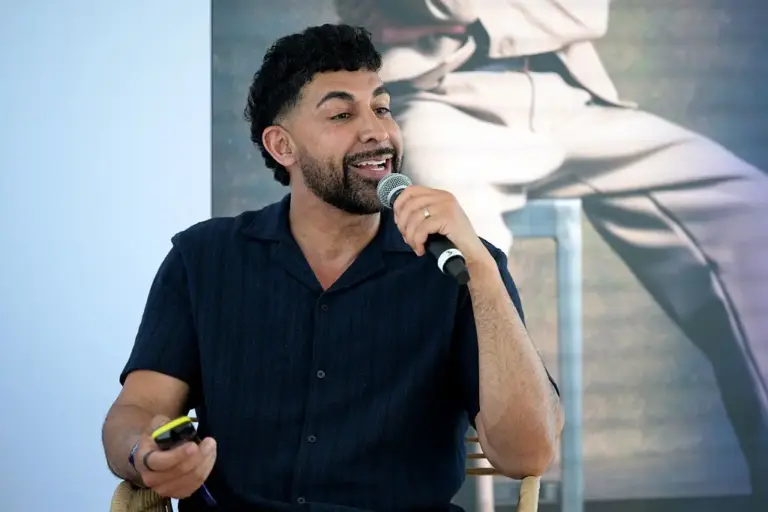
The shifting tectonics of modern entertainment reached a seismic peak during the 2026 Edinburgh TV Festival, where YouTube’s Vice President of Europe, Middle East, and Africa (EMEA), Pedro Pina, took the stage to deliver the world-renowned MacTaggart Lecture. Widely regarded as the U.K. broadcasting sector’s most prestigious speaking engagement—a platform historically reserved for television visionaries, network chiefs, and media pioneers—Pina’s address served as both a victory lap and a defensive shield.
YouTube’s dominance over the living room screen is no longer a futuristic prediction; it is an established, undeniable reality. Month after month, Nielsen’s The Gauge and equivalent global metrics confirm that the Google-owned video-sharing giant commands the largest single market share of television streaming traffic. This monumental shift has sent shockwaves through traditional British broadcasting. Legacy institutions such as the BBC, ITV, Channel 4, and Channel 5—historic pillars of U.K. culture bound by strict public service remits and regulatory burdens—find themselves facing an existential crisis.
At the heart of the friction is a growing regulatory and cultural debate: Can a platform driven entirely by algorithmic recommendation engines and user-generated content peacefully coexist with, or actively replace, regulated linear broadcasting? This tension boiled over when U.K. officials proposed a controversial Media Bill designed to force digital giants like YouTube to actively promote and prioritize official British public service content. Pina used his MacTaggart platform to push back hard against this measure, warning that algorithmic favoritism would crush independent creators and stifle the very innovation that built the modern digital creator economy.
Yet, as critics point out, YouTube wants it both ways. The platform acts like a traditional television network when it captures the lion’s share of living room viewing time and ad dollars, yet pivots back to identifying as a neutral tech platform or social media hub whenever regulatory accountability knocks on its door. As the boundaries between Silicon Valley and traditional broadcasting dissolve, the central question remains: If YouTube operates television’s most powerful schedule, should it not also play by television’s rules?
Detailed Chronology: The Anatomy of a Clash
To understand the friction that defined the 2026 Edinburgh TV Festival, one must trace the rapid evolution of YouTube from a desktop repository of amateur clips into the undisputed heavyweight champion of the living room television screen.
The Rise of the Living Room Monolith
For years, traditional broadcasters viewed YouTube as a complementary second-screen experience—a place for music videos, movie trailers, and bite-sized clips, distinct from the high-production-value environments of the living room television set. However, a profound behavioral shift occurred in the early 2020s. Backed by the ubiquity of smart TVs and streaming sticks, audiences began migrating their prime-time viewing habits from linear schedules to YouTube’s on-demand ecosystem.
By 2024 and 2025, Nielsen’s The Gauge consistently placed YouTube at the top of streaming viewership charts in the United States, a trend mirrored across Europe and the U.K. The television set, once the exclusive domain of BBC One or ITV, had become a portal for independent creators watched via the YouTube app.
The Regulatory Counter-Offensive
As viewing figures dwindle for linear broadcasters, U.K. lawmakers and media regulators have grown increasingly alarmed. Traditional broadcasters operate under stringent Ofcom broadcasting standards. In exchange for adhering to these high bars of impartiality, accuracy, and cultural representation, legacy networks were traditionally guaranteed prominent placement—specifically, single-digit channel numbers—on electronic program guides (EPGs) across British households.
As audiences abandon traditional EPGs in favor of YouTube’s home page, public service broadcasters (PSBs) argued they were being placed at an unfair disadvantage. Competing against a global recommendation algorithm that prioritizes engagement above all else, British networks found themselves fighting an uphill battle for visibility.
In response, British officials drafted and advanced a comprehensive Media Bill. Among its more contentious provisions was a mandate that would force major streaming and video-sharing platforms, including YouTube, to prominently feature and recommend content from official U.K. public service broadcasters.
The MacTaggart Showdown
The collision course between Silicon Valley and Whitehall culminated at the 2026 Edinburgh TV Festival. Stepping onto the stage for the MacTaggart Lecture, Pedro Pina faced an audience of skeptical television executives, producers, and journalists.
Rather than adopting a conciliatory posture, Pina used his platform to openly challenge the proposed Media Bill mandates. He argued that forcing algorithmic favoritism toward legacy broadcasters would penalize the independent digital creators who have successfully redefined British media culture. Far from viewing YouTube as an existential threat to British culture, Pina framed the platform as its modern engine, pointing to homegrown digital sensations who command cultural capital that rivals traditional television stars.
Supporting Context & Metrics: The Numbers Behind the Shift
The anxiety gripping the U.K. television industry is rooted in hard data. The metrics detailing YouTube’s consumption patterns paint a clear picture of an industry undergoing a permanent structural transformation.
Market Share and The Gauge
According to periodic data from Nielsen’s The Gauge, YouTube’s dominance of television screens is not a temporary spike; it is a sustained reality. In competitive media markets, YouTube frequently outpaces individual legacy networks and competing streaming services alike in total TV usage hours. This metric represents a fundamental paradigm shift: the device once known as the "idiot box" or "the telly"—historically controlled by state-sanctioned or commercially licensed broadcasters—is now primarily a gateway to user-generated and creator-led content.
| Media Category / Platform | Typical U.K. / Global Living Room Share Trajectory | Regulatory Burden / Oversight | Primary Content Discovery Mechanism |
|---|---|---|---|
| YouTube | Dominant & Growing (Leading The Gauge) | Minimal (Section 230 / Light-touch tech regulation) | Recommendation Algorithms / Engagement-Driven |
| BBC / ITV (PSBs) | Declining Linear / Contested Digital | Heavy (Ofcom standards, impartiality rules) | EPG Priority / Designated Channel Numbers |
| Subscription VOD (Netflix, Disney+) | Stable / High Engagement | Moderate (Impending AVMSD / local quotas) | Curated Home Pages / Personalization |
The Rise of the British Creator Economy
Pina’s defense of YouTube’s ecosystem heavily relied on the cultural footprint of independent creators. Figures such as Amelia Dimoldenberg—whose viral interview series Chicken Shop Date bridges the gap between digital-native absurdity and mainstream celebrity culture—and popular personalities like Angry Ginge illustrate a new class of British talent. These creators do not rely on traditional television gatekeepers, commissioning editors, or network commissioning boards to find an audience. Instead, they build direct, transnational relationships with viewers through YouTube’s platform infrastructure.
For traditional television executives, this decentralization of talent is deeply unsettling. The old model allowed broadcasters to act as cultural gatekeepers, deciding which stories were told and who deserved a national platform. YouTube’s democratization of production and distribution has permanently shattered that monopoly.
Official Statements & Industry Perspectives
The debate surrounding Pedro Pina’s MacTaggart Lecture has exposed deep ideological fractures within the modern media landscape.
YouTube’s Defense: The "Epic" Next Chapter
During his address, Pina leaned heavily into historical analogies, comparing the current anxiety over streaming to previous panics triggered by the expansion of television channels and cable networks. He argued that historical fears of media fragmentation invariably gave way to creative renaissances.
"In reality, more competition meant more appetite for risk, and more space for new voices," Pina stated during the lecture. Looking forward, he offered an optimistic rallying cry for the digital age: "This next chapter of British television will not be a tragedy. It will be an epic."
By advocating for a level playing field where content is judged by audience engagement rather than institutional pedigree, YouTube positions itself as the ultimate champion of free expression and democratic media consumption.
The Broadcaster Counter-Perspective: Playing Without Rules
Conversely, traditional broadcasters and media analysts argue that YouTube’s diplomatic "why can’t we be friends" rhetoric masks an unfair regulatory arbitrage.
As noted in a critical analysis published by The Streaming Wars, YouTube’s structural positioning is deeply contradictory: "YouTube is no longer standing outside the television industry asking to be taken seriously. It is operating television’s most powerful schedule."
Critics emphasize that while YouTube reaps the financial and cultural rewards of a primary television network—capturing billions of ad dollars traditionally earmarked for linear broadcasting—it largely sidesteps the heavy legal, social, and cultural obligations that traditional broadcasters must shoulder. From protecting minors and enforcing strict watershed rules to maintaining political impartiality during elections, legacy broadcasters operate under a heavy regulatory yoke that tech platforms have historically managed to evade.
The Identity Crisis: Entertainment Hub vs. Social Media Platform
This debate underscores a clever, opportunistic identity management strategy long employed by YouTube and its parent company, Alphabet.
When global regulators introduce strict social media safety bills—such as youth access restrictions, age verification mandates, or algorithmic liability laws—YouTube quickly pivots its public relations strategy, emphasizing that it is not a social network, but rather an "entertainment hub" akin to Netflix or traditional television.
However, when governments attempt to regulate YouTube like a traditional broadcaster—imposing content quotas, local production levies, or mandatory public service prominence rules—the platform rapidly shifts gears, highlighting its user-generated roots, its social networking capabilities, and its role as an open community for millions of independent creators. This fluid identity allows YouTube to claim the privileges of both sectors while selectively rejecting the responsibilities of either.
Future Outlook: Where Do We Go From Here?
As the dust settles from the 2026 Edinburgh TV Festival, the fundamental tensions laid bare by Pedro Pina’s MacTaggart Lecture remain entirely unresolved. The U.K. Media Bill and similar legislative efforts across Europe represent a critical test case for the future of media regulation in the digital age.
If governments succeed in forcing technology platforms to prioritize public service content, it could establish a powerful global precedent. Regulators would effectively signal that any platform controlling the living room screen—regardless of its technical architecture or business model—must contribute to the cultural and civic health of the nations in which it operates.
On the other hand, if YouTube successfully resists these interventions, it will cement a new era where algorithmic engagement metrics completely supersede institutional broadcasting mandates. In this future, the definition of "television" will no longer be tied to public service remits, national borders, or Ofcom standards, but to screen time and algorithmic resonance.
Ultimately, Pina may be right that British television is entering an "epic" rather than a tragedy. But if that epic is to have a sustainable and equitable conclusion, YouTube will first have to stop playing a double game and decide once and for all what type of corporate citizen it truly wants to be.