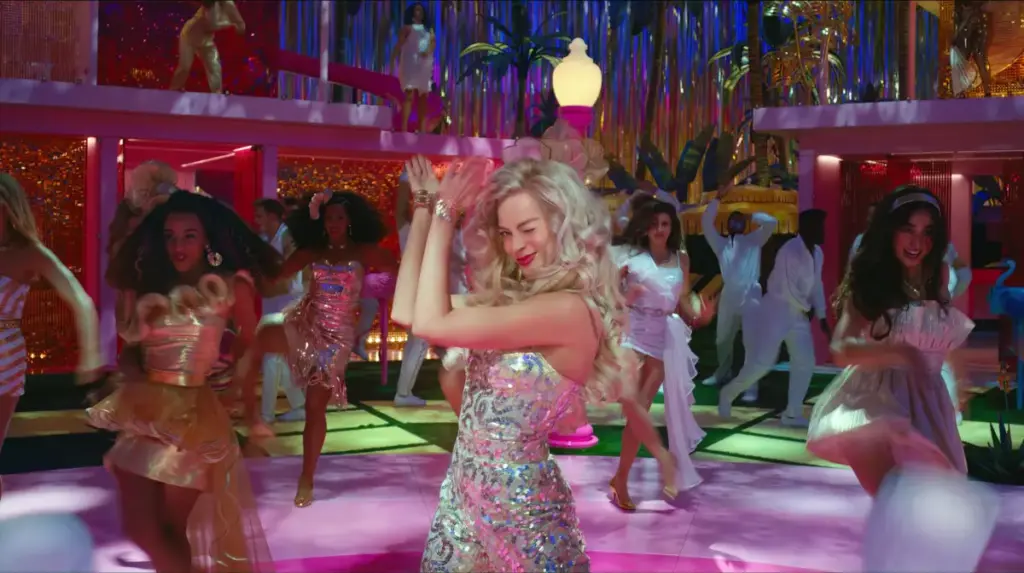
Nearly three years after Greta Gerwig’s Barbie painted the global box office an unapologetic shade of hot pink, the cinematic landscape is still feeling its aftershocks. Grossing a staggering $1.4 billion globally, the 2023 blockbuster shattered records by becoming the highest-grossing film ever directed by a solo woman, while simultaneously sparking unprecedented cultural discourse about patriarchy, consumerism, and existential dread wrapped in plastic packaging.
Yet, as Hollywood looks toward the horizon, the prospect of a follow-up has devolved into a complex, high-stakes game of corporate chess. What should have been a straightforward victory lap for Warner Bros. Pictures has stalled dramatically. Behind closed doors, negotiations for Barbie 2 have reportedly broken down repeatedly, with more than six major offers turned down by Gerwig, star and producer Margot Robbie, and co-star Ryan Gosling.
At the core of this standoff are astronomical pay demands, creative anxieties over replicating a once-in-a-lifetime lightning strike, and an unforgiving ticking clock. With contract clauses dictating that the underlying film rights revert entirely to toy manufacturing giant Mattel by December, Warner Bros. is facing an unprecedented deadline.
Compounding the tension is a heavy dose of irony: a film that famously satirized corporate greed and the commodification of culture has now become the epicenter of a frantic, multimillion-dollar scramble by a studio desperate to protect its most lucrative modern IP.
Detailed Chronology of the Standoff
To understand the current impasse between Warner Bros. and the creative architects of Barbie, it is necessary to examine how the project evolved from a standalone cultural phenomenon into an elusive franchise puzzle.
1. The Summer of 2023: A Phenomenon is Born
When Barbie hit theaters in July 2023, it did so with a gale-force wind of cultural momentum. Propelled by the "Barbenheimer" phenomenon—a simultaneous box office release alongside Christopher Nolan’s Oppenheimer—the film transcended traditional marketing. It became a communal, tribal event.
Margot Robbie’s meticulously curated, era-referencing fashion press tour and Ryan Gosling’s meme-ready, full-throated commitment to Ken captured the public imagination for months. The movie crossed the elusive $1 billion threshold faster than any film in Warner Bros.’ history, cementing its place in pop culture history.
Crucially, however, both Gerwig and Robbie designed Barbie as a definitive, self-contained story. There were no post-credit scenes teasing a sequel, nor were there early multi-picture deals locked in for the main cast. The film was conceived as a singular artistic statement wrapped inside a studio tentpole.
2. The Post-Release Vacuum and Initial Resistance (2024–2025)
Following the film’s historic box office run and subsequent awards-season triumphs (including an Oscar win for Billie Eilish’s song "What Was I Made For?" and a Best Supporting Actor nomination for Gosling), rumors of a sequel immediately began to circulate.
Insiders note that Warner Bros. executives, eager to capitalize on the unprecedented windfall, quickly approached Gerwig and Robbie to gauge interest in expanding the universe. However, early resistance was immediate. Gerwig expressed hesitation about forcing a narrative continuation where none was naturally required, noting the immense pressure of living up to the original’s lightning-in-a-bottle reception.
3. The Escalating Financial Battles (Late 2025–2026)
As months turned into years, the discussions shifted from creative viability to aggressive financial negotiations. According to recent reports from industry insiders, Warner Bros. has tabled more than six distinct offers to the core creative team over the past three years.
The most recent proposals have been described by studio sources as offering "life-changing" money—reportedly representing the highest upfront compensation packages Warner Bros. has ever extended to a filmmaking team and its leads. Yet, these offers have been systematically rejected.
Reports indicate that Ryan Gosling is commanding a baseline of roughly $20 million to reprise his role as Beach Ken, matching his original salary while factoring in the expanded market value of the character. Meanwhile, Margot Robbie—who earned an estimated $50 million for the first film through a combination of her acting salary and lucrative backend producer bonuses—is reportedly negotiating for a historic compensation package.
Industry watchers note that Robbie’s demands could push her past Sandra Bullock’s benchmark 2013 payday for Gravity (reported in the region of $70 million), making Robbie the highest-paid female lead in Warner Bros. history. Concurrently, the creative team is demanding increased backend participation and heightened creative control to ensure that any sequel maintains the satirical bite and visual audacity of the original.
Supporting Context & Metrics: The Economics of Plastic
The reluctance of Warner Bros. to capitulate immediately—coupled with the creators’ steadfast refusal to settle for standard sequel payouts—is illuminated by a closer look at the financial metrics of the first film and the broader studio landscape.
Metric / Milestone
Data Point / Figure
Significance
Global Box Office
$1.4 Billion
Made Barbie the highest-grossing film by a solo female director in history.
Warner Bros. Record
Fastest to $1 Billion
Achieved the milestone faster than any other film in the studio’s century-long history.
Margot Robbie’s Earnings
~$50 Million (First Film)
Combines lead acting salary and producer backend points, setting a high baseline for negotiations.
Ryan Gosling’s Demand
~$20 Million (Sequel Baseline)
Reflects the breakout cultural impact and market value of the Ken character.
Industry Benchmark
~$70 Million (Sandra Bullock, Gravity)
The current ceiling for a female lead’s payout at Warner Bros., a record set 16 years ago.
The December Deadline
Contractual Reversion Clause
Rights to the Barbie IP revert to Mattel if a greenlight/deal is not finalized by the end of the year.
The Mattel Factor and the December Deadline
Adding an explosive element to these ongoing negotiations is the contractual framework governing the intellectual property. Under the original licensing agreement between Warner Bros. and toy giant Mattel, strict timelines dictate how long the studio holds exclusive cinematic rights without an active production pipeline.
According to recent disclosures, Warner Bros. is racing against a hard deadline this coming December to secure the cast, crew, and narrative framework for a sequel. If an agreement cannot be struck before the clock runs out, the rights to the franchise revert entirely to Mattel, stripping Warner Bros. of one of the most valuable properties in modern cinema. This leverage has undoubtedly empowered Robbie, Gerwig, and their representatives to hold firm on their unprecedented demands.
Official Statements and Industry Perspectives
While official public commentary from the primary stakeholders remains guarded, industry insiders and entertainment analysts have increasingly spoken out about the unprecedented nature of the standoff.
A senior studio executive, speaking on the condition of anonymity to Variety, expressed frustration over the protracted talks:
"We are looking at numbers that historically belong to superhero franchises and legacy sequels like ‘Avatar’ or ‘Top Gun.’ The studio wants this badly, but there is a financial threshold where the risk-to-reward ratio begins to flip against profitability, especially when you factor in ballooning talent costs."
Conversely, representatives close to the creative talent emphasize that the financial demands are entirely justified given the historic revenue generated by the first film. A source familiar with Margot Robbie’s production banner, LuckyChap Entertainment, noted:
"The first movie wasn’t just a hit; it reinvented how studios market original intellectual property. The compensation requested reflects not just time on set, but the immense cultural heavy lifting required to build a global movement from a plastic doll."
Meanwhile, pop culture critics have pointed out the delicious irony of the situation. Barbie functioned largely as a meta-commentary on late-stage capitalism, corporate sanitization, and the inherent absurdity of corporate entities attempting to monetize feminism and self-actualization. Today, the real-world scramble to lock down a sequel mirrors the exact corporate desperation lampooned on screen.
Future Outlook: Will Barbie 2 Happen?
As the December deadline fast approaches, the entertainment industry remains divided on whether a compromise can be reached.
On one hand, the financial incentives for Warner Bros. are simply too massive to abandon lightly. In an era where superhero fatigue has begun impacting box office returns, original-leaning blockbusters with built-in brand recognition are the holy grail of Hollywood financing. Walking away from a proven multi-billion-dollar universe would be a bitter pill for studio leadership to swallow.
On the other hand, forcing a sequel without the vital creative synergy of Greta Gerwig and Margot Robbie risks producing a diluted product—a misstep reminiscent of critically panned legacy sequels like Sex and the City 2. If the studio refuses to meet the historic financial and creative demands, the rights will return to Mattel, potentially opening the door for the toy manufacturer to shop the property to competing streamers or studios.
Ultimately, whether we return to Barbieland or leave Barbie and Ken to their happily-ever-after in the real world depends entirely on how much Warner Bros. is willing to pay to keep the pink machine turning. One thing is certain: when the clock strikes midnight this December, the outcome will reshape Hollywood compensation models and IP management for years to come.