Executive Overview
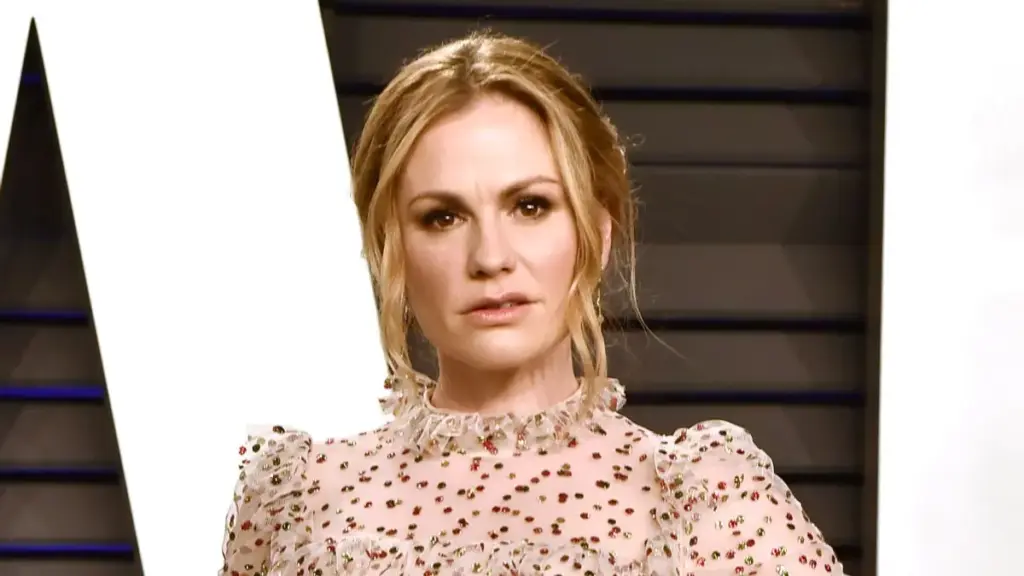
The devastating recent deaths of several prominent former child actors—including Hayden Panettiere, Michelle Trachtenberg, and Daveigh Chase—have ignited an urgent, long-overdue conversation regarding the profound vulnerabilities embedded within the entertainment industry. Stepping forward into this critical discourse is Academy Award winner Anna Paquin, who began her professional acting career at the tender age of nine.
In a series of candid and emotionally charged social media statements, Paquin shed light on what she termed the "profoundly sad lives" and untimely ends experienced by numerous former child stars, with a specific, unyielding focus on pre-sexualized female performers. Paquin argues that the institutional "systems" ostensibly designed to protect minors in Hollywood frequently exist only on paper, leaving vulnerable children exposed to immense psychological pressure, exploitation, and premature adultification.
By offering a direct line of support to her peers and calling out the systemic failures of the industry, Paquin’s intervention serves as a watershed moment. It forces audiences, executives, and legal regulators to confront the dark reality behind the silver screen: an ecosystem that too often consumes its youngest participants and discards them when the cameras stop rolling.
Detailed Chronology: A Tragedy in Three Acts
The recent losses of Hayden Panettiere, Michelle Trachtenberg, and Daveigh Chase—all of whom entered the spotlight before the age of ten and passed away prematurely before turning forty—have exposed the devastating, long-term tolls of early childhood fame.
Hayden Panettiere (1989–2025)
Hayden Panettiere’s journey in the entertainment industry began at an astonishing eleven months old when she appeared in a toy commercial, transitioning quickly to soap operas by the age of four. Over the decades, she became a recognizable fixture of television and film, notably starring in Heroes and Nashville. However, behind the glamorous facade lay deep-seated trauma.
In her autobiography, This Is Me, published earlier this year, Panettiere detailed how she was systematically "groomed" for acting, missing out entirely on a normal childhood, friendships, and privacy. She bravely revealed her struggles with postpartum depression, addiction, and the heavy burden of managing fame from infancy. She notably shared that a publicist gave her a "happy pill" at a young age—a substance that acted as a gateway to pharmaceutical dependency.
Following her tragic death at age 36 from cardiac arrest, investigations deepened when emergency responders were presented with a bag of medications by her ex-boyfriend, Brian Hickerson, underscoring the complex medical and psychological battles she faced in her final years.
Michelle Trachtenberg (1985–2025)
Remembered fondly for her roles in Buffy the Vampire Slayer, EuroTrip, and Ice Princess, Michelle Trachtenberg began her illustrious career at just three years old. Trachtenberg passed away at the age of 39 due to medical complications resulting from diabetes, which was a secondary side effect of a liver transplant.
Trachtenberg’s life in the public eye was plagued by isolation and trauma. Reflecting on her youth, she detailed enduring relentless bullying from schoolmates—one of whom physically assaulted her by throwing her down a flight of stairs. Furthermore, Trachtenberg spoke out against toxic environments on set, recalling a director whose behavior toward young actresses was so "casually cruel," "hostile," and "toxic" that he was eventually barred from being in the same room as her (though the director vehemently denied the allegations). Her life illustrates how early exposure to fame can alienate a child from normal social development, leaving them defenseless against predatory or neglectful adult supervision.
Daveigh Chase (1990–2025)
Daveigh Chase, universally beloved as the voice of Lilo in Disney’s animated classic Lilo & Stitch and for her haunting portrayal of Samara Morgan in The Ring, died earlier this year at the age of 35 from complications associated with AIDS.
Chase officially stepped away from acting in 2016, after which she encountered severe personal hardships, including public struggles with substance abuse and periods of homelessness. Her family offered conflicting accounts regarding the onset of her addiction—her father claimed drug struggles began as early as age 13, while her mother pointed to a severe motorcycle accident in 2016 as the turning point. Chase’s tragic trajectory highlights how child stars, once separated from the steadying infrastructure of production sets, can fall through society’s safety nets without adequate post-career rehabilitation and mental health support.
Supporting Context & Metrics: Anna Paquin’s Testimony and Industry Realities
Anna Paquin’s entry into this harrowing conversation carries immense weight. Having debuted in Jane Campion’s 1993 masterpiece The Piano at age nine—a performance that earned her the Academy Award for Best Supporting Actress, making her the second-youngest competitive Oscar winner in history—Paquin understands the labyrinth of child stardom from the inside.
The Anatomy of Exploitation
Taking to Instagram following the news of Panettiere’s death, Paquin laid bare the systemic failures of the entertainment business:
"It’s not a coincidence that so many former, specifically pre-sexualised female, child ‘stars’ have profoundly sad lives and untimely ends. We were not as protected by the ‘systems’ that look great on paper as we are supposed to be."
Paquin explicitly clarified that her critique centers on the unique trauma of being thrust into the role of a "sex object" prematurely on professional sets. In a subsequent post, she expanded on the theme of vulnerability, noting that children inherently lack power within a hierarchical corporate structure:
"People treat people who have no power, sometimes, in ways that are completely unacceptable. But when you’re a child and you don’t know any different, and you don’t want to get into trouble, you just keep your mouth shut."
This dynamic of forced compliance creates a culture of silence. Children on film and television sets are conditioned to please adult directors, producers, and crew members to secure their employment and avoid being labeled "difficult," rendering them acutely susceptible to manipulation and boundary violations.
Official Statements and Industry Peer Support
In an unprecedented display of solidarity, Paquin did not stop at structural critique; she offered direct, personal intervention to any former or current child performers who find themselves isolated by their experiences.
Addressing her peers directly via social media, she wrote:
"RIP HP, MT, DC and too many others. It’s a strange small club we belong to and you are worthy of support no matter how our industry made us feel. Literally DM me. I believe you and I will stand by your side. You aren’t alone. Let’s have each other’s backs. It might make public disclosure less terrifying."
This peer-to-peer outreach underscores a glaring void in traditional institutional care. In the absence of comprehensive psychological safety nets provided by studios, unions, or legal frameworks, actors like Paquin are stepping forward to form informal support networks.
Significantly, Paquin also highlighted that child exploitation is not an inevitable outcome of filmmaking. In a follow-up post, she noted that positive change is entirely possible when production leadership makes youth welfare a foundational priority:
"As an adult I’ve had the pleasure of working on productions where the welfare and mental health of young performers was handled incredibly carefully. Especially around material that was intense. It is possible to holistically look after kids on set and tell complex and sometimes upsetting stories. It just has to be the top priority of the production."
Future Outlook: Reforming the Safeguards for Minor Performers
The tragic convergence of losses among 1990s and 2000s child stars—Panettiere, Trachtenberg, and Chase—alongside the fierce advocacy of survivors like Anna Paquin, has created an undeniable mandate for systemic reform across the global entertainment industry.
1. Overhauling Coogan Law and Union Protections
While historic legislation like the California Child Actor’s Bill (commonly known as the Coogan Law) was designed to protect the financial earnings of minor performers, contemporary legal frameworks lag far behind the psychological and digital realities of the 21st century. Industry experts and advocates are now calling for mandatory, independent mental health tracking, long-term counseling stipends funded by production budgets, and rigorous psychological vetting of directors and crew members working closely with minors.
2. Eradicating the "Sex Object" Pipeline
Paquin’s pointed commentary regarding the premature sexualization of young girls on set requires an immediate cultural and regulatory reckoning. Casting directors, talent agents, and production companies must enforce stricter boundaries regarding script content, wardrobe, and promotional obligations for minor actors to prevent psychological erosion and adultification.
3. Institutionalizing Post-Career Support
The transition out of childhood stardom—often termed "retirement" or the shift into adult roles—remains a dangerous precipice. Organizations like SAG-AFTRA and major studio networks must consider establishing dedicated transition programs, career retraining resources, and specialized psychiatric care units tailored specifically to the unique trauma profiles of former child performers.
As Anna Paquin’s courageous intervention demonstrates, the culture of silence is finally cracking. By breaking the code of compliance and offering a lifeline to those suffering in the shadows, the community of former child stars is demanding a future where the magic of cinema no longer extracts the well-being and lives of its youngest and most vulnerable artists.