Executive Overview
In the bustling urban landscape of Berlin, where the cultural cadence blends the relentless hum of modern industry with a vibrant, alternative lifestyle, finding time for elite athletic training can seem like an insurmountable challenge. Yet, for Hong—a Berlin-based graphic designer, international flight attendant, and seasoned endurance athlete—marathon training is not a punishing ritual of deprivation, but rather an exercise in holistic self-care.
Hong’s journey shatters the pervasive myth that elite endurance sports are exclusively the domain of hyper-focused professionals who wake up effortlessly at 5:00 a.m. to log grueling miles in the dark. Once firmly self-identified as a "non-runner," Hong is now actively preparing for her seventh full marathon. Her philosophy centers on a radical premise: high-performance athleticism and absolute personal comfort do not have to be mutually exclusive. By expertly balancing a demanding, dual-career lifestyle, a rich social calendar, and a meticulously structured training regimen, Hong has redefined what it means to be a modern marathoner.
This deep-dive feature explores a typical week in Hong’s life, examining how she manages her physical and mental well-being, the methodologies behind her training, the vital role of community, and the profound psychological shifts that occur when fitness is approached with joy, consistency, and self-compassion.
Detailed Chronology: A Week in the Life of a Modern Marathoner
To understand how Hong sustains her rigorous training schedule while navigating an unpredictable career in aviation and design, one must examine her week day by day. Her routine is a masterclass in time management, intuitive pacing, and the integration of physical exertion with cultural and social enrichment.
Monday: The Rhythm of the City and the Power of Playlists
The week begins with high demands on Hong’s time and energy. Balancing freelance design projects with intercontinental flights means her schedule is rarely predictable. To prevent burnout and keep the passion for running alive, Monday serves as a psychological and sonic reset.
- The Sonic Lifeline: Hong admits that she does not always listen to music while running, reserving it for moments when she feels low on energy. When motivation wanes, her carefully curated running playlist—featuring an eclectic mix of disco, house, and techno—acts as an immediate catalyst.
- Vocal Regulation: On runs where breathlessness threatens to overwhelm her, Hong employs a unique technique: she starts singing. This forces her to slow down, regain control of her breathing, and transform a grueling physical struggle into a joyful, lighthearted experience. Her impromptu roadside performances frequently draw amused smiles from passing pedestrians.
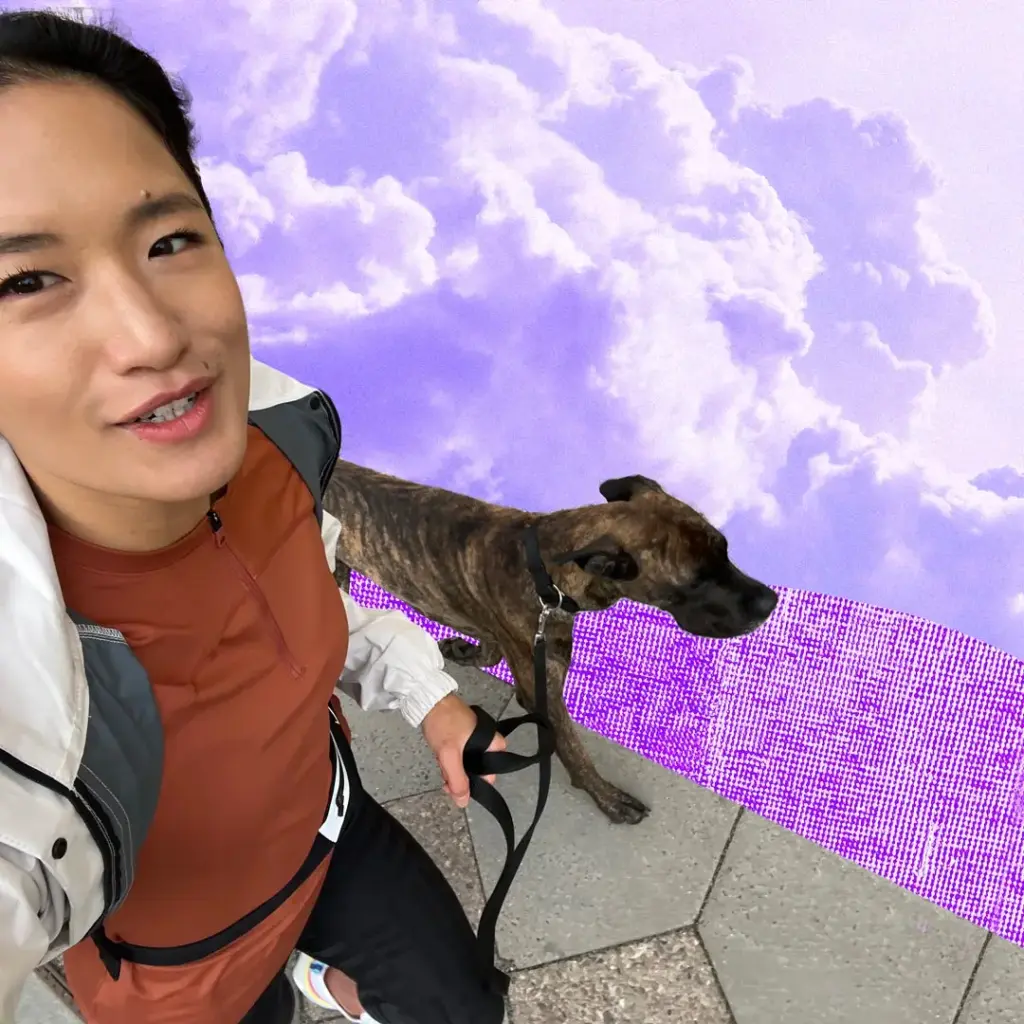
- Canine Companionship: To inject variety and social connection into her Monday miles, Hong often borrows a friend’s dog, Mia. Brimming with boundless energy, Mia provides spirited competition. While Mia easily wins the early-stage sprint, Hong’s superior endurance eventually turns the tables, making it a symbiotic workout for both human and hound.
Tuesday: Cross-Training and Injury Prevention
True athletic longevity requires looking beyond the pavement. Tuesday is intentionally designated as a non-running day, dedicated entirely to structural integrity and muscular balance.
- Yoga and Strength Conditioning: Hong supplements her mileage with targeted strength training designed to fortify joints, build stabilizing muscles, and prevent the overuse injuries common among distance runners. This is paired with regular sessions of restorative yoga to maintain flexibility.
- Physiotherapy and Recovery: Routine check-ins with a physiotherapist ensure that minor muscular imbalances are addressed before they morph into sidelining injuries.
- The Foundation for Thresholds: By building this robust physical baseline, Hong ensures she can comfortably step out of her comfort zone during intense workouts without completely depleting her physiological reserves.
Wednesday: Professional Demands and Cultural Respite
As a flight attendant traversing time zones, Hong views rest not as an inconvenience, but as an essential training pillar just as critical as high-intensity intervals.
- Navigating the Social Sphere: When back in Berlin, reconnecting with her vast network of friends is a top priority. Wednesday provides a vital psychological break from physical training, offering Hong the space to immerse herself in Berlin’s thriving cultural scene.
- Art as Mental Rest: Rather than squeezing in a recovery jog, Hong frequently spends her Wednesday visiting local art galleries and exhibitions, proving that mental relaxation is just as important for athletic performance as physical stillness.
Thursday: Pushing Limits on the Track
With her body fully rested and primed, Thursday represents the zenith of intensity for the week. Preparing for a marathon requires structured speed work, and Hong approaches these high-stress sessions with both anticipation and psychological preparedness.
- Embracing the Track: Track workouts are designed to test anaerobic thresholds, pushing Hong to discover how fast she can run and how long she can sustain peak velocity. Despite the physical toll, she embraces the competitive challenge.
- Equipment Selection: To absorb the high-impact forces of track training, Hong relies on specific gear, notably the Nike Invincible 3. Praised for its responsive, "bouncy" foam sole, the footwear provides a secure, cushioned foundation across varied synthetic and asphalt surfaces, mitigating the shock on joints during maximal-effort intervals.
Friday: Active Recovery and Reintegration
Following the exhaustive demands of Thursday’s track session, Friday is characterized by a deliberate deceleration of pace.
- Gentle Movement: Aside from a short, restorative yoga flow, Friday is largely free of structured workouts.
- Urban Exploration: Continuing her integration back into Berlin life post-flight, Hong often meets friends for gallery visits or neighborhood strolls. This day highlights her core philosophy: training should enhance life, not isolate the athlete from it.
Saturday: The Meditative Long Run and Culinary Rewards
Saturday morning belongs to the pavement, the dirt, and the subconscious mind.
- The Landwehrkanal Route: Hong’s standard training route snakes alongside the picturesque Landwehrkanal, offering a shifting terrain of smooth asphalt, soft grass, and occasional mud patches.
- Mental Disconnection: Equipped with an engaging podcast or simply tuned into the ambient acoustic backdrop of Berlin, Saturday runs serve as a form of active meditation. Observing the city wake up and watching fellow Berliners adds a rich, observational layer to the miles.
- The Post-Run Ritual: No long run is complete without a reward. Hong concludes her Saturday excursion at a local market stand in Kreuzberg, savoring a well-earned artisanal coffee and a light snack.
Sunday: Community, Endurance, and Dumplings
The culmination of the training week takes place on Sunday, transforming an individual pursuit into a collective celebration of movement.
- The Joy Run Collective: Hong is an active member of the Joy Run Collective, a local running community that fosters inclusivity and mutual encouragement.
- Long-Distance Endurance in the Tiergarten: Sunday’s session involves a high-mileage endurance run through Berlin’s sprawling Tiergarten park. Navigating lower weekend temperatures and extended cardiovascular loads requires careful thermal preparation and layering.
- The Post-Run Feast: True to her philosophy that food is both fuel and joy, the run culminates in a communal brunch. This week’s menu features homemade dumplings—a culinary reward that Hong admits occupies her thoughts throughout the entire week.
Supporting Context & Metrics: The Science of Balanced Endurance
Hong’s trajectory from reluctant beginner to sub-elite marathoner highlights a broader, paradigm-shifting movement within modern endurance sports. For decades, the dominant cultural narrative surrounding marathons was rooted in asceticism—the idea that runners must endure punishing schedules, rigid diets, and psychological burnout to cross the finish line.
Sports science increasingly validates Hong’s intuitive approach:
- The Role of Parasympathetic Recovery: Research in exercise physiology demonstrates that chronic cortisol elevations from over-training can impair muscle protein synthesis and immune function. By prioritizing sleep, social connection, and cultural outings (such as gallery visits), Hong actively promotes parasympathetic nervous system dominance, lowering stress hormones and accelerating tissue repair.
- Psychological Consistency over Intensity: Behavioral studies in sports psychology indicate that long-term athletic adherence is dictated more by perceived enjoyment and identity integration than by sheer willpower. By ensuring her runs are comfortable, socially engaging, and paired with positive reinforcements (like podcasts, dogs, and artisanal snacks), Hong reduces the cognitive friction associated with lacing up her shoes.
- Holistic Cross-Training Efficacy: Orthopedic data consistently shows that runners who incorporate strength training, mobility work, and low-impact cross-training (such as yoga) experience a significantly lower incidence of running-related injuries—particularly patellofemoral pain syndrome and Achilles tendinitis—compared to runners who engage exclusively in high-mileage road running.
Official Perspectives: The Philosophy of Modern Running Culture
As urban running communities surge in popularity globally, industry leaders and community organizers are taking note of this cultural shift toward holistic, lifestyle-integrated athletics.
"The modern endurance athlete is no longer willing to sacrifice their quality of life for a medal. What we are seeing in cities like Berlin, London, and New York is a reimagining of running culture. It is less about suffering in isolation and much more about community, mental wellness, and self-expression. Athletes like Hong demonstrate that peak performance is entirely compatible with enjoying the finer things in life—whether that is modern art, a dog named Mia, or Sunday dumplings with your crew."
— Dr. Aris Thorne, Sports Sociologist and Endurance Consultant
Furthermore, footwear and apparel engineers have adapted to this evolution. Modern running shoes are engineered not merely for raw aerodynamic efficiency, but for maximal energy return, injury mitigation, and all-day comfort—bridging the gap between high-performance athletic gear and lifestyle footwear.
Future Outlook: The Road to the Seventh Marathon
Reflecting on her journey—which began four years ago and has left her, at age 30, visibly healthier, stronger, and more confident than she was in her twenties—Hong looks ahead to her next major milestone with quiet confidence.
The psychological transformation has been just as profound as the physiological gains. Running has taught Hong how to lean into discomfort, diagnose mental fatigue, and push through psychological barriers without losing her sense of self. She has proven conclusively that consistency and comfort do not have to be mutually exclusive forces.
As she laces up her shoes for the upcoming training cycles leading to her seventh marathon, Hong’s journey offers a powerful blueprint for anyone looking to push their physical limits without losing their joy, their social life, or their morning coffee.
Hong’s Three Golden Rules for Maximizing Running Enjoyment
For runners looking to escape burnout, inject more fun into their weekly training, and adopt a more sustainable athletic lifestyle, Hong offers three foundational takeaways:
- Invest in Uncompromising Comfort: Never underestimate the psychological and physical impact of the right gear. Whether it is supportive, responsive footwear or weather-appropriate apparel, feeling secure and comfortable on your feet transforms every stride.
- Curate Your Mental Landscape: Build a dynamic auditory toolkit. Whether it is an upbeat playlist spanning disco, house, and techno for low-energy days, or an immersive podcast for long, meditative miles, managing your mental stimulation is just as important as managing your heart rate.
- Always Plan the Reward: Link your physical exertion to a tangible, joyful experience. Whether it is a scenic route through the city, the company of a friend or canine companion, or a delicious post-run snack (like Kreuzberg coffee or Sunday dumplings), giving yourself something to look forward to ensures long-term consistency.