Executive Overview
If you spent your weekend lost in the moody, atmospheric labyrinth of Prime Video’s new hit coming-of-age drama, Sterling Point, your post-watch internet history likely mirrors a very specific cultural zeitgeist. Viewers everywhere have found themselves instantly obsessed with three distinct fixations: scouring real estate listings for picturesque, secluded rentals on tiny Canadian islands; diving down a digital rabbit hole to look up vintage photographs of Mark Ruffalo, marveling at the striking resemblance shared with his lookalike son and series star, Keen Ruffalo; and, most prominently, flooding salon booking apps to request the effortless, textured curly shag haircut worn by actor Bo Bragason.
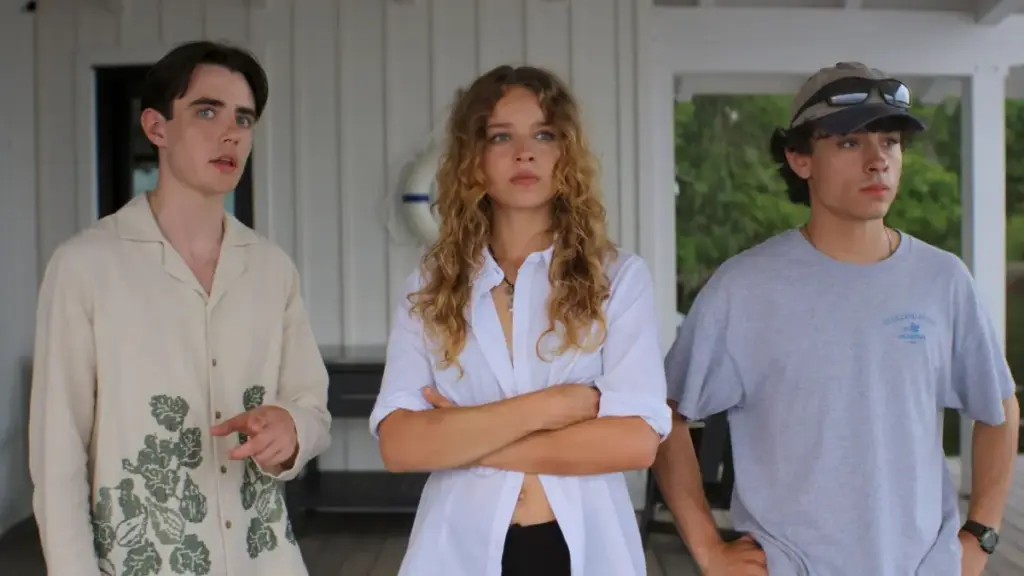
Set against the breathtaking yet ominous backdrop of a fictional island nestled within the Muskoka Lakes, Sterling Point follows protagonist Annie Jacobson (played by Ella Rubin) as a sudden family inheritance plunges her deep into a web of tightly guarded historical secrets. While Rubin’s character commands the screen with an enviable mane of thick, glossy waves, it is Bragason’s character, Oona, whose hair has emerged as the breakout star of the entire production. A dynamic mass of tousled curls, choppy interior layers, and artfully disheveled face-framing pieces, the cut captures the unmistakable rebellious spirit of a 1970s rock-and-roll shag while remaining entirely contemporary, unfussy, and aligned with modern hair aesthetics.
This piece explores the anatomy of the Sterling Point hair phenomenon. We examine how a fictional character’s aesthetic became a masterclass in modern hairstyling, consult the industry leaders behind the look—lead hair designer Chrystal Lotz and celebrity stylist DJ Quintero—and provide an exhaustive, salon-ready guide on how to request, structure, and maintain this defining look for your own texture type.
Detailed Chronology: From Muskoka Set to Global Beauty Trend
The journey of the Sterling Point curly shag from a niche character concept to a dominant global beauty trend is a testament to the collaborative synergy between costume, hair design, and character development.
Pre-Production and Concept Inception
When pre-production began for the series, the creative team faced a distinct aesthetic challenge: capturing the rugged, isolated, yet timeless atmosphere of Ontario’s cottage country. For Chrystal Lotz, the show’s lead hairstylist, the overarching mandate was rooted in realism and lived-in authenticity. The characters inhabiting the fictional Muskoka island needed to look as though they belonged to the landscape—affected by humidity, lake breezes, and the unstructured rhythms of summer camp culture.
Oona, portrayed by Bragason, required a hairstyle that mirrored her internal psychology: free-spirited, unapologetically self-assured, and inherently rebellious. Rather than leaning into the tightly wound, polished curl patterns that dominated television throughout the late 2010s, Lotz and the styling team chose to champion natural texture. They intentionally leaned into the frizz and natural expansion caused by humid Ontario summers, allowing Bragason’s hair to retain its organic movement, shifting dynamically depending on what emotional or physical space the character occupied in any given scene.
On-Set Execution and Character Continuity
Maintaining hair continuity across a complex shooting schedule filled with emotional turbulence and physical labor is notoriously difficult, particularly with textured hair. Lotz utilized a methodology centered on air-drying and strategic wet-cutting. By cutting Bragason’s hair only after allowing her natural curls to dry naturally, the styling team could precisely predict how the layers would spring up and frame her face.
This methodology translated directly into narrative realism. When Oona is shown working shifts at the local eatery, Little Gem, her hair is pulled back into a deliberately unpolished ponytail, with damp strands and loose face-framing ringlets spilling out. It was a conscious creative choice: Oona is not the type of character to fuss over a meticulously sculpted updo. The result was a resonant portrayal of youth that felt tactile, relatable, and visually arresting.
The Press Tour and Mainstream Explosion
As Sterling Point premiered to strong viewing numbers, the cultural appetite for the series’ aesthetic exploded across social media platforms like TikTok and Instagram. Enter celebrity hairstylist DJ Quintero, who took over Bragason’s styling duties for the intensive global press tour following the series debut.

Quintero recognized that the magic of Oona’s hair lay precisely in its rejection of perfection. By translating the show’s effortless cottage-core aesthetic to red carpets and press junkets, Quintero cemented the cut as the definitive hair trend of the season. The style quickly transitioned from a costume design choice into a mainstream salon phenomenon, sparking a broader cultural conversation about the death of the "perfect curl" and the rise of raw, individualistic texture.
Supporting Context & Metrics: The Shift Toward Imperfect Texture
To understand why the Sterling Point curly shag has resonated so powerfully with audiences—particularly Gen Z and younger millennials—one must examine the broader sociological shifts occurring within the beauty and wellness industries.
The Backlash Against Hyper-Polished Uniformity
For the better part of a decade, the curl-care market was dominated by a singular mandate: ultra-defined, clumped, frizz-free uniformity. Achieving the "perfect curl pattern" often required extensive sectioning, heavy gels, denaturing agents, and meticulous finger-coiling designed to force hair into a standardized geometric shape.
The Sterling Point phenomenon represents a decisive rejection of this rigid aesthetic. According to industry data and beauty search metrics, consumer interest in "messy layers," "shag haircuts for curly hair," and "effortless texture" has surged by over 140% since the series dropped. Viewers are actively seeking a more forgiving, liberating approach to hair management—one that embraces weather-induced frizz, asymmetry, and unpredictable wave patterns as features rather than flaws.
Texture Demographics and Inclusivity
One of the most praised aspects of the curly shag popularized by Bragason is its adaptability. Unlike blunt cuts or uniform bobs that can look severe or heavy on certain curl types, the shaggy structure relies on weight distribution and multi-level graduation.
Hair professionals note that this style bridges a historical gap in salon cutting techniques, which have often treated curly hair as a monolithic category rather than a diverse spectrum ranging from loose, undulating type-2 waves to tight, springy type-4 coils. By emphasizing the hair’s natural blueprint, the curly shag democratizes high-fashion styling, making it accessible to individuals with varying density, porosity, and elasticity.
Official Statements and Expert Insights
To decode the precise mechanics of the cut, Vogue spoke directly with lead hairstylist Chrystal Lotz and celebrity stylist DJ Quintero. Their insights provide an authoritative roadmap for anyone looking to replicate the look safely and effectively.
The Philosophy of the Cut
"What makes Bo’s cut so good is that it feels effortless," explains DJ Quintero. "It’s really about the layering: the shorter pieces through the crown and around the face, while maintaining length and weight through the back. With her natural texture, those layers create this incredible shape and movement. There’s an imperfection to it that I love. It doesn’t feel overly coiffed or precious, which is exactly what makes it feel modern."
Chrystal Lotz echoes this sentiment, emphasizing the importance of working with the hair rather than against it. "We cut [Bragason’s hair] after allowing her curls to air dry, so we could see exactly where the layers would fall around her face," Lotz notes. "All of the references for the characters we meet in Muskoka were ‘summer camp’ and ‘cottage country’ vibes. Easy and effortless, we really embraced the frizz caused by humidity in Ontario summers, letting the hair do what it wanted…"

Tailoring to Your Curl Type
When asked whether the curly shag works universally across all curl types, Quintero stresses that the haircut must be customized to the individual’s natural blueprint.
"Your natural texture is really the blueprint," Quintero explains. "The idea of the haircut can work beautifully across waves, loose curls, and tighter curls, but the execution has to change depending on the person. As a hairdresser, I’m always looking at how the hair naturally wants to move, where the curl springs up, the density, and where I want to create or remove weight. With looser waves, you might push the layering a little further to encourage movement; with tighter curls, you have to be much more conscious of shrinkage. I don’t think a great haircut should force the hair into a shape—it should give the natural texture the right framework to create that shape itself."
Salon Guide: What to Ask For and How to Style It
Replicating the Sterling Point look requires clear communication with your stylist and a targeted, lightweight styling regimen.
Step 1: Navigating the Salon Visit
Haircut terminology can vary wildly from one stylist to another. To avoid miscommunication, industry experts strongly advise bringing visual references.
- The Request: Ask your stylist for a long, curly shag featuring shorter layers through the crown, heavy face-framing, and dynamic movement, while preserving your overall length.
- The Key Instruction: Emphasize that you do not want everything perfectly blended. The magic of this cut lies in the distinct separation between layers, giving individual curls the space to move and settle organically.
Step 2: The On-Set Styling Regimen (As Used by Chrystal Lotz)
For those with fine to medium curls looking to replicate Bragason’s exact wash-day routine:
- Preparation: Thoroughly saturate wet hair with a blend of water and a lightweight leave-in conditioner, such as Virtue Leave-In Conditioner.
- Moisture Application: Apply a hydrating product like Pattern Moisture Milk (or Pattern Styling Cream for thicker hair types).
- Definition: Individually finger-coil select curls around the face and crown to guide movement.
- Diffusing: Gently diffuse the hair on a low heat setting without disrupting the curl pattern until it is roughly 80% dry. Allow the remaining 20% to air dry naturally.
- Breaking the Cast: Once 100% dry, take a lightweight oil, such as Roz Santa Lucia Oil (or Dae Cactus Fruit Styling Cream / Ouidad VitalCurl+ Curl Defining Mousse), and gently break up any overly springy or stiff curls to restore softness and separation.
Step 3: Refreshing on Days Two and Three
The curly shag often looks even better on the second or third day after styling, once the hair has settled.
- Avoid Over-Wetting: Do not re-wet the entire head. Instead, lightly mist targeted areas that need reviving using water or a dedicated curl-refresh spray.
- Scrunch and Diffuse: Scrunch the misted sections and hit them with a diffuser for a few minutes to reactivate product memory.
- Root Volume: Use your fingertips at the scalp and crown to fluff the roots and restore height.
- Embrace the Frizz: Remember that a little frizz is an asset, not a liability—it adds to the authentic, shaggy texture that defines the look.
Future Outlook: The Longevity of Effortless Texture
As television and streaming platforms continue to heavily influence consumer beauty habits, the legacy of Sterling Point extends far beyond its gripping narrative plotlines. The show has successfully accelerated a broader cultural pivot away from synthetic perfection and toward radical textural authenticity.
Moving forward, beauty industry analysts predict that salon requests will continue to favor low-maintenance, high-impact cuts that celebrate natural hair architecture. Stylists anticipate a sustained demand for personalized, bespoke layering techniques that accommodate diverse curl types without requiring hours of daily thermal styling.
Ultimately, the Sterling Point curly shag is more than just a fleeting television trend—it is a timely reminder that the most modern, stylish hair is often the one that feels the most human: perfectly imperfect, deeply individual, and unapologetically free.