Executive Overview
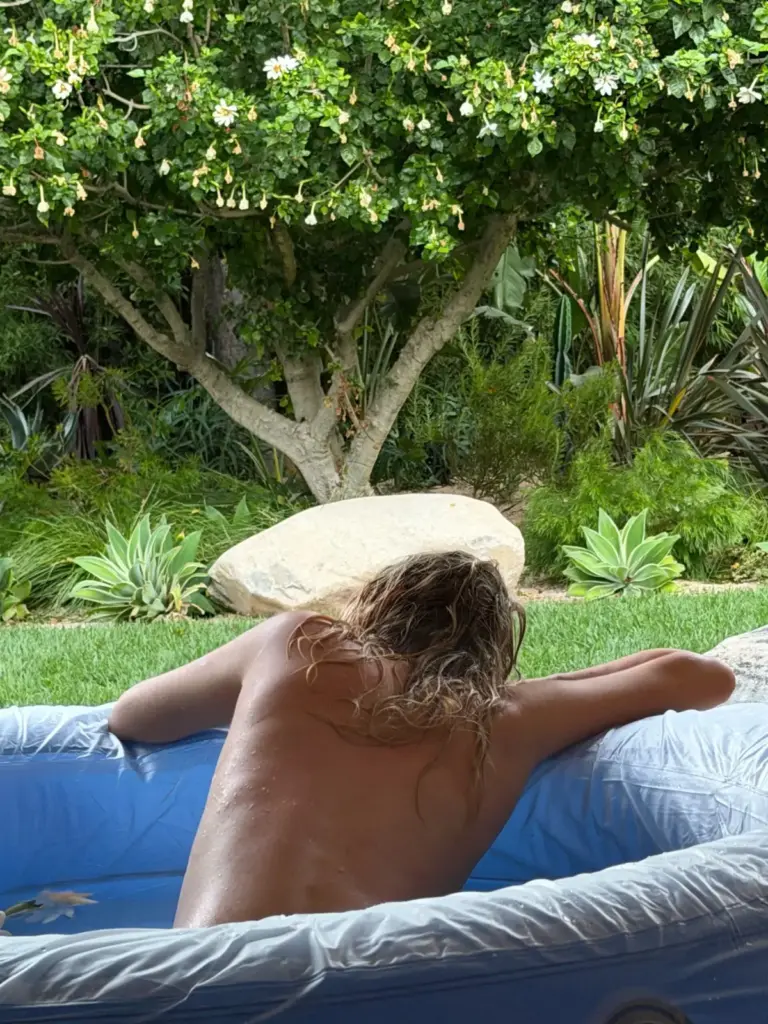
The intersection of modern celebrity lifestyle, holistic wellness, and deeply personal milestones often yields compelling narratives, but few are as evocative as supermodel and brand founder Elsa Hosk’s recent journey into motherhood for the second time. On the morning of July 22, under the fragrant canopy of a massive, fully flowered tree in her Los Angeles backyard, Hosk welcomed her second daughter, Flora Blue, into the world.
While the imagery calls to mind an ethereal, fairy-tale romance, the reality of Hosk’s journey is rooted in determination, psychological processing, and an intentional evolution of her approach to birth. Moving from the high-stress, clinical expectations typical of the fashion industry to the raw, unscripted intensity of a home birth, Hosk and her fiancé, Tom Daly, have cultivated a distinct philosophy regarding family, sanctuary, and natural living.
This comprehensive report explores the multifaceted dimensions of Hosk’s second home birth. It examines the architectural and botanical significance of her Los Angeles property, the psychological shadow of her first delivery, the mechanics of her rapid second labor, and the broader cultural conversation surrounding home births among high-profile figures. By analyzing the intersection of celebrity autonomy, doula-supported care, and holistic birthing practices, we gain insight into a growing movement that prioritizes personal agency over institutional convention.
Detailed Chronology: From New York Transitions to the Los Angeles Canopy
The Genesis of a Home-Birth Advocate (2021)
The story of Elsa Hosk’s home-birth journey begins not with a lifelong crusade against clinical obstetrics, but with a sudden cross-country relocation and a piece of documentary filmmaking. In 2021, just a month before the arrival of her first daughter, Tuulikki Joan (affectionately known as "Tuuli"), Hosk and Daly made the pivotal decision to pack up their lives in New York City and plant new roots in Los Angeles.
At the time, Hosk’s birth plan adhered to standard high-end medical trajectories: a scheduled Cesarean section. However, the energy of their new Southern California home—highlighted by a sprawling, mature ecosystem in the backyard—prompted a reevaluation. The shift was accelerated by viewing the 2008 documentary The Business of Being Born, a film widely credited with sparking a modern renaissance in home-birth advocacy across the United States.
Faced with a new geographic reality and a newly awakened perspective on obstetrical intervention, Hosk sought guidance. Through a chance encounter while shopping at The Elder Statesman in West Hollywood, she was introduced to Carson Myer, a premier doula whose client roster includes cultural heavyweights such as Gigi Hadid and Mandy Moore. This serendipitous meeting laid the groundwork for Hosk’s transition from conventional hospital settings to the intimate, controlled environment of domestic childbirth.
Processing the First Birth: The Reality of Labor
Hosk’s first experience bringing Tuuli into the world was, by her own admission, a formidable crucible. Though a birthing tub had been meticulously set up inside her primary bedroom, the reality of active labor defied the serene, quiet aesthetics often marketed on social media.
"I couldn’t think about the experience for the longest time because it felt too traumatic, too sensitive," Hosk reflects. "My husband took these beautiful photos. To this day, I have not been able to look at them."
Unlike the idealized portrayals of tranquil, silent breathing during contractions, Hosk’s labor was visceral and loud. "I have heard from people who have these beautiful, calm births, but that’s just not how I labor. I’m screaming at the top of my lungs."
This candor is crucial in contemporary maternal discussions. By stripping away the romanticized gloss often attached to holistic births, Hosk highlights a vital truth: natural does not inherently mean painless or quiet. It means authentic. The intensity of Tuuli’s arrival left a lasting psychological imprint, requiring time, emotional processing, and maternal maturation before Hosk felt prepared to expand her family once more.
The Arrival of Flora Blue: July 22
When pregnancy commenced for baby number two, the architectural and botanical elements of Hosk’s Los Angeles estate took center stage. The giant tree in her backyard—a botanical fixture that had stood silent witness to her family’s California chapter—exhibited an unprecedented biological display.
"The blooms only last a few days," Hosk explains. "But this year, it was blooming like it never had before. You could smell it through the entire garden."
This botanical crescendo aligned precisely with the onset of labor. At midnight, active labor began. Eschewing a single stationary position, Hosk moved fluidly through her environment: laboring outside on a rugged stone, shifting to her bed, moving to the floor, and seeking sanctuary in a shower.
"I also had this really amazing moment in the shower where I was able to tune out all the outside noise—it was like I was in a cocoon," she notes.

As the final stages approached, the birth plan evolved to incorporate the natural world directly. Moving the birthing pool from the indoor bedroom to the direct canopy of the blooming backyard tree, Hosk entered the water for the final phase. In a staggering sequence of events, the active pushing phase lasted a mere twelve minutes. At precisely 6:00 a.m. on July 22, Flora Blue made her entrance into the world beneath the fragrant, falling petals.
Supporting Context & Metrics: The Home Birth Paradigm
To fully contextualize Elsa Hosk’s experience, it is necessary to examine the broader statistical and cultural landscape surrounding home births, doula utilization, and maternal mental health.
The Rise of Out-of-Hospital Births in the United States
According to data from the National Center for Health Statistics (NCHS), out-of-hospital births—which include births in homes and freestanding birth centers—have experienced steady fluctuations and renewed interest over the past decade. While home births still account for a relatively small percentage of total U.S. births (hovering around 1.4% to 1.6% nationally), metropolitan areas like Los Angeles have seen significantly higher concentrations of planned out-of-hospital deliveries, driven by access to specialized concierge midwifery and doula networks.
| Metric / Indicator | Statistical Trend / Context | Primary Influencing Factors |
|---|---|---|
| U.S. Out-of-Hospital Birth Rate | ~1.5% of total births nationally; higher in urban enclaves (e.g., L.A., NYC). | Desire for autonomy, distrust of routine clinical interventions, COVID-19 pandemic effects. |
| Doula-Assisted Birth Outcomes | Associated with decreased C-section rates, shorter labors, and higher maternal satisfaction. | Continuous emotional, physical, and informational support. |
| California Home Birth Infrastructure | Supported by a robust network of licensed midwives (LMs) and certified professional midwives (CPMs). | Progressive integrative health policies and specialized referral networks. |
The Economic and Cultural Anatomy of Celebrity Home Births
Hosk’s journey reflects a broader demographic trend among affluent, public-facing women who choose out-of-hospital births. Financial resources allow for the curation of elite care teams—including high-end doulas like Carson Myer, private midwives, and specialized postpartum support—transforming the home environment into a medically monitored, highly secure sanctuary.
However, experts in maternal-fetal medicine emphasize that a successful home birth requires strict risk stratification. Low-risk pregnancies, absence of pre-existing maternal morbidities, and immediate proximity to a level-four hospital are standard prerequisites for responsible out-of-hospital midwifery care. Hosk’s ability to pivot seamlessly between indoor comforts, shower sanctuaries, and outdoor botanical pools underscores the luxury of space and privacy that affluent home-birthing mothers command.
Official Statements and Personal Reflections
The narrative of Flora Blue’s birth is best understood through the direct reflections of those who orchestrated and experienced it. The psychological transformation from the trauma of Tuuli’s delivery to the transcendence of Flora’s arrival highlights the profound impact of environmental alignment.
"It was the most magical birth ever," Hosk shares, summarizing the culmination of her midnight labor.
The sensory overload of the blooming tree—its scent permeating the garden, its petals marking the passage of time, and its canopy offering shade during the early morning hours—became deeply intertwined with the child’s identity. This environmental synchronicity directly inspired the newborn’s nomenclature.
"What could be more dreamy than the flowers coming out right at the time I go into labor?" Hosk asks rhetorically, explaining the origin of the name Flora Blue.
Drawn from the ephemeral beauty of a botanical cycle that occurs only once a year, the name serves as a permanent memorial to a morning where nature, motherhood, and architectural sanctuary converged.
Carson Myer, Hosk’s doula, has similarly championed the philosophy of intuitive, undisturbed birth. While Myer maintains a discreet practice catering to high-profile clients who value absolute privacy, her methodologies consistently emphasize physiological respect for the laboring body—allowing women to move through vocalizations, unconventional postures, and environmental shifts without the rushed interventions frequently encountered in high-census hospital delivery wards.
Future Outlook: The Evolution of Modern Motherhood in the Public Eye
As Elsa Hosk navigates life as a mother of two daughters—Tuulikki Joan and Flora Blue—her public platform continues to evolve. No longer just a symbol of high fashion, editorial campaigns, and Scandinavian minimalist aesthetics, Hosk has intentionally integrated the raw, unvarnished realities of motherhood into her brand narrative.
Implications for Maternal Wellness Discourse
The willingness of high-profile figures to speak openly about birth trauma, vocal labor, and the psychological hurdles of postpartum recovery serves a vital public service. By dismantling the myth of the "effortless, silent celebrity birth," Hosk validates the diverse spectrum of human labor experiences. Her trajectory suggests several key trends for the future of maternal wellness:
- Destigmatization of Vocal and Intense Labor: Pushing back against expectations of quiet composure, public figures normalizing loud, physically demanding labor help alleviate the shame or inadequacy many women feel when their births do not match media tropes.
- The Integration of Nature and Wellness Architecture: The design of residential spaces is increasingly factoring in wellness and restorative health. As seen with Hosk’s backyard tree, home environments are curated not just for visual aesthetics, but for psychological grounding and milestone documentation.
- Collaborative Care Models: The continued rise of doula-midwife-OB/GYN hybrid support systems points toward a future where institutional medicine and holistic care are less adversarial and more complementary, provided patient risk profiles are carefully managed.
Conclusion
Elsa Hosk’s second home birth is more than a picturesque anecdote for lifestyle publications; it is a case study in maternal agency, emotional healing, and environmental harmony. From the intense, processing-heavy arrival of her first daughter in 2021 to the swift, fragrant, dawn-lit birth of Flora Blue beneath a blooming Los Angeles canopy in 2024, Hosk has charted an authentic course through modern motherhood. As she continues to balance the demands of the global fashion industry with the grounding realities of raising two young girls in California, her story remains a testament to the power of intuition, preparation, and the enduring magic of the natural world.