Executive Overview
In the fast-paced ecosystem of high-end beauty and personal care technology, few brands command the zealous, almost cult-like devotion of Dyson. When the engineering powerhouse expands into a new category, consumers and industry insiders alike prepare to witness a paradigm shift. Over the past several decades, the British manufacturer has fundamentally redefined how society approaches mundane domestic tasks. In 1983, it disrupted the cleaning industry with the introduction of the bagless vacuum cleaner. In 2016, it left the beauty world breathless with the Supersonic hair dryer—a $400 styling tool that transformed an appliance long considered a utilitarian afterthought into a sleek, status-symbol vanity piece.
Therefore, when whispers began circulating through industry channels regarding a top-secret oral care innovation code-named "682," anticipation reached a fever pitch. By early September, that anticipation culminated in a high-profile, glamorous launch event in Paris, introducing the world to the Dyson CameraJet: the globe’s first-ever toothbrush, water flosser, and intraoral camera hybrid. Promising to streamline dental hygiene by firing targeted mouthwash streams via a pencil-tip-sized camera while the user brushed, the device was heralded as the undisputed Rolls-Royce of oral care.
Yet, within mere weeks of its triumphant debut, the romanticized narrative of effortless, high-tech dental perfection unraveled entirely. Consumers who shelled out an eye-watering $499 found themselves grappling with catastrophic hardware failures, water seepage, and sudden, inexplicable shutdowns. What was initially marketed as the dawn of a new era in personal hygiene quickly morphed into a cautionary tale of over-engineering, insufficient clinical transparency, and product rollouts plagued by systemic defects.
This in-depth investigative report explores the ambitious engineering behind the Dyson CameraJet, the widespread hardware failures that sidelined the device, the company’s official response, and what this high-stakes misstep means for the future of luxury wellness technology.
Detailed Chronology: From UK Labs to Sudden Obsolescence
The Genesis of Project "682"
The conceptual foundation of the CameraJet was not built overnight. According to Dyson engineers, the idea first germinated nearly a decade prior to its public unveiling. The company spent six grueling years researching, designing, and prototyping the device—surpassing the development timelines allocated to both its iconic bagless vacuums and its revolutionary hair dryers.
Last spring, Allure’s executive beauty director, Jenny Bailly, traveled to Dyson’s top-secret research and development labs in the United Kingdom for an exclusive, behind-the-scenes preview of the innovation. While testing was strictly prohibited during the visit, observers were universally struck by the sheer scale of the engineering rigor applied to the project. The device was engineered to run on a staggering 16 million lines of code, utilizing an artificial intelligence learning system trained on a vast library of 470,000 dental images designed to accurately map and identify interdental gaps.
The Paris Premiere and Immediate Consumer Fascination
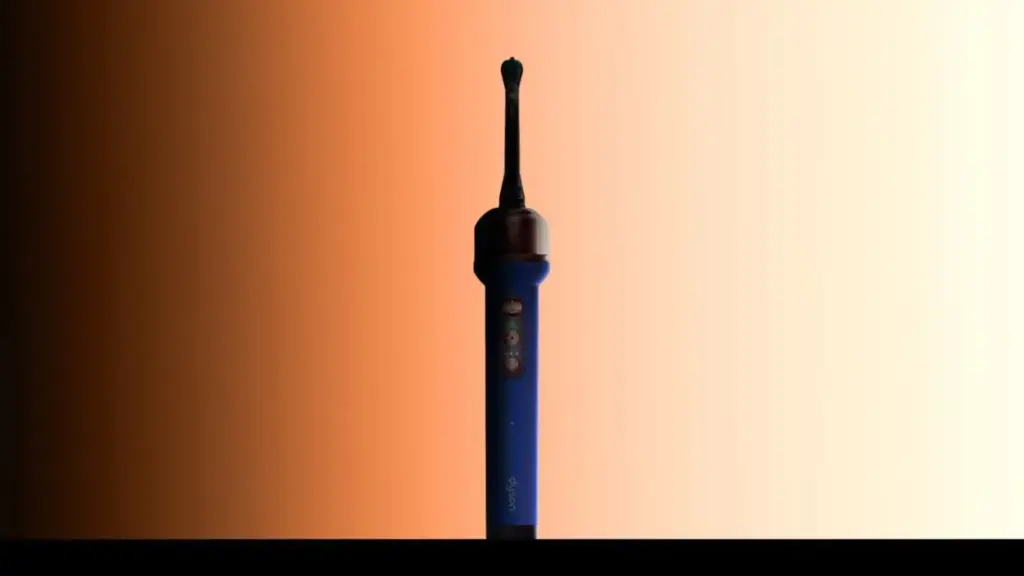
When the CameraJet officially launched at the beginning of September, it arrived with maximum theatricality. Priced at a staggering $499, the device was immediately positioned at the absolute apex of the luxury market. Its aesthetic execution was undeniably alluring: a striking, cobalt-blue oral-hygiene monolith designed with minimalist elegance, meant to serve as a sophisticated centerpiece on modern bathroom countertops.
Early adopters and beauty editors alike were gifted review units. For a fleeting window of time, the experience felt magical. The convergence of brushing, water-flossing, and visual monitoring seemed to foreshadow the future of preventative healthcare. Early reviewers praised the tactile feel, the precision of the jet, and the sleek design, convincing many that the steep four-figure price tag was justified for a device promising a lifetime of superior dental health.
The Cliff: Hardware Failures and Sudden Ghosting
The honeymoon phase, however, proved shockingly brief. Across social media platforms and consumer forums, early buyers who invested their hard-earned money into the $499 apparatus began reporting alarming malfunctions.
- The Consumer Reports Case Study: An editor at Consumer Reports documented that her first review unit died less than 24 hours after opening the box—suffering a catastrophic system failure before she even had a single opportunity to test it on her teeth.
- Degradation of Performance: Users who managed to bypass the initial 24-hour window reported rapid performance degradation. Diaphragm pumps began to slow down, conical jets misfired, and the targeted high-frequency pulsations—ostensibly rated at 245 vibrations per second—weakened significantly before the units failed to turn on entirely.
- The Sudden Disappearance: As complaints mounted, the CameraJet vanished from digital shelves, listed abruptly as "out of stock" across both official channels like Dyson.com and retail partners such as Sephora.
Supporting Context & Metrics: The Engineering vs. Reality Divide
To comprehend the failure of the CameraJet, one must evaluate the immense complexity of what Dyson attempted to achieve. Marrying high-velocity liquid propulsion, high-definition optical imaging, and high-frequency acoustic vibrations inside a hand-held, water-exposed consumer device is an engineering nightmare.
The Technology Under the Hood
- 16 Million Lines of Software Code: The brains of the CameraJet rely on software sophistication that rivals modern automotive driver-assistance systems.
- AI Training Sets: The optical navigation system was trained on nearly half a million distinct dental images to accurately position the water jet between teeth in real time.
- Live-Stream Privacy Concerns: The device connects to the Dyson mobile application, offering users a live, internal view of their oral cavity while brushing. While this sparked immediate data privacy conversations, Dyson clarified that video feeds are neither stored locally on the app nor uploaded to cloud servers.
The Missing Clinical Evidence
Beyond hardware instability, the CameraJet faced growing scrutiny regarding its scientific efficacy. Promotional press materials distributed during the launch claimed that the device removed up to 69 percent more plaque than "market-leading premium electric toothbrushes in hard-to-reach areas."
However, investigative inquiries by beauty journalists revealed a notable lack of robust, independent clinical data. Since the days when the device was known only by its internal project designation ("682"), requests for peer-reviewed clinical studies yielded sparse results. Crucially, the only formal study shared with industry experts compared the CameraJet’s performance against a basic manual toothbrush—a low baseline for an ultra-luxury device commanding a $499 investment, rather than comparisons against established premium power brushes like the Philips Sonicare or Oral-B iO series.
Official Statements and Corporate Accountability
As public frustration escalated and media outlets began pressing for answers regarding the widespread product failures, Allure formally reached out to Dyson corporate communications. Journalists sought clarification on inventory availability, the root cause of the widespread hardware breakdowns, and whether a formal product recall would be issued.
In an official statement, a Dyson spokesperson addressed the crisis:
"Unfortunately, one production batch of jet tubes experienced a process issue, creating a potential for water seepage which affected the performance of a small number of products. We took what we believe to be the right decision to isolate impacted products, which resulted in an out-of-stock position. We are now in full production and shipping product to our partners. We are sorry that we have let down our loyal customers and we will do all we can to support them."
While the company acknowledged a manufacturing defect tied to a specific "production batch" and water seepage, noticeable gaps remained in their transparency. Dyson failed to provide a concrete timeline for when the CameraJet would return to the open market, nor did they issue definitive guidance regarding extended warranties, refunds, or replacement protocols for consumers holding defective $499 bricks.
This situation invites inevitable comparisons to historical tech launches that prioritized software and hardware ambition over basic utility—reminiscent of early smartphone rollouts where groundbreaking virtual assistants debuted alongside broken cellular data connections. As one frustrated reviewer summarized: “The camera features are incredible and the AI is fascinating, but at the end of the day, I need a tool that consistently functions for its primary purpose.”
Future Outlook: Can Dyson Rebuild Consumer Trust?
Dyson’s brand equity has historically been anchored in unyielding durability. Millions of households utilize Supersonic hair dryers that have operated flawlessly for a decade, or cordless vacuum cleaners that have maintained peak suction for upwards of five years. The CameraJet represents a rare, jarring departure from that legacy of reliability.
For the luxury beauty and tech markets, the CameraJet fiasco serves as a stark reminder of the limits of over-engineering. Consumers are increasingly fatigued by exorbitantly priced "smart" appliances that prioritize gimmick-driven novelty over foundational dependability.
What Comes Next?
- Quality Control Remediation: Dyson must prove that its updated production batches have permanently resolved the internal water-seepage vulnerability before asking consumers to trust the $499 price point again.
- Clinical Validation: To win over skeptical dental professionals and savvy beauty consumers, the brand will need to release rigorous, peer-reviewed comparative data proving that the CameraJet genuinely outperforms existing market leaders.
- The Return to Reliable Alternatives: In the interim, consumers burned by the CameraJet are predictably retreating to familiar, less flashy, but infinitely more dependable alternatives—such as trusted Sonicare and Oral-B models that prioritize mechanics over microchips.
Until Dyson can provide verifiable proof that the CameraJet is ready for prime-time use without the risk of abrupt, catastrophic failure, this high-tech romance remains firmly in the past. The device burned exceptionally bright, but its flame was extinguished almost as fast as it arrived.