The intersection of sport and style has reached a historic zenith. Long gone are the days when an athlete’s off-field persona was strictly secondary to their performance between the hash marks. Today, the modern gridiron star is as much a cultural curator and style icon as they are a tactical weapon. This paradigm shift—cemented by the runway-ready tunnel walks of the NFL and the global lifestyle branding of elite athletes—is now trickling rapidly down to the collegiate ranks.
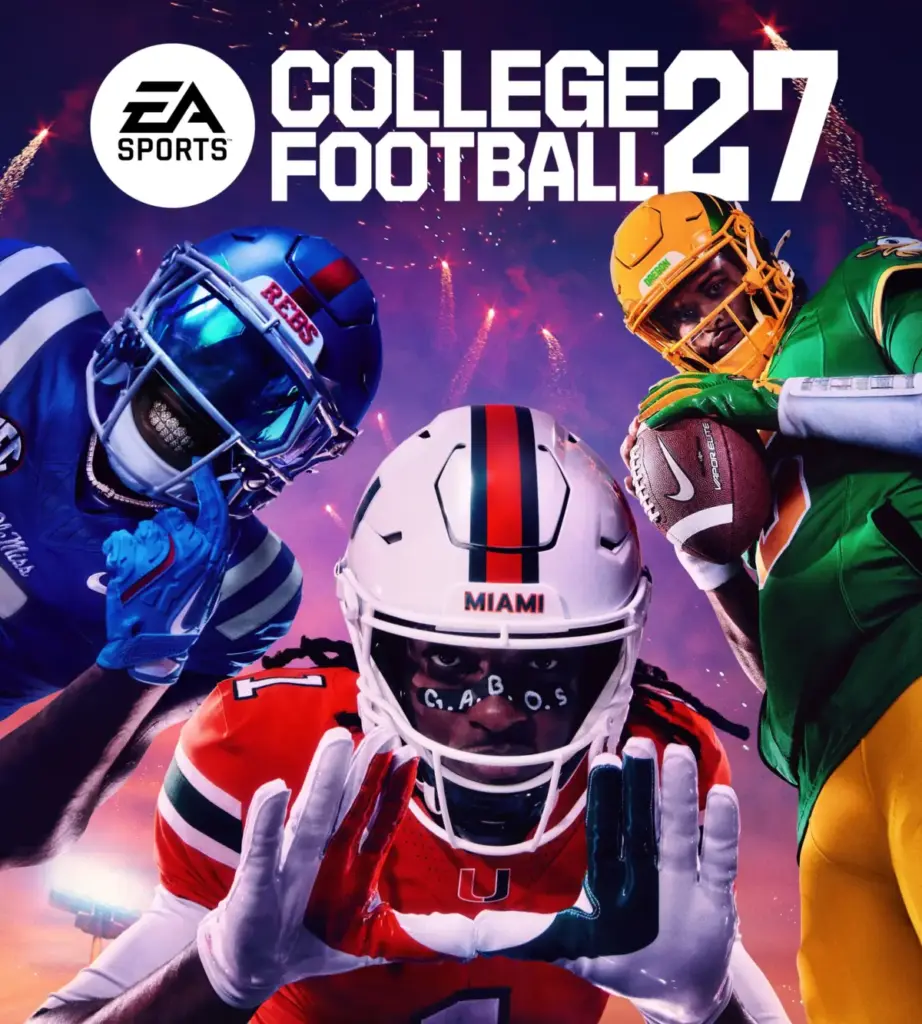
Nowhere is this evolution more vividly captured than on the cover of EA Sports’ highly anticipated College Football 27 video game. For the cover reveal, the franchise bypassed traditional conventions by handpicking three dynamic rising stars: Miami Hurricanes wide receiver Malachi Toney, Oregon Ducks quarterback Dante Moore, and Ole Miss Rebels running back Kewan Lacy. Rather than staging a sterile promotional photo, EA Sports framed these young phenoms through the lens of individual authenticity. Complete with distinct personal aesthetics, bold accessories, and an unapologetic sense of self, the cover serves as a cultural artifact of a new era.
In this new frontier, football and fashion are inextricably linked. Whether it is Malachi Toney sporting a custom nose strip emblazoned with a personal mantra, Kewan Lacy flashing diamond-studded grillz, or Dante Moore maintaining a cool, collected demeanor in effortless loungewear, these athletes prove that personal style is an extension of their on-field prowess. As these rising stars prepare to carry the torch into the professional leagues, they are dismantling archaic stereotypes about how a football player should look, speak, and act. This in-depth report explores the convergence of collegiate athletics, high fashion, and modern identity, charting how the next generation is rewriting the rules of sports culture.
Detailed Chronology: The Evolution of Athletic Style
To understand the profound cultural weight of the College Football 27 cover reveal, one must trace the rapid acceleration of style within American football over the past decade. For generations, professional football culture was characterized by conformity. Standardized suits, uniform travel gear, and conservative dress codes dictated the pre-game tunnel arrival. However, as social media democratized fashion and players sought new avenues for self-expression, the tunnel walk transformed into high-stakes performance art.
The Pro Blueprint and the Rise of the Tunnel Walk
The National Football League paved the way for this sartorial revolution. Drawing inspiration from the NBA and Formula 1—where pre-race and pre-game outfits command entire media cycles—NFL players began treating the stadium tunnel as an impromptu runway. Elite athletes like Kansas City Chiefs tight end Travis Kelce, Philadelphia Eagles quarterback Jalen Hurts, and New York Jets quarterback Tyrod Taylor established themselves as bona fide menswear tastemakers.
Soon, the fashion industry took notice. Major luxury houses began actively courting football players. New York Giants wide receiver Odell Beckham Jr. secured coveted front-row seats at New York Fashion Week; Philadelphia Eagles running back Saquon Barkley walked the runway for Hermès; and style icons like Cincinnati Bengals quarterback Joe Burrow and Minnesota Vikings wide receiver Justin Jefferson graced the Met Gala carpet.
Simultaneously, athletes began using their bodies as a canvas for non-conformity. Chicago Bears quarterback Caleb Williams famously shattered gender norms in the sport by sporting vibrant, colorful manicures before every game—a signature look that was subsequently immortalized on the cover of Madden NFL 27.
The Collegiate Shift: From the Pros to the Phenoms
While professional athletes are backed by a small army of personal stylists, glam squads, and industry insiders—such as Kyle Smith, the NFL’s first-ever official fashion editor—the collegiate class is navigating this space with a refreshing, organic autonomy.
At the official College Football 27 cover reveal event in Chicago, the trio of cover athletes showcased three distinct sartorial approaches rooted entirely in their individual upbringings and environments:
Dante Moore (21, Oregon Ducks): Standing tall in a monochromatic beige loungewear set with his hair styled in a natural afro, Moore epitomized effortless West Coast relaxation.
Kewan Lacy (19, Ole Miss Rebels): Radiating southern confidence, Lacy donned a crisp white Supreme zip-up jacket paired with classic khakis, anchoring his look with a gleaming set of custom grillz.
Malachi Toney (18, Miami Hurricanes): Capturing the vibrant, high-energy pulse of South Florida, Toney wore a minimalist white t-shirt that allowed his statement jewelry to command attention—specifically, a gold “75” chain resting at the center of his chest, commemorating his viral 75-yard touchdown against North Carolina State University in 2022.
This juxtaposition of regional aesthetics highlights how today’s college athletes are not relying on corporate playbooks to define their image. Instead, they are leaning into their authentic roots.
Supporting Context & Metrics: Geography, Aesthetics, and Gatekeeping
The style choices of these young athletes are not arbitrary; they are deeply informed by the geographical and cultural landscapes they inhabit.
The Geography of Cool: Eugene vs. Coral Gables
Environmental factors play a massive role in shaping how these players curate their everyday wardrobes. For Dante Moore, navigating the quiet, nature-imbued college town of Eugene, Oregon, dictates a relaxed approach to dress.
"In my everyday life, I’m wearing pajamas or something along those lines," Moore explains. "You’ll most likely find people wearing Nike or Dr. Martens. Nothing too crazy. We don’t really dress up as much [in Oregon]."
For Moore, fashion is about remaining loose and comfortable, mirroring the poised, calm demeanor he displays when reading a defense from the pocket. "My personal style lets me express the way I feel," he adds.
Conversely, Malachi Toney operates in the high-octane, trend-conscious environment of Miami. Toney’s wardrobe is noticeably more elevated, though he admits to a protective streak when asked about his favorite labels. Exhibiting the classic traits of a modern streetwear insider, Toney playfully gatekeeps his preferred designers.
"I don’t want to say the brands. I like gatekeeping because people are going to start wearing them," Toney laughs, before relenting. "Alright: I’m a fan of Paly, ERD, Chrome Hearts, and Better With Age. All the expensive stuff."
The Psychology of Aesthetic Autonomy
For Kewan Lacy, style is entirely devoid of external pressure. Speaking on his approach to fashion, Lacy notes a complete lack of interest in industry trends or societal expectations.
"Usually, I wear whatever unless there’s an event. That’s when I have to dress up," Lacy says. "I feel like there’s no pressure to dress up. I’m not trying to impress anybody. I wear whatever catches my eye. I try to get pieces I like, and over time, they just come together for me."
This philosophy extends directly to his on-field presence, where a diamond-studded Cheshire grin serves as a physical manifestation of his refusal to conform to stoic, traditional athletic archetypes.
Official Statements: Mantras, Mindsets, and the New Mental Fortitude
Beyond aesthetics, the defining characteristic of this new generation of football stars is an iron-clad psychological framework. Thrust into the spotlight as digital-age phenoms, these players manage immense expectations with a maturity that belies their age.
Malachi Toney and the Philosophy of G.A.B.O.S.
Malachi Toney’s personality is physically manifested on the College Football 27 cover, where he is captured mid-pose, hands primed for a reception. Most striking is the nose strip adorned with the acronym G.A.B.O.S.—a sartorial statement that has evolved into a foundational life mantra.
"It’s a lifestyle—Game Ain’t Based on Sympathy," Toney states.
This unyielding mindset dictates his approach to both competition and personal identity. Rather than looking to established stars for validation, Toney relies on internal benchmarks.
"I feel like I have my own style," Toney tells Teen Vogue. "I wouldn’t look at anybody else—like ‘Oh, he’s putting on [this brand], so I gotta put this on, too,’ or that I have to meet the same standard they’re at. I just want to be myself, for real."
Dante Moore and Kewan Lacy on Managing the Pressure
As the faces of a new gaming franchise and the presumptive future of the sport, the weight of public expectation is immense. Yet, both Moore and Lacy view this scrutiny through an empowering lens.
Dante Moore:"Pressure is a privilege. So you’ve got to enjoy and embrace it."
Kewan Lacy:"I just take everything day by day. I don’t feel like there’s any expectations from anybody. I try to make [my mom] proud the best I can. I try to be as successful as possible by not making the wrong decisions."
This grounded perspective ensures that while these athletes are eager to experiment with fashion and culture, their primary focus remains firmly rooted in athletic excellence.
Future Outlook: The Intersection of Gaming, Fashion, and Football
The release of College Football 27—with gameplay access rolling out to MVP+ Membership subscribers—symbolizes more than just the return of a beloved video game franchise. It marks a cultural milestone where the virtual and real worlds of sports culture seamlessly merge.
As college athletes gain unprecedented abilities to monetize their Name, Image, and Likeness (NIL), their influence over youth culture, fashion trends, and consumer habits will only intensify. The players featured on the cover of College Football 27 represent a definitive break from the past. They are multi-dimensional individuals who refuse to be boxed into narrow athletic definitions. They paint their nails, wear custom grillz, gatekeep luxury streetwear brands, and embrace high-stakes pressure as a privilege.
In this new era, the boundary between the gridiron and the global fashion stage has officially dissolved. For Malachi Toney, Dante Moore, Kewan Lacy, and their contemporaries, the game has changed—and it certainly isn’t based on sympathy.