Executive Overview
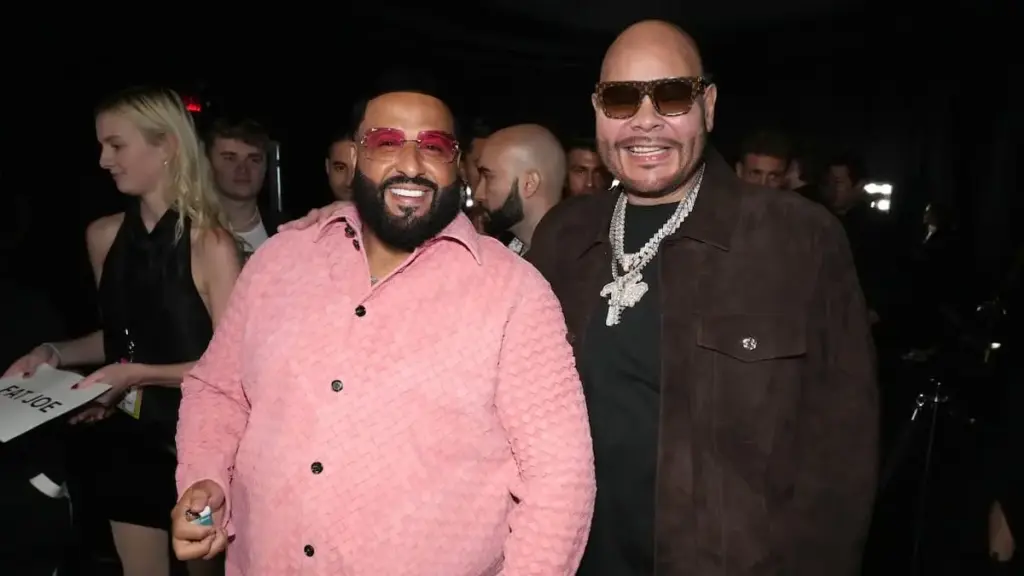
Navigating interpersonal conflicts is rarely a walk in the park, but the stakes multiply exponentially when the individuals involved are multi-platinum, globally recognized icons within the high-stakes ecosystem of the music industry. For veteran New York rapper and cultural ambassador Fat Joe, recent months have tested the limits of diplomacy, loyalty, and long-standing industry camaraderie. Placed squarely in the uncomfortable position of a mutual confidant, Fat Joe has found himself attempting to bridge an unexpected chasm between two industry titans: the omnipresent Toronto hitmaker Drake and veteran producer-mogul DJ Khaled.
The friction materialized following the release of Drake’s Iceman project, specifically on the track "Make Them Pay." In a verse that quickly sent shockwaves through hip-hop circles, Drake took direct aim at Khaled, questioning his silence regarding the ongoing humanitarian crisis in Palestine and pointing to perceived shifts in allegiance amid the broader landscape of the industry’s shifting alliances. For Fat Joe—who maintains a decades-long brotherhood with Khaled alongside a deeply respectful, mutually affectionate relationship with Drake—the diss track transformed an abstract industry dispute into a deeply personal tightrope walk.
Appearing on the influential morning radio show The Breakfast Club, Fat Joe opened up about his frantic attempts to play peacemaker, backtracking slightly on previous terminology while doubling down on his unwavering loyalty to Khaled. As hip-hop continues to parse the fallout from Drake’s sweeping string of recent feuds—which have famously entangled everyone from Kendrick Lamar and A$AP Rocky to Rick Ross—this particular rift underscores the complex web of personal relationships underlying public rap beefs. This article offers an investigative deep dive into the roots of the conflict, the anatomy of Fat Joe’s mediation efforts, the broader context of Drake’s lyrical onslaughts, and what this high-profile friction means for the future of hip-hop’s inner circle.
Detailed Chronology: From Industry Brotherhood to Lyrical Friction
To fully understand the weight of Fat Joe’s current mediation efforts, one must trace the timeline of relationships that have long defined the upper echelons of urban music. For years, the narrative surrounding Drake, DJ Khaled, and Fat Joe was one of seamless collaboration, mutual endorsement, and high-profile victories.
The Era of Unprecedented Collaboration
For over a decade, DJ Khaled and Drake enjoyed a virtually untouchable creative partnership. Spanning anthems like "No New Friends," "To the Max," "Greece," and "Popstar," the duo routinely dominated Billboard charts, turning their studio chemistry into cultural moments. Khaled famously positioned Drake as a cornerstone of his star-studded promotional rollouts, while Drake lent his platinum touch to elevate Khaled’s compilation albums. Parallel to this, Fat Joe maintained a legendary status as a New York fixture, bridging generations of hip-hop royalty. Joe’s deep-rooted friendship with Khaled—often described by Joe as a brotherly bond—meant he was intimately familiar with Khaled’s inner circle, philanthropic endeavors, and family-first lifestyle. Simultaneously, Joe shared an amicable, highly respectful rapport with Drake, highlighted by warm welcomes during trips to Toronto and mutual industry reverence.
The Turning Point: The Iceman Sessions and "Make Them Pay"
The landscape shifted dramatically as Drake entered a turbulent period characterized by widespread industry altercations. While public focus largely remained locked on his high-profile battles with West Coast heavyweights and long-standing rivals, subterranean shifts in his personal relationships began to surface through his music.
The boiling point arrived with the release of the track "Make Them Pay" from the Iceman sessions. In the song, Drake pivot away from standard rap braggadocio to direct targeted criticism at Khaled, bridging personal grievances with geopolitical commentary. Drake rapped:
"And, Khaled, you know what I mean / The beef was fully live, you went halal and got on your deen / And your people are still waitin’ for a free Palestine / But apparently everything isn’t black and white and red and green, damn / I’m seein’ everyone’s true colors, for real, I’m sensin’ a theme."
The lyrics caught the hip-hop community off guard. By weaponizing Khaled’s personal faith and public silence on a sensitive global crisis—while simultaneously questioning his loyalty amid Drake’s broader industry conflicts—the verse transformed a private coolness into a very public flashpoint.
Fat Joe Steps into the Breach
Almost immediately, industry observers turned their attention to figures connected to both camps, with Fat Joe emerging as the primary focus. Known for his candid commentary and status as an elder statesman of New York hip-hop, Joe found himself thrust into the role of involuntary mediator. Recognizing the potential for a prolonged, damaging rift between two pillars of his personal life, Joe initiated behind-the-scenes conversations to defuse the tension, attempting to deliver olive branches and restore a baseline of communication before the public narrative spiraled entirely out of control.
Supporting Context & Metrics: The Anatomy of Modern Rap Beefs
The conflict between Drake and DJ Khaled occupies a unique space within the history of hip-hop altercations. Unlike traditional rap beefs fueled by competing for artistic supremacy, territorial dominance, or disputed crowns, this friction highlights the ideological and personal fault lines that emerge when global pop culture intersects with sociopolitical issues and industry loyalty.
The Weight of Political and Cultural Critique in Hip-Hop
Hip-hop has historically served as the "CNN of the streets," a platform where artists comment on local, national, and international affairs. However, as rap has evolved into a multi-billion-dollar global corporate enterprise, the expectations placed upon artists regarding sociopolitical commentary have shifted dramatically.
Drake’s critique of Khaled on "Make Them Pay" touches upon a growing trend in modern discourse: the demand for public figures, particularly those of immense platform and influence, to take explicit stances on global humanitarian crises such as the ongoing situation in Palestine. By calling out Khaled for allegedly navigating industry politics while remaining silent on pressing global matters, Drake introduced a layer of moral critique rarely seen in standard rap feuds. This added a layer of complexity that standard industry mediation could not easily resolve, as it forced individuals to weigh their public moral stances against private business relationships.
The "Non-Rapper" Dynamic in Hip-Hop Altercations
A central theme of Fat Joe’s defense of DJ Khaled centers on a fundamental structural reality of the music industry: DJ Khaled is a producer, executive, and hype man, not a battle rapper.
In his subsequent interview reflections, Joe highlighted the inherent unfairness of targeting someone who does not possess the lyrical toolkit or the inclination to engage in back-and-forth record disses. While artists like Kendrick Lamar, Meek Mill, or Pusha T are structurally equipped to enter the lyrical arena and trade counter-punches on wax, Khaled’s professional identity is built on positivity, networking, album curation, and uplifting families and communities.
When Joe initially utilized the term "bullying" to describe the dynamic—a phrasing he later walked back and clarified during his Breakfast Club appearance—he was attempting to articulate this exact disparity. In Joe’s view, targeting an executive whose primary output is celebratory anthems and motivational social media content creates an uneven playing field, making peace-making efforts all the more urgent for mutual friends caught in the middle.
Official Statements and Media Fallout
The tension reached a fever pitch when Fat Joe sat down for a wide-ranging interview with the hosts of The Breakfast Club. Known for extracting candid, unfiltered truths from hip-hop’s elite, the platform provided Joe with the ideal space to address the elephant in the room regarding his relationships with both Drake and Khaled.
Fat Joe Clarifies His Position and Mediation Efforts
Addressing the hosts directly, Joe did not shy away from detailing his active role in trying to mend fences between the two camps. He emphasized that his loyalty to Khaled is absolute, describing the producer as a brother with whom he stands "on 10 toes at all times."
"I tried to fix that with him and Khaled, or whatever they got going," Joe explained during the interview. "Khaled’s my brother, so we going to stand on 10 toes at all times… I try to throw an olive branch, do what I could… I know I went to Toronto and got welcome texts and all that. I never disrespected [Drake], I actually got super love for him."
Joe’s remarks painted a vivid picture of the modern music industry’s complex matrix of relationships, where mutual respect for an artist’s undeniable talent (Drake) does not eclipse lifelong familial bonds with a trusted confidant (Khaled).
Retracting and Refining the "Bullying" Narrative
A significant portion of the discussion revolved around Joe’s previous characterization of the situation as "bullying." Recognizing that the term carries heavy connotations within both street culture and media circles, Joe took the opportunity to refine his language and contextualize his original intent.
"I don’t know how people feel or how people think or how people respond, or whatever the case may be," Joe elaborated. "My thing was, like, Khaled don’t rap, Khaled don’t diss. Khaled’s with his kids, Khaled is who he is. I don’t care what you think, what it is, it’s always love… He’s always helping people. So what I meant by that, by saying ‘bullying,’ wasn’t probably the best way to describe it."
By walking back the absolute nature of the word "bullying," Joe managed to diffuse potential secondary blowback from Drake’s notoriously litigious and vocal fan base, while simultaneously reinforcing his core protective stance regarding Khaled’s character, work ethic, and philanthropic nature.
Future Outlook: Can the Rifts Be Healed?
As the dust settles on Fat Joe’s revealing media tour, the broader hip-hop community is left to ponder the long-term trajectory of these relationships. In an industry where public fallouts are routinely amplified across social media algorithms, the path toward reconciliation is rarely straightforward.
The Evolution of Drake’s Industry Relations
Drake’s recent artistic era has been defined by a siege mentality. Having engaged in high-profile lyrical warfare across multiple fronts, the Toronto megastar has demonstrated an increasing willingness to sever ties, call out perceived fair-weather friends, and challenge the integrity of peers within the ecosystem. Whether this aggressive posture represents a permanent shift in Drake’s interpersonal strategy or merely a temporary artistic phase remains to be seen. However, the collateral damage—evidenced by the strain placed on mutual friends like Fat Joe—suggests that repairing these bridges will require significant diplomatic effort from industry veterans.
The Resiliency of DJ Khaled’s Brand
For DJ Khaled, the lyrical critique has done little to derail his overarching business model or public persona. True to Fat Joe’s characterization, Khaled has continued to focus on his family, his motivational media presence, and his massive upcoming musical ventures. In the world of commercial pop and hip-hop curation, Khaled’s brand resilience has historically relied on his ability to unite disparate artists under a single banner of celebration. While the friction with Drake represents a rare blemish on an otherwise spotless collaborative record, Khaled’s industry longevity suggests he is well-equipped to weather the storm.
The Indispensable Role of Industry Peacemakers
Ultimately, the unfolding drama highlights the vital, underappreciated role that veteran figures like Fat Joe play behind the scenes. In an industry frequently driven by ego, territorial posturing, and viral conflict, the voice of reason advocating for mediation and mutual respect is more essential than ever.
Whether Fat Joe’s olive branches ultimately succeed in bringing Drake and DJ Khaled back to a place of mutual harmony remains an open question. What is certain, however, is that as long as Joe retains his seat at the table, he will continue to champion his brothers, protect the culture’s historical integrity, and navigate the treacherous waters of celebrity politics with the seasoned grace of a true New York legend.