Executive Overview
In the sprawling, often rigid landscape of classic rock and heavy metal, few transitions carry the seismic weight of replacing a legendary frontman. When Dee Snider—the theatrical, high-octane voice behind anthems like "We’re Not Gonna Take It" and "I Wanna Rock"—announced his abrupt retirement from Twisted Sister in February 2026 due to debilitating degenerative pain, it sent shockwaves through the global rock community. The departure of a founding vocalist who defined an era usually signals the definitive end of a band’s legacy. Instead, Twisted Sister opted for a path fraught with risk: drafting former Skid Row frontman Sebastian Bach for a targeted, limited run of live dates.
The debut of this newly configured lineup was met with an immediate, polarized reaction. Fans and purists took to social media and forums to debate whether Twisted Sister could truly exist without Snider’s unmistakable snarl and larger-than-life stage presence.
Enter Jay Jay French. In a candid, unfiltered September 2026 interview with Podcast Rock City Live, the founding guitarist and mastermind behind Twisted Sister forcefully dismantled the notion of rock-and-roll irreplaceability. Drawing sharp comparisons to legendary transitions in music history—such as Queen drafting Adam Lambert and Journey discovering Arnel Pineda—French defended the band’s choice to bring in Bach. Furthermore, French offered a pointed message to disgruntled fans, addressing everything from the economics of modern concert ticket pricing to the fundamental realities of aging legacy acts.
This in-depth report examines the fallout of Snider’s retirement, the mechanics of rock band succession, French’s fiery defense of Sebastian Bach, and what this high-stakes partnership means for the future of Twisted Sister’s storied legacy.
Detailed Chronology: From Snider’s Exit to Bach’s Arrival
The sequence of events leading up to the current controversy unfolded rapidly over the course of 2026, marking a dramatic chapter in Twisted Sister’s decades-long history.
February 2026: The End of an Era
The seeds of the current debate were sown in early February 2026, when Dee Snider officially announced his retirement from live performing with Twisted Sister. For years, rumors had swirled regarding the physical toll that the band’s punishing, high-energy shows took on its members. Snider confirmed the worst-case scenario for fans: progressive, degenerative pain had made the physical demands of fronting Twisted Sister unsustainable.
Snider, who had always maintained a reputation as one of metal’s most relentless and physically active frontmen, acknowledged that he could no longer deliver the caliber of performance that fans expected. While his departure was amicable and understood by his bandmates, it left a massive void. Twisted Sister, a band that had previously staged triumphant reunion runs and cemented itself as a premier live act, faced an existential question: hang up the makeup and leather for good, or find a way forward.
The Search for a Successor
Rather than calling it a permanent career curtain, the remaining members of Twisted Sister—including founding guitarist Jay Jay French, guitarist Eddie Ojeda, and bassist Mark Mendoza—began exploring options for a strictly limited series of live performances. The criteria were rigorous: the replacement vocalist needed not only the vocal horsepower to hit the punishing high notes of Snider’s catalog, but also the established heavy metal pedigree to command massive festival stages without looking out of place.
The choice ultimately fell upon Sebastian Bach, the towering, golden-voiced former frontman of Skid Row. Bach, who had long shared a generational and stylistic kinship with the members of Twisted Sister, possessed the exact brand of 1980s hard-rock royalty required for the job. Importantly, the transition came with Snider’s blessing, providing a crucial seal of approval that helped ease the initial blow for much of the fanbase.
Summer to Fall 2026: The Live Debut and Backlash
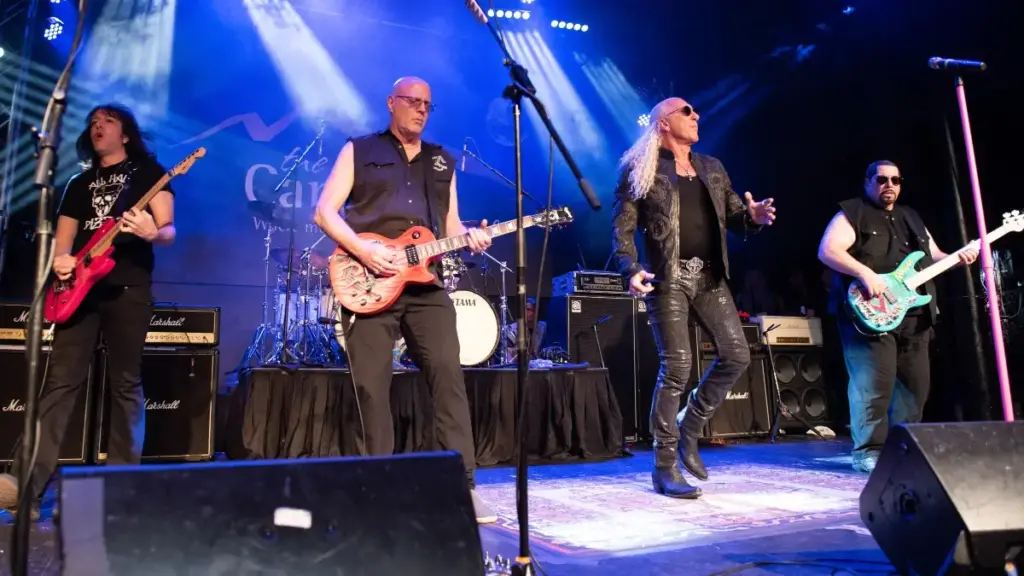
Bach’s inaugural performances with Twisted Sister hit the stage amid intense scrutiny. For traditionalists, hearing those iconic tracks filtered through Bach’s distinct vocal texture—which, while immensely powerful, carries a different timber and vibrato than Snider’s—was jarring.
Reviews from the first few outings were undeniably mixed. While critics and audience members praised the raw energy and musicianship on stage, a vocal faction of die-hard fans argued that Twisted Sister without Dee Snider was simply an expensive cover band. It was this wave of online grumbling and fan pushback that prompted Jay Jay French to step behind the microphone in September 2026 and offer a blistering defense of the band’s decisions.
Supporting Context & Metrics: The Mechanics of Legacy Band Replacements
To truly understand Jay Jay French’s perspective, one must examine the modern landscape of legacy rock and roll. The phenomenon of iconic bands continuing long after their original frontmen have departed, retired, or passed away has become an economic and cultural necessity in the 21st century.
The Precedent of Irreplaceability
During his September 2026 interview on Podcast Rock City Live, French did not mince words when addressing the sanctity of rock vocalists.
*"If you ask a hundred Twisted fans who could do it, you’ll get ones who go, ‘Dee can never be replaced.’ You hear that s*t all the time," French stated. "[But] the thing is this: nobody is irreplaceable anywhere. They’re really not."
To back up his claim, French pointed to two of the most successful and scrutinized vocal transitions in rock history:
- Queen and Adam Lambert: Freddie Mercury is widely considered by historians, peers, and fans alike to be the greatest vocalist in the history of rock music. Yet, following his tragic death in 1991 and subsequent years of inactivity, Queen eventually joined forces with American Idol alumnus Adam Lambert. Despite initial skepticism from purists, the Queen + Adam Lambert collaboration has spent over a decade selling out stadiums worldwide, proving that a masterclass in vocal execution can bridge the generational divide. French highlighted the seeming absurdity of this evolution—taking a talent from a pop-oriented television competition and placing him at the helm of rock royalty—as proof that traditional gatekeeping holds little weight in the face of raw talent.
- Journey and Arnel Pineda: Similarly, French invoked the legacy of Journey, a band defined by the stratospheric, soaring tenor of Steve Perry, widely regarded as a close runner-up for rock’s vocal crown. When Perry permanently parted ways with the band, many declared Journey finished. Instead, the band found Arnel Pineda via YouTube videos of him singing Journey covers in the Philippines. Pineda stepped into one of the most demanding front-man roles in music and seamlessly carried the band forward into a multi-decade continuation.
The Professional Pedigree
French was quick to draw a distinction between how other bands found their replacements and the seasoned pedigree that Sebastian Bach brings to Twisted Sister. While acknowledging the unconventional discovery methods of Queen and Journey, French emphasized that Bach required no internet discovery or reality-television boot camp.
"The difference between that is we got a real guy, like someone who actually does this for a living, is a bona fide superstar, a great performer in his own right," French noted.
By framing Bach not as an experimental wildcard, but as an established heavyweight of the same era and genre, French sought to legitimize the partnership for skeptics who felt the pairing crossed stylistic boundaries.
Official Statements & Industry Perspectives
The conversation surrounding Sebastian Bach’s tenure with Twisted Sister extends far beyond standard tour promotion; it touches on the philosophical contract between aging rock musicians and their audiences.
Navigating the Naysayers
French’s candor during his Podcast Rock City Live appearance revealed a deep understanding of fan psychology, rooted in his own experiences as a consumer of music. He openly admitted that he shares the same critical mindset when evaluating other legacy bands that fail to meet his nostalgic expectations.
"And by the way," French remarked, "I understand naysayers because I have that same opinion about certain bands that I like. And I’ve made jokes about the bands that I like that no longer live up to my belief and my memory of how great they could be."
However, French drew a hard line between expressing personal disappointment and attempting to dictate the artistic choices of working musicians. For those who choose to complain rather than embrace the new iteration of the band, French offered a blunt, pragmatic ultimatum: nobody is being forced to participate.
The Economics of Modern Live Music
Perhaps the most striking component of French’s commentary was his focus on the financial realities facing concertgoers in 2026. With ticket prices for legacy rock tours reaching unprecedented highs, French argued that artists carry a profound ethical responsibility to justify those costs.
"No one’s forcing you to go anywhere," French said. *"It’s a f**ing free country. You don’t wanna listen to a record? Don’t listen to a record. You don’t wanna go to a show? Don’t go to a show. Especially with the ticket prices being what they are these days. Which means, on top of which, the responsibility of the artist should be to respect the ticket prices."
This statement bridges the gap between fan grievance and artistic accountability. By acknowledging the financial burden placed on modern audiences, French positioned Twisted Sister’s decision to bring in a powerhouse performer like Bach not as a cheap cash-grab, but as a good-faith effort to deliver a high-energy, high-value live production that respects the price of admission.
Praise for the Frontman
Despite the early mixed reviews, French’s personal review of Sebastian Bach could not be more glowing. Taking over for Dee Snider requires filling literal and figurative shoes of monumental proportions—complete with the trademark wild hair and larger-than-life stage persona that defined 1980s metal.
According to French, Bach has exceeded expectations behind the scenes, proving to be an invaluable asset to the camp.
"He’s been the greatest… He’s been the most fun guy. He is the most fun guy," French praised, emphasizing that the chemistry within the touring camp remains exceptionally high.
Future Outlook: What Lies Ahead for Twisted Sister and Sebastian Bach?
As the dust settles on the initial wave of controversy surrounding Dee Snider’s retirement and Sebastian Bach’s integration, the broader question remains: what does the future hold for Twisted Sister?
The Limitations of the Partnership
It is crucial to note that Bach’s involvement with Twisted Sister is strictly designated for a limited run of tour dates rather than a permanent, full-time reconstitution of the band. Both parties have been transparent that this is an extraordinary measure designed to allow the remaining founding members to perform select dates for fans who still crave the live experience, rather than a permanent replacement of Snider.
Because Snider’s departure was driven by physical necessity rather than interpersonal conflict or a permanent break in relations, the door remains open for occasional one-off appearances, special events, or archival projects spearheaded by the original lineup. However, for the active, touring arm of the brand in 2026 and beyond, Bach serves as the bridge.
Redefining the Legacy Act Playbook
Twisted Sister’s approach offers a fascinating case study in how heritage rock bands can navigate the twilight of their careers. As the foundational architects of the 1970s and 1980s rock explosion age out of rigorous touring schedules, bands are forced to choose between permanent silence and evolutionary adaptation.
By leaning into transparency, respecting the economic realities of their fan base, and selecting a replacement who commands mutual respect within the industry, French, Ojeda, and Mendoza have charted a pragmatic course.
Conclusion
The mixed reviews that greeted Sebastian Bach’s debut with Twisted Sister are an inevitable byproduct of deep emotional attachment. For millions of fans, Dee Snider is Twisted Sister. No amount of rationale or historical precedent will completely erase the sting of a legendary frontman’s retirement.
Yet, as Jay Jay French passionately argued, rock and roll has never been a static museum piece. It is a living, breathing, and expensive medium driven by performers who still possess the fire to entertain. Whether fans ultimately choose to embrace Bach’s tenure or stay home, the band has made its stance clear: the music is too loud, and the history is too rich, to simply fade away quietly into the night.