Executive Overview
For decades, the cultural script dictating female bodily presentation was rigidly uniform: smooth, hairless skin was synonymous with hygiene, youth, and normative femininity. From the hyper-plucked eyebrows of the late 1990s to the ubiquitous requirement of Brazilian waxes, the pursuit of hairlessness demanded immense time, physical discomfort, and financial investment. Yet, a quiet revolution has been unfolding across generations and subcultures. Today, an increasing number of women are radically reframing their relationship with body hair, transforming it from a source of perpetual maintenance and internalized shame into a canvas for self-expression, political statement, and bodily autonomy.
Body hair—and the conscious decision of how to wear it—has become inextricably linked to modern discussions surrounding gender identity, sexuality, and intersectional feminism. While patriarchal beauty standards have long pathologized natural female hair growth as "masculine" or "unfeminine," a growing counter-movement is turning this premise on its head. By embracing underarm hair, lush leg growth, prominent facial features, and natural pubic hair, these women are actively redefining what it means to look, feel, and embody womanhood.
However, this shift is far from a post-sexist utopia. Women who forgo hair removal continue to navigate a minefield of sexist double standards, unsolicited commentary, and deep-seated societal conditioning. To understand the complex realities of this modern aesthetic rebellion, we spoke with ten women who have consciously chosen to step off the hair-removal treadmill. Their stories reveal a multifaceted landscape of personal liberation, shifting cultural norms, and the enduring friction between individual choice and societal expectation.
Detailed Chronology: The Evolution of Hairlessness and the Counter-Movement
To fully grasp the current renaissance of body hair acceptance, it is necessary to trace how society’s relationship with female hair has evolved over the past thirty years.
The 1990s and 2000s: The Apex of Extreme Haarlosigkeit
The closing decade of the twentieth century and the early years of the new millennium marked the zenith of enforced female hairlessness. Propelled by media representations, fashion magazines, and burgeoning commercial beauty industries, hair removal shifted from an occasional grooming choice to an obligatory hygienic baseline. Eyebrows were subjected to aggressive tweezing until they were reduced to pencil-thin lines. Concurrently, the total eradication of pubic hair through salon treatments like Brazilian waxing became the gold standard of intimate grooming.
During this era, any deviation from the smooth aesthetic was heavily stigmatized. Hair on a woman’s legs, underarms, or upper lip was treated as a personal failure or a sign of poor hygiene. The cultural narrative was absolute: to be a desirable woman was to be meticulously hair-free.
The 2010s: The Seeds of Skepticism
As intersectional feminism gained mainstream momentum in the 2010s, women began to critically examine the patriarchal underpinnings of everyday beauty routines. Blogs, early social media platforms, and feminist art spaces started showcasing unedited bodies. Women began asking a radical question: Who am I actually doing this for? The realization that billions of dollars were being extracted from women annually to maintain an infantile, hairless aesthetic sparked the first wave of organized pushback.
The 2020s and Beyond: Normalization and Personal Choice
Today, the pendulum is swinging toward a more diverse, individualized landscape. While many women still choose to remove their body hair—and deserve total autonomy in that decision—a significant and vocal segment is letting it grow. From Gen Z TikTok creators proudly displaying leg hair to millennials abandoning underarm shaving for good, natural body hair is slowly transitioning from a shock-value political statement into an unremarkable, valid personal choice.
Supporting Context & Metrics: The Psychology of Hair and Identity
Body hair is biologically designed to regulate temperature, release pheromones, and protect sensitive areas of skin. Yet, socially, it functions as a heavily coded signifier.
Gender Performance and Societal Double Standards
Sociologists note that body hair is one of the primary physical boundaries used to police the gender binary. Men are expected to be hairy as a marker of virility, while women are infantilized and expected to maintain the smooth skin of a prepubescent child. When women reject this expectation, they disrupt the visual comfort of the heteronormative gaze.
For many queer and non-binary individuals, dropping the razor is a deliberate step in deconstructing gender constructs. As one interviewee shared:
"As a queer person, you realize that once you critically examine cultural myths, you see they are completely made up. You are fed a heteronormative narrative of how your life ‘should’ be. Once you question that and realize it’s nonsense, you start questioning other aspects—like your beauty routine. It truly opens your eyes."
The Liberation of the Mundane
For others, the decision is less about political rebellion and more about comfort, skin health, and sensory autonomy. Conditions like folliculitis, razor burn, and ingrown hairs make traditional hair removal a painful physical ordeal. Choosing comfort over conformity often leads to a surprising psychological shift: the realization that natural bodies are inherently neutral.
Personal Testimonies: Ten Women on Forgoing Hair Removal
To capture the diverse motivations driving this movement, we listened to the personal accounts of ten women who have embraced their natural hair growth.
1. The Accidental Naturalist
"My hair is very light. Because of that, I always thought: ‘Oh wow, I actually don’t need to shave.’ So I let it grow, and when it finally became visible, I realized I simply didn’t care. I felt extremely comfortable with it."
For those with lighter pigmentation, the pressure to remove hair often arrives later or feels less urgent, providing an effortless entry point into body hair acceptance.
2. The Power of Partnerial Support
"My boyfriend encourages me to leave my body hair alone wherever I want. He wants me to do what makes me happy. It’s your body—and therefore your choice how you present yourself."
Supportive partners can play a crucial role in dismantling internal shame, reminding women that true intimacy does not require physical conformity.
3. Redefining Femininity
"I love body hair and see no reason not to have it if you like it. I stopped shaving my armpits because I realized that hairless pits didn’t automatically make me look feminine. I actually felt more feminine with body hair. Yes, ladies!"
This sentiment challenges the core marketing myth of the beauty industry: that hairlessness equals femininity. For many, retaining body hair enhances their sense of embodied womanhood.
4. The Friction-Free Routine
"I’ve been letting my underarm hair grow for over two years. I’ve always left my legs and intimate hair alone, maybe just trimming the latter. I used to shave, but I found it very uncomfortable, so I stopped. I also love how my hair looks."
Simplicity and physical comfort frequently eclipse societal pressures once a woman breaks the initial habit of regular removal.
5. The "Secret Club" Phenomenon
"I let my underarm hair grow for myself, and it was a deeply empowering feeling. It feels very comfortable. When I see other women with unshaven underarms—like on the subway holding onto the top rail—it feels like we belong to a secret club. Early on, I might have been shocked seeing that, but it’s becoming increasingly normal."
Shared visibility creates a sense of community. Public spaces become sites of silent solidarity among women who reject traditional grooming standards.
6. Embracing Natural Density
"My arms are quite hairy, and that used to make me very insecure. I definitely have more body hair than many others. I also have quite thick eyebrows. But I get compliments on those now—that’s great!"
Genetics vary wildly across ethnicities and lineages. Learning to love dense body or facial hair requires unlearning decades of critical internal monologue.
7. The Well-Manicured Lawn
"I used to rock a proper ’70s bush and just let it sprout. Today, I trim it into shape more. I call it ‘Downton Abbey’ because it looks as neat as a British lawn."
Natural does not mean unkempt. Many women enjoy maintaining their pubic hair through trimming while completely abandoning the complete eradication demanded by waxing culture.
8. Finding Strength in Facial Features
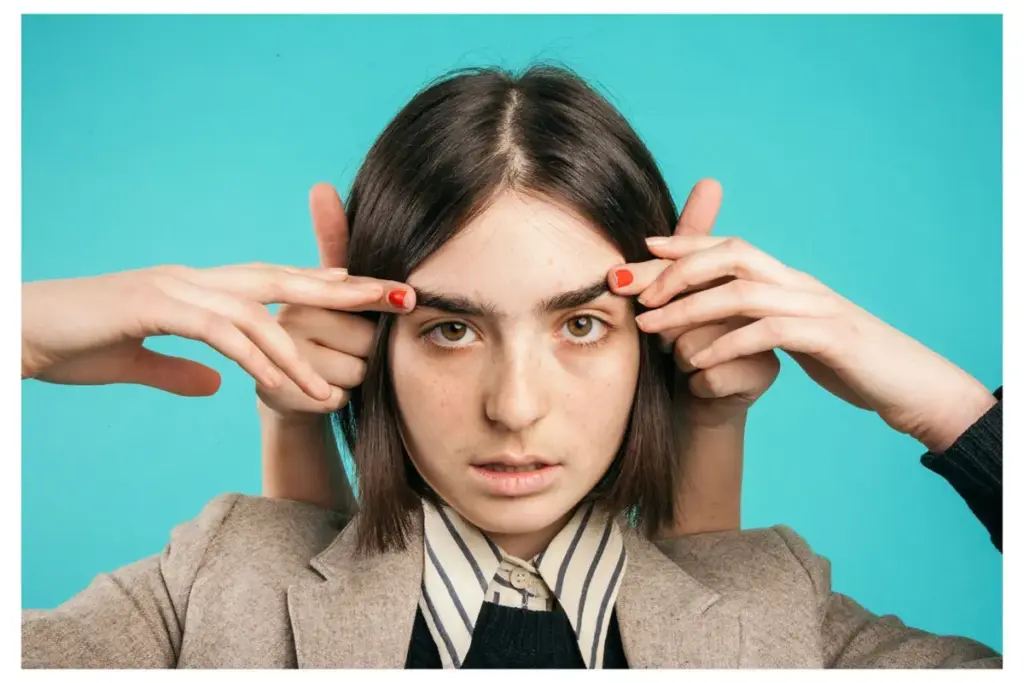
"As a child, people made fun of my eyebrows. Someone once said I looked like a monkey—pretty mean. But I believe the trend is moving toward acceptance. My eyebrows make me look strong, and I feel strong. When people tell me I remind them of Frida Kahlo, that’s a huge compliment; she was an incredible painter and a strong woman."
Facial hair, particularly thick eyebrows, can become a powerful focal point of personal identity, linking modern women to historical icons of female autonomy.
9. Questioning the Script
"When I came out as a queer woman, I stopped shaving. But it was also tied to my very sensitive skin. Mostly, it was about rethinking gender and exploring all facets of what a woman or femininity could look like… When you realize the heteronormative narrative doesn’t work for you, you start turning to other parts of your life, like your beauty routine."
Intersectionality proves that bodily autonomy is rarely isolated; it is deeply connected to how individuals navigate identity, space, and societal expectations.
10. The Neutral Acceptance
"I don’t really think about my body hair that often. It’s just there."
Perhaps the ultimate victory of the body hair movement is not politicization, but total normalization: reaching a point where body hair is treated with the same utter lack of fascination or disgust as the hair on one’s head.
Future Outlook: Where Do We Go From Here?
The cultural conversation surrounding female body hair is undeniably shifting, but the journey toward total acceptance is far from complete. While urban centers, artistic communities, and younger generations are fostering environments where body hair is treated as a non-issue, institutional resistance remains. Workplaces, media outlets, and dating spheres still harbor lingering biases.
The Commercial Landscape
As consumer demands evolve, beauty brands are being forced to adapt. While hair removal products continue to dominate global sales, brands are increasingly marketing formulations centered around skin health, sensitive skin care, and pain-free alternatives, rather than relying exclusively on the fear-based marketing of the past ("shame on you for being hairy").
Cultural Persistence
Ultimately, the future of body hair lies in absolute choice. The goal of the modern feminist movement is not to mandate body hair—just as it should not mandate hairlessness. True liberation is achieved when a woman can pick up a razor, or put it down permanently, driven entirely by her own desires rather than the suffocating weight of societal surveillance. As more women continue to share their stories, challenge double standards, and occupy space unapologetically, the cultural footprint of the hair-removal mandate will continue to shrink—one natural leg, arm, and underarm at a time.