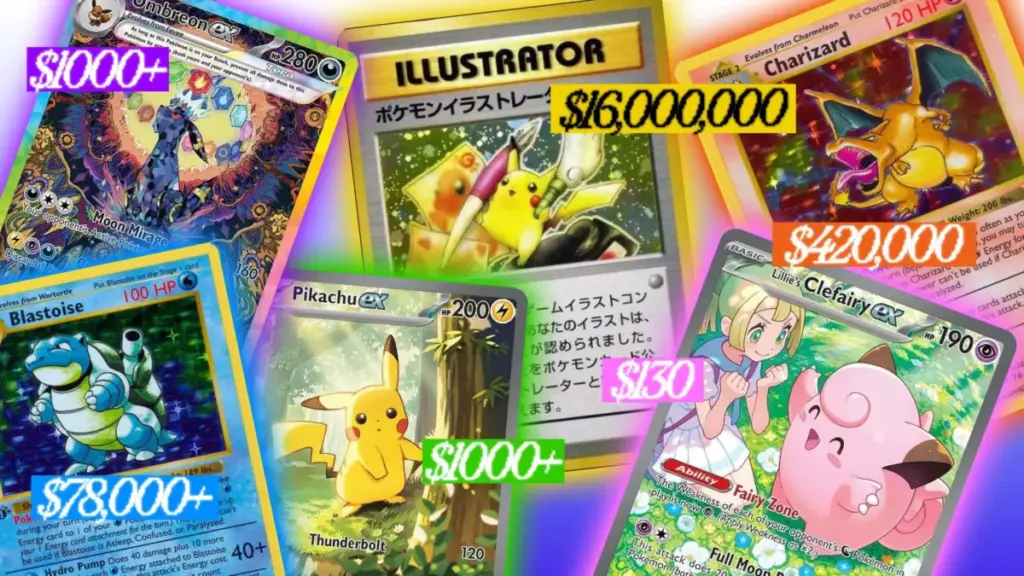
For nearly three decades, Pokémon has functioned as an undisputed titan of global pop culture, permeating video games, cinematic universes, fashion runways, and childhood memories. Yet, the hobby that once centered on harmless playground trades and nostalgic binder collections has undergone a radical, high-stakes financial metamorphosis. Driven by post-pandemic economic speculation, aggressive influencer culture, and a staggering surge in asset valuation, Pokémon trading cards are no longer viewed merely as children’s entertainment products. They are now elite speculative assets, traded with the ferocity and valuation curves of blue-chip tech stocks.
This meteoric rise in worth—where vintage first-edition pieces and rare modern "chase" cards routinely command tens or even hundreds of thousands of dollars—has cast a dark shadow over the community. What was once a joyful subculture defined by community trade-ins and collective nostalgia has increasingly become a prime target for organized crime. From brazen daytime heists at major pop-culture conventions like Anime NYC to armed, multi-jurisdictional storefront robberies in Manhattan, Los Angeles, and across the globe, the trading card community is grappling with a wave of violent crime.
As lawmakers in Japan weigh market regulations and local storefronts are forced to install riot-proof glass and armed-security measures, the global Pokémon ecosystem finds itself at a historic crossroads. This investigative report examines the driving forces behind the card market’s explosive valuation, chronicles the alarming escalation of high-stakes robberies, and explores how store owners, creators, and lifelong enthusiasts are fighting to preserve the community spirit that built the franchise.

Detailed Chronology: The Escalation of Card-Store Crime
The intersection of Pokémon card collecting and violent crime transitioned from an isolated anomaly to an alarming global trend in early 2026. The shift highlighted a dangerous vulnerability: independent storefronts, designed as welcoming community hubs, frequently lacked the hardened security protocols historically standard in the jewelry or fine art sectors.
The Manhattan Incident at Trainer Court
In January 2026, a newly established Manhattan card shop originally named Poké Court (subsequently rebranded as Trainer Court following a direct intervention by Nintendo) hosted its first community crafting day. Dozens of enthusiasts gathered inside to customize protective plastic cases ("toploaders") with creative stickers and designs.
Without warning, three masked individuals wearing all-black attire and colorful backpacks breached the premises, locked the front door behind them, and held customers and employees at gunpoint. Trapping roughly thirty people inside, the perpetrators systematically smashed glass display cases with heavy hammers, looting approximately $100,000 in high-value Pokémon cards, inventory sets, registers of cash, and a staff member’s personal mobile phone.

Reflecting on the terrifying event, Pokémon content creator KatEmAll recalled being so engrossed in customizing a card case that she initially failed to process the escalating chaos. It was only after hearing the glass shatter and looking up to see an armed assailant standing feet away that the reality of an armed robbery set in.
A Global Wave of Burglaries
The Manhattan robbery was far from an isolated incident. Throughout the first half of 2026, a wave of systematic burglaries targeted collectors and storefronts worldwide:
- Los Angeles, California: Armed robbers followed a high-profile collector from a boutique shop, making off with an estimated $300,000 in cards stashed inside a briefcase. That exact same weekend, a nearby card store was breached using a chainsaw, resulting in the theft of over $50,000 in inventory.
- Wilmington, North Carolina: A local game store clerk was pepper-sprayed and bound with zip ties during a violent robbery that netted over $20,000 in merchandise.
- Woodbridge, New Jersey: A father and son packing up their inventory following a trade show were held at gunpoint in June, losing $150,000 in rare cards and $12,000 in cash.
- International Incidents: The crisis extended far beyond U.S. borders. Two brothers pleaded guilty in the United Kingdom for stealing roughly £71,000 ($96,000) worth of cards in a coordinated string of thefts. In Tokyo, two men were arrested for swiping ¥34 million (approx. $213,000) in cards from a delivery van. Incidents were similarly reported in France, Spain, Canada, Hong Kong, New Zealand, and Germany, prompting some international shop owners to cease selling Pokémon cards entirely due to the physical risk.
Supporting Context & Metrics: The Anatomy of a Boom
To understand why Pokémon cards have become prime targets for criminal syndicates, one must examine the unprecedented economic forces driving their valuation.

Production and Printing Surge
Following the franchise’s debut in Japan in 1996 and its subsequent U.S. arrival in 1999 via Wizards of the Coast, the card game experienced a massive 90s boom before stabilizing. For decades, the Pokémon Company produced a relatively modest 1 to 2 billion cards annually.
However, the COVID-19 pandemic in 2020 served as a massive cultural catalyst. Millions of adults stuck at home rediscovered their childhood binders in attics and garages, sparking an unprecedented rush on the market. Simultaneously, high-profile internet personalities—most notably influencer Logan Paul, who famously purchased a pristine Pikachu Illustrator card for millions—helped normalize speculative investing within the hobby.
Responding to skyrocketing demand, production numbers climbed astronomically:

- 2020: Nearly 4 billion cards printed.
- 2021–2022: 9.1 billion cards printed.
- Peak Production: Nearly 11.9 billion cards produced by early 2024, followed by 10 billion cards printed the subsequent year.
Valuation and Market Comparisons
According to Adam Hijleh, CEO and co-founder of the trading-card portfolio tracking app Collectr, Pokémon merchandise accounts for a staggering 65% of all tracked platform activity—encompassing sales, digital scans, and total collection valuations.
The economic appreciation of individual cards has outpaced many traditional asset classes. For example:
- A 1st Edition Shadowless Blastoise originally valued at $70 to $100 in a 1999 Beckett magazine now commands over $1,500 raw, while top-tier graded variants can soar to $78,000.
- The valuation shift represents a staggering percentage increase that rivals or exceeds major tech equities like Nvidia over comparable multi-year periods.
- Modern sets, such as the late-2024 Prismatic Evolutions release featuring Eevee and its rare Umbreon Ex chase card, pushed secondary-market values past $1,000 raw and over $5,000 for professionally authenticated, pristine-graded copies.
Official Statements and Legal Interventions
Law enforcement agencies and international governments have begun treating trading card theft not as petty property crime, but as organized felony enterprise.

In May 2026, U.S. Attorney for the Southern District of New York Jay Clayton, alongside special agents from the Bureau of Alcohol, Tobacco, Firearms and Explosives (ATF), announced the arrest of a Queens man linked to the Trainer Court armed robbery and a secondary Queens card shop heist. Charged with conspiracy to commit armed robberies resulting in over $100,000 in stolen inventory, the suspect faces up to 20 years in federal prison. Surveillance footage released by prosecutors showed the defendant casing Trainer Court days before the attack, meticulously photographing display cases.
On an international scale, regulatory bodies have taken formal notice. Representatives from Japan’s ruling Liberal Democratic Party issued a stark warning to The Japan Times: "Trading cards are no longer simply consumer products. The market’s rapid expansion and the growing asset value of trading cards have given rise to problems that cannot be ignored." Japanese lawmakers are actively exploring legislative frameworks to stabilize the secondary market and curb speculative manipulation.
Future Outlook: Protecting the Community Spirit
Despite the threats posed by criminal elements and volatile market pricing, the foundational heart of the Pokémon community remains remarkably resilient. Storefronts like Trainer Court have fundamentally restructured their physical layouts to balance safety with accessibility. By installing heavy riot-grade glass, updating security cameras, closing earlier, and deliberately phasing out ultra-high-end inventory that attracts criminal surveillance, shop owners are reclaiming their spaces.

Furthermore, industry figures emphasize that the actions of a few bad actors do not reflect the true culture of the fandom. Content creators, independent vendors, and multi-generational collectors continue to gather at trade shows, participate in live-streamed pack openings, and curate artistic master sets based on aesthetic joy rather than monetary returns.
When Trainer Court was attacked in January, the global community rallied instantaneously. Figures like Sarah Natochenny, the original English voice of Ash Ketchum, arrived at the shop bearing food and solidarity. As store owner Courtney Chin aptly summarized in the immediate aftermath of the tragedy: "Everyone rallied together to overcome Team Rocket. It’s literally good versus evil."
As the franchise approaches its monumental 30th anniversary, the Pokémon card ecosystem stands resilient. Armed with reinforced security, proactive law enforcement backing, and an unyielding community spirit, collectors and shop owners alike are ensuring that the world of Pokémon remains a place of connection, nostalgia, and shared joy rather than fear.