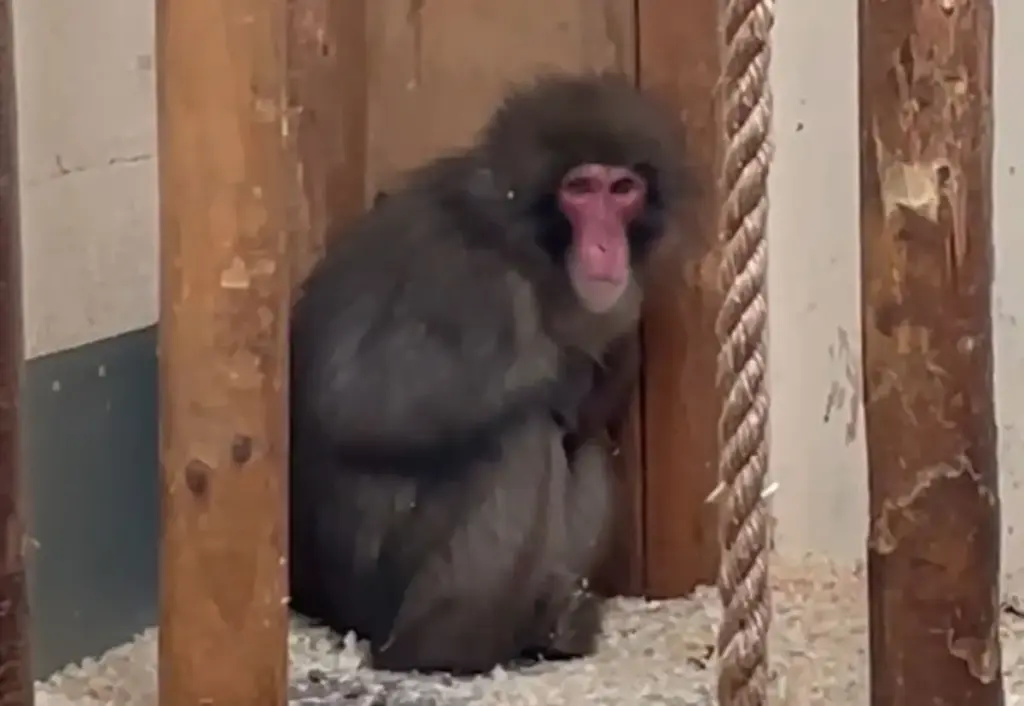
AVIEMORE, SCOTLAND — The crisp morning air over the Scottish Highlands is currently playing host to an unusual high-tech manhunt—or rather, monkey hunt. Wildlife authorities, animal care specialists, and local volunteers are scouring the dense woodlands surrounding the Cairngorms following the sudden disappearance of a young Japanese macaque named Luka.
The primate vanished overnight on Sunday, August 16, 2026, slipping away from his enclosure at the renowned Highland Wildlife Park near Aviemore. Park officials confirmed that Luka was last sighted in the nearby Balavil area, sparking an intensive multi-agency search and rescue operation utilizing state-of-the-art thermal imaging drones.
While authorities have stressed that Luka is not considered dangerous to humans, the incident has drawn immediate comparisons to a high-profile escape just two years prior, when another macaque named Honshu went rogue for four days, capturing international media attention and earning the tongue-in-cheek moniker "Kingussie Kong."
As search teams comb through rugged terrain and local residents remain on high alert, questions are once again being raised regarding the complex social dynamics of captive primates, enclosure security, and the behavioral pressures that drive these animals to seek freedom in the Scottish wilderness.
Executive Overview
The disappearance of Luka marks the second time in as many years that a Japanese macaque has managed to breach the perimeter or escape the confines of its troop at the Highland Wildlife Park, operated by the Royal Zoological Society of Scotland (RZSS).
The incident began sometime overnight on August 16, 2026. Zookeepers conducting their morning headcount discovered that Luka, a young male macaque, was missing from his habitat. Immediate containment protocols were triggered, and a specialized tracking team was deployed to scour the surrounding landscape.
According to Darren McGarry, Head of Animal Care at the RZSS, primate group dynamics can be volatile. Young males are frequently subjected to aggressive territorial pressures, social exclusion, or forced exile from dominant factions within the troop—a natural biological phenomenon that often compels them to seek refuge elsewhere.
To locate Luka without causing undue stress to the animal, wildlife experts have leaned heavily on modern technology. Search operations have integrated thermal imaging drones capable of detecting the macaque’s body heat through thick undergrowth and forest canopy—a tactic that proved successful during previous wildlife recovery operations in the region.

While the park has issued assurances that Luka poses no direct threat to public safety, officials have issued strict guidelines urging residents and tourists not to approach the animal if spotted. Instead, the public has been asked to report any potential sightings immediately via a dedicated emergency hotline.
Detailed Chronology of the Disappearance
The Great Escape: Unfolding Events of August 16–17, 2026
The precise mechanics of how Luka managed to leave his enclosure remain under internal review by Highland Wildlife Park curators, though the timing points to an overnight departure.
- Sunday, August 16, Evening: Keepers secure the Japanese macaque enclosure as dusk settles over the Highland Wildlife Park, located just outside Aviemore within the scenic Cairngorms National Park. At this stage, all animals are accounted for during evening routines.
- Monday, August 17, Morning: Routine morning checks reveal an empty enclosure. An internal alert is sounded, and curatorial staff initiate an immediate perimeter sweep of the park grounds.
- Monday, August 17, Afternoon: Intelligence from local landowners and park rangers places Luka further afield. The animal is officially spotted in the Balavil area, situated roughly several hundred meters beyond the immediate park boundaries.
- Monday, August 17, Evening: The RZSS deploys advanced thermal imaging drones to track Luka’s movements through wooded areas as daylight fades. Public safety notices are distributed across regional news networks, establishing a dedicated hotline for civilian reports.
[Timeline of Events: August 16–17, 2026]
 ├── Evening, Aug 16: Final evening headcount; all macaques secured.
 ├── Morning, Aug 17: Absence discovered during morning routine.
 ├── Afternoon, Aug 17: Confirmed sighting in the Balavil area.
 └── Evening, Aug 17: Thermal drone deployment and public advisory launched.
Search operations have faced logistical hurdles due to the dense vegetation and sprawling terrain characteristic of the Scottish Highlands. However, teams remain optimistic that continuous aerial monitoring will pinpoint Luka’s exact coordinates, allowing veterinary professionals to safely tranquilize and recover him.
Supporting Context & Metrics: The Behavioral Science of Macaque Exiles
To fully understand why Luka chose to leave the safety of the Highland Wildlife Park, one must examine the complex social structures of Japanese macaques (Macaca fuscata), also commonly known as snow monkeys.
Primate Hierarchies and Territorial Expulsion
In the wild, Japanese macaques live in matriarchal societies governed by strict hierarchies. While females typically remain within their natal troop for life, young males face a mandatory life transition. As they reach sexual maturity, adolescent and young adult males are routinely forced out of their birth groups by dominant males or choose to emigrate independently to avoid inbreeding and reduce social friction.
- Social Friction: Captive environments, even expansive ones like those at the Highland Wildlife Park, mirror these natural evolutionary pressures. Enclosures, while enriched, present finite boundaries.
- Expulsion Dynamics: When a young male like Luka falls out of favor with the troop’s dominant alpha or faces sustained aggression from rival peers, his survival instinct dictates flight. Driven by stress, territorial anxiety, and the biological urge to find a new social structure, these animals will exploit the smallest structural vulnerability or scale vertical barriers to escape hostile troop members.
Technological Advancements in Wildlife Tracking
The methods used to recapture escaped exotic animals have evolved dramatically over the past decade. Ground searches alone are frequently ineffective when dealing with agile, arboreal primates capable of navigating dense forest canopies at high speeds.
- Thermal Imaging Drones: Equipped with infrared cameras, search drones can detect minute thermal signatures against the cooler background of Scottish foliage, rivers, and soil. This technology is particularly effective during dawn, dusk, and nighttime hours when macaques are stationary or resting in trees.
- Baiting and Tranquilization: Once located via aerial surveillance, teams coordinate ground-level containment. Rather than pursuing the animal—which triggers a flight response—specialists often establish stationary monitoring points, utilizing preferred food items or waiting for the animal to settle before administering a safe, long-range sedative dart.
Official Statements and Public Appeals
The Royal Zoological Society of Scotland and the Highland Wildlife Park have maintained transparent communication channels with local communities, balancing public reassurance with urgent appeals for vigilance.
Expert Insights from the RZSS
Darren McGarry, Head of Animal Care at the RZSS, emphasized the natural drivers behind Luka’s behavior while reiterating safety protocols:

"We are doing everything we can to locate the macaque using a variety of techniques in the local area including a thermal imaging drone.
Primate group dynamics can be very complex and males being forced out of a group is not uncommon. Although the macaque is not dangerous, our advice is members of the public should not approach him and to contact 07769165117 with any details of a sighting."
Official Park Briefing
An official statement released by the Highland Wildlife Park management echoed these sentiments, providing clear instructions for residents living in proximity to the Balavil and Aviemore sectors:
"A young male Japanese macaque named Luka has escaped from his habitat at Highland Wildlife Park.
The search teams are currently working to locate Luka using a range of techniques including a thermal imaging drone. He was last seen in the Balavil area.
The macaque is not considered dangerous, but members of the public are asked not to approach him if spotted."
Authorities have reiterated that while Japanese macaques possess powerful jaws and sharp teeth typical of non-human primates, they are naturally timid animals that prefer to flee rather than confront humans. However, cornering or attempting to capture the animal independently could provoke a defensive reaction.
Historical Precedent: The Ghost of "Kingussie Kong" (2024)
For regular visitors to the Highland Wildlife Park and residents of the Badenoch and Strathspey region, Luka’s escape evokes vivid memories of a remarkably similar incident that gripped the United Kingdom in early 2024.

The Epic Saga of Honshu
In March 2024, another male Japanese macaque—subsequently named Honshu by media outlets, and affectionately dubbed "Kingussie Kong" by local wits—made headlines across the globe after executing a daring breakout from the very same park.
- The Breakout: Honshu’s escape was similarly attributed to an intense physical altercation with other male members of the macaque troop. Battered and stressed, he breached the enclosure perimeter and vanished into the Highland wilderness.
- The Four-Day Odyssey: For four days, Honshu managed to evade search parties, surviving sub-zero night temperatures and foraging through local gardens. Drone footage captured the fugitive macaque navigating snow-dusted pine branches, pausing in forest undergrowth to survey his surroundings before effortlessly scampering away from pursuers.
- The Capture Strategy: The public played an instrumental role in Honshu’s eventual recovery. Residents within a multi-mile radius were urged by park authorities to bring potential food sources—such as domestic bird feeders, household food waste, and pet food—indoors to encourage the hungry primate to approach human settlements where surveillance teams could track him.
- The Resolution: Honshu was ultimately located roughly 300 meters north of the park entrance, resting in the back garden of a residential property. Monitored closely via drone to ensure public safety, he was successfully tranquilized by veterinary experts, brought back to safety, and subsequently relocated to a more secure, specialized facility at Edinburgh Zoo to prevent future territorial conflicts.
Future Outlook: Security Reviews and Long-Term Rehabilitation
As search teams continue their systematic sweeps of the Balavil woods with thermal drones, park administrators are already looking toward the long-term implications of Luka’s escape.
Enclosure Reinforcement and Behavioral Management
Zoological facilities housing intelligent, highly adaptable primates face continuous design challenges. Japanese macaques are native to regions with harsh winters and mountainous terrain, possessing exceptional climbing abilities, physical strength, and problem-solving intelligence.
- Habitat Audits: Following the conclusion of the current search and Luka’s safe recovery, RZSS engineers and animal welfare inspectors are expected to conduct rigorous structural reviews of the macaque enclosure, examining perimeter fencing, arboreal overhangs, and vantage points vulnerable to exploitation.
- Troop Management Strategies: To mitigate the root cause of these escapes—inter-male aggression and territorial exclusion—curators may need to adjust troop demographics, introduce sub-enclosures for transitional housing, or proactively rehome vulnerable young males to partner institutions across the UK and Europe before natural social pressures result in another breakout.
Public Impact and Community Resilience
The local community around Aviemore has once again demonstrated remarkable patience and cooperation, mobilizing local knowledge to aid professional wildlife trackers.
For now, the immediate priority remains singular: bringing Luka home safely. As twilight descends once more over the Cairngorms, the silent hum of thermal drone propellers overhead offers hope that the young macaque’s days on the run are numbered, and that a warm meal, veterinary checkup, and secure sanctuary await him.
Anyone with information regarding Luka’s current whereabouts is urged to contact the dedicated wildlife emergency hotline immediately at 07769165117. Members of the public are strictly advised to maintain a safe distance and avoid attempting any form of capture.