The tragic death of Professor Jason Arday at the age of 41 has sent shockwaves through British academic circles, sparking intense national debate over media ethics, systemic racism, and the institutional pressures faced by minority scholars at the highest levels of academia. Professor Arday, who made history in 2023 by becoming the University of Cambridge’s youngest-ever Black professor, was found dead at his London home on August 14, 2026. His passing occurred just days after he tendered his resignation amid an intense wave of public scrutiny and allegations regarding his academic background and PhD thesis—allegations he continuously and vehemently denied.
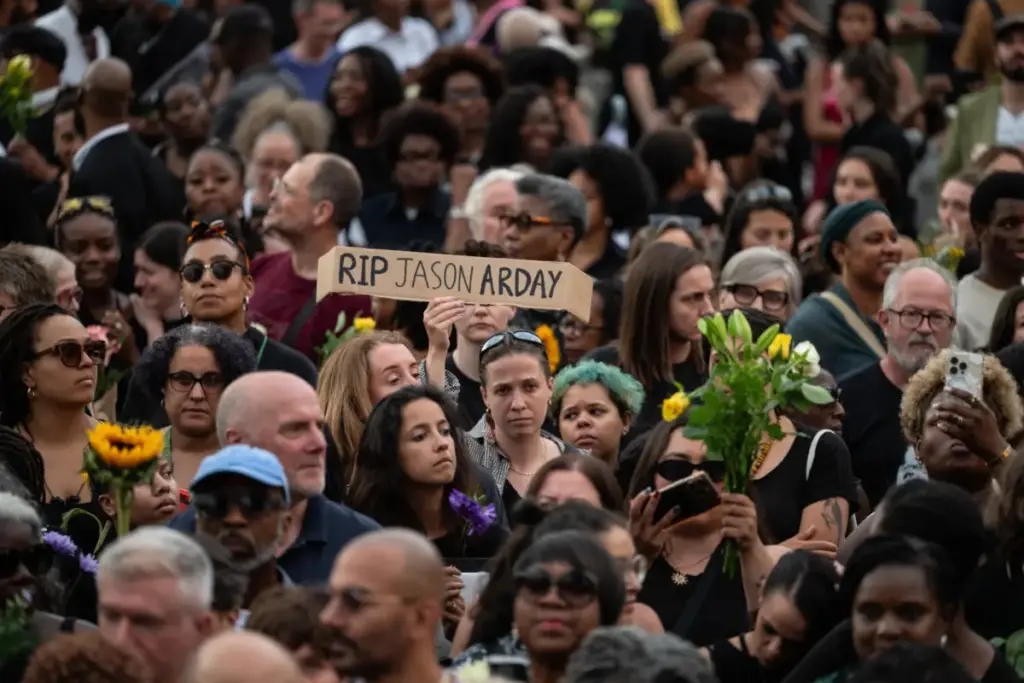
In the wake of his death, tens of thousands of mourners, prominent political figures, civil rights activists, and academics have rallied to honor his legacy. A massive vigil held in London’s Trafalgar Square drew an estimated crowd of over 30,000 people, transforming into a powerful demonstration against what organizers and close friends have characterized as a targeted, racially motivated smear campaign. As public outcry mounts, calls for formal parliamentary inquiries into media coverage and institutional accountability have gained unprecedented momentum, raising critical questions about how elite British institutions and the press handle high-achieving Black academics.
Detailed Chronology: From Historic Appointment to Final Days
A Trailblazing Rise in British Academia
Jason Arday’s journey to the University of Cambridge was nothing short of miraculous. Diagnosed with autism and global developmental delays as a child, Arday was unable to read or write until the age of 18 and remained largely speechless until he was 11. Through extraordinary resilience, self-determination, and a deep passion for education, he overcame these formidable hurdles to earn multiple degrees before breaking barriers in higher education.
In 2023, at the age of 37, Arday was appointed as Professor of Sociology of Education at the University of Cambridge. He was not only the youngest Black professor in the institution’s history but also entered an extraordinarily exclusive demographic: at the time of his appointment, he was one of only six Black professors at Cambridge and among just 155 Black university professors across the entire United Kingdom, out of a total academic pool of approximately 23,000. His appointment was widely celebrated as a triumph of representation and a beacon of hope for neurodivergent and minority students globally.
The Scrutiny and Resignation
Despite his historic achievements, Professor Arday’s tenure at Cambridge was abruptly derailed in the summer of 2026. He became the subject of intense media scrutiny and institutional inquiries concerning aspects of his PhD thesis, his broader academic portfolio, and accounts of his personal achievements.
Friends and colleagues noted that the relentless nature of the investigations and the subsequent public backlash took a devastating toll on his mental health. Facing mounting pressure, Arday cancelled an upcoming book tour and officially resigned from his professorship at Cambridge in early August 2026. However, rather than abating, the public scrutiny intensified following his departure, culminating in his tragic death by suicide on August 14, 2026, at his home in London.
Supporting Context & Metrics: The Anatomy of a Media Firestorm
The weeks leading up to and following Professor Arday’s resignation have prompted serious introspection regarding the role of modern media and digital-era harassment in public tragedies.
The Scale of Media Coverage
According to data compiled by independent media analysis organizations, the intensity of the press cycle surrounding Arday reached unprecedented levels. Data highlighted by campaigners and supporters revealed that in the 22 days between his resignation and his death, major news outlets and digital platforms published an astonishing 249 articles concerning the academic.
Attendees at the Trafalgar Square vigil carried placards directly referencing these statistics, with one prominent sign reading: "249 articles in 22 days." Civil rights groups and mental health advocates have pointed to this staggering volume of coverage as evidence of a disproportionate, relentless pile-on that constituted severe psychological harassment.
Public Mobilization and Petitions
The public reaction to Arday’s death has transcended standard memorial tributes, manifesting in coordinated campaigns for institutional reform and accountability:
The Good Law Project Petition: Spearheaded alongside prominent public figures, a petition organized by the Good Law Project demanding a formal inquiry into the media coverage surrounding Professor Arday quickly surpassed 90,000 signatures. High-profile signatories include Green Party leader Zack Polanski, veteran Member of Parliament Diane Abbott, and media personality Jameela Jamil.
Crowdfunding for Support and Advocacy: Sir Patrick Vernon, a leading campaigner instrumental in establishing National Windrush Day, launched a GoFundMe crowdfunding initiative to support advocacy and justice efforts. The fund rapidly amassed over £170,000 in donations from across the globe, reflecting the widespread resonance of Arday’s story.
Official Statements and Tributes
The Family’s Statement
During the emotional vigil at Trafalgar Square, Labour MP Bell Ribeiro-Addy read a poignant statement on behalf of the Arday family. The statement captured the profound grief and exhaustion experienced by those closest to the professor:
"The public cruelty Jason was subjected to was too much for any man to bear. What has become clear over the past 72 hours is the profound impact he had on people. A selfless and gentle soul, he tirelessly uplifted others through his words and actions. His achievements were great and we do not want misrepresentations about his character to overshadow them… Although it is bittersweet, now kindness is needed in life, not just in death. We’ll never know what might have been different had he experienced more of it while he was still here."
Voices from Friends and Colleagues
Prominent figures who stood by Arday during his final days delivered impassioned speeches at Trafalgar Square, condemning the institutional and public environment that allowed his persecution to occur.
Lord Simon Woolley, a crossbench peer and close personal friend of Arday, delivered a searing critique of the campaign against the academic, describing it as a "public execution" and a "lynching." Recalling a dinner just days before his death with Arday, Diane Abbott, and activist Misan Harriman, Lord Woolley shared the professor’s final despairing words:
"We held him in our arms. We told him he was loved. He held Diane’s hands, and he said, ‘I love you, but… they’re hounding me to death, and I cannot see a way out.’… Never stole a bag of crisps. He was exonerated from plagiarism. But the dogs of hell, the hounds of hell, sought to pursue any inaccuracy that they could say Jason is a bad man, Jason doesn’t deserve to be in Cambridge. For them, Jason doesn’t deserve to be alive. There needs to be some reckoning. There needs to be some justice."
Veteran MP Diane Abbott similarly addressed the vast crowd, arguing that the vitriolic campaign against Arday was fundamentally rooted in systemic prejudice:
"He must have felt that if he resigned the attacks on him would stop, but in fact they got even worse… This was a vicious campaign, but it wasn’t just a campaign against the professor, it was a campaign against all of us, and that’s why it is so important to come together and fight for justice for Professor Jason Arday."
Future Outlook: Accountability and Institutional Reform
The legacy of Professor Jason Arday will undoubtedly loom large over British higher education and media ethics for years to come. His death has laid bare the precarious position of Black academics operating within elite, historically homogeneous institutions.
The Demand for Structural Change
Education unions, racial equality advocates, and university reformers are now demanding a comprehensive overhaul of how British universities support minority staff members, particularly when they become targets of high-profile public controversies. Critics argue that institutions like the University of Cambridge failed to provide adequate pastoral care or robust defense for Arday when his credentials and personal integrity came under attack.
Media Ethics and Regulatory Scrutiny
Furthermore, the intense focus on the 249 articles published about Arday in just over three weeks has re-ignited the debate concerning press standards, digital pile-ons, and accountability in modern journalism. Regulatory bodies and independent inquiry groups are under increasing pressure to examine whether existing press guidelines are sufficient to prevent targeted harassment that results in catastrophic psychological harm.
As flowers continue to be laid at the base of Nelson’s Column and the footlights of Trafalgar Square, the rallying cry of "Rest in power, Jason Arday" serves as both a heartbreaking farewell and an enduring demand for systemic justice. Professor Arday’s extraordinary life—rising from a childhood characterized by severe communication barriers to the pinnacle of academic excellence—remains an inspiration, while his tragic end stands as a stark reminder of the urgent work still required to build a truly inclusive and compassionate society.