Executive Overview
Brooke Eby was just 33 years old when she received a diagnosis that she would frequently describe, with unflinching candor, as an absolute death sentence. Amyotrophic lateral sclerosis (ALS)—more commonly known as Lou Gehrig’s disease—is a progressive neurodegenerative disorder that systematically erodes the body’s ability to move, speak, swallow, and breathe autonomously. Crucially, it commits this physical devastation while leaving the mind entirely intact, trapping conscious, vibrant individuals inside failing shells of flesh and bone. Given how little modern medicine understands about its root causes and how profoundly ineffective current interventions are at halting its relentless progression, an ALS diagnosis has historically been met with quiet despair, private grief, and rapid societal erasure.
Eby shattered that quiet. It was announced that she passed away at the age of 37, leaving behind a legacy that fundamentally altered how the public, researchers, and fellow patients conceptualize life with a terminal illness.
In many respects, Eby’s initial journey mirrored the classic, tragic archetype of the disease. Her early symptom was deceptively benign—a slight, barely noticeable limp. This launched her into a frustrating, protracted medical odyssey of misdiagnoses, specialist visits, and mounting anxiety, all against the backdrop of a completely clean family history. (Statistically, approximately 90% of all ALS cases are classified as sporadic, meaning they occur entirely at random with no known genetic lineage).
Yet, Eby’s story diverged sharply from the demographic norm. Diagnosed far younger than the average ALS patient, she brought a distinctly millennial ethos to her predicament. Utilizing TikTok and Instagram under the razor-sharp, self-deprecating handle @limpbroozkit, Eby bypassed traditional, sanitized medical messaging. Instead, she chose radical, unfiltered, and frequently hilarious transparency.
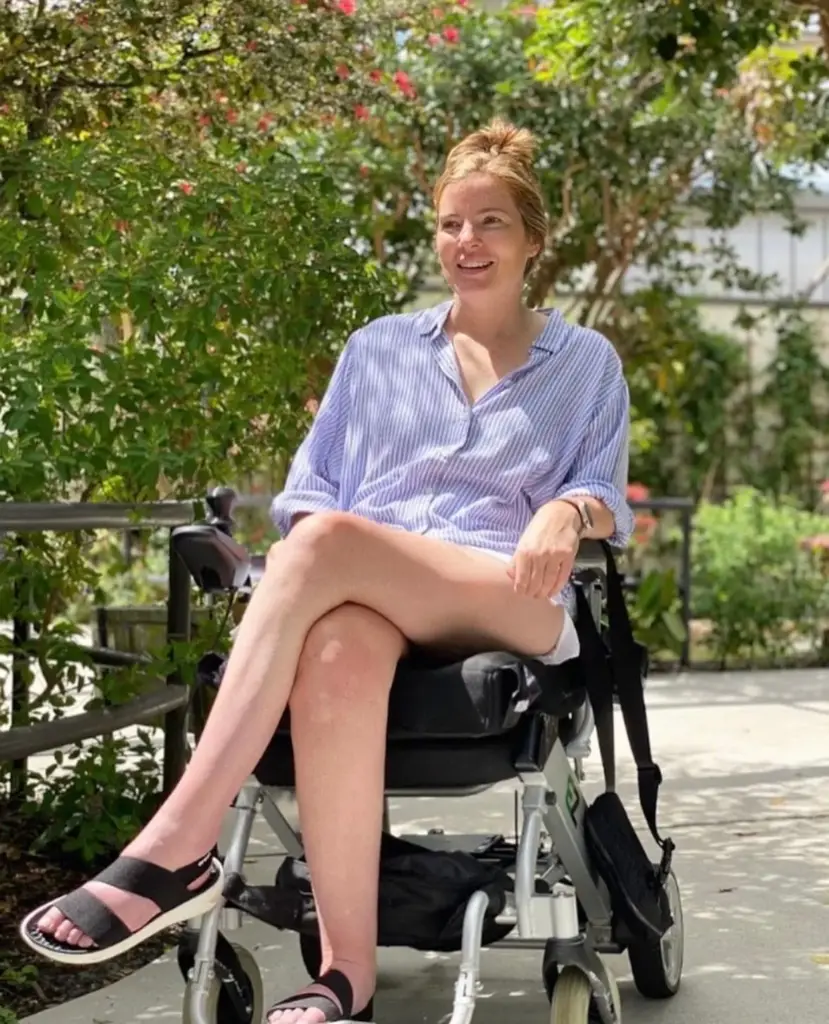
By documenting every agonizing transition—from walking with a limp to navigating a motorized wheelchair, experiencing vocal degradation, and debating the logistical and emotional hurdles of receiving a feeding tube—Eby invited the world into the reality of a terminal decline. She did not just live an extraordinary life because of her indomitable spirit; she chose to leverage her own mortality as an active instrument for global awareness, fundraising, and systemic change.
Detailed Chronology: From the First Limp to Digital Advocacy
The Long Road to a Devastating Reality
The trajectory of ALS is notoriously difficult to map in its early stages. For Brooke Eby, the disease announced itself quietly. A subtle shift in her gait—a slight limp that she initially brushed off as a minor injury or athletic strain—served as the opening salvo of a life-altering medical battle. Months of inconclusive doctor appointments followed. Because ALS mimics numerous other neurological and orthopedic conditions, obtaining a definitive diagnosis often requires ruling out a battery of alternative illnesses, a process that breeds psychological exhaustion for patients and their families.
When the diagnosis finally landed at age 33, it carried the full weight of medical finality. ALS attacks the motor neurons in the brain and spinal cord. As these cells degenerate, they lose their ability to initiate and control muscle movement. Patients gradually lose their independence, transitioning from minor mobility aids to full-time wheelchair dependence, eventual respiratory failure, and, ultimately, death—typically within two to five years of symptom onset.
The Birth of "@limpbroozkit" and the Relyvrio Challenge
Confronted with a prognosis that offered virtually no hope of recovery, Eby refused to retreat into the shadows. Embracing digital media as her primary medium for agency and connection, she launched her online presence under the cheeky handle @limpbroozkit.
Her breakthrough moment on TikTok arrived with a video that instantly captured the internet’s paradoxical appetite for dark humor and raw authenticity. Tasked with consuming Relyvrio—a newly approved, notoriously foul-tasting ALS medication—Eby decided to take matters into her own hands. In a viral clip that racked up hundreds of thousands of views, she chugged the medicinal concoction through a beer bong.
Playfully dubbing it the "Relyvrio Challenge"—a satirical nod to the massive, highly sanitized ALS Ice Bucket Challenge that swept the globe years prior—Eby forced viewers to confront the grim reality of daily treatment regimens through the lens of comedy. Watching the video was a jarring experience that left audiences suspended between laughter and tears. It was an intentional disruption of how society expects terminally ill individuals to behave: rather than suffering in dignified silence, Eby demanded to be seen, heard, and laughed with.
The Visual Diary of Decline
As her disease progressed, Eby maintained her commitment to digital documentation, creating what amounted to a real-time anthropological and emotional diary of neurodegeneration. For many families touched by the disease, watching her content was a double-edged sword.
Those intimately familiar with ALS recognized the milestones of decline with heartbreaking precision. Followers could scroll back through her TikTok feed and watch the exact timeline unfold: the introduction of a cane, the transition to a motorized wheelchair, the subtle shifts in vocal resonance as bulbar onset affected her speech, and her candid, unvarnished discussions regarding the psychological and physical hurdles of implementing a feeding tube.
Eby took her followers on a profoundly bumpy, unedited ride. By refusing to shield her audience from the ugly, uncomfortable, and deeply vulnerable aspects of her physical deterioration, she demystified the disease, stripping away the clinical sterility that so often alienates patients from the broader community.
Supporting Context & Metrics: The Landscape of ALS Research and Advocacy
The Clinical Reality of Amyotrophic Lateral Sclerosis
To fully comprehend the magnitude of Brooke Eby’s advocacy, one must examine the stark clinical landscape of ALS. According to data from the Centers for Disease Control and Prevention (CDC) and major neurological institutes:
- Incidence and Prevalence: Approximately 5,000 people are diagnosed with ALS each year in the United States alone. At any given time, an estimated 20,000 to 30,000 Americans are living with the disease.
- Age of Onset: While ALS can strike at any age, it is most commonly diagnosed in individuals between the ages of 40 and 70, with the average age of diagnosis hovering around 55. Eby’s diagnosis at 33 placed her well outside the typical demographic window, compounding the psychological isolation often felt by younger patients.
- Survival Rates: The prognosis remains grim. Approximately 50% of all people diagnosed with ALS die within three years of their symptoms first appearing. Only about 10% survive for ten years or more.
- Economic and Logistical Burden: The cost of managing ALS is astronomical. Full-time care, home modifications, specialized communication devices, and adaptive equipment can easily exceed hundreds of thousands of dollars per year, placing immense financial strain on families already grappling with terminal grief.
Bridging the Gap: Innovation and Community Building
Eby understood that raising awareness on social media was only half the battle; structural support and practical interventions were equally vital. Recognizing the acute isolation experienced by patients, she founded ALStogether, an online platform and community space designed to connect individuals navigating the disease, offering peer support, resource sharing, and a sense of shared humanity.
Furthermore, Eby’s pragmatic approach to daily living led her to collaborate with adaptive apparel brands such as Silverts. Recognizing that traditional clothing becomes an insurmountable barrier for individuals with limited mobility, she worked to design stylish, functional, and adaptable clothing lines. These collections aimed to restore a sense of dignity, autonomy, and personal style to people whose bodies no longer cooperated with standard fashion conventions.
Her fundraising efforts were equally unorthodox and undeniably effective. Blending sharp social commentary with earnest pleas for research funding, she famously remarked during a live fundraiser stage appearance:
"If a Kardashian got ALS, we would all be saved. The Kardashian Curse would be turned into the Kardashian Cure."
It was a quintessential Eby-esque quip—witty, provocative, and hyper-aware of how modern celebrity culture drives philanthropic capital. By highlighting the vast disparities in funding and public attention between high-profile maladies and orphan diseases like ALS, she challenged the philanthropic status quo.
Official Statements and Tributes
The announcement of Brooke Eby’s passing at age 37 sent shockwaves through the digital advocacy community and major health organizations alike. Tributes poured in from across the globe, underscoring her profound impact on public consciousness.
The ALS Network released an official statement honoring her memory and contributions:
"Brooke Eby approached an unimaginably cruel disease with a fierce, unapologetic spirit that redefined modern patient advocacy. She used her voice, her humor, and her platform to drag ALS out of the shadows and into the cultural conversation. Her loss is immeasurable, but her footprint on the movement toward a cure will endure forever."
Advocacy groups and fellow creators highlighted how Eby’s digital footprint transformed the emotional architecture of terminal illness. Rather than framing her diagnosis as a private tragedy, she weaponized transparency to build a collective movement.
Her family released a statement expressing deep gratitude for the outpouring of support while issuing a clear call to action to honor her life’s work. Rather than focusing solely on grief, they urged the public to channel their emotions into tangible support for ongoing research and patient services.
Future Outlook: Continuing Brooke Eby’s Legacy
Brooke Eby’s life and untimely death leave behind a blueprint for modern health advocacy. She proved that terminal illness does not require solemn silence or sanitized decorum; it can be met with sharp wit, digital fluency, and an unyielding demand for systemic change.
As the medical community continues its slow, arduous march toward effective treatments and a definitive cure for ALS, the cultural ground laid by advocates like Eby ensures that the disease will no longer be easily ignored. Her work through ALStogether and her partnerships in adaptive design have permanently elevated the standard of living and visibility for neurodegenerative disease patients.
How to Support the Legacy
In accordance with the wishes of Brooke Eby’s family, those moved by her story and her relentless fight are strongly encouraged to contribute to organizations dedicated to patient support and scientific breakthroughs:
- ALStogether: Donations help sustain the digital community space and resource network that Eby built to ensure no patient has to face the disease alone. Visit ALStogether to contribute.
- Team Gleason: Founded by former NFL player Steve Gleason—another pioneering figure in modern ALS advocacy—this organization focuses on providing vital assistive technology, equipment, and adventure opportunities to people living with ALS. Visit Team Gleason to learn more and donate.
Brooke Eby died on the internet so that the world might finally wake up to the reality of ALS. Her fierce advocacy ensures that the countdown to a cure continues with renewed urgency, humor, and unwavering resolve.