Executive Overview
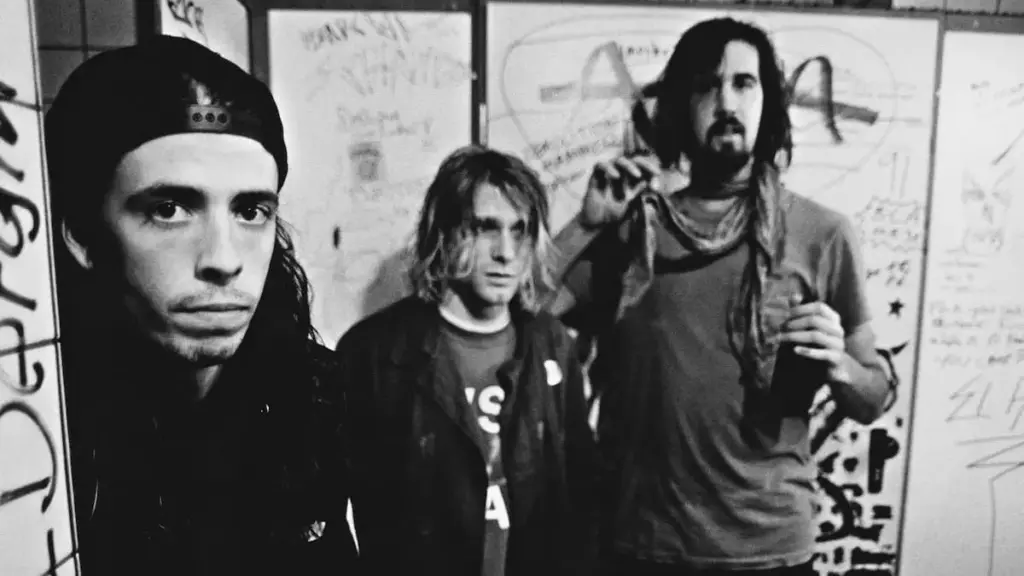
By the time the fall of 1992 rolled around, the landscape of popular music had been violently upended. The polished, hairspray-drenched excess of 1980s glam rock had been systematically dismantled by the raw, unwashed fury of the Pacific Northwest grunge explosion. At the epicenter of this seismic cultural shift stood Nirvana—a trio from Aberdeen, Washington, whose landmark anthem, "Smells Like Teen Spirit," did not merely top the charts; it utterly redefined the generational zeitgeist.
However, with unprecedented commercial success came an entirely new suite of conflicts. Nirvana’s ethos was rooted in punk rock, anti-establishment cynicism, and a profound distaste for the corporate machinery of the mainstream music industry. Their meteoric rise meant they were suddenly forced to play in the very sandbox they loathed, sharing airwaves, award shows, and backstage corridors with the gilded relics of the rock establishment they had just rendered obsolete.
Nothing encapsulated this volatile friction quite like the 1992 MTV Video Music Awards (VMAs) at the Universal Amphitheatre in Los Angeles. Over the course of a single evening, Nirvana managed to alienate corporate network executives, ignite a bitter backstage feud with hard rock royalty, and orchestrate one of the most delightfully subversive televised acts of civil disobedience in the history of live broadcasting.
What began as a routine red-carpet appearance quickly devolved into a high-stakes psychological chess match involving threats of physical violence, fierce backstage posturing, censorship battles, and a calculated musical prank that gave MTV executives a collective heart attack. This is the definitive inside story of the night Nirvana went to war with the mainstream—and won.
Detailed Chronology: The Anatomy of a Disaster
Backstage Tension: The Spark That Lit the Powder Keg
The evening’s friction began long before the cameras rolled, sparked by a casual, albeit provocative, piece of backstage banter. Kurt Cobain and his wife, Hole frontwoman Courtney Love, crossed paths with Guns N’ Roses frontman Axl Rose—the undisputed titan of the very hard-rock establishment that Nirvana was rapidly replacing.
In a move that could be interpreted as either supreme psychological warfare or naive social outreach, Love approached Rose with an inquiry regarding their newborn daughter, Frances Bean. She jokingly asked Rose if he would be willing to serve as the child’s godfather.
Rose, who viewed Nirvana as anti-establishment upstarts and was deeply insecure about his shifting cultural dominance, did not take the jest lightly. Instead of directing his anger toward Love or simply walking away, Rose turned his ire directly onto Cobain, issuing a severe, aggressive ultimatum. According to reports archived by the AV Club, Rose threatened Cobain with a physical beatdown if he failed to control his wife.
"You shut your bitch up, or I’m taking you down to the pavement," Rose reportedly snarled at Cobain.
Cobain, characteristically unimpressed by machismo and rock-star posturing, merely rolled his eyes. Turning to Love, he sarcastically muttered for her to quiet down, diffusing the immediate physical threat through sheer deadpan apathy. Simultaneously, an auxiliary verbal sparring match erupted between Love and Rose’s then-girlfriend, supermodel Stephanie Seymour, ratcheting the emotional tension in the backstage green room to a breaking point.
The Censorship Battle: "Rape Me" vs. MTV
With the backstage atmosphere thick with hostility, Nirvana prepared for their scheduled performance slot. But a fresh battle was brewing, this time pitting the band against the network’s nervous broadcast standards and practices department.
According to Nirvana bassist Krist Novoselic, Cobain had his heart set on playing their unreleased, provocative track "Rape Me." The song, a harrowing anthem of subjugation and survival written from the perspective of a victim, was viewed by Cobain as an important artistic statement. To MTV executives, however, the title alone was an absolute nightmare for live, prime-time television.
Network producers were adamant that Nirvana play virtually anything else in their catalog. Novoselic, looking back on the ordeal in a retrospective essay for the Seattle Weekly, detailed the exhausting standoff:
"I thought we should play something off Nevermind, do the gig, and leave. Easy, right? No. Kurt was very stubborn and refused to play another tune. There was quite a swirl around this issue."
MTV held firm, threatening to pull the band from the broadcast entirely if they proceeded with "Rape Me." The network offered a compromise: play the breakthrough hit "Lithium." Cobain resisted, but as showtime drew closer, the band realized they needed a vessel to smuggle their subversive intent onto the live stage. They ultimately capitulated to playing "Lithium," but not before plotting an audacious musical ambush.
The Near-Brawl in the Wings
As the band made their final march toward the stage, the lingering fallout from the Rose-Cobain confrontation threatened to erupt into physical violence. As Novoselic navigated the backstage corridors, he crossed paths with Guns N’ Roses bassist Duff McKagan.
McKagan, still intoxicated and fueled by loyalty to his front man after the earlier dressing-room altercation, decided to confront Novoselic on behalf of Rose. What followed was a tense, hostile exchange that very nearly culminated in a full-scale physical brawl in front of show production staff.
"I was walking toward the stage and came across my now-friend and colleague, Duff McKagan. I think Duff was also under the influence," Novoselic recalled. "He must have heard something from Rose and had a terse word for me. I was already a little bent out of shape and instantly replied with the same sentiment. The production people grabbed me and we continued toward the stage."
Swift intervention by alert production security prevented the situation from exploding into a multi-band melee, allowing Nirvana to push past the wings and step directly into the blinding lights of the live broadcast.
The Performance and the Prank
When Nirvana finally took the stage, the tension in the room was palpable. Millions of viewers worldwide were watching, unaware of the corporate panic and backstage intimidation that had transpired over the previous few hours.
True to their punk roots, Cobain, Novoselic, and drummer Dave Grohl had a mischievous trick up their sleeve. Instead of launching straight into the approved chords of "Lithium," Cobain stepped up to the microphone and deliberately began strumming the opening chords of "Rape Me."
For a few agonizing seconds, the control room at MTV held its collective breath, convinced that the band was intentionally violating the network’s strict censorship mandate on live television.
Having successfully sent network executives into a brief, heart-stopping panic, Cobain smirked, pivoted sharply, and transitioned into the opening notes of "Lithium." The performance itself was characteristically high-energy, volatile, and emotionally charged.
As the song reached its chaotic climax, the band decided to punctuate their disdain for the corporate spectacle in the most traditional way possible: total destruction. Grohl famously vaulted over his drum kit, kicking over cymbals and sending drums flying. Novoselic hurled his bass guitar high into the air—misjudging its trajectory slightly, resulting in the instrument landing squarely on his own forehead and knocking him briefly dazed. Cobain smashed his battered Fender Jaguar guitar into amplifiers as feedback shrieked through the auditorium, leaving the stage in complete, glorious ruins.
Supporting Context & Metrics: The Cultural Earthquake of 1992
To fully understand the weight of Nirvana’s actions at the 1992 VMAs, one must examine the metrics and cultural climate of the era.
- The Commercial Peak of Nevermind: By September 1992, Nirvana’s major-label debut Nevermind (released in September 1991) had sold millions of copies worldwide, eventually displacing Michael Jackson’s Dangerous from the #1 spot on the US Billboard 200 chart in early 1992.
- The Paradigm Shift in Rock Radio: Prior to 1991, the top-grossing rock tours and video airplay were dominated by hair metal acts such as Guns N’ Roses, Motley Crue, and Poison. By the end of 1992, record labels were systematically dropping hair metal bands in favor of alternative and grunge acts from the Pacific Northwest.
- MTV’s Dominance: In 1992, the MTV Video Music Awards was arguably the single most influential cultural barometer for youth culture. A performance on the VMAs could instantly launch a single into multi-platinum status or ruin a career overnight. By thumbing their nose at the network, Nirvana demonstrated an unprecedented level of leverage for a rock band of that era.
Official Statements and Retrospective Insights
In the years following the 1992 VMAs, the participants involved have frequently revisited the historic night, offering candid reflections on the egos, substances, and artistic stubbornness that drove the chaos.
Krist Novoselic’s retrospective writing provides a candid look at the internal psychology of the band during their sudden ascent into superstardom. Rather than romanticizing the rock-star lifestyle, Novoselic’s accounts highlight a band that felt profoundly alienated by the artificiality of Hollywood award shows.
Similarly, Duff McKagan and other members of the rock community have since downplayed the backstage hostility, often attributing the near-fights to the excessive consumption of alcohol and the intense pressures of being young, wealthy, and constantly under the global microscope. Over the decades, the animosity between the members of Nirvana and Guns N’ Roses has largely thawed into mutual professional respect, though the events of September 3, 1992, remain etched in rock history as an unrepeatable collision of two distinct musical eras.
Future Outlook: The Enduring Legacy of Nirvana’s Defiance
The events of the 1992 MTV Video Music Awards served as a vital transitional marker for rock music. It proved that the old guard—typified by bloated egos, physical intimidation, and corporate hand-wringing—could no longer control the narrative of popular music.
While Nirvana’s career was tragically cut short with the death of Kurt Cobain in April 1994, their uncompromising attitude toward the corporate entertainment complex continues to serve as a cultural blueprint for independent artists. The night they terrified MTV executives, nearly brawled with Guns N’ Roses, and smuggled a banned song onto national television remains a masterclass in artistic integrity. It stands as a powerful reminder of an era when rock stars were still dangerous, unpredictable, and entirely unwilling to play by the rules.