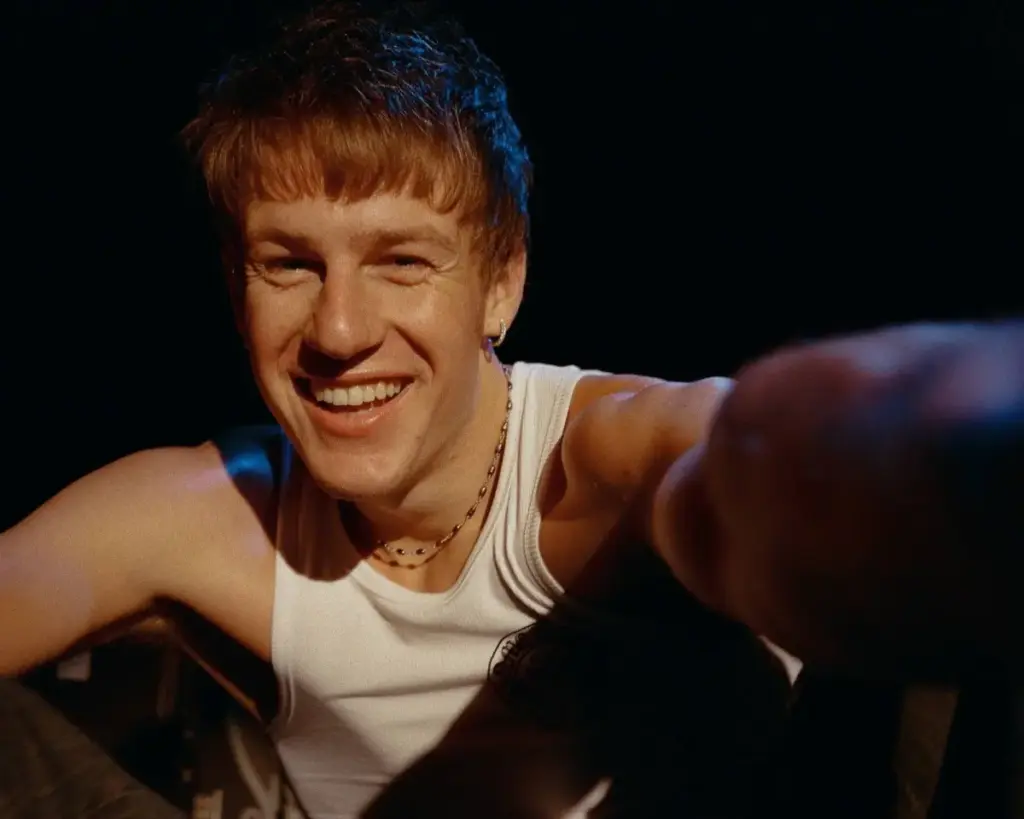
In the hyper-accelerated digital economy, cultural relevance is a volatile, highly localized currency. Yet, rare figures manage to bridge the gap between niche internet intrigue and tangible, physical-world adoration. Enter Malcolm Todd: singer, songwriter, multi-instrumentalist, producer, and the subject of our latest installment of Coolest Person in the Room.
Four years ago, Todd was just another face in the crowd at a college radio house show, pitching himself to play an unglamorous basement set only to be turned away at the door. Today, the narrative has drastically inverted. In 2026, Todd is the epicenter of the room—a rising star who commands adoring crowds, faces the sudden whiplash of public recognition at places like Erewhon, and is preparing to embark on an extensive global tour.
With the release of his latest project, Do That Again, Todd captures the raw, volatile energy of transitioning from adolescence into early adulthood. Blending a producer’s ear with a burgeoning vocalist’s confidence, Todd’s artistry thrives on emotional honesty, reckless experimentation, and an unshakable commitment to authenticity. This profile explores his rapid ascent, the realities of navigating fame at age 22, his creative processes, and how he maintains his signature "sparkle" amidst an increasingly noisy industry.
Detailed Chronology: From College Radio Rejections to Global Stages
To understand Malcolm Todd’s current trajectory is to understand the dizzying speed of contemporary music discovery. The timeline of his career highlights how quickly modern independent success can transition into mainstream cultural ubiquity.
The Formative Years (2022 and Prior)
Before the streaming algorithms caught on and the festival bookings rolled in, Todd was an 18-year-old navigating foundational crossroads. Facing the classic post-high school dilemma, he made the pivotal choice to bypass traditional higher education, opting instead to trust his gut and dive headfirst into music production and songwriting.
During this era, Todd was primarily a producer and writer who happened to sing—a dynamic that shaped his early projects, including his breakout mixtape Sweet Boy. At this stage, he was unpolished, "green," and operating entirely out of pure instinct. Humble beginnings defined the period: trying to hustle sets at college radio house shows, often facing standard rejection while quietly honing his craft behind the scenes.
The Breakthrough and the Mixtape Era
As his sonic identity solidified, Todd’s knack for blending infectious melodies with evocative, diary-entry lyricism began to turn heads online. Projects like Sweet Boy served as his introduction to the wider public, establishing a foundational fan base that appreciated his vulnerability. However, it wasn’t until the rollout leading up to his latest work that the ground truly shifted beneath his feet.
The 2026 Surge and Do That Again
If previous years were about laying brick, 2026 has been about erecting the skyscraper. Todd notes that widespread public recognition only began to feel truly substantial this year. Moving past the anonymity of his early teens, he now navigates the strange duality of fame: recognized by devoted fans while remaining relatively invisible to the general public at large.
The release of his latest album, Do That Again, marks the definitive closing of his teenage chapter and the opening of a more complex, mature era. Informed by months spent living recklessly in New York City, reading Lizzy Goodman’s iconic 2000s indie sleaze chronicle Meet Me in the Bathroom, and drawing style cues from icons like Michael Jordan and Dennis Rodman, the album captures the essence of a modern rockstar finding his footing.
Supporting Context & Metrics: Navigating the Industry at 22
Todd’s rise cannot be viewed in a vacuum; it exists at the intersection of modern internet subcultures, shifting listening habits, and the timeless anxieties of youth.
The Psychology of Modern Youth Culture
At 22 years old, Todd occupies a fascinating vantage point regarding contemporary Gen Z culture. When asked about modern male subcultures—ranging from sports betting to "looksmaxxing" (the obsessive optimization of physical appearance)—Todd offers a surprisingly empathetic, grounded perspective.
"We’re all humans and we’re all trying to fulfill ourselves. If looksmaxxing fulfills you and you don’t get into other people’s way, I can’t stop you. Obviously, it’s not healthy. We’re behind on the fucked up body dysmorphia women deal with. It’s insane, the standards people are deciding for beauty. I’m sure it’s fun for them, but there’s consequences. I just pray for them and be the best I can be."
This self-awareness shields him from the superficial traps that often ensnare young creators thrust into the spotlight. Rather than leaning into toxic online validation loops, Todd focuses on artistic integrity and maintaining his mental health.
The Mechanics of Music: Sampling, Creation, and Inspiration
Todd’s approach to music production is deeply tactile. Known for his viral footprint—including being sampled by Don Toliver on "E85" and incorporating his own stylistic flips—Todd views sample culture as an entertaining yet legally treacherous "slippery slope."
Furthermore, his creative process is marked by intense emotional immersion. Whether it’s the spontaneous creation of lyrics like "I probably shouldn’t do it, but I’ll do it for the song"—a testament to his willingness to take real-life risks simply to generate raw source material—or the necessary incubation period required to process heartbreak, Todd lives his art to its absolute limits. Notably, despite creating music that many categorize as sensual "baby-making music," Todd admits that he prefers silence during intimate moments, finding himself far too easily distracted by the analytical ear of a working musician.
Family Ties and Collaborative Ecosystems
An essential pillar of Todd’s support system is his sister, Audrey Hobert, who has also recently launched her own music career. Watching a close family member navigate the same treacherous waters has proven uniquely symbiotic. For Todd, getting to watch an artist he deeply admires grow up from the inside provides a profound well of daily inspiration, while tour life benefits immensely from their mutual sibling support.
Official Statements and Direct Perspectives
In intimate conversations detailing his philosophy on fame, perspective, and personal growth, Malcolm Todd reflects candidly on what it means to be crowned the "Coolest Person in the Room."
On the Reality of Sudden Fame
"As far as recognition goes, it’s only started to feel substantial this year. I’ve really gotten popular in 2026, and I really do feel famous now. Obviously, fame is relative. You’re famous to who you’re famous to. To most people, I’m not famous. But the come up has been kind of nice. I could go out and get recognized and then move on with my day. Now, there’s more eyes. Like in Erewhon, I feel more watched. Everyone is still so nice. I like when people tell me how they feel, like that they like my music. Because you don’t always have the chance to do that face to face."
On Personal Evolution and Blocking Out Noise
"The thing I’ve learned the most is perspective. And being able to block out noise. I didn’t come into it thinking I’d have to learn it, but then those challenges come up. It’s a true skill I had to learn in order to keep making music I enjoy. I also always want to be a more confident singer. I’m a producer and writer before I’m a singer."
On Preserving His "Sparkle"
When asked about his biggest fear—losing his signature "sparkle"—Todd identifies his intrinsic charm and idiosyncratic quirks (such as shooting pool left-handed while throwing a ball with his right) as the core of his identity. It is an unforced authenticity that has carried him through the noise.
Future Outlook
As Malcolm Todd looks beyond the release of Do That Again and prepares to take his music to international stages, the trajectory points toward sustained, substantive growth.
Having successfully bridged the gap between his tentative beginnings as an 18-year-old avoiding college and his current status as a commanding 22-year-old voice in modern indie-pop and R&B, Todd has cemented his foundation. He no longer feels the blinding greenness of his Sweet Boy era, nor is he weighed down by the anxieties of early expectations. Instead, he views his current body of work as a crucial middle ground—a rough-around-the-edges snapshot of a young artist evolving in real-time.
When asked what advice he would offer to his past self—specifically the 18-year-old deciding to skip college—Todd’s response is simple, peaceful, and entirely emblematic of his cool demeanor:
"I’d tell him to trust his instincts. I feel very guided on my journey right now. I’d tell him he was going to do great, and be on my way. I’m really enjoying how it’s going."
With global tours on the horizon, a fiercely loyal fanbase, and an artistic compass calibrated entirely to his own internal truth, Malcolm Todd isn’t just playing songs for the room anymore—he is the room.