Executive Overview
For decades, Naomi Watts has commanded the screen with a rare, electrifying intensity, effortlessly anchoring some of modern cinema’s most psychologically complex and haunting narratives. Yet, beneath the veneer of Hollywood royalty and critical adoration lies a grueling, arduous journey of rejection, eviction notices, and profound self-doubt.
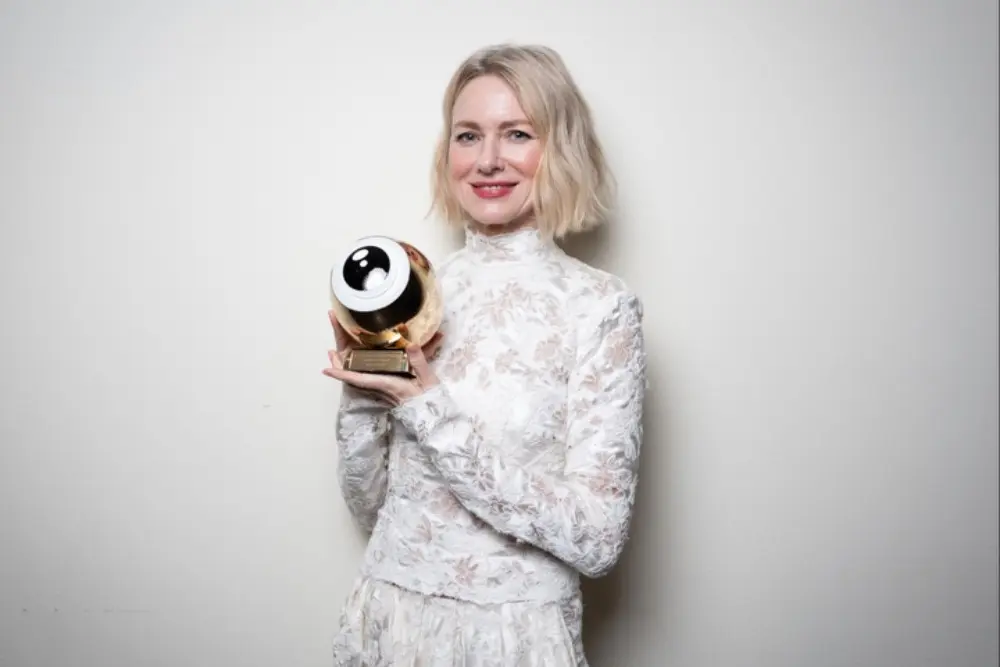
Accepting the prestigious Golden Eye Award at the Zurich Film Festival, Watts offered a candid, unvarnished look at the decade of struggle that preceded her meteoric rise. Far from the overnight sensation narrative often peddled by the entertainment industry, Watts spent her formative years in Los Angeles drowning in financial instability and professional paralysis. Told by agents that she was "too intense" and "freaking people out," she found herself shape-shifting into hollow parodies of what casting directors thought they wanted—desperately attempting to be perceived as funny, sexy, or conventionally palatable.
It required the singular, visionary genius of director David Lynch to shatter the armor she had constructed around herself, unlocking a career-defining breakthrough in Mulholland Drive. From there, Watts navigated a labyrinth of high-profile blockbusters, harrowing independent dramas, and later-life advocacy, transforming personal vulnerabilities—ranging from a transient childhood to early-onset menopause—into her greatest professional and personal superpowers.
Detailed Chronology: From the Brink of Eviction to Cinematic Icon
The Wilderness Years: A Decade of Reinvention and Rejection
Before cementing her status as an A-list cinematic force, Watts endured ten punishing years in the industry characterized by dry spells, professional dead ends, and existential dread. The desperation was palpable and all-consuming.
"It was a grind. That 10 years before I met David, I became so locked up and I felt worthless," Watts recalled during her Zurich Film Festival masterclass.
The psychological toll of relentless auditioning manifested physically and behaviorally. Lacking financial stability, she routinely fell behind on rent, facing the terrifying prospect of eviction. In an effort to secure work, she subjected herself to the whims of casting agents and studio executives who attempted to commodify her essence.
"They told me I wasn’t funny last week, so now I am trying to be funny. They told me I wasn’t sexy — I’m trying to be sexy," Watts explained, detailing the exhausting cycle of chameleon-like adaptation required of struggling actors. "You reshape yourself and try to read the tone of what is needed. That’s how it went, and I couldn’t be myself anymore. I was either an extreme version of myself or a diluted version of myself."
Her agent at the time famously pulled her aside for a blunt intervention: "We need to have a heart-to-heart. Honey, you are too intense. You are freaking people out." Watts’ response was as exhausted as it was honest: "Yeah, no shit. I was desperate! I was behind on my rent; I was getting evicted. I didn’t know what to bring to this room."
The Lynchian Awakening and Mulholland Drive
Salvation arrived in her late twenties, courtesy of avant-garde auteur David Lynch. Widely recognized as one of the most transformative creative partnerships in modern cinema, Lynch’s intervention dismantled the protective layers Watts had accumulated during her years of rejection.
"It took a genius like David Lynch to see beyond all that weirdness I built up, undo it, and get to the real me," she reflected.
Mercifully, the meeting yielded Mulholland Drive (2001), a psychological neo-noir masterpiece that instantly propelled Watts into the global consciousness. The film remains an untouchable cultural artifact, frequently topping critical "best of the century" lists.
Reflecting on the milestone, Watts expressed deep pride in its enduring legacy: "That film gave me the most incredible role that affected people. To this day, they still watch it. It’s still on these ‘bests’ lists. I’m just very, very proud to be a part of that film."
Her career trajectory validated the sage advice offered earlier by close friend and fellow antipodean actress Nicole Kidman. Watts recalled Kidman telling her: "All it takes is one thing, one thing could change everything."
"That didn’t make sense to me for a very long time," Watts admitted. "Until David Lynch, and then it became very real."
Navigating Success: The Ring and 21 Grams
Rather than resting on the laurels of critical acclaim, Watts immediately confronted the precarious nature of Hollywood stardom. Hot off Mulholland Drive, she was offered the lead role in Gore Verbinski’s horror remake, The Ring (2002). Initially, she resisted.
"I tried to say ‘no.’ There’s no certainty to anything you do, ever," she noted. Fearing that leaping straight from an arthouse masterpiece into a commercial studio horror film might dilute her freshly minted prestige, she pushed back against her representation. "My agents were excited about this. I said: ‘Wait. I just got this critical acclaim, so I want to instantly go into a Hollywood blockbuster-y movie?!’ I fought with my agent at the time. I didn’t know it was going to be a massive hit! I woke up the horror genre, in a way. It was a lucky, lucky break."
Her tactical versatility continued with Alejandro González Iñárritu’s devastating drama 21 Grams (2003), which earned her an Academy Award nomination. The notoriously grueling shoot pushed her to emotional and physical limits, a state she now views as creatively fertile. "Extraordinary things can happen when you get tired and irritable from doing things too much," she mused.
Supporting Context & Metrics: The Architecture of Identity and Grief
The Roots of Resilience
Watts’ capacity to weather professional instability and personal trauma can be traced back to her childhood. Growing up moving frequently, she was perpetually cast in the role of the outsider, navigating the delicate social dynamics of new environments. This transient upbringing inadvertently forged the thematic bedrock of her cinematic career.
"If there’s any theme in my work, it’s grief. It’s why I do what I do: I’m trying to figure out the meaning of life," Watts explained. "Another one is identity. I love the story [that asks]: ‘Who are you?’ That also comes from my moving around as a kid. I was always on the outskirts of the group, trying to find my way in."
Exploring Dark Spaces: The Housewife
This lifelong fascination with identity, trauma, and societal masks heavily informs her recent work, notably in Ben Shirinian’s 1960s-set period drama The Housewife. In the film, Watts tackles one of the darkest characters of her career: a woman projecting the image of a flawless domestic goddess while concealing a harrowing, post-war past.
"I never played a character like this, even though I look for flawed women and I’m not afraid of unlikeable. But this was extreme," she admitted. Preparing for the role required confronting difficult psychological terrain. "I knew what I was stepping into. I knew it was going to be a daunting, haunting understanding. A character like that comes to you at night, in your dreams."
Official Statements & Industry Impact
Reclaiming the Narrative: The Menopause Advocacy
Beyond her cinematic contributions, Watts has emerged as a fearless voice in destigmatizing midlife health issues, turning her personal trials into public advocacy. Confronted with early-onset menopause without adequate medical guidance or societal frameworks, Watts initially endured the transition in isolation and fear.
Her perspective shifted entirely after an intimate, vulnerable conversation with her partner (now husband), actor Billy Crudup. Recalling a moment of acute distress, she shared: "I was crying in the bathroom, trying to scratch off my estrogen patch. I told him what was going on, so nervous, and I thought: ‘He’s not gonna want to be with me anymore!’"
Crudup’s reaction redefined her sense of security: "He said: ‘Hold on. It’s great that you are taking care of yourself. Why are you ashamed?’ It was so sweet… And sexy. I felt safer than I ever felt."
Empowered by this support, Watts elected to shatter the cultural taboo surrounding the subject. "How about I just own the story? I’m in on the joke, although it’s not actually a joke. Why do we just suffer, instead of getting some normalcy? Just own it."
This epiphany culminated in the founding of Stripes Beauty, a pioneering wellness brand dedicated to women navigating perimenopause and menopause. Watts champions a collaborative approach to cultural change: "Men have to be curious and compassionate. And our job, ladies, is to share the story."
Future Outlook: Embracing Vulnerability as a Superpower
As Naomi Watts looks back on a career defined by fearless transformations, her relationship with self-doubt and public perception has fundamentally evolved. No longer driven by the frantic desire to please casting directors or mold herself into industry archetypes, she views her inherent sensitivities as strategic assets.
"Vulnerability is a superpower. It has taken me a long time to know that, and own that," she confessed during the climax of her Zurich masterclass. "I wish I’d learn earlier on to be more myself and [care] less about pleasing people. Some people are born with that level of confidence — I was never that person."
Rather than projecting an illusion of infallible strength, Watts embraces her internal landscape with radical honesty. "I still have a lot of self-doubt, but I don’t pretend it’s not a real thing. I try to see it as a gift. It’s more effective than just bullshitting your way through it all."
Armed with critical acclaim, a thriving entrepreneurial venture, and a hard-won peace of mind, Naomi Watts stands not just as a titan of contemporary cinema, but as a blueprint for artistic resilience—proving that the most compelling stories often emerge from the willingness to break open, look inward, and finally own one’s truth.