On September 8, 2026, the global fashion and royal-watching communities turned their gaze toward one of England’s most prestigious educational institutions. Prince William and Catherine, Princess of Wales, accompanied their eldest son, 13-year-old Prince George, on his first day of classes at Eton College. While the emotional significance of the milestone was clear—marking both a profound personal chapter for the young prince and a poignant echo of a family tradition established by Prince William and the late Princess Diana in 1995—the sartorial choices of the Princess of Wales triggered an entirely separate wave of industry-wide analysis.
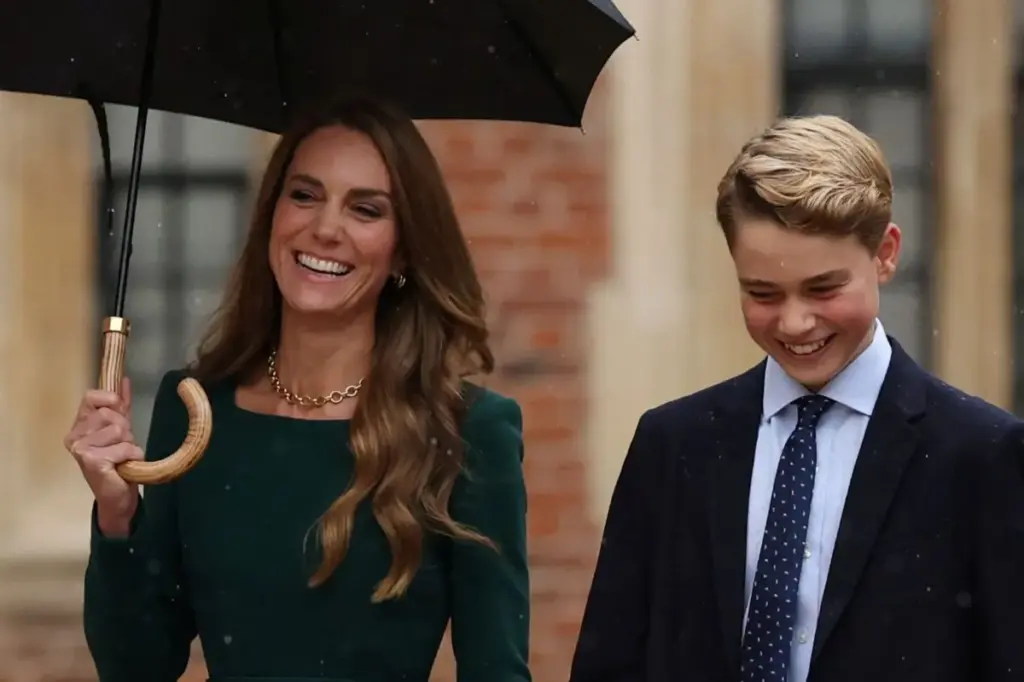
Rather than commissioning a bespoke piece for the high-profile public outing, the Princess of Wales reached into her royal archive, opting for a forest green Emilia Wickstead dress she had previously worn during an official visit to Boston in 2022. Paired with dark-brown Gianvito Rossi pumps, a chunky gold link chain by Laura Lombardi, and classic Cartier earrings, the ensemble did far more than project effortless royal decorum.
A rigorous breakdown of the look reveals that this recycled garment accidentally—or perhaps intuitively—served as a masterclass in upcoming seasonal forecasting. Without leaning into fleeting, fast-fashion micro-trends, the structured, earth-toned midi dress seamlessly united three of the most definitive fashion movements dictating the fall 2026–winter 2027 style landscape: rich earth-tone color palettes, transitional midi-to-maxi hemlines, and the sweeping return of structured, ladylike elegance over years of casual, oversized silhouettes.
Detailed Chronology: A Milestone Day at Eton College
The late-summer morning at Eton College was brisk, setting a serious yet celebratory tone for the influx of students and their families. For Prince George, turning 13 and stepping onto the historic grounds of the British boarding school represented a monumental leap into young adulthood.
The scene outside the storied gates bore a striking historical parallel. Back in September 1995, a young Prince William made his own debut at Eton, famously guided through the media circus by his mother, Diana, Princess of Wales. Thirty-one years later, the cycle of royal education came full circle. Prince William, now Prince of Wales, walked alongside his wife and son, recreating a visual narrative of parental support and royal continuity that immediately dominated front pages worldwide.
While the emotional weight of the day centered on Prince George transitioning into his teenage years and navigating the rigorous academic halls of Eton, the public eye naturally gravitated toward the intentionality of Princess Catherine’s presence. Every element of her appearance was curated to balance accessibility with regal formality. Eschewing the stark blacks or bright jewel tones often associated with high-stakes public appearances, her choice of a subdued, organic green immediately grounded the family unit, projecting calm authority and warmth during a high-pressure media event.
Supporting Context & Metrics: The Economics of Rewear and the Rise of "Ladylike Chic"
The Archive-First Philosophy
Princess Catherine’s decision to rewear the Emilia Wickstead dress is part of a broader, sustained shift in royal dressing habits that has accelerated over the last half-decade. In an era where sustainability and circular fashion are no longer just ethical talking points but consumer mandates, the Princess of Wales has consistently championed repeat wears.
Industry data tracking royal wardrobes over the past five years indicates a dramatic drop in the acquisition of entirely new pieces for daytime public engagements. By choosing to step out in a garment four years after its initial public outing—the 2022 Boston tour—the Princess reinforces an economic and environmental sensibility. This "archive-first" approach resonates deeply with contemporary fashion consumers who are increasingly skeptical of continuous consumption, proving that high-end tailoring holds perpetual value.
Dissecting the Fall 2026 Trends
What makes the September 2026 Eton appearance a landmark moment for trend analysts is how effortlessly a 2022 design mapped onto the runway forecasts for late 2026 and early 2027. The outfit’s resonance can be categorized into three distinct pillars:
The Dominance of Earth Tones:
The fall-winter 2026–2027 runways have decisively pivoted away from the neon brights and stark monochromatic schemes of previous cycles, embracing a grounded, nature-inspired palette. Forest green, olive, espresso brown, and warm terracotta are currently anchoring major luxury collections. By pairing her forest green Emilia Wickstead dress with rich dark-brown Gianvito Rossi pumps, the Princess executed a sophisticated tonal pairing that defines the current seasonal shift.
The Transitional Hemline:
Hemlines have long been a battleground of style discourse, but the 2026 season favors the precise real estate that falls between traditional midi and maxi. Ending just above the ankles, this cut allows for maximum versatility. It pairs just as effortlessly with structured pumps or contemporary kitten-heel slingbacks as it does with heavier, knee-high leather boots for colder months. It is a silhouette the Princess has relied on for years, cementing her status as an early adopter of practical, elegant proportions.
The Return of Ladylike Chic:
For several seasons, global streetwear and luxury ready-to-wear alike were dominated by slouchy, oversized tailoring, athleisure-infused streetwear, and unstructured silhouettes. Fall 2026, however, marks the definitive resurgence of "ladylike chic." Marked by accentuated waists, defined bodices, architectural necklines, and flowing, structured skirts, this aesthetic prioritizes polish and intentional tailoring over casual comfort. The clean lines and fitted bodice of the princess’s dress encapsulated this pendulum swing back toward formal refinement.
Official Statements and Industry Reception
While Kensington Palace maintained its standard protocol of declining to comment on the stylistic or commercial implications of the royal wardrobe, fashion houses and luxury retailers were quick to respond to the public’s immediate reaction.
E-commerce searches for forest green midi dresses spiked by over 140% within 48 hours of the photographs being published. High-street and mid-tier brands—such as Boden, which offers similar structured olive silhouettes—reported immediate surges in traffic for items mirroring the Princess’s color story and neckline.
Prominent fashion critics noted the understated brilliance of the styling choices:
"The genius of Catherine’s style lies in her immunity to trend fatigue," noted one leading European fashion editor. "When she wore this Emilia Wickstead piece in Boston four years ago, it was simply a great royal look. Wwearing it to Eton in 2026, it reads as a masterclass in trend forecasting. It proves that true elegance doesn’t chase the current season; the current season eventually catches up to true elegance."
Furthermore, the integration of contemporary, slightly edgy accessories—specifically the chunky gold link chain by Laura Lombardi juxtaposed against traditional Cartier earrings—signaled a subtle modernization of royal attire. It demonstrated a willingness to mix accessible contemporary designers with heritage luxury houses, a styling trick that continues to endear her to younger, trend-conscious demographics.
Future Outlook: What the Eton Look Means for the Rest of 2026
As the fashion industry transitions deeper into the fall and winter seasons, the ripple effects of the Princess of Wales’s Eton appearance will likely steer consumer behavior and retail buying patterns for months to come.
1. Accelerated Adoption of Forest Green and Chocolate Brown
The color combination of deep forest green paired with rich chocolate brown has officially transitioned from a runway experiment to a mainstream uniform. As temperatures drop across Europe and North America, expect to see this sophisticated duet dominate corporate offices, formal daytime events, and evening gatherings. Retailers are expected to double down on these shades for holiday capsule collections, moving away from traditional winter reds and blacks.
2. The Longevity of Tailored Investment Pieces
The heavy promotion of micro-trends on social media platforms has historically driven rapid cycles of buying and discarding. However, the sustained cultural relevance of Princess Catherine’s 2022 dress serves as a high-profile case study for the power of investment dressing. Consumers are increasingly evaluating purchases based on cost-per-wear and timelessness rather than immediate novelty. Designers focusing on classic silhouettes with subtle, modern updates are projected to outperform those relying on ultra-short-lived gimmicks.
3. The Institutionalization of "Quiet Luxury" in Royal and Public Figureship
The expectation for public figures to dress with ecological and economic mindfulness is now an established standard. The days of wearing high-cost, single-use garments to major public photocalls are rapidly waning. The Princess of Wales has effectively set the gold standard for how public figures can honor momentous family milestones without participating in excessive consumerism—a precedent that will undoubtedly influence the sartorial strategies of younger generations of European royals.
In sum, what appeared at first glance to be a simple, pleasant family photo op outside an English boarding school gate ultimately delivered a profound fashion directive. By trusting her signature aesthetic—grounded in rich earth tones, impeccable tailoring, and timeless proportions—Kate Middleton did not just celebrate her son’s first day at Eton; she quietly wrote the definitive style guide for fall 2026.